Princeton Modern Knowledge - Böcker
Visar alla böcker i serien Princeton Modern Knowledge. Handla med fri frakt och snabb leverans.
6 produkter
6 produkter
290 kr
Skickas inom 7-10 vardagar
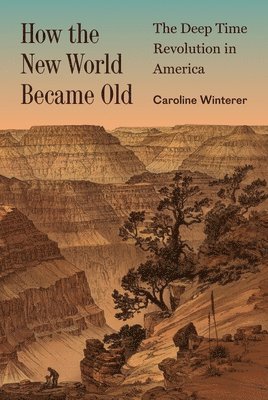
How the idea of deep time transformed how Americans see their country and themselvesDuring the nineteenth century, Americans were shocked to learn that the land beneath their feet had once been stalked by terrifying beasts. T. rex and Brontosaurus ruled the continent. North America was home to saber-toothed cats and woolly mammoths, great herds of camels and hippos, and sultry tropical forests now fossilized into massive coal seams. How the New World Became Old tells the extraordinary story of how Americans discovered that the New World was not just old—it was a place rooted in deep time.In this panoramic book, Caroline Winterer traces the history of an idea that today lies at the heart of the nation’s identity as a place of primordial natural beauty. Europeans called America the New World, and literal readings of the Bible suggested that Earth was only six thousand years old. Winterer takes readers from glacier-capped peaks in Yosemite to Alabama slave plantations and canal works in upstate New York, describing how naturalists, explorers, engineers, and ordinary Americans unearthed a past they never suspected, a history more ancient than anyone ever could have imagined.Drawing on archival evidence ranging from unpublished field notes and letters to early stratigraphic diagrams, How the New World Became Old reveals how the deep time revolution ushered in profound changes in science, literature, art, and religion, and how Americans came to realize that the New World might in fact be the oldest world of all.
337 kr
Skickas inom 7-10 vardagar
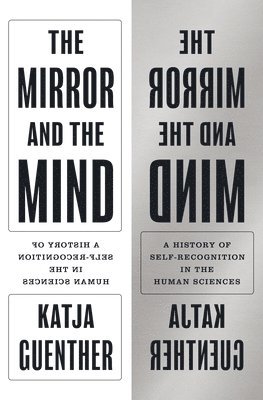
How the classic mirror test served as a portal for scientists to explore questions of self-awarenessSince the late eighteenth century, scientists have placed subjects—humans, infants, animals, and robots—in front of mirrors in order to look for signs of self-recognition. Mirrors served as the possible means for answering the question: What makes us human? In The Mirror and the Mind, Katja Guenther traces the history of the mirror self-recognition test, exploring how researchers from a range of disciplines—psychoanalysis, psychiatry, developmental and animal psychology, cybernetics, anthropology, and neuroscience—came to read the peculiar behaviors elicited by mirrors. Investigating the ways mirrors could lead to both identification and misidentification, Guenther looks at how such experiments ultimately failed to determine human specificity.The mirror test was thrust into the limelight when Charles Darwin challenged the idea that language sets humans apart. Thereafter the mirror, previously a recurrent if marginal scientific tool, became dominant in attempts to demarcate humans from other animals. But because researchers could not rely on language to determine what their nonspeaking subjects were experiencing, they had to come up with significant innovations, including notation strategies, testing protocols, and the linking of scientific theories across disciplines. From the robotic tortoises of Grey Walter and the mark test of Beulah Amsterdam and Gordon Gallup, to anorexia research and mirror neurons, the mirror test offers a window into the emergence of such fields as biology, psychology, psychiatry, animal studies, cognitive science, and neuroscience.The Mirror and the Mind offers an intriguing history of experiments in self-awareness and the advancements of the human sciences across more than a century.
Colonial Origins of Modern Social Thought
French Sociology and the Overseas Empire
Inbunden, Engelska, 2023
371 kr
Skickas inom 7-10 vardagar
A new history of French social thought that connects postwar sociology to colonialism and empireIn this provocative and original retelling of the history of French social thought, George Steinmetz places the history and development of modern French sociology in the context of the French empire after World War II. Connecting the rise of all the social sciences with efforts by France and other imperial powers to consolidate control over their crisis-ridden colonies, Steinmetz argues that colonial research represented a crucial core of the renascent academic discipline of sociology, especially between the late 1930s and the 1960s. Sociologists, who became favored partners of colonial governments, were asked to apply their expertise to such “social problems” as detribalization, urbanization, poverty, and labor migration. This colonial orientation permeated all the major subfields of sociological research, Steinmetz contends, and is at the center of the work of four influential scholars: Raymond Aron, Jacques Berque, Georges Balandier, and Pierre Bourdieu.In retelling this history, Steinmetz develops and deploys a new methodological approach that combines attention to broadly contextual factors, dynamics within the intellectual development of the social sciences and sociology in particular, and close readings of sociological texts. He moves gradually toward the postwar sociologists of colonialism and their writings, beginning with the most macroscopic contexts, which included the postwar “reoccupation” of the French empire and the turn to developmentalist policies and the resulting demand for new forms of social scientific expertise. After exploring the colonial engagement of researchers in sociology and neighboring fields before and after 1945, he turns to detailed examinations of the work of Aron, who created a sociology of empires; Berque, the leading historical sociologist of North Africa; Balandier, the founder of French Africanist sociology; and Bourdieu, whose renowned theoretical concepts were forged in war-torn, late-colonial Algeria.
Colonial Origins of Modern Social Thought
French Sociology and the Overseas Empire
Häftad, Engelska, 2025
250 kr
Skickas inom 7-10 vardagar
A new history of French social thought that connects postwar sociology to colonialism and empireIn this provocative and original retelling of the history of French social thought, George Steinmetz places the history and development of modern French sociology in the context of the French empire after World War II. Connecting the rise of all the social sciences with efforts by France and other imperial powers to consolidate control over their crisis-ridden colonies, Steinmetz argues that colonial research represented a crucial core of the renascent academic discipline of sociology, especially between the late 1930s and the 1960s. Sociologists, who became favored partners of colonial governments, were asked to apply their expertise to such “social problems” as detribalization, urbanization, poverty, and labor migration. This colonial orientation permeated all the major subfields of sociological research, Steinmetz contends, and is at the center of the work of four influential scholars: Raymond Aron, Jacques Berque, Georges Balandier, and Pierre Bourdieu.In retelling this history, Steinmetz develops and deploys a new methodological approach that combines attention to broadly contextual factors, dynamics within the intellectual development of the social sciences and sociology in particular, and close readings of sociological texts. He moves gradually toward the postwar sociologists of colonialism and their writings, beginning with the most macroscopic contexts, which included the postwar “reoccupation” of the French empire and the turn to developmentalist policies and the resulting demand for new forms of social scientific expertise. After exploring the colonial engagement of researchers in sociology and neighboring fields before and after 1945, he turns to detailed examinations of the work of Aron, who created a sociology of empires; Berque, the leading historical sociologist of North Africa; Balandier, the founder of French Africanist sociology; and Bourdieu, whose renowned theoretical concepts were forged in war-torn, late-colonial Algeria.
242 kr
Skickas inom 7-10 vardagar
How the classic mirror test served as a portal for scientists to explore questions of self-awarenessSince the late eighteenth century, scientists have placed subjects—humans, infants, animals, and robots—in front of mirrors in order to look for signs of self-recognition. Mirrors served as the possible means for answering the question: What makes us human? In The Mirror and the Mind, Katja Guenther traces the history of the mirror self-recognition test, exploring how researchers from a range of disciplines—psychoanalysis, psychiatry, developmental and animal psychology, cybernetics, anthropology, and neuroscience—came to read the peculiar behaviors elicited by mirrors. Investigating the ways mirrors could lead to both identification and misidentification, Guenther looks at how such experiments ultimately failed to determine human specificity.The mirror test was thrust into the limelight when Charles Darwin challenged the idea that language sets humans apart. Thereafter the mirror, previously a recurrent if marginal scientific tool, became dominant in attempts to demarcate humans from other animals. But because researchers could not rely on language to determine what their nonspeaking subjects were experiencing, they had to come up with significant innovations, including notation strategies, testing protocols, and the linking of scientific theories across disciplines. From the robotic tortoises of Grey Walter and the mark test of Beulah Amsterdam and Gordon Gallup, to anorexia research and mirror neurons, the mirror test offers a window into the emergence of such fields as biology, psychology, psychiatry, animal studies, cognitive science, and neuroscience.The Mirror and the Mind offers an intriguing history of experiments in self-awareness and the advancements of the human sciences across more than a century.
284 kr
Kommande
How the idea of deep time transformed how Americans see their country and themselvesDuring the nineteenth century, Americans were shocked to learn that the land beneath their feet had once been stalked by terrifying beasts. T. rex and Brontosaurus ruled the continent. North America was home to saber-toothed cats and woolly mammoths, great herds of camels and hippos, and sultry tropical forests now fossilized into massive coal seams. How the New World Became Old tells the extraordinary story of how Americans discovered that the New World was not just old—it was a place rooted in deep time.In this panoramic book, Caroline Winterer traces the history of an idea that today lies at the heart of the nation’s identity as a place of primordial natural beauty. Europeans called America the New World, and literal readings of the Bible suggested that Earth was only six thousand years old. Winterer takes readers from glacier-capped peaks in Yosemite to Alabama slave plantations and canal works in upstate New York, describing how naturalists, explorers, engineers, and ordinary Americans unearthed a past they never suspected, a history more ancient than anyone ever could have imagined.Drawing on archival evidence ranging from unpublished field notes and letters to early stratigraphic diagrams, How the New World Became Old reveals how the deep time revolution ushered in profound changes in science, literature, art, and religion, and how Americans came to realize that the New World might in fact be the oldest world of all.