Psychoanalytic Crossroads - Böcker
Visar alla böcker i serien Psychoanalytic Crossroads. Handla med fri frakt och snabb leverans.
7 produkter
7 produkter
1 119 kr
Skickas inom 10-15 vardagar
A remarkable achievement. Ammaniti and Stern have brought together an outstanding group of thinkers who address the problem of representation and psychoanalysis with depth and originality. Individually, each chapter is a joy to read. Collectively, the book is an essential addition to our thinking about the parameters of subjectivity and their role in the therapeutic process."Alicia F. Lieberman, Professor of Psychology, Univeristy of California San Francisco at San Francisco General Hospital and author of The Emotional Life of the ToddlerRepresentations and Narratives provides an innovative approach to understanding the internal world of infants and children. The creativity tht is needed to develop such an understanding is contained in thi an understanding is contained in this new and exciting edited volume. The two editors, from different backgrounds and cultures, have brought together a similarly diverse group of contributors who draw on their differences to develop important new integrations of psychoanalytic and developmental approaches to understanding psychic reality in early development. This volume moves this field an important step forward in creative and innovative thinking in this area."Joy D. Orlofsky, President, The World Association for Infant Mental Health and Editor, Infant Mental Health JournalThe concepts of representation and narratives have played a key role in the development of psychoanalysis, clinical research and theoretical speculation. This work carefully analyze the growth of representation and narratives in the history and practice of psychoanalysis.Found in the early writings of Freud, the term representation identifies the process of internalization; the building of an internal mental world, separate from external reality, which allows us to give meaning to our own experiences. Also found in Freud's early works, the concept of narration as the idea that personal experience might assume the character of a narrative construction provided the impetus for the war between Freudian metapsychology and American psychoanalysts in the 1970's.This significant addition to the Psychoanalytic Crosscurrents series explores the close and necessary relationship between the two theories and illustrate how they have developed the language of therapy and affected the practice of both psychoanalysis and developmental psychology.
912 kr
Skickas inom 10-15 vardagar
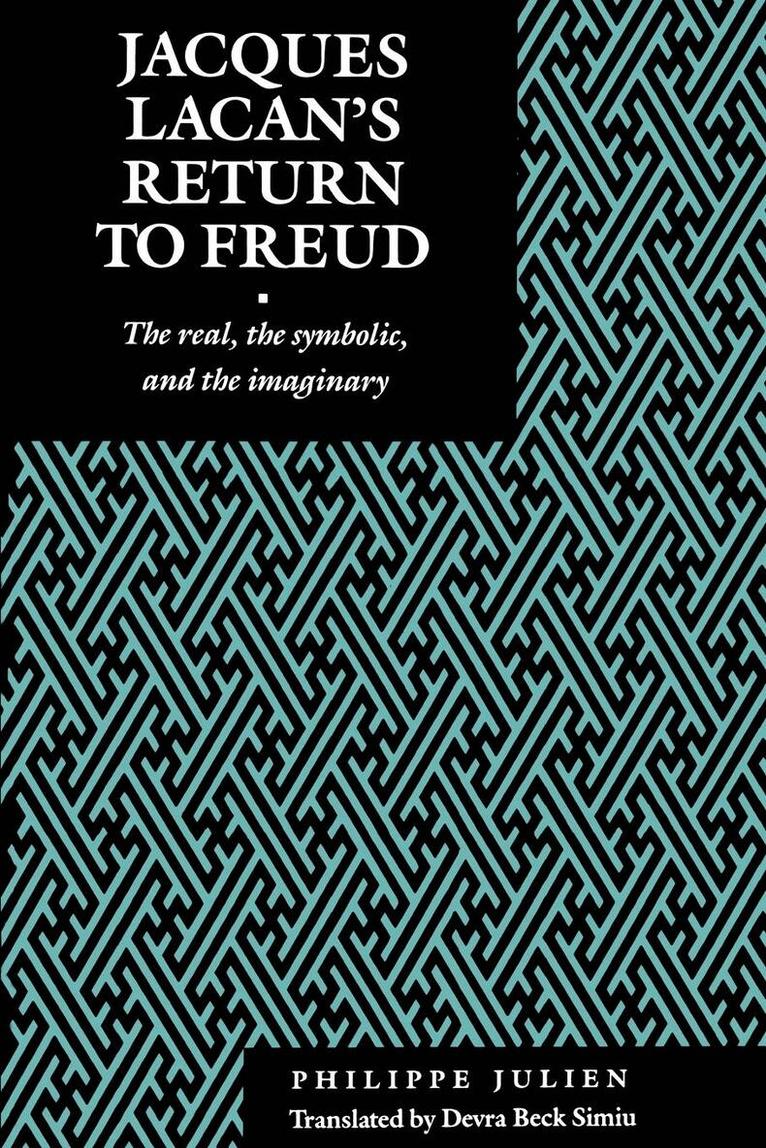
Among the numerous introductions to Lacan published to date in English, Philippe Julien's work is certainly outstanding. Beyond its conceptual clarity the book constitutes an excellent guide to Lacanian psychoanalytic practice.--Andr Patsalides, Psychoanalyst and President, Lacanian School of PsychoanalysisFrom 1953 to 1980, Jacques Lacan sought to accomplish a return to Freud beyond post- Freudianism. He defined this return as a new convenant with the meaning to the Freudian discovery. Each year through his teaching, he brought about this return. What was at stake in this renewal?Philippe Julien, who joined Lacan's Ecole Freudienne de Paris in 1968, attempts to answer this question. Situtated in the period after-Lacan, Julien shows that Lacan's return to Freud was neither a closing of the Freudian text by responding to questions left unanswered nor a reopening of the text by giving endless new interpretations. Neither dogmatic nor hermeneutic, Lacan's return to Frued was the return of an inevitable discordance between our experience of the unconscious and any attempt to give an account of it. For the unconscious, by its very nature, disappears at the same moment as it is discovered. It is in this sense that the author can claim that Lacan's return to Freud will have been Freudian.Constantly challenging the reader to submit to the rigors of Lacan's sinuous thinking, this penetrating work goes far beyond being a mere introduction. Rendered into elegant English by the American translator, who added numerous footnotes and scholarly references to the French original, this study brings Lacanian scholarship among English readers to a new level of sophistication.Neither dogmatic nor hermeneutic, Lacan's return to Freud was the return of an inevitable discordance between our experience of the unconscious and any attempt to give an account of it. For the unconscious, by its very nature, disappears at the same moment as it is discovered. It is in this sense that the author can claim that Lacan's return to Freud was Freudian.
361 kr
Skickas inom 7-10 vardagar
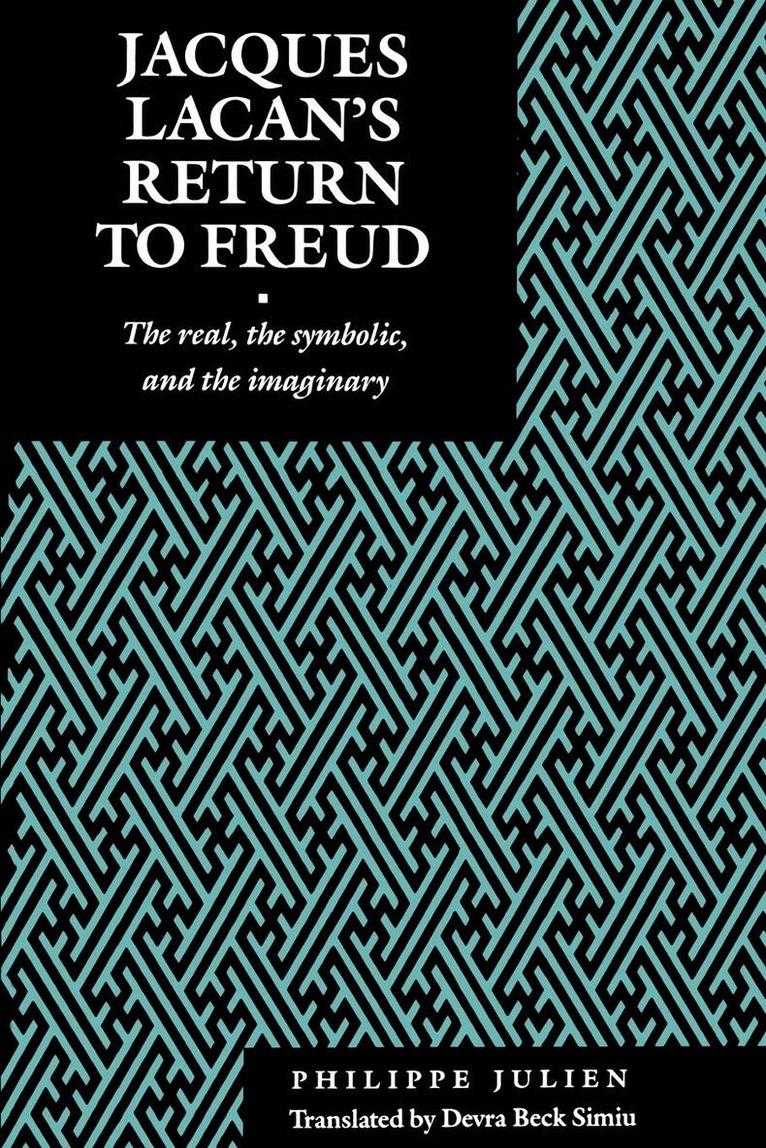
Among the numerous introductions to Lacan published to date in English, Philippe Julien's work is certainly outstanding. Beyond its conceptual clarity the book constitutes an excellent guide to Lacanian psychoanalytic practice.--Andr Patsalides, Psychoanalyst and President, Lacanian School of PsychoanalysisFrom 1953 to 1980, Jacques Lacan sought to accomplish a return to Freud beyond post- Freudianism. He defined this return as a new convenant with the meaning to the Freudian discovery. Each year through his teaching, he brought about this return. What was at stake in this renewal?Philippe Julien, who joined Lacan's Ecole Freudienne de Paris in 1968, attempts to answer this question. Situtated in the period after-Lacan, Julien shows that Lacan's return to Freud was neither a closing of the Freudian text by responding to questions left unanswered nor a reopening of the text by giving endless new interpretations. Neither dogmatic nor hermeneutic, Lacan's return to Frued was the return of an inevitable discordance between our experience of the unconscious and any attempt to give an account of it. For the unconscious, by its very nature, disappears at the same moment as it is discovered. It is in this sense that the author can claim that Lacan's return to Freud will have been Freudian.Constantly challenging the reader to submit to the rigors of Lacan's sinuous thinking, this penetrating work goes far beyond being a mere introduction. Rendered into elegant English by the American translator, who added numerous footnotes and scholarly references to the French original, this study brings Lacanian scholarship among English readers to a new level of sophistication.Neither dogmatic nor hermeneutic, Lacan's return to Freud was the return of an inevitable discordance between our experience of the unconscious and any attempt to give an account of it. For the unconscious, by its very nature, disappears at the same moment as it is discovered. It is in this sense that the author can claim that Lacan's return to Freud was Freudian.
1 186 kr
Skickas inom 10-15 vardagar
Psychoanalysis works with words, words spoken by a subject who asks that the analyst listen. This is the belief that underlies Francis Moran's rewarding exploration of a central problem in psychoanalytic theorynamely, the separation of the concepts of subject and agency. Subject and Agency in Psychoanalysis contends that Freud simultaneously employs two frameworks for explaining agency-- one clinical and one theoretical. As a result, Freud's exploration of agency proceeds from two logically incompatible assumptions. The division between these assumptions is a part of Freud's psychoanalytic legacy.Moran reads the Freudian inheritance in light of this division, showing how Klein and Hartmann's theoretical concepts of subject are adrift from the subject who speaks in analysis. Moran also shows that while Lacan's subject provides more focus on this issue, Lacan reverts to the Freudian division in his use of logically contradictory assumptions concerning the location of agency.Drawing on contemporary theory development, from Lacanian innovations to the social theories of Anthony Giddens, Moran proposes a new and fertile approach to a fundamental problem, significantly narrowing the gap between psychoanalytic theory and practice.
400 kr
Skickas inom 7-10 vardagar
In Self and Other, Robert Rogers presents a powerful argument for the adoption of a theory of object relations, combining the best features of traditional psychoanalytic theory with contemporary views on attachment behavior and intersubjectivity. Rogers discusses theory in relation both to actual psychoanalytic case histories and imagined selves found in literature, and provides a critical rereading of the case histories of Freud, Winnicott, Lichtenstein, Sechehaye, and Bettelheim.At once scientific and humanistic, Self and Other engagingly draws from theoretical, clinical, and literary traditions. It will appeal to psychoanalysts as well as to literary scholars interested in the application of psychoanalysis to literature.
1 119 kr
Skickas inom 10-15 vardagar
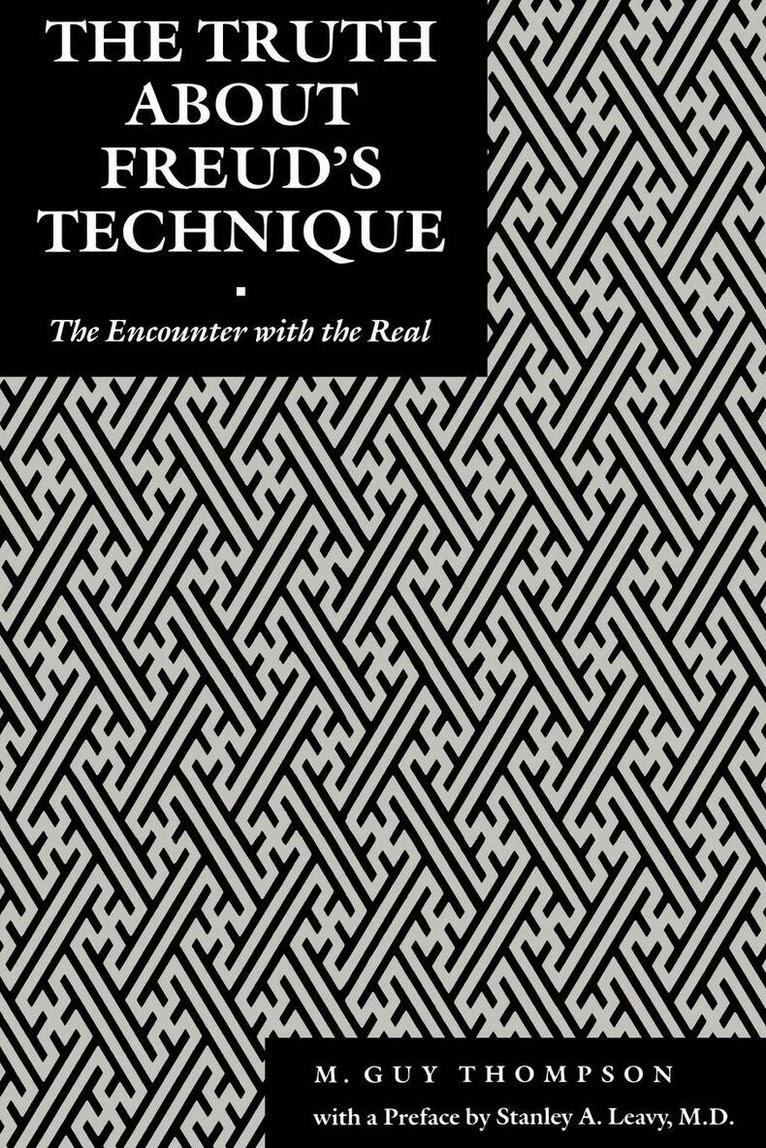
In this unusual and much-needed reappraisal of Freud's clinical technique, M. Guy Thompson challenges the conventional notion that psychoanalysis promotes relief from suffering and replaces it with a more radical assertion, that psychoanalysis seeks to mend our relationship with the real that has been fractured by our avoidance of the same. Thompson suggests that, while avoiding reality may help to relieve our experience of suffering, this short-term solution inevitably leads to a split in our existence.M. Guy Thompson forcefully disagrees with the recent trend that dismisses Freud as an historical figure who is out of step with the times. He argues, instead, for a return to the forgotten Freud, a man inherently philosophical and rooted in a Greek preoccupation with the nature of truth, ethics, the purpose of life and our relationship with reality. Thompson's argument is situated in a stunning re-reading of Freud's technical papers, including a new evaluation of his analyses of Dora and the Rat Man in the context of Heidegger's understanding of truth.In this remarkable examination of Freud's technical recommendations, M. Guy Thompson explains how psychoanalysis was originally designed to re-acquaint us with realities we had abandoned by encountering them in the contest of the analytic experience. This provocative examination of Freud's conception of psychoanalysis reveals a more personal Freud than we had previously supposed, one that is more humanistic and real.
389 kr
Skickas inom 7-10 vardagar
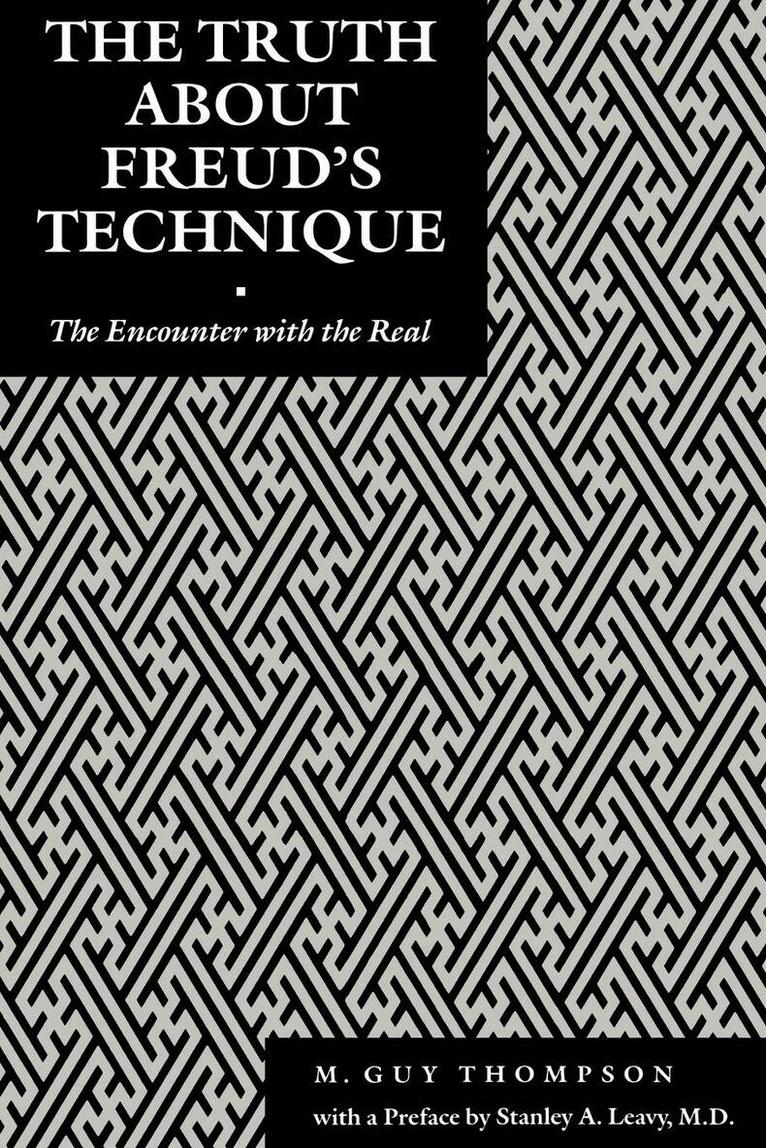
In this unusual and much-needed reappraisal of Freud's clinical technique, M. Guy Thompson challenges the conventional notion that psychoanalysis promotes relief from suffering and replaces it with a more radical assertion, that psychoanalysis seeks to mend our relationship with the real that has been fractured by our avoidance of the same. Thompson suggests that, while avoiding reality may help to relieve our experience of suffering, this short-term solution inevitably leads to a split in our existence.M. Guy Thompson forcefully disagrees with the recent trend that dismisses Freud as an historical figure who is out of step with the times. He argues, instead, for a return to the forgotten Freud, a man inherently philosophical and rooted in a Greek preoccupation with the nature of truth, ethics, the purpose of life and our relationship with reality. Thompson's argument is situated in a stunning re-reading of Freud's technical papers, including a new evaluation of his analyses of Dora and the Rat Man in the context of Heidegger's understanding of truth.In this remarkable examination of Freud's technical recommendations, M. Guy Thompson explains how psychoanalysis was originally designed to re-acquaint us with realities we had abandoned by encountering them in the contest of the analytic experience. This provocative examination of Freud's conception of psychoanalysis reveals a more personal Freud than we had previously supposed, one that is more humanistic and real.