Public Administration: Criticism and Creativity - Böcker
Visar alla böcker i serien Public Administration: Criticism and Creativity. Handla med fri frakt och snabb leverans.
4 produkter
4 produkter
255 kr
Skickas inom 7-10 vardagar
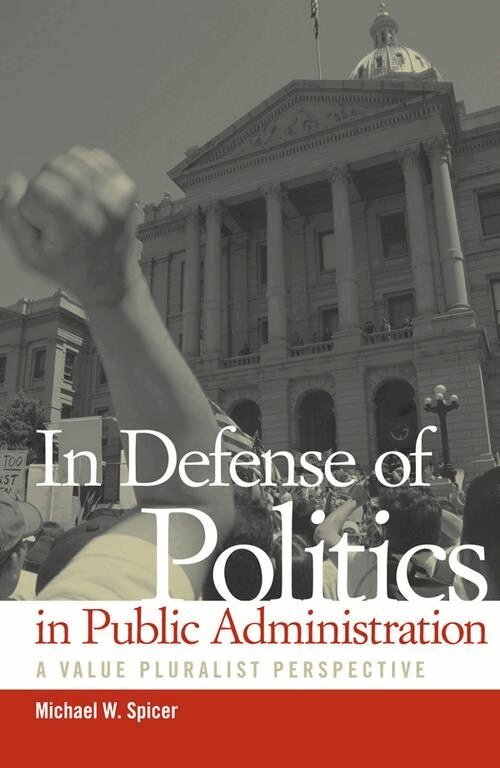
Scholars of public administration have historically too often been disdainful towards politics in the field, viewing political activities and interests as opportunities for corruption, mismanagement, and skewed priorities. Supporters of this antipolitical stance have become even more strident in recent years, many of them advancing scientific models for the study and practise of public administration and governance.Michael Spicer argues that politics deserves to be defended as a vital facet of public administration on the grounds that it can promote moral conduct in government and in public administration, principally by bringing to the foreground the role of values in administrative practice. Politics can facilitate the resolution of conflicts that naturally arise from competing values, or conceptions of the good, while minimising the use of force or violence. Drawing on the writings of Isaiah Berlin, Bernard Crick, and Stuart Hampshire, In Defense of Politics in Public Administration argues that value conflict is an integral part of our moral experience, both in making our own moral choices and in dealing with those whose values conflict with our own. This book is a spirited declaration of principles and a timely contribution to a dialogue that is redefining public administration, both in theory and in practise.
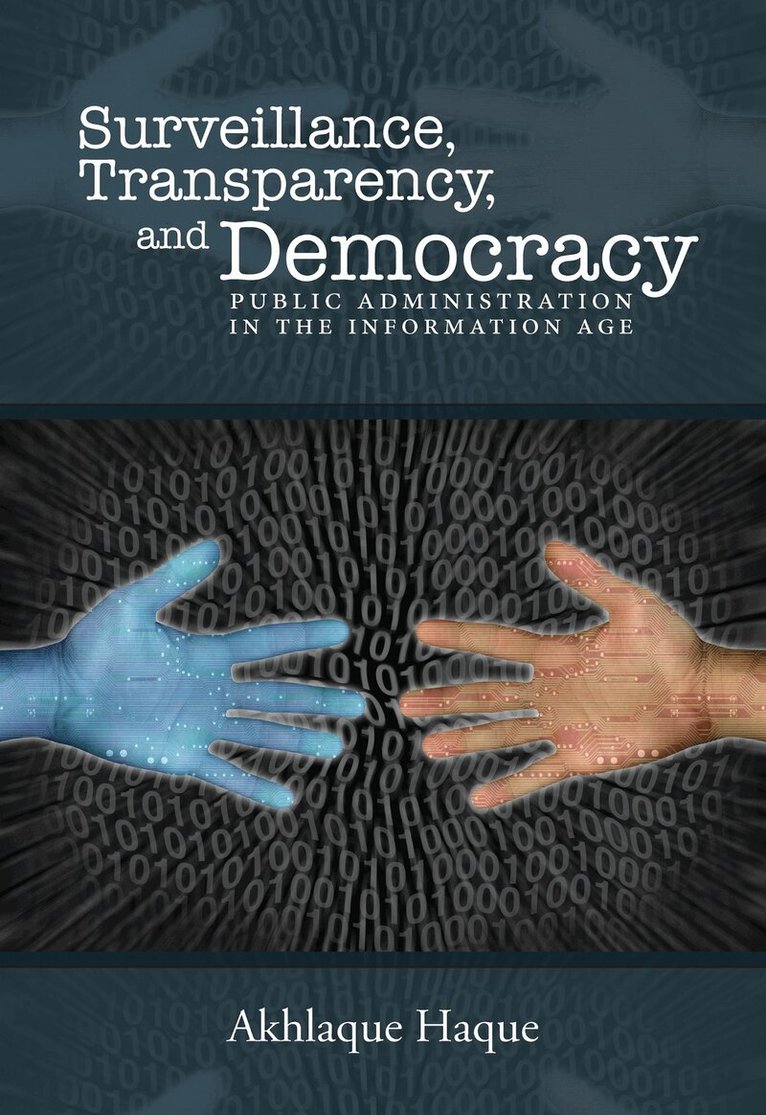
Surveillance, Transparency, and Democracy
Public Administration in the Information Age
Häftad, Engelska, 2020
255 kr
Skickas inom 7-10 vardagar
Investigates public administration’s increasing dependence on technology and how its pervasive use in complex and interrelated socioeconomic and political affairs has outstripped the ability of many public administrators and the public to grasp the consequences of their choices.In this well-informed yet anxious age, public administrators have constructed vast cisterns that collect and interpret a meteoric shower of facts. Akhlaque Haque demonstrates that this pervasive use and increasing dependence on information technology (IT) enables sophisticated and well-intentioned public services that nevertheless risk deforming public policy decision-making and sees a contradiction inherent in a public that seeks services that require a level of data collection that in turn triggers fears of a tyrannical police state.The author posits that IT’s potential as a tool for human development depends on how civil servants and citizens actively engage in identifying desired outcomes, map IT solutions to those outcomes, and routinize the applications of those solutions. This leads to his call for the development of entrepreneurs who generate innovative solutions to critical human needs and problems. In his powerful summary, he recaps possible answers to the question: What is the best way a public institution can apply technology to improving the human condition? Engrossing, challenging, and timely, Surveillance, Transparency, and Democracy is essential reading for both policy makers as well as the great majority of readers and citizens engaged in contemporary arguments about the role of government, public health and security, individual privacy, data collection, and surveillance.
317 kr
Skickas inom 7-10 vardagar
A Presidential Civil Service offers a comprehensive and definitive study of President Franklin Delano Roosevelt's Liaison Office for Personnel Management (LOPM). Established in 1939 following the release of Roosevelt's Brownlow Committee report, LOPM became a key milestone in the evolution of the contemporary executive-focused civil service. The Progressive Movement of the nineteenth and early twentieth centuries comprised groups across the political spectrum with quite different. All, however, agreed on the need for a politically autonomous and independent federal Civil Service Commission (CSC) to eliminate patronage and political favoritism. In A Presidential Civil Service, public administration scholar Mordecai Lee explores two models open to later reformers: continuing a merit-based system isolated from politics or a management-based system subordinated to the executive and grounded in the growing field of managerial science. Roosevelt's 1937 Brownlow Committee, formally known as the President's Committee on Administrative Management, has been widely studied including its recommendation to disband the CSC and replace it with a presidential personnel director. What has never been documented in detail was Roosevelt's effort to implement that recommendation over the objections of Congress by establishing the LOPM as a nonstatutory agency. The role and existence of LOPM from 1939 to 1945 has been largely dismissed in the history of public administration. Lee's meticulously researched A Presidential Civil Service, however, persuasively shows that LOPM played a critical role in overseeing personnel policy. It was involved in every major HR initiative before and during World War II. Though small, the agency's deft leadership almost always succeeded at impelling the CSC to follow its lead. Roosevelt's actions were in fact an artful and creative victory, a move finally vindicated when, in 1978, Congress abolished the CSC and replaced it with an Office of Personnel Management headed by a presidential appointee. A Presidential Civil Service offers a fascinating account and vital reassessment of the enduring legacy of Roosevelt's LOPM.
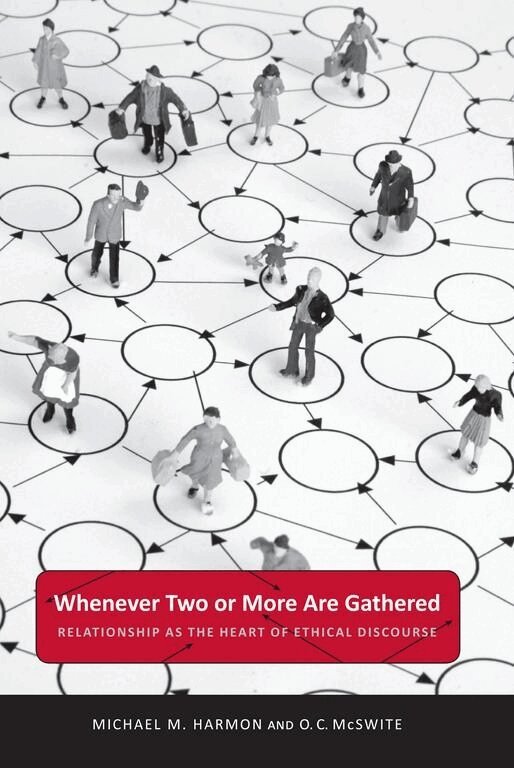
Whenever Two or More Are Gathered
Relationship As the Heart of Ethical Discourse
Häftad, Engelska, 2022
308 kr
Skickas inom 7-10 vardagar
Makes the case for human relationship as the proper foundation of administrative ethicsThis study of the critical role of ethics and moral responsibility in the field of public administration, Michael M. Harmon and O. C. McSwite posit that administrative ethics, as presently conceived and practiced, is largely a failure, incapable of delivering on its original promise of effectively regulating official conduct in order to promote the public interest. They argue that administrative ethics is compromised at its very foundations by two core assumptions: that human beings act rationally and that language is capable of conveying clear, stable, and unambiguous principles of ethical conduct. The result is the illusion that values, principles, and rules of ethical conduct can be specified in workably clear ways, in particular, through their formalization in official codes of ethics; that people are capable of comprehending and responding to them as they are intended; and that the rewards and punishments attached to them will be effective in structuring daily behavior. In a series of essays that draw on both fiction and film, as well as the disciplines of pragmatism, organizational theory, psychoanalysis, structural linguistics, and economics, Harmon and McSwite make their case for human relationship as the proper foundation of administrative ethics. “Exercising responsible ethical practice requires attaining a special kind of relationship with other people. Relationship is how the pure freedom that resides in the human psyche—for ethical choice, creativity, or original action of any type—can be brought into the structured world of human social relations without damaging or destroying it.” Furthermore, they make the case for dropping the term “ethics” in favor of the term “responsibility,” as “responsibility accentuates the social [relational] nature of moral action.”