Publications of the Center for Japanese and Korean Studies – serie
Visar alla böcker i serien Publications of the Center for Japanese and Korean Studies. Handla med fri frakt och snabb leverans.
8 produkter
8 produkter
811 kr
Skickas inom 3-6 vardagar
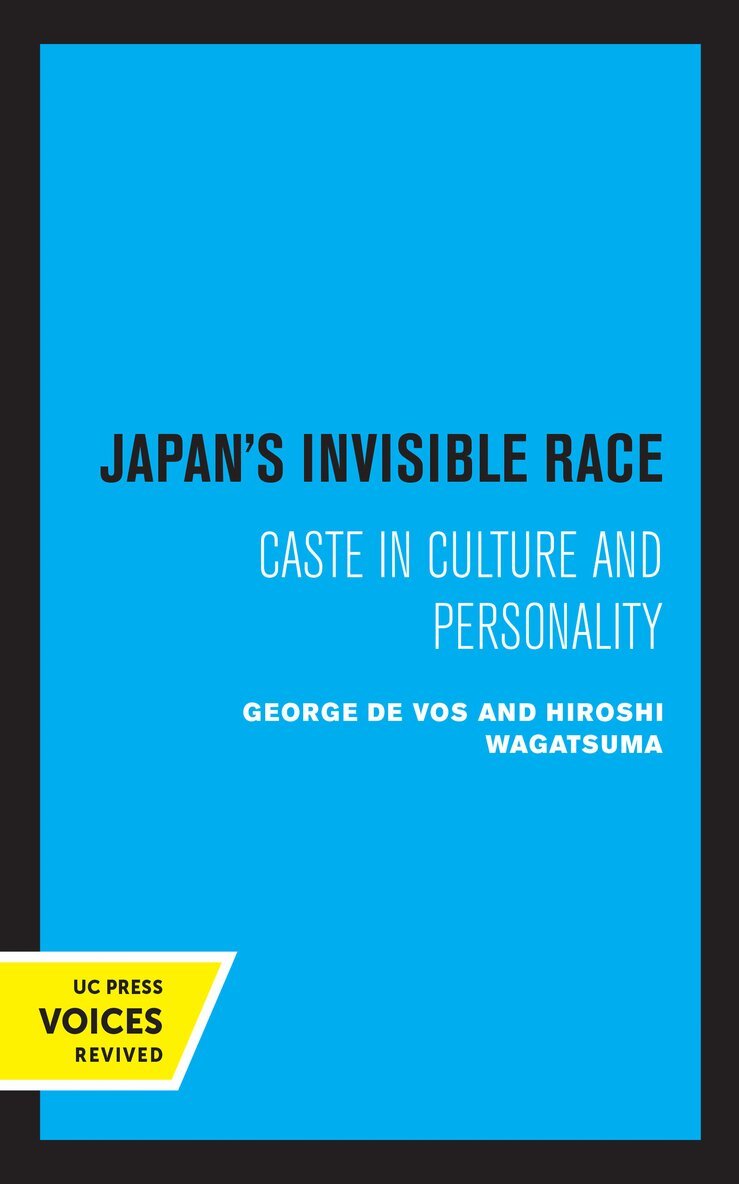
Modern Japanese share a myth to the effect that they harbor in their midst an inferior race less "human" than the stock that fathered their nation as a whole. These pariahs, numbering more than two million, are segregated by caste just as firmly as the Negro is in the United States. The present volume, to which several Japanese and American social scientists have contributed, offeres an interdisciplinary description and analysis of this strangely persistent phenomenon, inherited from feudal times. Its main thesis is that caste and racism are derivatives of identical psychological processes in human personality, however differently structure they may be in social institutions. It finds that what it terms status anxiety, related to defensively held social values, leads to a need to segregate disparaged parts of the population on grounds of innate inferiority. Until the time of their official emancipation in 1871, the so-called eta were distinguished visibly by their special garb. Today few clues to their identity are visible; yet, they remain a distinguishable, segregated segment of the population and bear inwardly, in a psychological sense, the stigma resulting from generations of oppression. This volume traces the story of the outcastes in complete detail--their origin, their stormy post-emancipation history, and their present leftist political significance. Large populations of outcasts live in urban ghettoes within the major cities of south-central Japan. In some of these metropolitan centers they comprise up to 5 percent of the population but contribute 60 to 65 percent of unemployment and relief roles. They have periodic trouble with the police; they manifest a delinquency rate more than three times that of the ordinary population; their children do poorly in school; they are subject to various forms of job discrimination; and few marriages are successfully consummated across the caste barrier. Some try to escape their past identity by becoming prostitutes or by entering the underworld. Those who survive discrimination to achieve status in society either live in fear of exposure [if they are "passing"] or overtly maintain their identity in proud isolation. Some who live in rural communities have achieved equal economic status with their neighbors but not full social acceptance. In their theoretical closing discussion the authors offer a challenging critique of Marxian class theory in introducing the concept of "expressive" exploitation--that is, the psychological use of a subordinate group as a repository of what is disavowed by the values of a culture in a caste society--as distinct in form and function from the "instrumental" economic or political exploitation of subjected minorities in class societies. Contributors:Gerald BerremanJohn B. CornellJohn DonoghueEdward NorbeckJohn PriceYuzuru SasakiGeorge O. Totten This title is part of UC Press's Voices Revived program, which commemorates University of California Press's mission to seek out and cultivate the brightest minds and give them voice, reach, and impact. Drawing on a backlist dating to 1893, Voices Revived makes high-quality, peer-reviewed scholarship accessible once again using print-on-demand technology. This title was originally published in 1966.
384 kr
Skickas
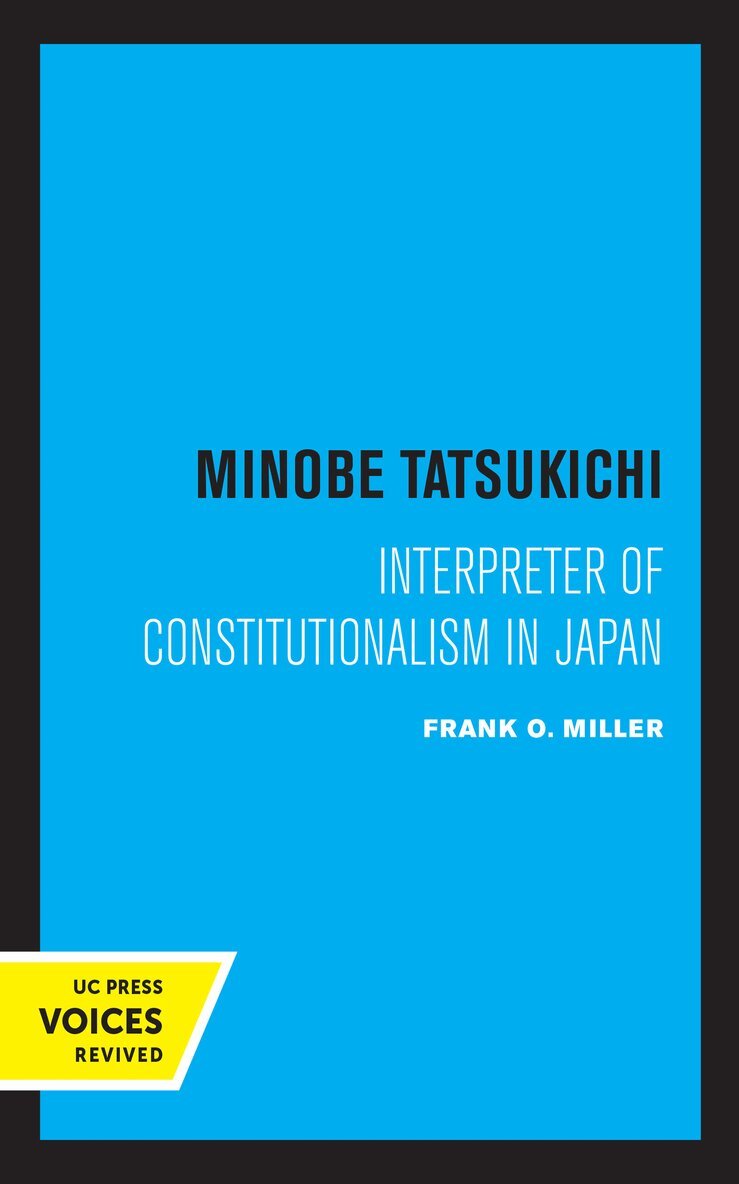
Minobe Tatsukichi and the Evolution of Japanese Constitutionalism examines the life, work, and enduring impact of Minobe Tatsukichi, a pivotal figure in Japanese constitutional theory. While Minobe is often referenced in Western literature, his contributions have frequently been reduced to his association with the "emperor-organ theory" and his brief, dramatic clash with militarist factions during the 1935 Minobe Affair. This book seeks to expand beyond those limited narratives, exploring the depth and complexity of Minobe's scholarship, his influence on the interpretation of the Meiji Constitution, and his role in shaping modern Japanese political thought.The study provides a detailed analysis of Minobe’s constitutional theories, tracing their implications for both prewar and postwar Japan. It situates Minobe as a key player in the evolution of liberal constitutionalism and its tensions with authoritarianism in Japan's modern era. By reevaluating Minobe's ideas in the context of Japan's political transitions—including the post-1945 constitutional reforms—the book sheds light on his lasting relevance. The narrative also addresses Minobe’s ambivalent position during the Occupation period, where his opposition to constitutional revision under American oversight marked a complex and often misunderstood chapter in his career. Through a comprehensive review of Minobe's writings, theoretical contributions, and historical impact, the book enriches our understanding of Japanese constitutional development and the intellectual currents that have shaped it.This title is part of UC Press's Voices Revived program, which commemorates University of California Press’s mission to seek out and cultivate the brightest minds and give them voice, reach, and impact. Drawing on a backlist dating to 1893, Voices Revived makes high-quality, peer-reviewed scholarship accessible once again using print-on-demand technology. This title was originally published in 1965.
861 kr
Skickas inom 3-6 vardagar
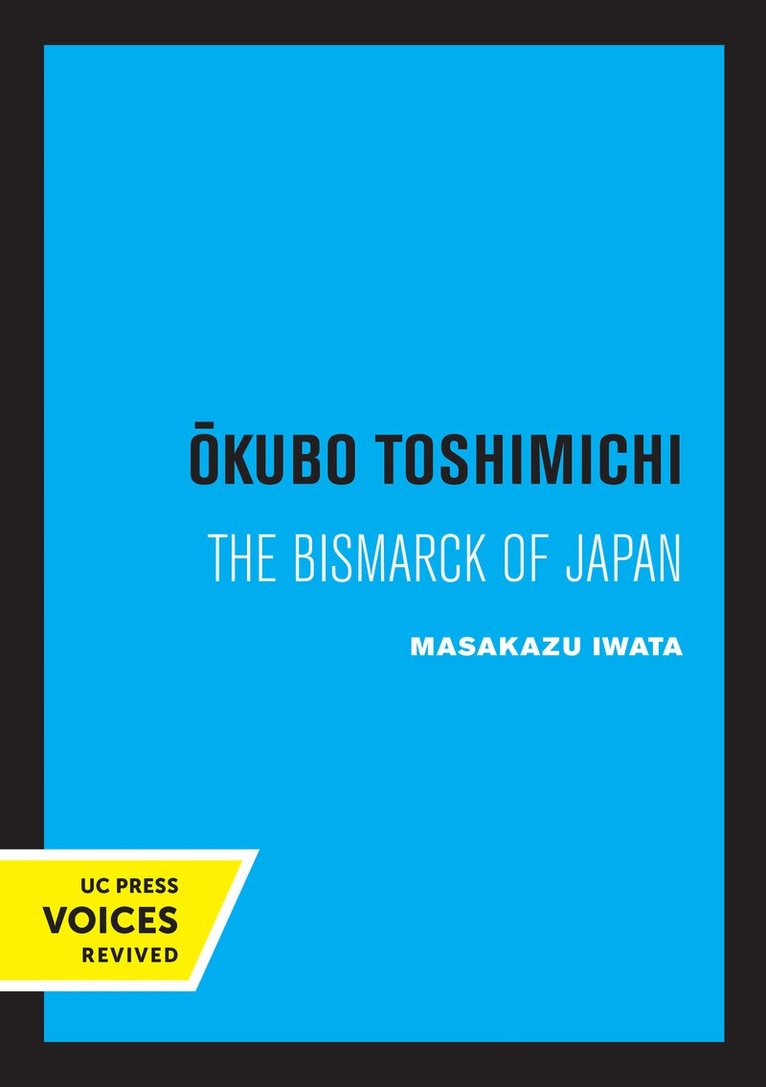
Okubo Toshimichi: The Bismarck of Japan by Masakazu Iwata offers the first full-length English-language biography of one of the central architects of Japan’s Meiji Restoration. Okubo (1830–1878), long overshadowed by his compatriots Saigo Takamori and Kido Koin, emerges here as the pivotal statesman who steered Japan from feudal fragmentation into a unified, modern state. Drawing on an impressive range of Japanese and Western sources, Iwata traces Okubo’s rise from low-ranking samurai in Satsuma to his role as the chief strategist of Restoration politics, organizer of the new Meiji bureaucracy, and ultimate target of samurai resistance. His life illustrates the turbulence of nineteenth-century Japan: rebellion, diplomacy, industrial reform, and the violent collision of tradition with modern nation-building.Written with clarity and scholarly rigor, the book situates Okubo within both Japanese and world history, comparing him to Bismarck as a figure of realpolitik who combined ruthless pragmatism with a vision of national strength. Iwata examines not only Okubo’s policies—finance, foreign affairs, internal modernization—but also the moral ambiguities of his methods: from suppressing domestic revolts to pushing industrialization through authoritarian means. The study illuminates the interplay of personality, political necessity, and structural change in the making of modern Japan, while raising enduring questions about leadership, absolutism, and the costs of modernization. For historians of Japan, political science scholars, and general readers interested in statecraft, this biography restores Okubo to his rightful place at the center of Japan’s transformation into a modern power.This title is part of UC Press's Voices Revived program, which commemorates University of California Press’s mission to seek out and cultivate the brightest minds and give them voice, reach, and impact. Drawing on a backlist dating to 1893, Voices Revived makes high-quality, peer-reviewed scholarship accessible once again using print-on-demand technology. This title was originally published in 1964.
811 kr
Skickas inom 3-6 vardagar
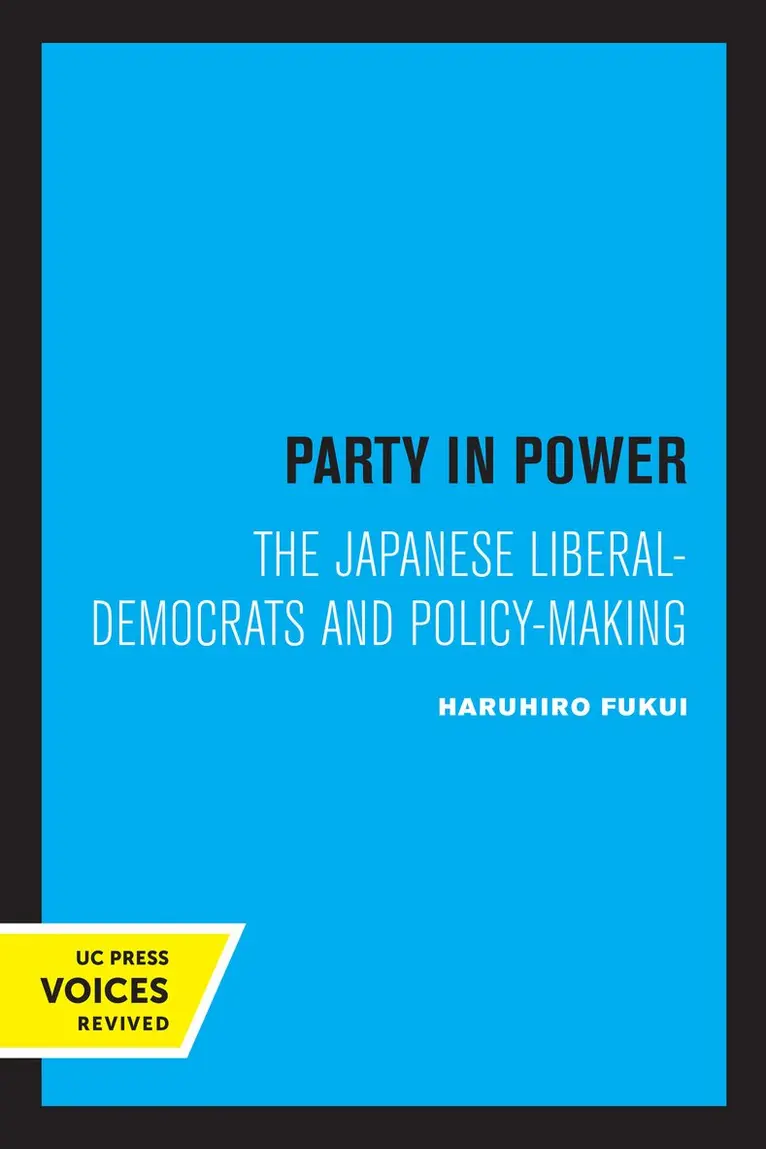
Party in Power: The Japanese Liberal-Democrats and Policy-Making offers an in-depth exploration of the intricate decision-making processes within Japan's dominant postwar political entity, the Liberal Democratic Party (LDP). Bridging the gap between political science and history, the book provides a nuanced analysis of how the LDP has shaped and responded to Japan's evolving political landscape. It underscores the LDP's unique ability to integrate the roles of bureaucracy, party factions, and policy-making councils, all within a framework influenced by Japan's broader cultural and historical context.This study delves into the LDP's structure and behavior, particularly its mechanisms for handling controversial domestic and foreign policy issues. Through case studies and empirical analysis, the book examines the interplay of organizational frameworks, factional rivalries, and socio-political forces that drive the LDP's governance strategies. By drawing comparisons with Western political systems and utilizing data from party publications, interviews, and media sources, it situates the LDP as a pivotal force in Japan's parliamentary cabinet system. This work is an essential resource for scholars and students seeking to understand the complexity of political power and policy-making in Japan's modern democracy.This title is part of UC Press's Voices Revived program, which commemorates University of California Press’s mission to seek out and cultivate the brightest minds and give them voice, reach, and impact. Drawing on a backlist dating to 1893, Voices Revived makes high-quality, peer-reviewed scholarship accessible once again using print-on-demand technology. This title was originally published in 1970.
758 kr
Skickas inom 7-10 vardagar
Modern Japanese share a myth to the effect that they harbor in their midst an inferior race less "human" than the stock that fathered their nation as a whole. These pariahs, numbering more than two million, are segregated by caste just as firmly as the Negro is in the United States. The present volume, to which several Japanese and American social scientists have contributed, offeres an interdisciplinary description and analysis of this strangely persistent phenomenon, inherited from feudal times. Its main thesis is that caste and racism are derivatives of identical psychological processes in human personality, however differently structure they may be in social institutions. It finds that what it terms status anxiety, related to defensively held social values, leads to a need to segregate disparaged parts of the population on grounds of innate inferiority. Until the time of their official emancipation in 1871, the so-called eta were distinguished visibly by their special garb. Today few clues to their identity are visible; yet, they remain a distinguishable, segregated segment of the population and bear inwardly, in a psychological sense, the stigma resulting from generations of oppression. This volume traces the story of the outcastes in complete detail--their origin, their stormy post-emancipation history, and their present leftist political significance. Large populations of outcasts live in urban ghettoes within the major cities of south-central Japan. In some of these metropolitan centers they comprise up to 5 percent of the population but contribute 60 to 65 percent of unemployment and relief roles. They have periodic trouble with the police; they manifest a delinquency rate more than three times that of the ordinary population; their children do poorly in school; they are subject to various forms of job discrimination; and few marriages are successfully consummated across the caste barrier. Some try to escape their past identity by becoming prostitutes or by entering the underworld. Those who survive discrimination to achieve status in society either live in fear of exposure [if they are "passing"] or overtly maintain their identity in proud isolation. Some who live in rural communities have achieved equal economic status with their neighbors but not full social acceptance. In their theoretical closing discussion the authors offer a challenging critique of Marxian class theory in introducing the concept of "expressive" exploitation--that is, the psychological use of a subordinate group as a repository of what is disavowed by the values of a culture in a caste society--as distinct in form and function from the "instrumental" economic or political exploitation of subjected minorities in class societies. Contributors:Gerald BerremanJohn B. CornellJohn DonoghueEdward NorbeckJohn PriceYuzuru SasakiGeorge O. Totten This title is part of UC Press's Voices Revived program, which commemorates University of California Press's mission to seek out and cultivate the brightest minds and give them voice, reach, and impact. Drawing on a backlist dating to 1893, Voices Revived makes high-quality, peer-reviewed scholarship accessible once again using print-on-demand technology. This title was originally published in 1966.
1 513 kr
Skickas inom 3-6 vardagar
Minobe Tatsukichi and the Evolution of Japanese Constitutionalism examines the life, work, and enduring impact of Minobe Tatsukichi, a pivotal figure in Japanese constitutional theory. While Minobe is often referenced in Western literature, his contributions have frequently been reduced to his association with the "emperor-organ theory" and his brief, dramatic clash with militarist factions during the 1935 Minobe Affair. This book seeks to expand beyond those limited narratives, exploring the depth and complexity of Minobe's scholarship, his influence on the interpretation of the Meiji Constitution, and his role in shaping modern Japanese political thought.The study provides a detailed analysis of Minobe’s constitutional theories, tracing their implications for both prewar and postwar Japan. It situates Minobe as a key player in the evolution of liberal constitutionalism and its tensions with authoritarianism in Japan's modern era. By reevaluating Minobe's ideas in the context of Japan's political transitions—including the post-1945 constitutional reforms—the book sheds light on his lasting relevance. The narrative also addresses Minobe’s ambivalent position during the Occupation period, where his opposition to constitutional revision under American oversight marked a complex and often misunderstood chapter in his career. Through a comprehensive review of Minobe's writings, theoretical contributions, and historical impact, the book enriches our understanding of Japanese constitutional development and the intellectual currents that have shaped it.This title is part of UC Press's Voices Revived program, which commemorates University of California Press’s mission to seek out and cultivate the brightest minds and give them voice, reach, and impact. Drawing on a backlist dating to 1893, Voices Revived makes high-quality, peer-reviewed scholarship accessible once again using print-on-demand technology. This title was originally published in 1965.
1 560 kr
Skickas inom 3-6 vardagar
Okubo Toshimichi: The Bismarck of Japan by Masakazu Iwata offers the first full-length English-language biography of one of the central architects of Japan’s Meiji Restoration. Okubo (1830–1878), long overshadowed by his compatriots Saigo Takamori and Kido Koin, emerges here as the pivotal statesman who steered Japan from feudal fragmentation into a unified, modern state. Drawing on an impressive range of Japanese and Western sources, Iwata traces Okubo’s rise from low-ranking samurai in Satsuma to his role as the chief strategist of Restoration politics, organizer of the new Meiji bureaucracy, and ultimate target of samurai resistance. His life illustrates the turbulence of nineteenth-century Japan: rebellion, diplomacy, industrial reform, and the violent collision of tradition with modern nation-building.Written with clarity and scholarly rigor, the book situates Okubo within both Japanese and world history, comparing him to Bismarck as a figure of realpolitik who combined ruthless pragmatism with a vision of national strength. Iwata examines not only Okubo’s policies—finance, foreign affairs, internal modernization—but also the moral ambiguities of his methods: from suppressing domestic revolts to pushing industrialization through authoritarian means. The study illuminates the interplay of personality, political necessity, and structural change in the making of modern Japan, while raising enduring questions about leadership, absolutism, and the costs of modernization. For historians of Japan, political science scholars, and general readers interested in statecraft, this biography restores Okubo to his rightful place at the center of Japan’s transformation into a modern power.This title is part of UC Press's Voices Revived program, which commemorates University of California Press’s mission to seek out and cultivate the brightest minds and give them voice, reach, and impact. Drawing on a backlist dating to 1893, Voices Revived makes high-quality, peer-reviewed scholarship accessible once again using print-on-demand technology. This title was originally published in 1964.
1 469 kr
Skickas inom 3-6 vardagar
Party in Power: The Japanese Liberal-Democrats and Policy-Making offers an in-depth exploration of the intricate decision-making processes within Japan's dominant postwar political entity, the Liberal Democratic Party (LDP). Bridging the gap between political science and history, the book provides a nuanced analysis of how the LDP has shaped and responded to Japan's evolving political landscape. It underscores the LDP's unique ability to integrate the roles of bureaucracy, party factions, and policy-making councils, all within a framework influenced by Japan's broader cultural and historical context.This study delves into the LDP's structure and behavior, particularly its mechanisms for handling controversial domestic and foreign policy issues. Through case studies and empirical analysis, the book examines the interplay of organizational frameworks, factional rivalries, and socio-political forces that drive the LDP's governance strategies. By drawing comparisons with Western political systems and utilizing data from party publications, interviews, and media sources, it situates the LDP as a pivotal force in Japan's parliamentary cabinet system. This work is an essential resource for scholars and students seeking to understand the complexity of political power and policy-making in Japan's modern democracy.This title is part of UC Press's Voices Revived program, which commemorates University of California Press’s mission to seek out and cultivate the brightest minds and give them voice, reach, and impact. Drawing on a backlist dating to 1893, Voices Revived makes high-quality, peer-reviewed scholarship accessible once again using print-on-demand technology. This title was originally published in 1970.