Pubns Manchester Centre for Anglo-Saxon Studies – Serie
Visar alla böcker i serien Pubns Manchester Centre for Anglo-Saxon Studies. Handla med fri frakt och snabb leverans.
11 produkter
11 produkter
Del 1 - Pubns Manchester Centre for Anglo-Saxon Studies
Textual and Material Culture in Anglo-Saxon England
Thomas Northcote Toller and the Toller Memorial Lectures
Inbunden, Engelska, 2003
1 640 kr
Skickas inom 10-15 vardagar
Significant Anglo-Saxon papers, with postscripts, illustrate advances in knowledge of life and culture of pre-Conquest England.Thomas Northcote Toller, of the Bosworth-Toller Anglo-Saxon Dictionary, is one of the most influential but least known Anglo-Saxon scholars of the early twentieth century. The Centre for Anglo-Saxon Studies at Manchester, where Toller was the first professor of English Language, has an annual Toller lecture, delivered by an expert in the field of Anglo-Saxon Studies; this volume offers a selection from these lectures, brought together for the firsttime, and with supplementary material added by the authors to bring them up to date. They are complemented by the 2002 Toller Lecture, Peter Baker's study of Toller, commissioned specially for this book; and by new examinations ofToller's life and work, and his influence on the development of Old English lexicography. The volume is therefore both an epitome of the best scholarship in Anglo-Saxon studies of the last decade and a half, and a guide for the modern reader through the major advances in our knowledge of the life and culture of pre-Conquest England.,Contributors: RICHARD BAILEY, PETER BAKER, DABNEY ANDERSON BANKERT, JANET BATELY, GEORGE BROWN, ROBERTA FRANK, HELMUT GNEUSS, JOYCE HILL, DAVID A. HINTON, MICHAEL LAPIDGE, AUDREY MEANEY, KATHERINE O'BRIEN O'KEEFFE, JOANA PROUD, ALEXANDER RUMBLE.
Del 2 - Pubns Manchester Centre for Anglo-Saxon Studies
Apocryphal Texts and Traditions in Anglo-Saxon England
Inbunden, Engelska, 2003
1 214 kr
Skickas inom 10-15 vardagar
Studies and editions of Anglo-Saxon apocryphal materials, filling a gap in literature available on the boundaries between apocryphal and orthodox in the period.Apocrypha and apocryphal traditions in Anglo-Saxon England have been often referred to but little studied. This collection fills a gap in the study of pre-Conquest England by considering what were the boundaries between apocryphaland orthodox in the period and what uses the Anglo-Saxons made of apocryphal materials. The contributors include some of the most well-known and respected scholars in the field. The introduction - written by Frederick M. Biggs, one of the principal editors of Sources of Anglo-Saxon Literary Culture - expertly situates the essays within the field of apocrypha studies. The essays themselves cover a broad range of topics: both vernacular and Latin texts, those available in Anglo-Saxon England and those actually written there, and the uses of apocrypha in art as well as literature. Additionally, the book includes a number of completely new editions of apocryphal texts which were previously unpublished or difficult to access. By presenting these new texts along with the accompanying range of essays, the collection aims to retrieve these apocryphal traditions from the margins of scholarship and restore tothem some of the importance they held for the Anglo-Saxons.Contributors: DANIEL ANLEZARK, FREDERICK M. BIGGS, ELIZABETH COATSWORTH, THOMAS N. HALL, JOYCE HILL, CATHERINE KARKOV, PATRIZIA LENDINARA, AIDEEN O'LEARY, CHARLES D. WRIGHT.
Del 3 - Pubns Manchester Centre for Anglo-Saxon Studies
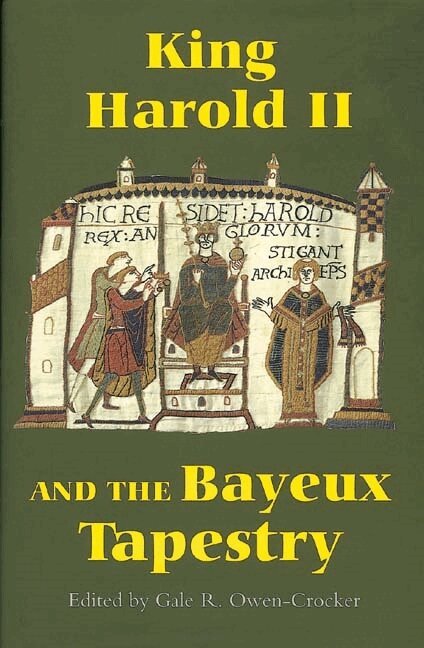
King Harold II and the Bayeux Tapestry
Inbunden, Engelska, 2005
1 088 kr
Skickas inom 10-15 vardagar
Essays on the brief but tumultuous reign of Harold II, and one of our most important sources of knowledge of the time - the Bayeux Tapestry.Harold II is chiefly remembered today, perhaps unfairly, for the brevity of his reign and his death at the Battle of Hastings. The papers collected here seek to shed new light on the man and his milieu before and after that climax. They explore the long career and the dynastic network behind Harold Godwinesson's accession on the death of King Edward the Confessor in January 1066, looking in particular at the important questions as to whether Harold's kingship was opportunist or long-planned; a usurpation or a legitimate succession in terms of his Anglo-Scandinavian kinships? They also examine the posthumous legends that Harold survived Hastings and lived on as a religious recluse.The essays in the second part of the volume focus on the Bayeux Tapestry, bringing out the small details which would have resonated significantly for contemporary audiences, both Norman and English, to suggest how they judged Harold and the other players in the succession drama of 1066. Other aspects of the Tapestry are also covered: the possible patron and locations the Tapestry was produced for; where and how it was designed; and the various sources - artistic and real - employed by the artist.Contributors: H.E.J. Cowdrey, Nicholas J. Higham, Ian Howard, Gillian Fellows-Jensen, Stephen Matthews, S.L. Keefer, Gale R. Owen-Crocker, Chris Henige, Catherine Karkov, Shirley Ann Brown, C.R. Hart, Michael Lewis. GALE OWEN-CROCKER is Professor of Anglo-Saxon Culture at the University of Manchester.
Del 7 - Pubns Manchester Centre for Anglo-Saxon Studies
Britons in Anglo-Saxon England
Inbunden, Engelska, 2007
1 198 kr
Skickas inom 7-10 vardagar
The question of the British presence in Anglo-Saxon England readdressed by archaeologists, historians, linguists, and place-name specialists.The number of native Britons, and their role, in Anglo-Saxon England has been hotly debated for generations; the English were seen as Germanic in the nineteenth century, but the twentieth saw a reinvention of the German "past". Today, the scholarly community is as deeply divided as ever on the issue: place-name specialists have consistently preferred minimalist interpretations, privileging migration from Germany, while other disciplinary groups have been less united in their views, with many archaeologists and historians viewing the British presence, potentially at least, as numerically significant or even dominant.The papers collected here seek to shed new light on this complex issue, by bringing together contributions from different disciplinary specialists and exploring the interfaces between various categories of knowledge about the past. They assemble both a substantial body of evidence concerning the presence of Britons and offer a variety of approaches to the central issues of the scale of that presence and its significance across the seven centuries of Anglo-Saxon England.NICK HIGHAM is Professor of Early Medieval and Landscape History at the University of Manchester. Contributors: RICHARD COATES, MARTIN GRIMMER, HEINRICH HARKE, NICK HIGHAM, CATHERINE HILLS, LLOYD LAING, C.P. LEWIS, GALE R. OWEN-CROCKER, O.J. PADEL, DUNCANPROBERT, PETER SCHRIJVER, DAVID THORNTON, HILDEGARD L.C. TRISTRAM, DAMIAN TYLER, HOWARD WILLIAMS, ALEX WOOLF
Del 8 - Pubns Manchester Centre for Anglo-Saxon Studies
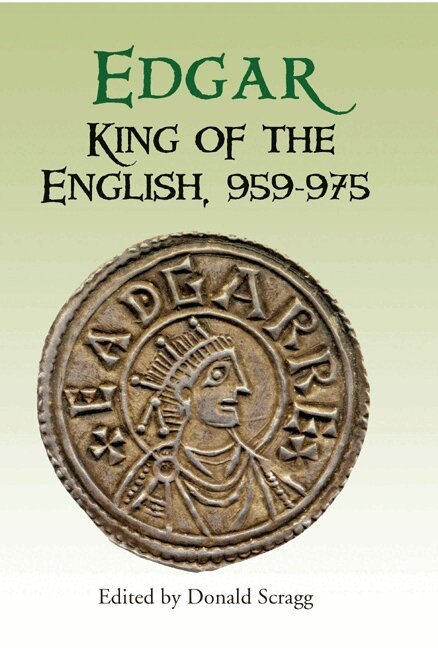
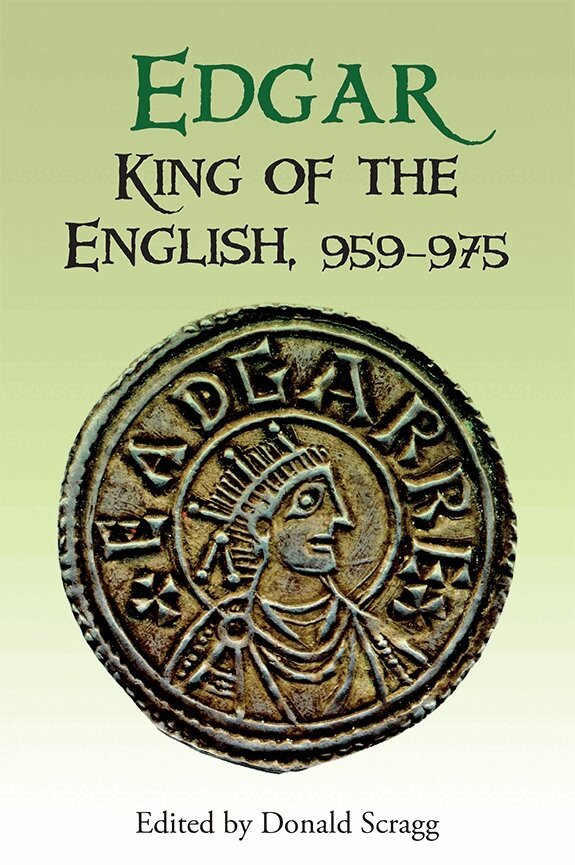
Edgar, King of the English, 959-975
New Interpretations
Inbunden, Engelska, 2008
1 215 kr
Skickas inom 10-15 vardagar
Fresh assessments of Edgar's reign, reappraising key elements using documentary, coin, and pictorial evidence.King Edgar ruled England for a short but significant period in the middle of the tenth century. Two of his four children succeeded him as king and two were to become canonized. He was known to later generations as "the Pacific" or"the Peaceable" because his reign was free from external attack and without internal dissention, and he presided over a period of major social and economic change: early in his rule the growth of monastic power and wealth involved redistribution of much of the country's assets, while the end of his reign saw the creation of England's first national coinage, with firm fiscal control from the centre. He fulfilled King Alfred's dream of the West Saxon royalhouse ruling the whole of England, and, like his uncle King Æthelstan, he maintained overlordship of the whole of Britain.Despite his considerable achievements, however, Edgar has been neglected by scholars, partly because his reign has been thought to have passed with little incident. A time for a full reassessment of his achievement is therefore long overdue, which the essays in this volume provide.CONTRIBUTORS: SIMON KEYNES, SHASHIJAYAKUMAR, C.P, LEWIS, FREDERICK M. BIGGS, BARBARA YORKE, JULIA CRICK, LESLEY ABRAMS, HUGH PAGAN, JULIA BARROW, CATHERINE KARKOV, ALEXANDER R. RUMBLE, MERCEDES SALVADOR-BELLO.
Del 9 - Pubns Manchester Centre for Anglo-Saxon Studies
Landscape Archaeology of Anglo-Saxon England
Inbunden, Engelska, 2010
1 072 kr
Skickas inom 7-10 vardagar
The Anglo-Saxon period was crucial to the development of the English landscape, but is rarely studied. The essays here provide radical new interpretations of its development.Traditional opinion has perceived the Anglo-Saxons as creating an entirely new landscape from scratch in the fifth and sixth centuries AD, cutting down woodland, and bringing with them the practice of open field agriculture, and establishing villages. Whilst recent scholarship has proved this simplistic picture wanting, it has also raised many questions about the nature of landscape development at the time, the changing nature of systems of land management, and strategies for settlement. The papers here seek to shed new light on these complex issues. Taking a variety of different approaches, and with topics ranging from the impact of coppicing to medieval field systems, from the representation of the landscape in manuscripts to cereal production and the type of bread the population preferred, they offer striking new approaches to the central issues of landscape change across the seven centuries of Anglo-Saxon England, a period surely foundational to the rural landscape of today.NICHOLAS J. HIGHAM is Professor of Early Medieval and Landscape History at the University of Manchester; MARTIN J. RYAN lectures in Medieval History at the University of Manchester. Contributors: Nicholas J. Higham, Christopher Grocock, Stephen Rippon, Stuart Brookes, Carenza Lewis, Susan Oosthuizen, Tom Williamson, Catherine Karkov, David Hill, Debby Banham, Richard Hoggett, Peter Murphy.
Del 10 - Pubns Manchester Centre for Anglo-Saxon Studies
Place-names, Language and the Anglo-Saxon Landscape
Inbunden, Engelska, 2011
1 215 kr
Skickas inom 10-15 vardagar
An exploration of the landscape of Anglo-Saxon England, particularly through the prism of place-names and what they can reveal.The landscape of modern England still bears the imprint of its Anglo-Saxon past. Villages and towns, fields, woods and forests, parishes and shires, all shed light on the enduring impact of the Anglo-Saxons. The essays in this volume explore the richness of the interactions between the Anglo-Saxons and their landscape: how they understood, described, and exploited the environments of which they were a part. Ranging from the earliest settlement period through to the urban expansion of late Anglo-Saxon England, this book draws on evidence from place-names, written sources, and the landscape itself to provide fresh insights into the topic. Subjects explored include the history of thestudy of place-names and the Anglo-Saxon landscape; landscapes of particular regions and the exploitation of particular landscape types; the mechanisms of the transmission and survival of written sources; and the problems and potentials of interdisciplinary research into the Anglo-Saxon landscape.Nicholas J. Higham is Professor of Early Medieval and Landscape History at the University of Manchester; Martin Ryan lectures in Medieval History at the University of Manchester.Contributors: Ann Cole, Linda M. Corrigan, Dorn Van Dommelen, Simon Draper, Gillian Fellows-Jensen, Della Hooke, Duncan Probert, Alexander R. Rumble, Martin J. Ryan, Peter A. Stokes, Richard Watson.
Del 12 - Pubns Manchester Centre for Anglo-Saxon Studies
Leaders of the Anglo-Saxon Church
From Bede to Stigand
Inbunden, Engelska, 2012
1 041 kr
Skickas inom 7-10 vardagar
Essays bring out the important and complex roles played by Anglo-Saxon churchmen, including Bede and lesser-known figures.Both episcopal and abbatial authority were of fundamental importance to the development of the Christian church in Anglo-Saxon England. Bishops and heads of monastic houses were invested with a variety of types of power and influence. Their actions, decisions, and writings could change not only their own institutions, but also the national church, while their interaction with the king and his court affected wider contemporary society. Theories of ecclesiastical leadership were expounded in contemporary texts and documents. But how far did image or ideal reflect reality? How much room was there for individuals to use their office to promote new ideas?The papers in this volumeillustrate the important roles played by individual leading ecclesiastics in England, both within the church and in the wider political sphere, from the late seventh to the mid eleventh century. The undeniable authority of Bede and Bishop Æthelwold is demonstrated but also the influence of less-familiar figures such as Bishop Wulfsige of Sherborne, Archbishop Ecgberht of York and St Leoba. The book draws on both textual and material evidence to show the influence (by both deed and reputation) of powerful personalities not only on the developing institutions of the English church but also on the secular politics of their time.Contributors: Alexander R. Rumble, Nicholas J.Higham, Martyn J. Ryan, Cassandra Rhodes, Allan Scott McKinley, Dominik Wassenhoven, Gale R. Owen-Crocker, Debby Banham, Joyce Hill.
Del 13 - Pubns Manchester Centre for Anglo-Saxon Studies
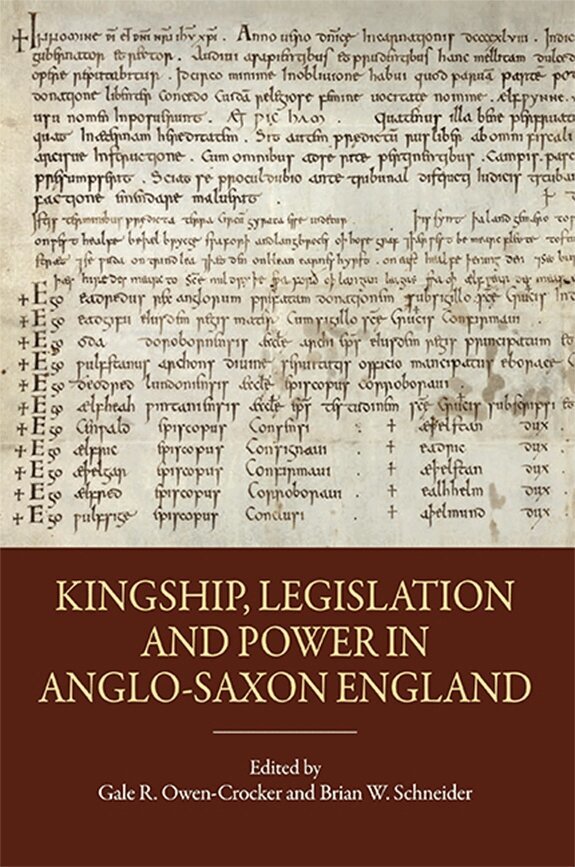
Kingship, Legislation and Power in Anglo-Saxon England
Inbunden, Engelska, 2013
1 198 kr
Skickas inom 7-10 vardagar
The relationship between Anglo-Saxon kingship, law, and the functioning of power is explored via a number of different angles.The essays collected here focus on how Anglo-Saxon royal authority was expressed and disseminated, through laws, delegation, relationships between monarch and Church, and between monarchs at times of multiple kingships and changing power ratios. Specific topics include the importance of kings in consolidating the English "nation"; the development of witnesses as agents of the king's authority; the posthumous power of monarchs; how ceremonial occasions wereused for propaganda reinforcing heirarchic, but mutually beneficial, kingships; the implications of Ine's lawcode; and the language of legislation when English kings were ruling previously independent territories, and the delegation of local rule. The volume also includes a groundbreaking article by Simon Keynes on Anglo-Saxon charters, looking at the origins of written records, the issuing of royal diplomas and the process, circumstances, performance and function of production of records.GALE R. OWEN-CROCKER is Professor of Anglo-Saxon Culture at the University of Manchester.Contributors: Ann Williams, Alexander R. Rumble, Carole Hough, Andrew Rabin, Barbara Yorke, Ryan Lavelle, Alaric Trousdale
Del 8 - Pubns Manchester Centre for Anglo-Saxon Studies
Edgar, King of the English, 959-975
New Interpretations
Häftad, Engelska, 2014
350 kr
Skickas inom 10-15 vardagar
Fresh assessments of Edgar's reign, reappraising key elements using documentary, coin, and pictorial evidence.King Edgar ruled England for a short but significant period in the middle of the tenth century. Two of his four children succeeded him as king and two were to become canonized. He was known to later generations as "the Pacific" or"the Peaceable" because his reign was free from external attack and without internal dissention, and he presided over a period of major social and economic change: early in his rule the growth of monastic power and wealth involved redistribution of much of the country's assets, while the end of his reign saw the creation of England's first national coinage, with firm fiscal control from the centre. He fulfilled King Alfred's dream of the West Saxon royalhouse ruling the whole of England, and, like his uncle King Æthelstan, he maintained overlordship of the whole of Britain.Despite his considerable achievements, however, Edgar has been neglected by scholars, partly becausehis reign has been thought to have passed with little incident. A time for a full reassessment of his achievement is therefore long overdue, which the essays in this volume provide.CONTRIBUTORS: SIMON KEYNES, SHASHI JAYAKUMAR, C.P. LEWIS, FREDERICK M. BIGGS, BARBARA YORKE, JULIA CRICK, LESLEY ABRAMS, HUGH PAGAN, JULIA BARROW, CATHERINE KARKOV, ALEXANDER R. RUMBLE, MERCEDES SALVADOR-BELLO
Del 14 - Pubns Manchester Centre for Anglo-Saxon Studies
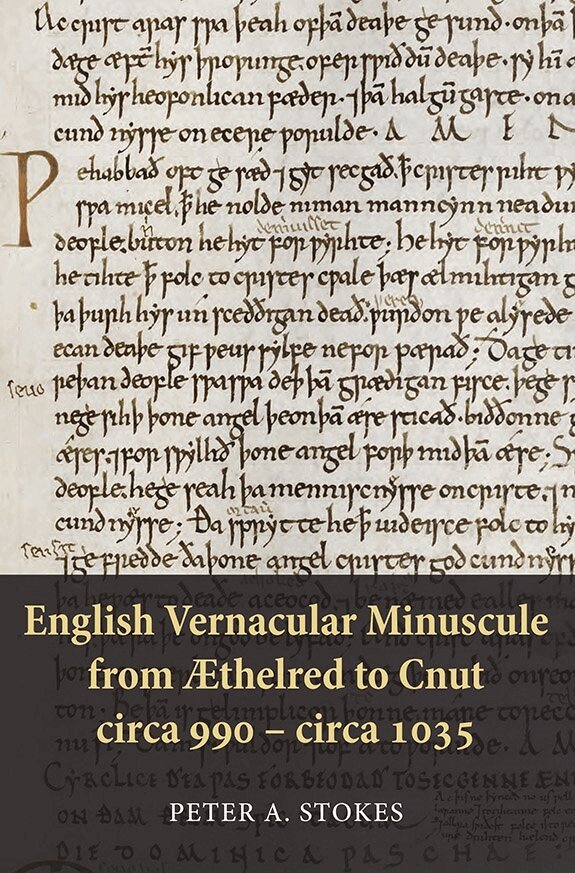
English Vernacular Minuscule from Æthelred to Cnut, circa 990 - circa 1035
Inbunden, Engelska, 2014
1 198 kr
Skickas inom 7-10 vardagar
First full-scale examination of the phenomenon of the English Vernacular minuscule, analysing the full corpus and giving an account of its history and development.A new, distinct script, English Vernacular minuscule, emerged in the 990s, used for writing in Old English. It appeared at a time of great political and social upheaval, with Danish incursions and conquest, continuing monastic reform, and an explosion of writing and copying in the vernacular, including the homilies of Ælfric and Wulfstan, two different recensions of the Anglo-Saxon Chronicle, two of the four major surviving manuscripts of Old English poetry (the "Beowulf" and "Junius" books), and many original royal and ecclesiastical diplomas, writs and wills. However, although these important manuscripts and documents have been studied extensively, this has tended to be in isolation or small groups, never before as a complete corpus, a gap which this volume aims to rectify. It opens with the historical context, followed by a thorough reexamination of the evidence for dating and localising examples of the script. It then offers a full analysis of the complete corpus of surviving writing in English Vernacular minuscule, datable approximately from its inception in the 990s to the death of Cnut in 1035. While solidly grounded in palaeographical methodology, the book introduces more innovative approaches: by examining all of the approximately 500 surviving examples of the script as a whole rather than focussing on selected highlights, it presents a synthesis of the handwriting in order to identify local practices, new scribal connections, and chronological and stylistic developments in this important but surprisingly little-studied script.Peter A. Stokes is Senior Lecturer at King's College London.