Nicholas J. Higham - Böcker
Visar alla böcker från författaren Nicholas J. Higham. Handla med fri frakt och snabb leverans.
7 produkter
7 produkter
880 kr
Skickas inom 7-10 vardagar
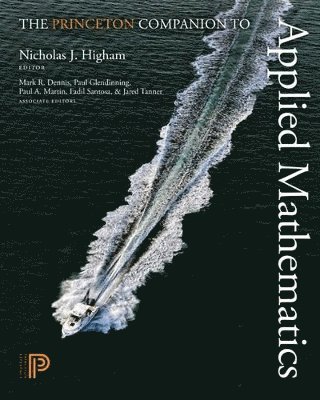
This is the most authoritative and accessible single-volume reference book on applied mathematics. Featuring numerous entries by leading experts and organized thematically, it introduces readers to applied mathematics and its uses; explains key concepts; describes important equations, laws, and functions; looks at exciting areas of research; covers modeling and simulation; explores areas of application; and more. Modeled on the popular Princeton Companion to Mathematics, this volume is an indispensable resource for undergraduate and graduate students, researchers, and practitioners in other disciplines seeking a user-friendly reference book on applied mathematics.* Features nearly 200 entries organized thematically and written by an international team of distinguished contributors* Presents the major ideas and branches of applied mathematics in a clear and accessible way* Explains important mathematical concepts, methods, equations, and applications* Introduces the language of applied mathematics and the goals of applied mathematical research* Gives a wide range of examples of mathematical modeling* Covers continuum mechanics, dynamical systems, numerical analysis, discrete and combinatorial mathematics, mathematical physics, and much more* Explores the connections between applied mathematics and other disciplines* Includes suggestions for further reading, cross-references, and a comprehensive index
229 kr
Skickas inom 7-10 vardagar
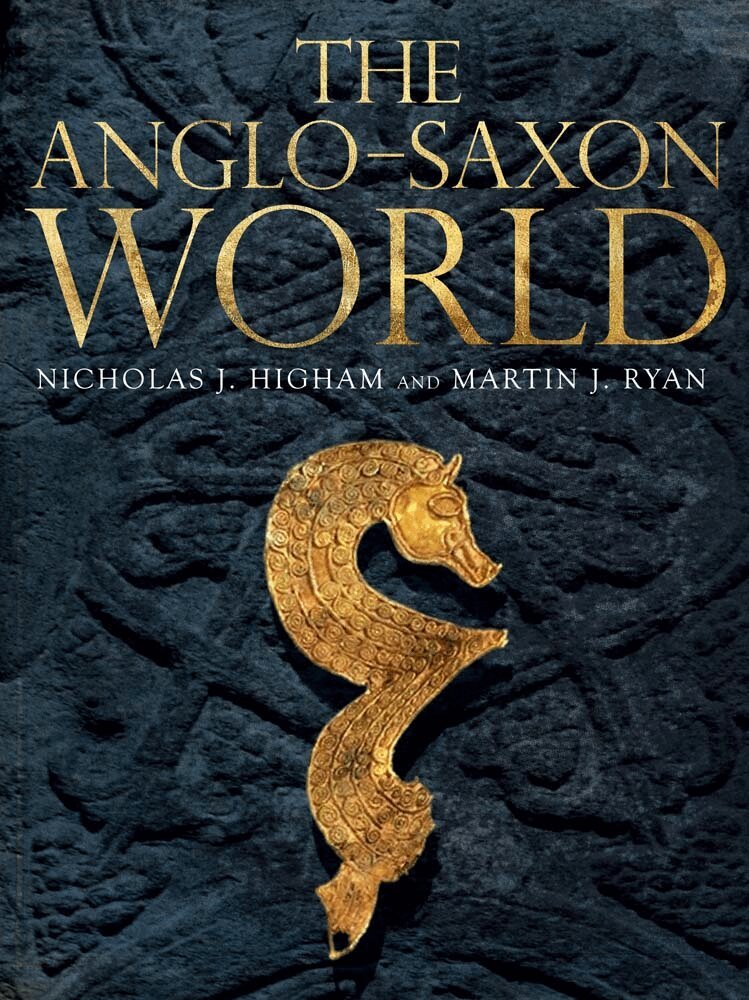
The Anglo-Saxon period, stretching from the fifth to the late eleventh century, begins with the Roman retreat from the Western world and ends with the Norman takeover of England. Between these epochal events, many of the contours and patterns of English life that would endure for the next millennium were shaped. In this authoritative work, N. J. Higham and M. J. Ryan reexamine Anglo-Saxon England in the light of new research in disciplines as wide ranging as historical genetics, paleobotany, archaeology, literary studies, art history, and numismatics. The result is the definitive introduction to the Anglo-Saxon world, enhanced with a rich array of photographs, maps, genealogies, and other illustrations. The Anglo-Saxon period witnessed the birth of the English people, the establishment of Christianity, and the development of the English language. With an extraordinary cast of characters (Alfred the Great, the Venerable Bede, King Cnut), a long list of artistic and cultural achievements (Beowulf, the Sutton Hoo ship-burial finds, the Bayeux Tapestry), and multiple dramatic events (the Viking invasions, the Battle of Hastings), the Anglo-Saxon era lays legitimate claim to having been one of the most important in Western history.
306 kr
Skickas
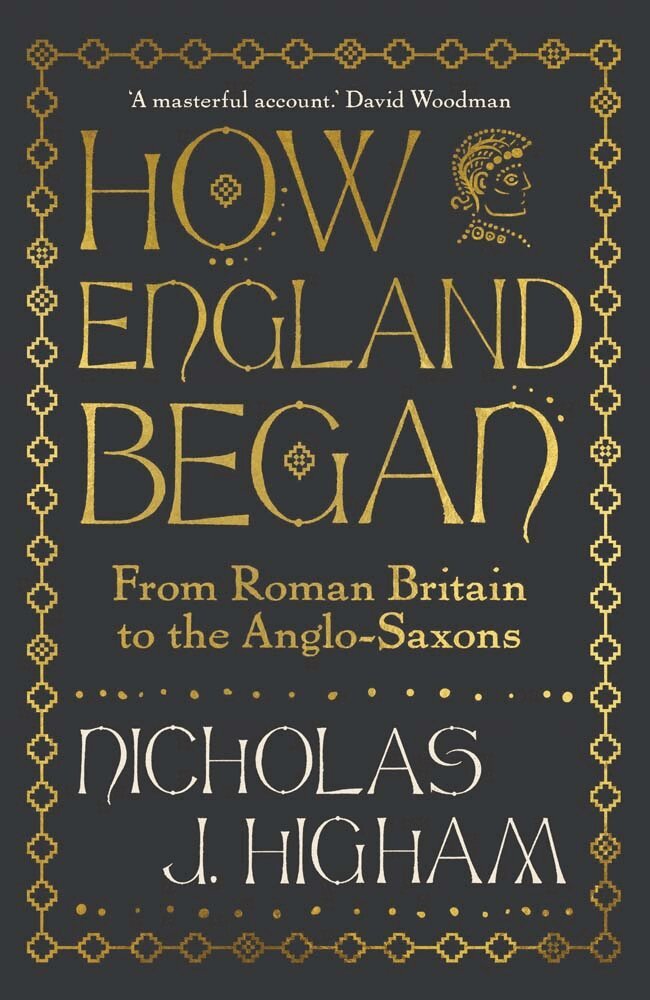
An engaging, wide-ranging exploration of the end of Roman Britain and the beginnings of England In 410 CE, Roman rule of Britain collapsed, bringing a centuries-long occupation to an end. A century later, Britain was dividing into two areas with contrasting cultures, an expansive “Anglo-Saxon” south and east, and a shrinking Celtic west and north. How did this transition happen? And why did the customs of the Germanic incomers prevail in England, unlike elsewhere in Europe? In this deeply researched account, Nicholas J. Higham addresses these difficult questions head on. Higham draws on archaeological evidence and contemporary literature, including the writings of Gildas, to reconsider the accepted narrative. We see anew the importance of culture, warfare, and language—as the arrival, spread, and dominance of incomers irrevocably changed the country. This period marked the beginnings of Englishness, and of such insular identities as Welsh and Cornish. Offering surprising new insights, Higham provides a penetrating account of how, as Roman Britain ended, Anglo-Saxon England emerged.
160 kr
Skickas inom 7-10 vardagar
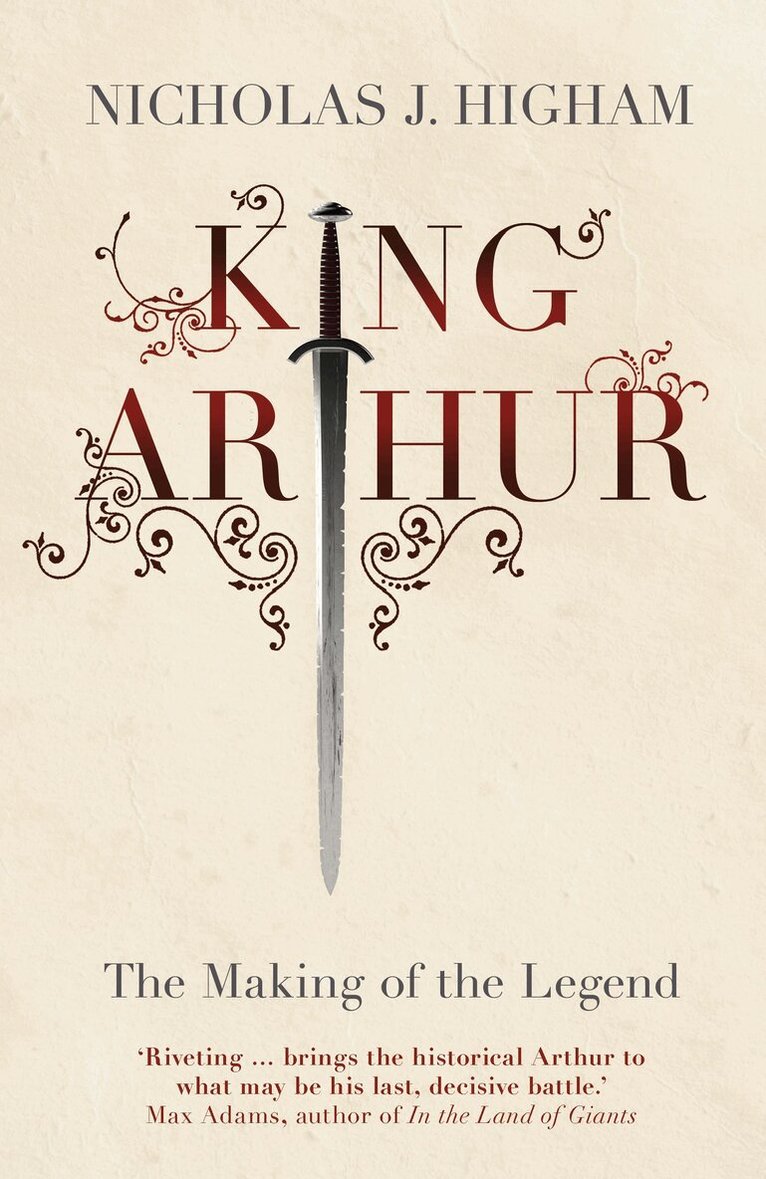
A prominent scholar explores King Arthur’s historical development, proposing that he began as a fictional character developed in the ninth centuryAccording to legend, King Arthur saved Britain from the Saxons and reigned over it gloriously sometime around A.D. 500. Whether or not there was a “real” King Arthur has all too often been neglected by scholars; most period specialists today declare themselves agnostic on this important matter. In this erudite volume, Nick Higham sets out to solve the puzzle, drawing on his original research and expertise to determine precisely when, and why, the legend began. Higham surveys all the major attempts to prove the origins of Arthur, weighing up and debunking hitherto claimed connections with classical Greece, Roman Dalmatia, Sarmatia, and the Caucasus. He then explores Arthur’s emergence in Wales—up to his rise to fame at the hands of Geoffrey of Monmouth. Certain to arouse heated debate among those committed to defending any particular Arthur, Higham’s book is an essential study for anyone seeking to understand how Arthur’s story began.
810 kr
Skickas inom 7-10 vardagar
Handbook of Writing for the Mathematical Sciences provides advice on all aspects of scientific writing, with a particular focus on writing mathematics. Its readable style and handy format, coupled with an extensive bibliography and comprehensive index, make it useful for everyone from undergraduates to seasoned professionals. This third edition revises, updates, and expands the best-selling second edition to reflect modern writing and publishing practices and builds on the author’s extensive experience in writing and speaking about mathematics. Key features:coverage of fundamentals of writing, including English usage, revising a draft, and writing when your first language is not English; thorough treatment of mathematical writing, including how to choose notation, how to choose between words and symbols, and how to format equations;many tips for exploiting LATEX and BibTEX; advice on how to write and publish a paper, covering the entire publication process; and anecdotes, quotes, and unusual facts that enliven the presentation. The new edition: has been reorganized to make the book easier to use for reference; treats modern developments in publishing such as open access, DOIs, and ORCID; has a new chapter on workflow covering text editors, markup languages, version control, and much more; has a new chapter that discusses the principles of indexing and how to prepare an index in LATEX; has a new chapter on reviewing a paper, book proposal, or book; has a new chapter “Writing a Book” that includes advice on choosing a publisher and LATEX tips particular to books; contains more on poster design, and discusses e-posters and the poster blitz; and has a new chapter giving advice on writing a blog post.
Del 9 - Pubns Manchester Centre for Anglo-Saxon Studies
Landscape Archaeology of Anglo-Saxon England
Inbunden, Engelska, 2010
1 071 kr
Skickas inom 7-10 vardagar
The Anglo-Saxon period was crucial to the development of the English landscape, but is rarely studied. The essays here provide radical new interpretations of its development.Traditional opinion has perceived the Anglo-Saxons as creating an entirely new landscape from scratch in the fifth and sixth centuries AD, cutting down woodland, and bringing with them the practice of open field agriculture, and establishing villages. Whilst recent scholarship has proved this simplistic picture wanting, it has also raised many questions about the nature of landscape development at the time, the changing nature of systems of land management, and strategies for settlement. The papers here seek to shed new light on these complex issues. Taking a variety of different approaches, and with topics ranging from the impact of coppicing to medieval field systems, from the representation of the landscape in manuscripts to cereal production and the type of bread the population preferred, they offer striking new approaches to the central issues of landscape change across the seven centuries of Anglo-Saxon England, a period surely foundational to the rural landscape of today.NICHOLAS J. HIGHAM is Professor of Early Medieval and Landscape History at the University of Manchester; MARTIN J. RYAN lectures in Medieval History at the University of Manchester. Contributors: Nicholas J. Higham, Christopher Grocock, Stephen Rippon, Stuart Brookes, Carenza Lewis, Susan Oosthuizen, Tom Williamson, Catherine Karkov, David Hill, Debby Banham, Richard Hoggett, Peter Murphy.
Del 10 - Pubns Manchester Centre for Anglo-Saxon Studies
Place-names, Language and the Anglo-Saxon Landscape
Inbunden, Engelska, 2011
1 214 kr
Skickas inom 10-15 vardagar
An exploration of the landscape of Anglo-Saxon England, particularly through the prism of place-names and what they can reveal.The landscape of modern England still bears the imprint of its Anglo-Saxon past. Villages and towns, fields, woods and forests, parishes and shires, all shed light on the enduring impact of the Anglo-Saxons. The essays in this volume explore the richness of the interactions between the Anglo-Saxons and their landscape: how they understood, described, and exploited the environments of which they were a part. Ranging from the earliest settlement period through to the urban expansion of late Anglo-Saxon England, this book draws on evidence from place-names, written sources, and the landscape itself to provide fresh insights into the topic. Subjects explored include the history of thestudy of place-names and the Anglo-Saxon landscape; landscapes of particular regions and the exploitation of particular landscape types; the mechanisms of the transmission and survival of written sources; and the problems and potentials of interdisciplinary research into the Anglo-Saxon landscape.Nicholas J. Higham is Professor of Early Medieval and Landscape History at the University of Manchester; Martin Ryan lectures in Medieval History at the University of Manchester.Contributors: Ann Cole, Linda M. Corrigan, Dorn Van Dommelen, Simon Draper, Gillian Fellows-Jensen, Della Hooke, Duncan Probert, Alexander R. Rumble, Martin J. Ryan, Peter A. Stokes, Richard Watson.