Radical Histories of the Middle East – serie
Visar alla böcker i serien Radical Histories of the Middle East. Handla med fri frakt och snabb leverans.
5 produkter
5 produkter
587 kr
Skickas
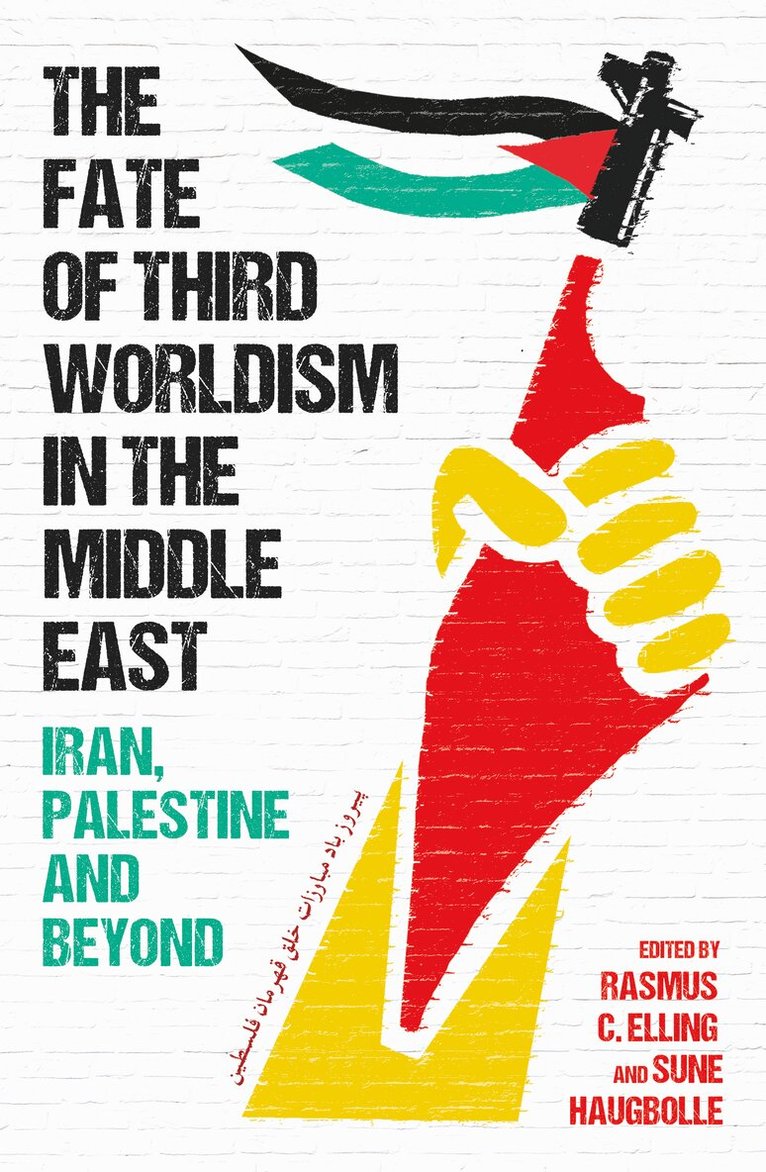
In the latter half of the twentieth century, a revolutionary idea promised to upend the global order. Anti-imperialist militancy, bolstered by international solidarity, would lead to not only the national liberation of oppressed peoples but universal emancipation, shattering the division between the prosperous nations of the capitalist West and the poorer countries of the Global South.The idea was Third Worldism, and among others it inspired struggles in Iran and Palestine. By the early 1980s, however, progressive visions of independence and freedom had fallen to the reality of an oppressive Islamic theocracy in Iran, while the Palestinian Revolution had been eclipsed by civil war in Lebanon, Israeli aggression and intra-Arab conflict.This thought-provoking volume explores the dramatic decline of Third Worldism in the Middle East. It reveals the lived realities of the time by focusing on the key protagonists – from student activists to guerrilla fighters, and from volunteer nurses to militant intellectuals – and juxtaposes the Iranian and Palestinian cases to offer a riveting re-examination of this defining era. Ultimately, it challenges us to reassess how we view the end of the long 1960s, prompting us to reconsider perennial questions concerning self-determination, emancipation, change and solidarity. ContentsIntroduction: The Transformation of Third Worldism in the Middle EastSune Haugbolle and Rasmus Elling1 Demystifying Third World Solidarity: Cuba and the Palestinian Revolution in the SeventiesSorcha Thomson2 Nursing the Revolution: Norwegian Medical Support in Lebanon as Solidarity, 1976–1983Pelle Valentin Olsen3 Searching for Friends Across the Global South: Classified Documents, Iran, and the Export of the Revolution in 1983Simon Wolfgang Fuchs4 The Gendered Politics of Dead Bodies: Obituaries, Revolutionaries, and Martyrs between the Iranian, Palestinian, and Dhufar RevolutionsMarral Shamshiri5 Brothers, Comrades, and the Quest for the Islamist International: The First Gathering of Liberation Movements in Revolutionary IranMohammad Ataie6 Abu Jubran and Jabal ʿAmil Between the Palestinian and Iranian RevolutionsNathaniel George7 The Islamic Republic Party and the Palestinian Cause, 1979–80: A Discursive Transformation of the Third Worldist AgendaMaryam Alemzadeh8 Translation, Revolutionary Praxis, and the Enigma of Manuchehr HezarkhaniNasser Mohajer and Eskandar Sadeghi-Boroujerdi9 The Front of our Friends: Shu’un Falastiniyya as an Archive of Palestinian Third WorldismKlaudia Wieser10 Fragile Solidarity: The Iranian Left and the Kurdish National Question in the 1979 RevolutionRasmus C. Elling and Jahangir Mahmoudi11 The ‘Ends’ of the Palestinian Revolution in the Fakhani RepublicSune HaugbolleAfterword: Towards a Praxis-Centred Historiography of Middle East Third WorldismToufoul Abou-Hodeib and Naghmeh Sohrabi
486 kr
Skickas inom 7-10 vardagar
Discussions of the Arab world, particularly the Gulf States, increasingly focus on sectarianism and autocratic rule. These features are often attributed to the dominance of monarchs, Islamists, oil, and ‘ancient hatreds’. To understand their rise, however, one has to turn to a largely forgotten but decisive episode with far-reaching repercussions – Bahrain under British colonial rule in the early twentieth century.Drawing on a wealth of previously unexamined Arabic literature as well as British archives, Omar AlShehabi details how sectarianism emerged as a modern phenomenon in Bahrain. He shows how absolutist rule was born in the Gulf, under the tutelage of the British Raj, to counter nationalist and anti-colonial movements tied to the al-Nahda renaissance in the wider Arab world. A groundbreaking work, Contested Modernity challenges us to reconsider not only how we see the Gulf but the Middle East as a whole.
439 kr
Skickas
Khalil Maleki (1901–1969) was a selfless campaigner for democracy and social welfare in twentieth-century Iran. His was a unique approach to politics, prioritising the criticism of policies detrimental to his country’s development over the pursuit of power itself. An influential figure, he was at the centre of such formative events as the split of the communist Tudeh party, and the 1953 coup and its aftermath.In an age of intolerance and uncompromising confrontation, Maleki remained an indefatigable advocate for open discussion and peaceful reform – a stance that saw him jailed several times. This work makes a compelling case for him to be regarded among the foremost thinkers of his generation.
277 kr
Skickas
Following the 1953 coup that toppled the democratically elected government of Mossadeq and restored the rule of the Shah in Iran, Mostafa Sho‘aiyan became a key figure on the country’s militant left. From a life underground he contributed significantly to the study of Iranian history and politics, and developed a unique theory of revolution.A Rebel’s Journey provides fascinating insights into the life and work of this singular theoretician. Peyman Vahabzadeh sets Sho‘aiyan’s thought in the context of his time and place, and explores how his revolutionary theory might contribute to today’s expanding movements for social justice and liberation.
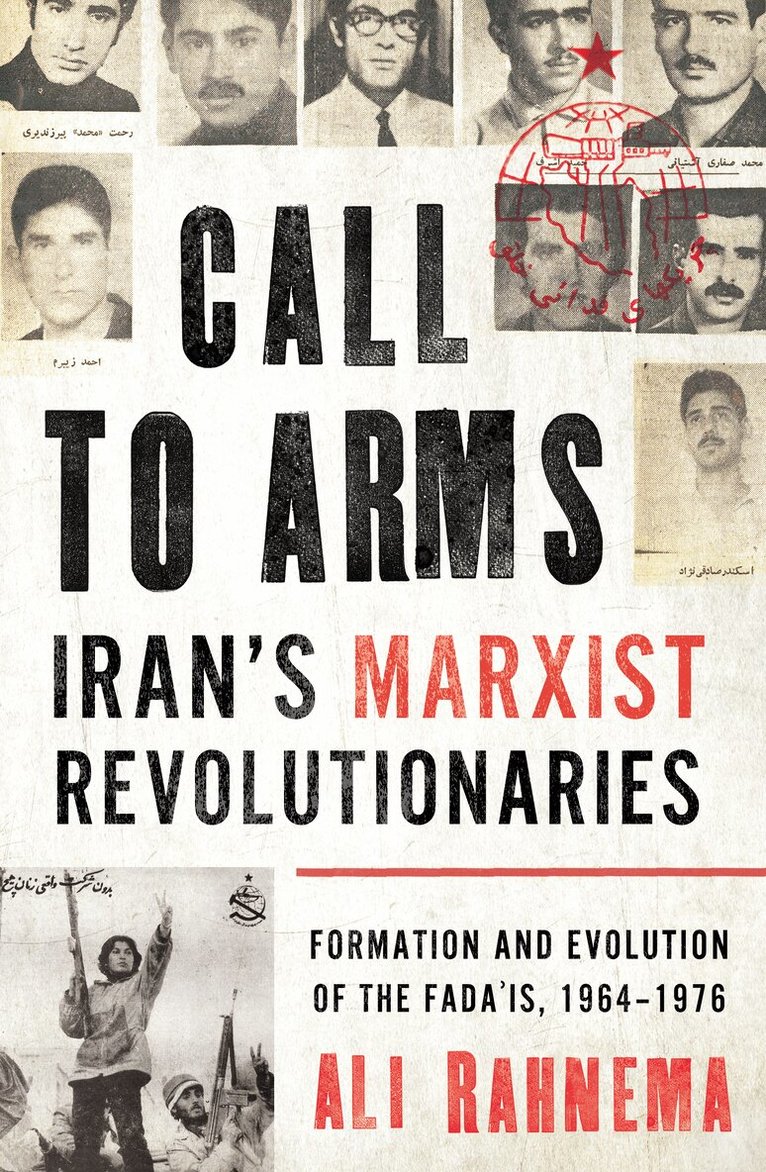
Call to Arms: Iran’s Marxist Revolutionaries
Formation and Evolution of the Fada'is, 1964–1976
Inbunden, Engelska, 2021
496 kr
Skickas
On 8 February 1971, Marxist revolutionaries attacked the gendarmerie outpost at the village of Siyahkal in Iran’s Gilan province. Barely two months later, the Iranian People’s Fada’i Guerrillas officially announced their existence and began a long, drawn-out urban guerrilla war against the Shah’s regime.In Call to Arms, Ali Rahnema provides a comprehensive history of the Fada’is, beginning by asking why so many of Iran’s best and brightest chose revolutionary Marxism in the face of absolutist rule. He traces how radicalised university students from different ideological backgrounds morphed into the Marxist Fada’is in 1971, and sheds light on their theory, practice and evolution. While the Fada’is failed to directly bring about the fall of the Shah, Rahnema shows they had a lasting impact on society and they ultimately saw their objective achieved.