
Radical Natures – serie
Visar alla böcker i serien Radical Natures. Handla med fri frakt och snabb leverans.
7 produkter
7 produkter
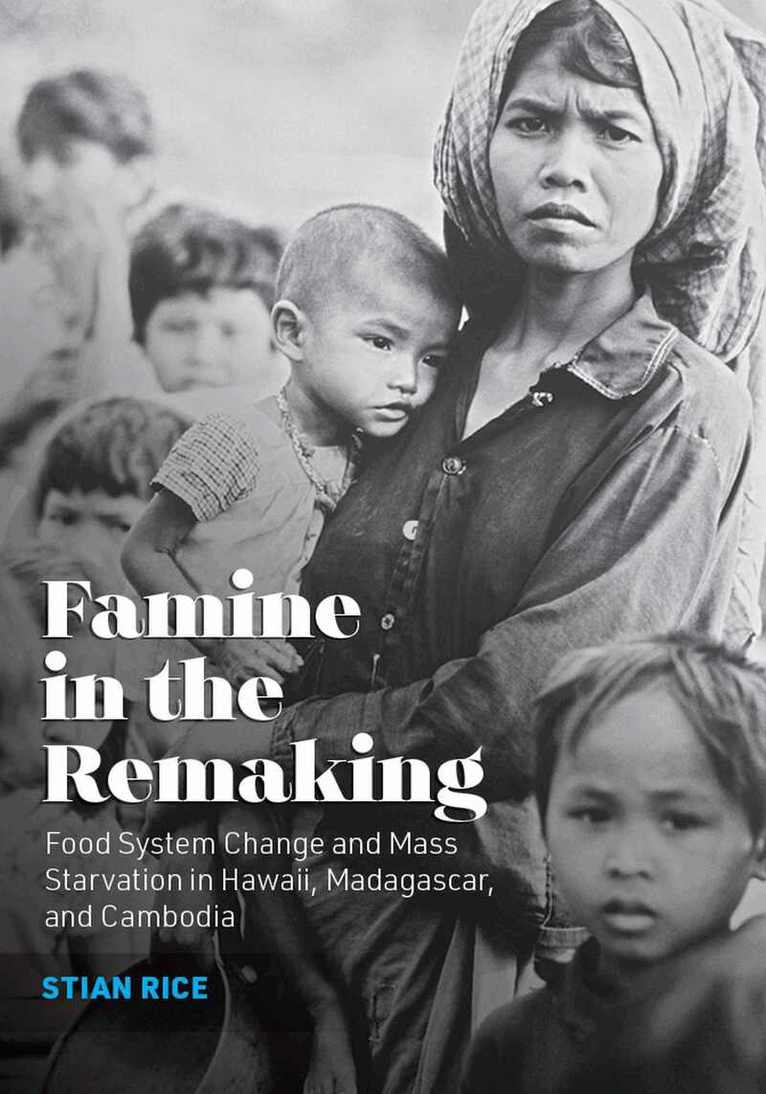
Famine in the Remaking
Food System Change and Mass Starvation in Hawaii, Madagascar, and Cambodia
Inbunden, Engelska, 2020
1 115 kr
Skickas inom 10-15 vardagar
Mass starvation's causes may seem simple and immediate: crop failure, poverty, outbreaks of violence, and poor governance. But famines are complex, and scholars cannot fully understand what causes them unless they look at their numerous social and environmental precursors over long arcs of history, and over long distances.Famine in the Remaking examines the relationship between the reorganisation of food systems and large-scale food crises through a comparative historical analysis of three famines: Hawaii in the 1820s, Madagascar in the 1920s, and Cambodia in the 1970s. This examination identifies the structural transformations - that is, changes to the relationships between producers and consumers - that make food systems more vulnerable to failure. Moving beyond the economic and political explanations for food crisis that have dominated the literature, Stian Rice emphasises important socioecological interactions, developing a framework for crisis evolution that identifies two distinct temporal phases and five different types of causal mechanisms involved in food systems failure. His framework contributes to current work in famine prevention and, animated by a commitment to social justice, offers the potential for early intervention in emerging food crises.
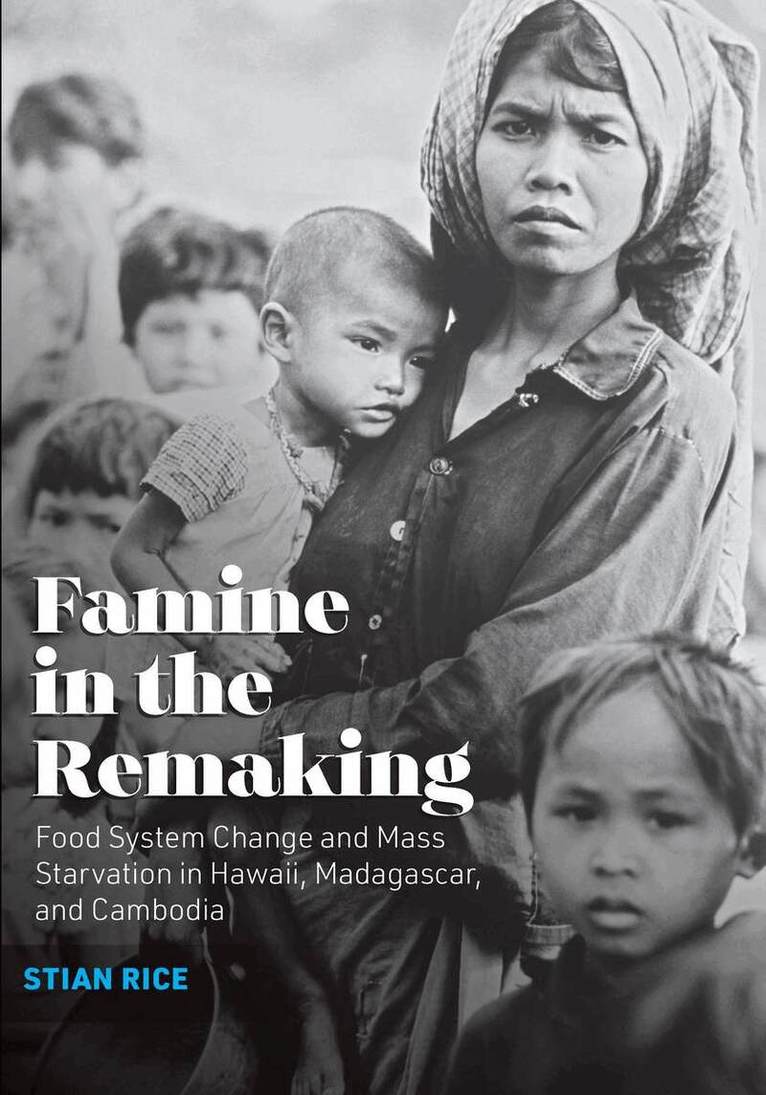
Famine in the Remaking
Food System Change and Mass Starvation in Hawaii, Madagascar, and Cambodia
Häftad, Engelska, 2020
326 kr
Skickas inom 10-15 vardagar
Mass starvation's causes may seem simple and immediate: crop failure, poverty, outbreaks of violence, and poor governance. But famines are complex, and scholars cannot fully understand what causes them unless they look at their numerous social and environmental precursors over long arcs of history, and over long distances.Famine in the Remaking examines the relationship between the reorganisation of food systems and large-scale food crises through a comparative historical analysis of three famines: Hawaii in the 1820s, Madagascar in the 1920s, and Cambodia in the 1970s. This examination identifies the structural transformations - that is, changes to the relationships between producers and consumers - that make food systems more vulnerable to failure. Moving beyond the economic and political explanations for food crisis that have dominated the literature, Stian Rice emphasises important socioecological interactions, developing a framework for crisis evolution that identifies two distinct temporal phases and five different types of causal mechanisms involved in food systems failure. His framework contributes to current work in famine prevention and, animated by a commitment to social justice, offers the potential for early intervention in emerging food crises.
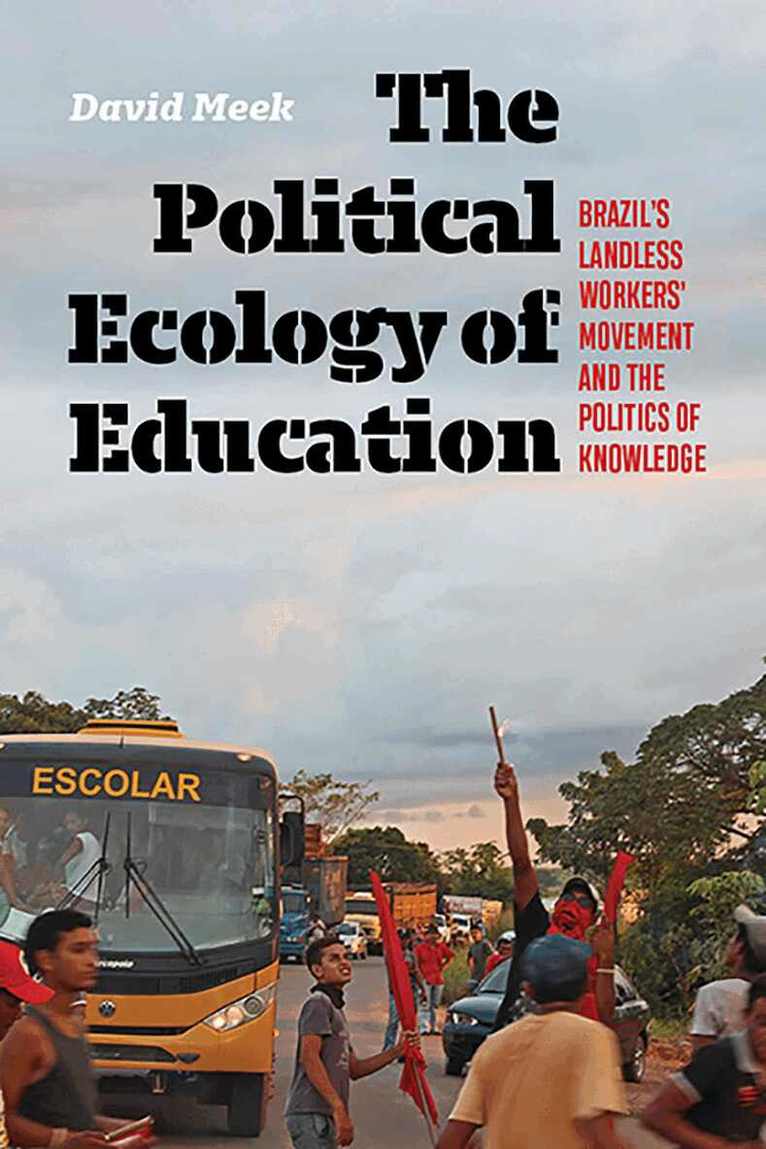
Political Ecology of Education
Brazil's Landless Worker's Movement and the Politics of Knowledge
Inbunden, Engelska, 2020
1 083 kr
Skickas inom 10-15 vardagar
Agrarian social movements are at a crossroads. Although these movements have made significant strides in advancing the concept of food sovereignty, the reality is that many of their members remain engaged in environmentally degrading forms of agriculture, and the lands they farm are increasingly unproductive. Whether movement farmers will be able to remain living on the land, and dedicated to alternative agricultural practices, is a pressing question.The Political Ecology of Education examines the opportunities for and constraints on advancing food sovereignty in the 17 de Abril settlement, a community born out of a massacre of landless Brazilian workers in 1996. Based on immersive fieldwork over the course of seven years, David Meek makes the provocative argument that critical forms of food systems education are integral to agrarian social movements' survival. While the need for critical approaches is especially immediate in the Amazon, Meek's study speaks to the burgeoning attention to food systems education at various educational levels worldwide, from primary to postgraduate programs. His book calls us to rethink the politics of the possible within these pedagogies.
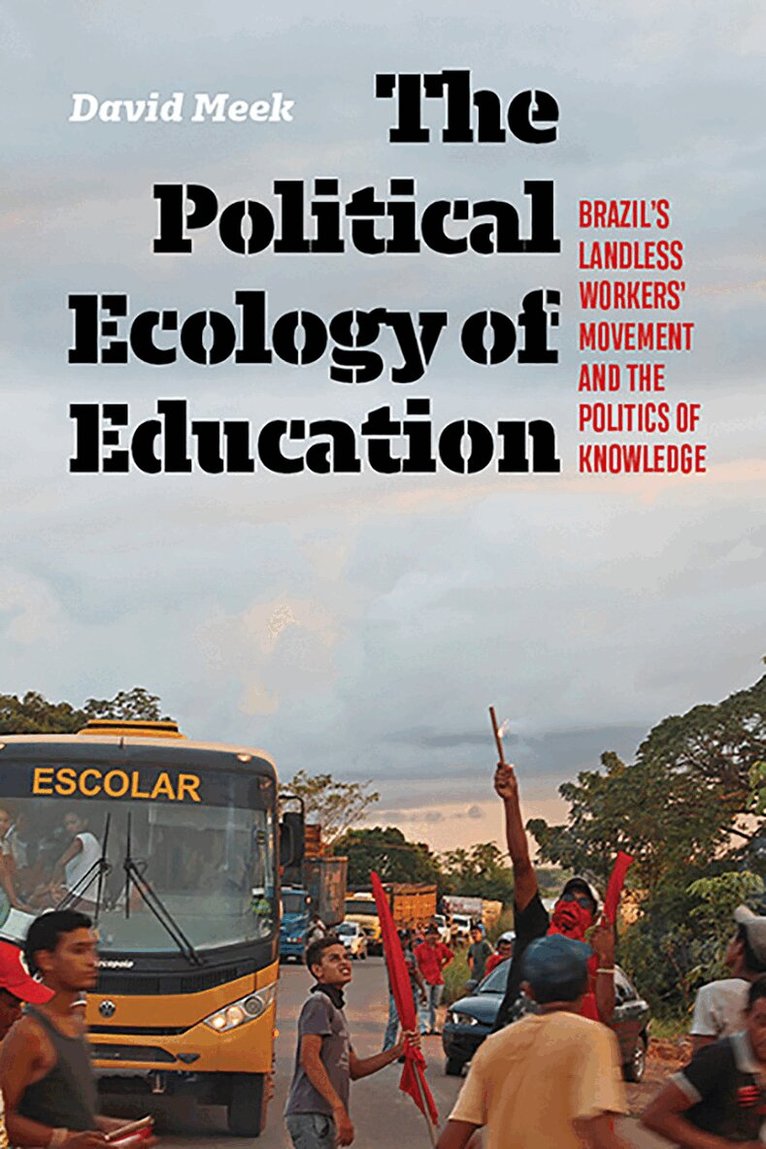
Political Ecology of Education
Brazil's Landless Worker's Movement and the Politics of Knowledge
Häftad, Engelska, 2020
303 kr
Skickas inom 10-15 vardagar
Agrarian social movements are at a crossroads. Although these movements have made significant strides in advancing the concept of food sovereignty, the reality is that many of their members remain engaged in environmentally degrading forms of agriculture, and the lands they farm are increasingly unproductive. Whether movement farmers will be able to remain living on the land, and dedicated to alternative agricultural practices, is a pressing question.The Political Ecology of Education examines the opportunities for and constraints on advancing food sovereignty in the 17 de Abril settlement, a community born out of a massacre of landless Brazilian workers in 1996. Based on immersive fieldwork over the course of seven years, David Meek makes the provocative argument that critical forms of food systems education are integral to agrarian social movements' survival. While the need for critical approaches is especially immediate in the Amazon, Meek's study speaks to the burgeoning attention to food systems education at various educational levels worldwide, from primary to postgraduate programs. His book calls us to rethink the politics of the possible within these pedagogies.
1 115 kr
Skickas inom 10-15 vardagar
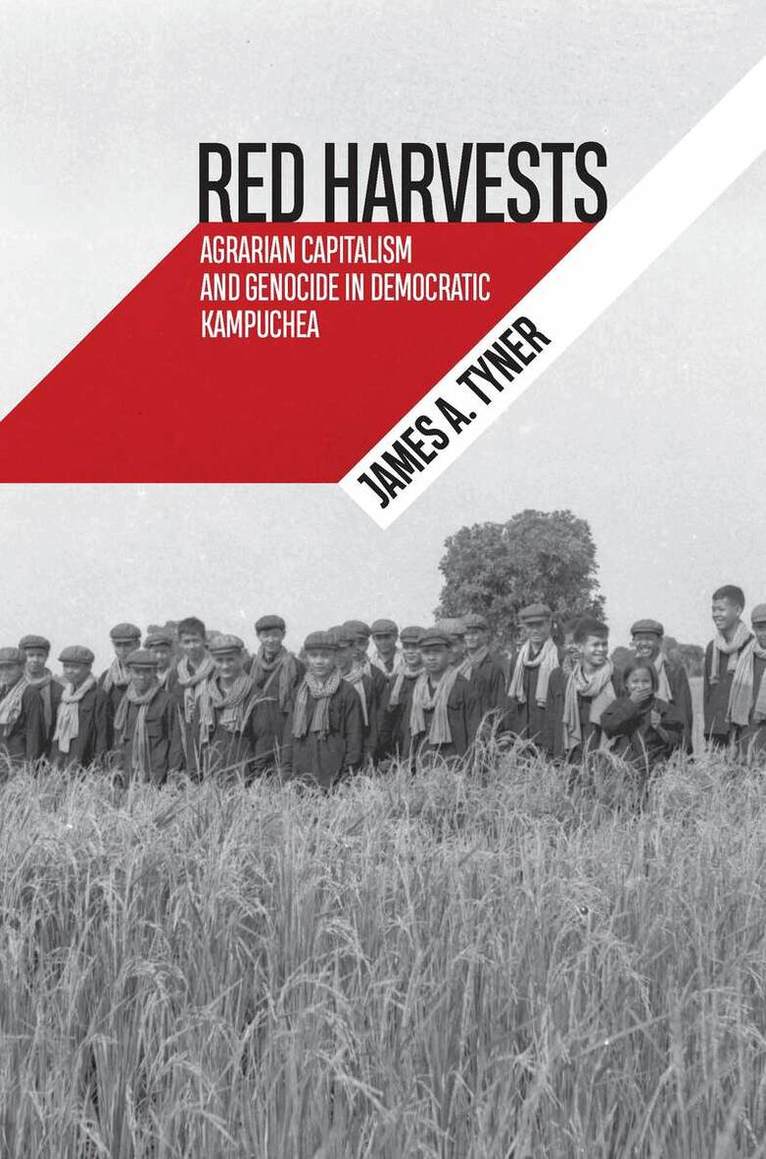
Reassessing the Cambodian genocide through the lens of global capitalist development.James Tyner reinterprets the place of agriculture under the Khmer Rouge, positioning it in new ways relative to Marxism, capitalism, and genocide. The Cambodian revolutionaries' agricultural management is widely viewed by critics as irrational and dangerous, and it is invoked as part of wider efforts to discredit leftist movements. Researching the specific functioning of Cambodia's transition from farms to agriculture within the context of the global economy, Tyner comes to a different conclusion. He finds that analysis of "actually existing political economy"—as opposed to the Marxist identification the Khmer Rouge claimed—points to overlap between Cambodian practice and agrarian capitalism.Tyner argues that dissolution of the traditional Khmer family farm under the aegis of state capitalism is central to any understanding of the mass violence unleashed by the Khmer Rouge. Seen less as a radical outlier than as part of a global shift in farming and food politics, the Cambodian tragedy imparts new lessons to our understanding of the political economy of genocide.
326 kr
Skickas inom 10-15 vardagar
Reassessing the Cambodian genocide through the lens of global capitalist development.James Tyner reinterprets the place of agriculture under the Khmer Rouge, positioning it in new ways relative to Marxism, capitalism, and genocide. The Cambodian revolutionaries' agricultural management is widely viewed by critics as irrational and dangerous, and it is invoked as part of wider efforts to discredit leftist movements. Researching the specific functioning of Cambodia's transition from farms to agriculture within the context of the global economy, Tyner comes to a different conclusion. He finds that analysis of "actually existing political economy"—as opposed to the Marxist identification the Khmer Rouge claimed—points to overlap between Cambodian practice and agrarian capitalism.Tyner argues that dissolution of the traditional Khmer family farm under the aegis of state capitalism is central to any understanding of the mass violence unleashed by the Khmer Rouge. Seen less as a radical outlier than as part of a global shift in farming and food politics, the Cambodian tragedy imparts new lessons to our understanding of the political economy of genocide.
Seeds of Occupation, Seeds of Possibility
The Agrochemical-GMO Industry in Hawai'i
Häftad, Engelska, 2022
326 kr
Skickas inom 10-15 vardagar
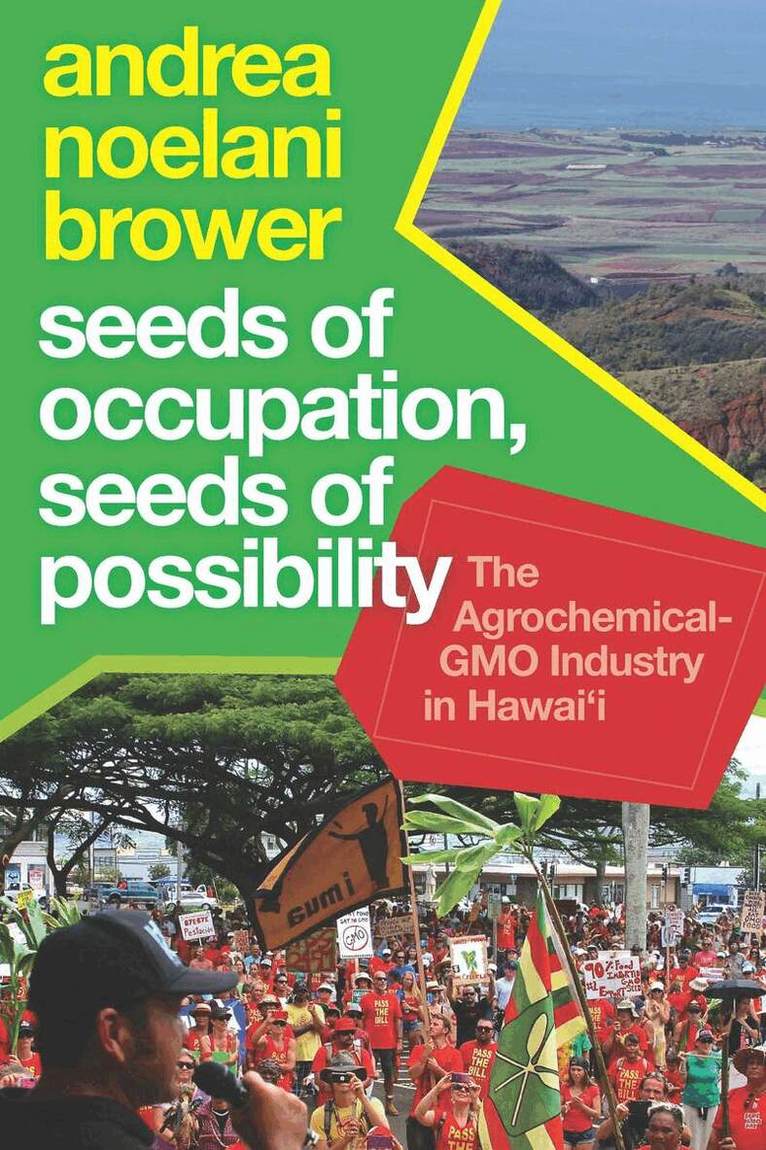
How Hawaiʻi became the epicenter of the biotech seed industry, and how a resistance movement arose to confront the industry’s power.Hawaiʻi is a primary site for development of herbicide-resistant corn seed and, until recently, was host to more experimental field trials of genetically engineered crops than anywhere else in the world. It is also a node of powerful resistance. While documentaries and popular news stories have profiled the biotech seed industry in Hawaiʻi, Seeds of Occupation, Seeds of Possibility is the first book to detail the social and historical conditions by which the chemical-seed oligopoly came to occupy the most geographically isolated islands in the world and made the soils of Hawaiʻi the epicenter of agrochemical and agricultural biotechnology testing.Andrea Brower, an activist-scholar from Hawaiʻi, examines the consequences related to genetically engineered seed development for Hawaiʻi’s people and the social movement that has risen in response. With insights beyond the islands, Seeds of Occupation, Seeds of Possibility illuminates why visions for a radically better world must be expanded by intersectional and systemically oriented movements.