Receptors and Recognition - Böcker
Visar alla böcker i serien Receptors and Recognition. Handla med fri frakt och snabb leverans.
15 produkter
15 produkter
549 kr
Skickas inom 10-15 vardagar
533 kr
Skickas inom 10-15 vardagar
This new se ries is concerned with intercellular communication and recognition. It is now widely appreciated that these processes playa crucial role in virtually all biological systems and functions. These encompass fertilisation, embryonic development, infectious interactions, the activity of the nervous system, the regulation of growth and develop ment by hormones and the immune response to foreign or 'non-self antigens. Historically as described in the first review in this volume, the general concept of cell-associated receptors as the molecular entity primarily responsible for the specificity of signal recognition arose independently in the fields of immunology, pharmacology and developmental biology. From an early stage the analogy between cellular recognition and the discriminatory activity of antibodies and enzymes was emphasised. A vital conceptual advance, expressed most c1early by Linus Pauling and Paul Weiss, was the idea that non-covalent molecular interactions (of proteins in particular) were responsible forbiological specificity in in general. In the last decade several major advances have led to a new level of understanding of the molecular basis of cellular recognition. In several systems (in particular with neurotransmitters, hormones and antigens) it is possible to direct1y demonstrate the existence of receptors - associated in each case with the cell surface. These studies have been paralleled by equally important insights into the general structure and organisation of cell membranes and the possible ways in which signals arriving from the 'outside' can be transduced across the cell surface membrane to induce or regulate the cell's programmed responses.
533 kr
Skickas inom 10-15 vardagar
533 kr
Skickas inom 10-15 vardagar
Monoclonal Antibodies to Receptors
Probes for Receptor Structure and Funtcion
Inbunden, Engelska, 1984
2 111 kr
Skickas inom 10-15 vardagar
Receptor specific antibodies are excellent probes for a wide range of biological investigations on receptor structure and function. The hybridoma technology (Kohler and Milstein, 1975) has inevitably had a major impact on this field with most of the better known receptors now identified with monoclonal antibodies. This volume of the Receptors and Recognition series provides reviews of recent developments in this field and emphasizes in particular the new opportunities afforded by the judicious application of monoclonal reagents. It is assumed that most readers will be familiar with the now fairly routine methods of cell fusion, hybridoma cloning and selection for producing monoclonal antibodies and so few details of the basic technical procedures are described. Several good reviews on this topic are however available (see Galfre and Milstein, 1981; Goding, 1980; Yelton and Scharf, 1981; McMichael and Fabre, 1982). By no means all vertebrate receptor species are discussed here; omissions include antibodies to low density lipoprotein receptors (Beisiegel et al. , 1981; Kita et al. , 1981), prolactin and growth hormone receptors (Friesen etal. , 1982; Simpson et al., 1983) and the hepatocyte asialoglycoprotein receptor (Schwartz et al. , 1981; Harford et al. , 1982). Nevertheless the coverage is comprehensive and critical and the individual chapters provided illustrate vividly the rapid progress being made.
533 kr
Skickas inom 10-15 vardagar
Microbiology has undergone a number of metamorphoses in its relatively brief existence. It has been in approximate succession, morphology, epidemiology, biochemistry, genetics, and molecular biology. It is also becoming a significant parcel of cell surface studies. The one embodiment which has remained elusiv- particularly for bacteriology - is the taxonomic one. This may have been a blessing in disguise because it encouraged microbiologists to deal with the general rather than the particular; promoting a search for unitary explanations, in the manner of Kluyver and van Niel, long before anyone knew about the universality of the genetic code, or could trace the genealogy of enzymes from the study of amino acid substitutions. . This volume is predicated on the idea that deep analogies underly the mech anisms of cellular interaction, and therefore belongs in the unitary tradition of microbiology. It occupies itself with a wide variety of micro-organisms, considering them from vantage points of considerable diversity, ranging from taxonomic irreverence to keen evolutionary awareness, and is concerned with areas which have developed independently of each other.
525 kr
Skickas inom 10-15 vardagar
Fifty-odd years have elapsed since the first observation of the response of visceral smooth muscle to an adenine nucleotide was reported by Drury and Szent Gyorgi (1929). It is now known that purinergic receptors mediating responses to adenosine and the adenine nucleotides (AMP, ADP and ATP) are present in all types of visceral smooth muscle. Adenine itself and other endogenous purine derivatives appear to have no direct effects, or only minimal effects, on most visceral smooth muscles. Airway smooth muscle is an exception in this regard, and responds to purine bases and non-adenine nucleosides and nucleotides. Knowledge of the distribution of purinergic receptor sites on the plasma membrane of visceral musculature has grown particularly rapidly since Burnstock and his colleagues (1970) proposed that ATP, or a related adenine derivative, is the inhibitory transmitter released from non cholinergic non-adrenergic nerves present in the gut. Much evidence has been presented favoring the view that ATP is the inhibitory transmitter, and evidence to the contrary has also been put forward. The hypothesis remains controversial primarily because specific blockers of the postsynaptic purinergic site, with which the hypothesis might be tested, have not been found. Nevertheless, the numerous studies designed to investigate the purinergic nerve hypothesis have generated much information concerning the nature of the purinergic receptors in visceral smooth muscle.
533 kr
Skickas inom 10-15 vardagar
Bacteria adhere to and colonize almost any surface. Within minutes after sub merging a solid object in seawater or freshwater, the surface becomes colonized by adherent micro-organisms, and the earliest organisms to adhere are bacteria. Adherent colonies of bacteria have also been observed on particles of sand, soil, other bacteria, plant tissues, and a variety of animal tissues. Shortly after birth, the skin and the mucosal surfaces of the upper respiratory tract and the gastro intestinal tract of animals and man become heavily colonized by a variety of adherent bacteria which persist in varying numbers as indigenous parasites. The apparent symbiotic balance between the host and his indigenous parasites oc casionally is upset by the invasion of harmful bacteria which adhere to and colonize these surfaces. Pathogenic bacteria may also adhere to and colonize normally sterile surfaces such as the mucosa of the genito-urinary tract and the lower respiratory tract, and occasionally even endothelial surfaces of the cardiovascular system, resulting in the development of serious infectious diseases. Although marine microbiologists have been aware for a long time that bacteria must stick to surfaces in order to avoid being swept away by moving streams of water, not until recently has it been widely recognized that adherence must be an important ecological determinant in the colonization of specific sites in plants and animals, and in particular an important early event in the pathogenesis of bacterial infections in animals and man. It is true that Dr G.
Del 10 - Receptors and Recognition
Neurotransmitter Receptors
Part 2 Biogenic Amines
Häftad, Engelska, 2012
533 kr
Skickas inom 10-15 vardagar
Since the discovery that neuronal transmission can be chemically mediated, a large number of compounds have been found in the mammalian central nervous system which appear to function as neurotransmitter agents. Recently, electro physiological and biochemical methods have been developed which have enabled neuroscientists to classify better the myriad of neurotransmitter receptor sites in brain and to study their properties in finer detail. As a result of these investigations, a significant number of new discoveries have been made about the mechanisms involved in neurotransmitter receptor interactions, the role neurotransmitters play in the actions of pharmacological agents and in the pathogenesis of various neuropsychiatric disorders. The present two volume text was compiled to summarize the information relating to the physiological, biochemical, pharmacological and functional characteristics of neurotransmitter receptor sites. While emphasis is placed on neurotransmitter receptors in the mammalian central nervous system, the characteristics of these receptors in other species, both vertebrate and invertebrate, are also discussed where appropriate. While these books cover the major classes of putative neurotransmitters - amino acids, peptides and biogenic amines - and are therefore broad in scope, each is discussed in a concise fashion to highlight the major points of historical and contemporary interest. In addition to outlining data, each chapter addresses current theories relating to the various aspects of receptor properties and function in an attempt to reveal the directions of future research and as a stimulus for other workers in the field.
549 kr
Skickas inom 10-15 vardagar
This volume focuses exclusively on those endocytic processes that sequester proteins by a selective, receptor-mediated mechanism. In such an endocytic process, cell surface receptors specifically bind protein ligands and localize them to specialized invaginations of the plasma membrane. These regions are coated pits, so named because they are lined on the cytoplasmic face with an ordered array of the protein, clathrin. It is this 'coat' which provides their characteristic electron microscopic image. Subsequently, these regions pinch off to form coated vesicles which rapidly lose their 'coat' and then fuse with other organelles or the plasma membrane. The hallmarks of ,this process are the specific receptors, coated pits, coated vesicles and an ordered sequence of transit events leading to delivery to selected locations. Receptor recognition, specific disposition of the endocytosed ligand and the existence of recep tor-ligand complexes at highest density in coated pits define the process as selective and concentrative. This topic has received ever increasing attention during the past few years. The evolving mechanisms are especially exciting because they come at a time when the conventional views based on thermodynamic arguments suggest that proteins should not be able to cross into the cell. Receptor-mediated endocytosis, however, reconciles the view that biological membranes should be impervious to macromolecules with the evidence that certain mac romolecules do gain entrance into the cell. During the last few years this field has been stimulated by studies on the uptake and processing of low density lipoproteins (LDL) by cells.
525 kr
Skickas inom 10-15 vardagar
The cell surface is the barrier between the cell and its environment which regulates the flow of both simple and complex molecules into and out of the cell; it is also the organelle responsible for communication between the cell and its environment. Each cell expresses receptors for a wide variety of hormones, growth factors, growth substrates and other cells. In multicellular organisms communication between cells is required for controlling development, cellular differentiation, morphogenesis and, in a more general sense, integration of myriad cell types into a single organism. The series Receptors and Recognition has as its overall aim the dissection of the cell surface to correlate structure and function for this complex organelle. In most of the preceding volumes the approach has been biochemical or physiological. In this volume the mammalian cell surface is analysed by a genetic approach. Genetic analysis of the cell surface, especially when combined with immuno logical techniques, has a long history. In 1900 Landsteiner showed that serum from one individual could agglutinate the red cells of another. Besides the practical result of making blood transfusion safe, this was the first demon stration of a human genetic polymorphism and for the next 50 years the red blood cell surface provided most of the genetic markers used to study human populations.
2 174 kr
Skickas inom 10-15 vardagar
Receptor specific antibodies are excellent probes for a wide range of biological investigations on receptor structure and function. The hybridoma technology (Kohler and Milstein, 1975) has inevitably had a major impact on this field with most of the better known receptors now identified with monoclonal antibodies. This volume of the Receptors and Recognition series provides reviews of recent developments in this field and emphasizes in particular the new opportunities afforded by the judicious application of monoclonal reagents. It is assumed that most readers will be familiar with the now fairly routine methods of cell fusion, hybridoma cloning and selection for producing monoclonal antibodies and so few details of the basic technical procedures are described. Several good reviews on this topic are however available (see Galfre and Milstein, 1981; Goding, 1980; Yelton and Scharf, 1981; McMichael and Fabre, 1982). By no means all vertebrate receptor species are discussed here; omissions include antibodies to low density lipoprotein receptors (Beisiegel et al. , 1981; Kita et al. , 1981), prolactin and growth hormone receptors (Friesen etal. , 1982; Simpson et al., 1983) and the hepatocyte asialoglycoprotein receptor (Schwartz et al. , 1981; Harford et al. , 1982). Nevertheless the coverage is comprehensive and critical and the individual chapters provided illustrate vividly the rapid progress being made.
525 kr
Skickas inom 10-15 vardagar
Since the discovery that neuronal transmission can be chemically mediated, a large number of compounds have been found in the mammalian central nervous system which appear to function as neurotransmitter agents. Recently, electrophysiological and biochemical methods have been developed which have enabled neuroscientists to classify better the myriad of neurotransmitter receptor sites in brain and to study their properties in finer detail. As a result of these investigations, a significant number of new discoveries have been made about the mechanisms involved in neurotransmitter receptor interactions, the role neurotransmitters play in the actions of pharmacological agents and in the pathogenesis of various neuropsychiatric disorders. The present two volume text was compiled to summarize the information relating to the physiological, biochemical, pharmacological and functional characteristics of neurotransmitter receptor sites. While emphasis is placed on neurotransmitter receptors in the mammalian central nervous system, the characteristics of these receptors in other species, both vertebrate and invertebrate, are also discussed where appropriate. While these books cover the major classes of putative neurotransmitters - amino acids, peptides and biogenic amines - and are therefore broad in scope, each is discussed in a concise fashion to highlight the major points of historical and contemporary interest. In addition to outlining data, each chapter addresses current theories relating to the various aspects of receptor properties and function in an attempt to reveal the directions of future research and as a stimulus for other workers in the field.
533 kr
Skickas inom 10-15 vardagar
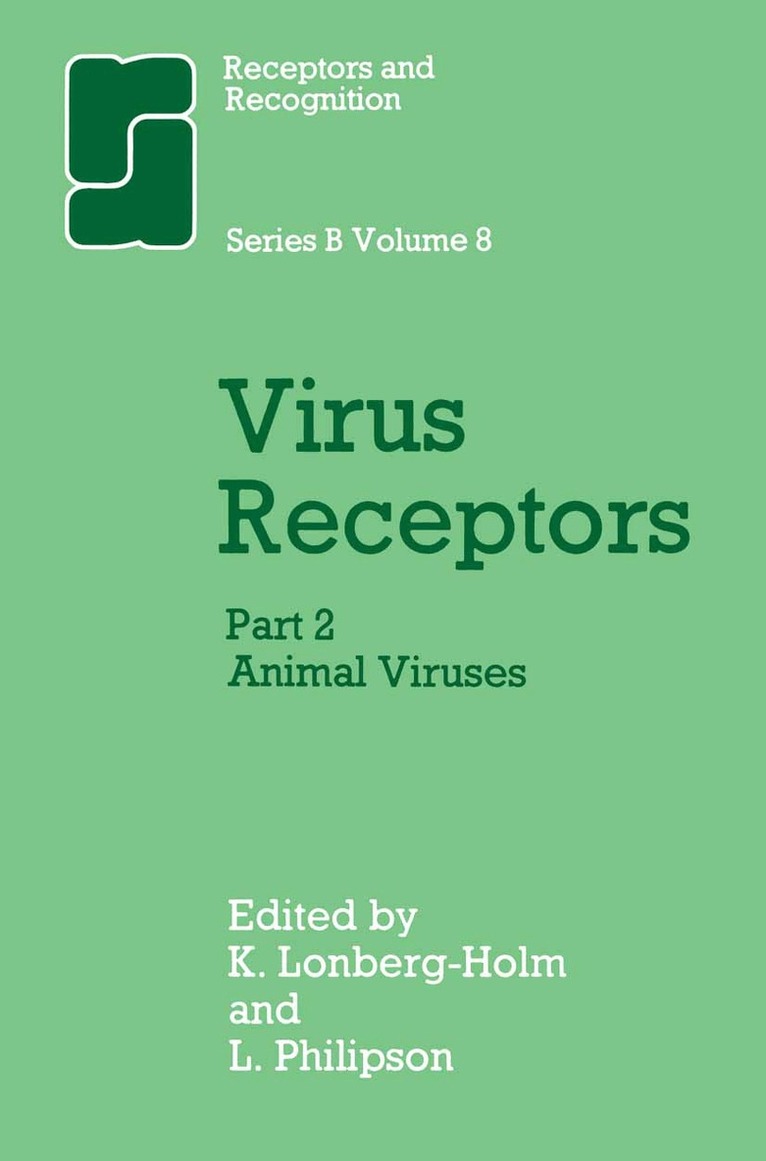
It is hardly necessary to define the concept of receptors to readers of this series, but it should be born in mind that in several instances receptors are undefined entities, whose molecular details remain to be established. On the other hand the ligand, which reco~izes the receptors, has been identified and characterized in most cases. The current interest in the structure and function of biological membranes gives great expectations that in the near future we may understand the details of ligand-receptor interaction. This interaction involves two defined steps: the first, usually referred to as recognition, is followed by the second step, transduction, in which the ligand-receptor interaction is translated by the cell into a biochemical action. The present two volumes which cover prokaryotic and eukaryotic virus receptors, have been published together in order to illustrate the specificity of virus receptor recognition which appears to be a guiding principle for both bacteria and higher cells. The identification and characterization of the receptors for phages of gram-negative bacteria has to a large extent relied on the genetic techniques available for these organisms. In a similar way the availability of genetic systems has also clarified the interrelationship between animal retrovirus receptors even if the molecular structure remains to be determined. The paucity of defined genetic systems may therefore explain part of our ignorance concerning the molecular details of virus receptors on human cells and possibly also on gram positive bacteria.
1 044 kr
Skickas inom 10-15 vardagar
It is hardly necessary to define the concept of receptors to readers of this series, but it should be borne in mind that in several instances receptors are undefined entities, whose molecular details remain to be established. On the other hand the ligand, which recognizes the receptors, has been identified and characterized in most cases. The current interest in the structure and function of biological membranes gives great expectations that we may understand in the near future the details of ligand-receptor interaction. This interaction involves two defined steps: the first, usually referred to as recognition, is followed by the second step, transduction, in which the ligand-receptor interaction is translated by the cell into a biochemical action. The present two volumes which cover prokaryotic and eukaryotic virus receptors, have been published together in order to illustrate the specificity of virus receptor recognition which appears to be a guiding principle for both bacteria and higher cells. The identification and characterization of the receptors for phages of gram-negative bacteria has to a large extent relied on the genetic tech niques available for these organisms. In a similar way the availability of genetic systems has also clarified the interrelationship between animal retrovirus receptors even if the molecular structure remains to be determined. The paucity of defined genetic systems may therefore explain part of our ignorance concerning the mole cular details of virus receptors on human cells and possibly also on gram-positive bacteria.