Religion and Global Politics Series – Serie
Visar alla böcker i serien Religion and Global Politics Series. Handla med fri frakt och snabb leverans.
4 produkter
4 produkter
417 kr
Skickas inom 5-8 vardagar
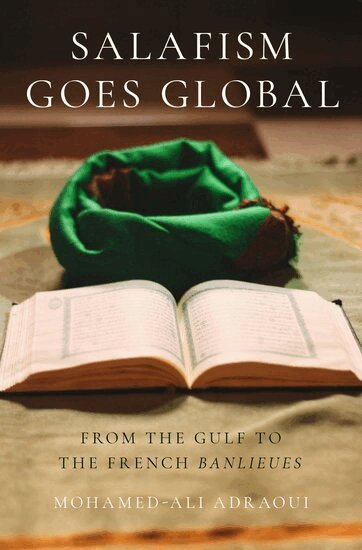
Salafism is a fundamentalist Sunni vision of Islam that is growing in popularity in many countries. In this book, Mohamed-Ali Adraoui focuses on quietist Salafism, which he calls a study in contradictions. Strongly opposed to political action, terrorism, and the overthrow of established regimes, quietist Salafism insists on restructuring Islamic norms with the fervor of a revivalist and fundamentalist ethic. Quietist Salafis seek the purification of culture and religious renewal through a "de-militantization" of the Islamic corpus.Adraoui explores the Salafis' individual trajectories, their relationship with politics, and their vision of the world and of modernity, in order to understand how quietist Salafis negotiate their social identities and religious obligations in the Western context. What does the increasing presence of Islamic movements in the global space mean? Adraoui draws parallels between the French case and that of Muslim countries, and argues that the spread of quietist Salafism is partially a result of the foreign policy of Saudi Arabia. Quietist Salafism, he argues, is resonant of Saudi Arabia's efforts to promote a legitimist, anti-anarchist, and counter-revolutionary conception of Islam, after having long legitimized and reinforced the Islamist forces and Jihadist movements when it was in its geopolitical interests to do so. Salafism Goes Global sheds light on a dynamic of globalization that is taking place in the margins.
1 396 kr
Skickas inom 5-8 vardagar
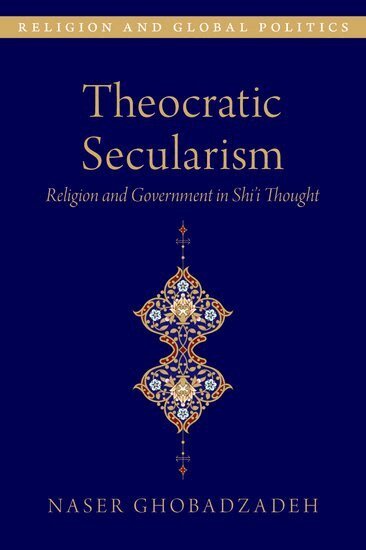
For more than forty years, there has been a religious government in Iran that claims to be rooted in shi'i political theology. In this book, Naser Ghobadzadeh intends to show that this reading of shi'i political theology is a fundamental deviation from orthodox shi'ism. The principle of theocracy is one of the most fundamental principles of the shi'i orthodox belief system, but its realization in practice depends on the return of the Twelfth Imam. Until that day, the institution of government and political leadership falls outside the scope of the authority of religious leaders. Naser Ghobadzadeh shows that governmental-shi'ism is less than half a century old and that its formation was not the product of a transformation in orthodox shi'i political theology. Rather, governmental-shi'ism was born in the political arena and has been able to survive because it profits from government resources.Coining the term 'theocratic secularism', this book argues for the re-instatement of a form of political secularism in Iran.
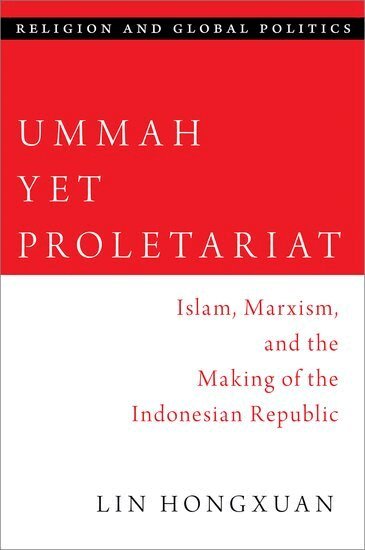
Ummah Yet Proletariat
Islam, Marxism, and the Making of the Indonesian Republic
Inbunden, Engelska, 2023
1 024 kr
Skickas inom 5-8 vardagar
From 1965 to 1966, at least 500,000 Indonesians were killed in military-directed violence that targeted suspected Communists. Muslim politicians justified the killings, arguing that Marxism posed an existential threat to all religions. Since then, the demonization of Marxism, as well as the presumed irreconcilability of Islam and Marxism, has permeated Indonesian society. Today, the Indonesian military and Islamic political parties regularly invoke the spectre of Marxism as an enduring threat that would destroy the republic if left unchecked.In Ummah Yet Proletariat, Lin Hongxuan explores the relationship between Islam and Marxism in the Netherlands East Indies (NEI) and Indonesia from the publication of the first Communist periodical in 1915 to the beginning of the 1965-66 massacres. Lin demonstrates how, in contrast to state-driven narratives, Muslim identity and Marxist analytical frameworks coexisted in Indonesian minds, as well as how individuals' Islamic faith shaped their openness to Marxist ideas. Examining Indonesian-language print culture, including newspapers, books, pamphlets, memoirs, letters, novels, plays, and poetry, Lin shows how deeply embedded confluences of Islam and Marxism were in the Indonesian nationalist project. He argues that these confluences were the result of Indonesian participation in networks of intellectual exchange across Asia, Europe, and the Middle East, of Indonesians "translating" the world to Indonesia in an ambitious project of creative adaptation.
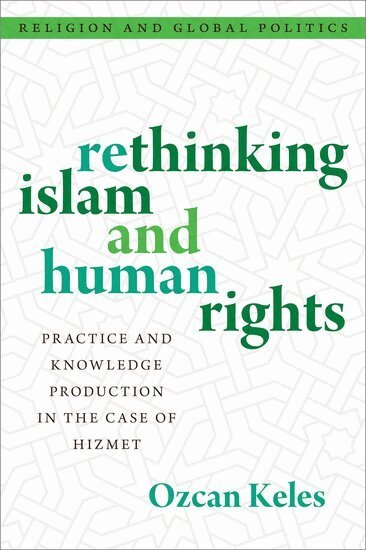
Rethinking Islam and Human Rights
Practice and Knowledge Production in the Case of Hizmet
Inbunden, Engelska, 2023
780 kr
Skickas inom 5-8 vardagar
The literature that explores the compatibility of Islam and human rights is torn between one approach that focuses on reinterpreting Islamic scripture and another that concentrates on reconfiguring Muslim sensibility. Since one cannot be understood without the other, both approaches fail to account for change within their respective domains. In Rethinking Islam and Human Rights, leading Islam and human rights scholar Ozcan Keles examines how social movement practice unknowingly and unintentionally produces Islamic knowledge on human rights (i.e., change) in both scriptural reinterpretation and societal disposition, through a focus on the interaction between the two. Rethinking Islam and Human Rights weaves together theoretical insights from a range of disciplines, while reworking process tracing methodology, to focus on a single case study analysis of the practices of the Hizmet movement (also known as the Gülen movement) to flesh out the dynamics of this interactive change and the centrality of practice-based knowledge production therein. In doing so, Keles demonstrates how and why social movement practice organically, unassumingly, unintentionally and often, counter-intentionally, produces socially transformative formalized Islamic knowledge on human rights. He shows how it is possible to account for the production, assimilation, legitimization, and externalization of Islamic knowledge through a single relational process on some of the most intransigent issues: apostasy and women's rights. Consequently, this book offers an important pathway to re-assess age-old challenges at the cross-sectional impasse of change, stability, and religious knowledge production, which extends beyond those associated with Islam and human rights.