Remembering the Modern World - Böcker
Visar alla böcker i serien Remembering the Modern World. Handla med fri frakt och snabb leverans.
18 produkter
18 produkter
2 150 kr
Skickas inom 10-15 vardagar
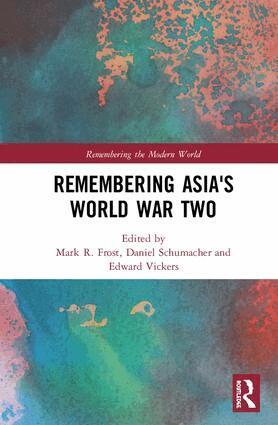
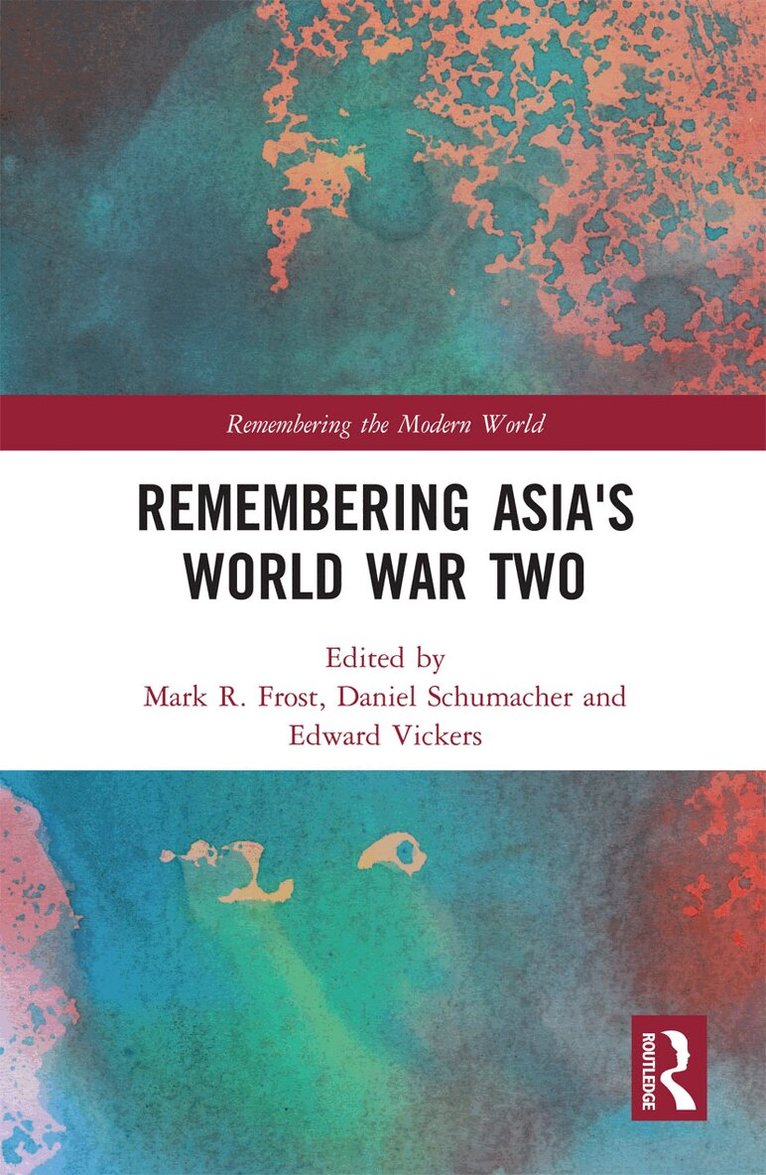
Over the past four decades, East and Southeast Asia have seen a proliferation of heritage sites and remembrance practices which commemorate the region’s bloody conflicts of the period 1931–45. Remembering Asia’s World War Two examines the origins, dynamics, and repercussions of this regional war “memory boom”.The book analyzes the politics of war commemoration in contemporary East and Southeast Asia. Featuring contributions from leading international scholars, the chapters span China, Japan, Malaysia, Hong Kong, and Singapore, covering topics such as the commemoration of the Japanese military’s “comfort women” system, forms of "dark tourism" or commemorative pilgrimages (e.g. veterans’ tours to wartime battlefields), and the establishment and evolution of various war-related heritage sites and museums. Case studies reveal the distinctive trajectories of new and newly discovered forms of remembrance within and across national boundaries. They highlight the growing influence of non-state actors over representations of conflict and occupation, as well as the increasingly interconnected and transnational character of memory-making. Taken together, the studies collected here demonstrate that across much of Asia the public commemoration of the wars of 1931–45 has begun to shift from portraying them as a series of national conflicts with distinctive local meanings to commemorating the conflict as a common pan-Asian, or even global, experience.Focusing on non-textual vehicles for public commemoration and considering both the local and international dimensions of war commemoration within, Remembering Asia’s World War Two will be a crucial reference for students and scholars of History, Memory Studies, and Heritage Studies, as well as all those interested in the history, politics, and culture of contemporary Asia.
579 kr
Skickas inom 10-15 vardagar
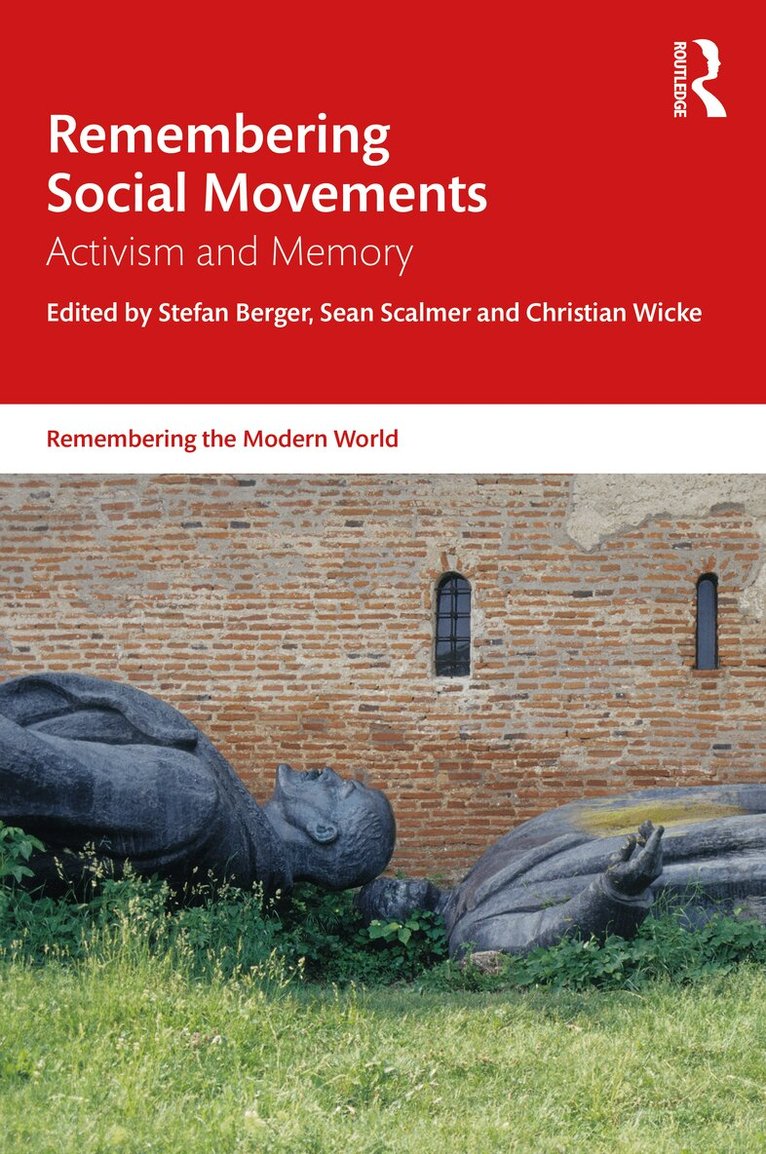
Remembering Social Movements offers a comparative historical examination of the relations between social movements and collective memory.A detailed historiographical and theoretical review of the field introduces the reader to five key concepts to help guide analysis: repertoires of contention, historical events, generations, collective identities, and emotions. The book examines how social movements act to shape public memory as well as how memory plays an important role within social movements through 15 historical case studies, spanning labour, feminist, peace, anti-nuclear, and urban movements, as well as specific examples of ‘memory activism’ from the 19th century to the 21st century. These include transnational and explicitly comparative case studies, in addition to cases rooted in German, Australian, Indian, and American history, ensuring that the reader gains a real insight into the remembrance of social activism across the globe and in different contexts. The book concludes with an epilogue from a prominent Memory Studies scholar.Bringing together the previously disparate fields of Memory Studies and Social Movement Studies, this book systematically scrutinises the two-way relationship between memory and activism and uses case studies to ground students while offering analytical tools for the reader.
2 150 kr
Skickas inom 10-15 vardagar
Remembering Social Movements offers a comparative historical examination of the relations between social movements and collective memory.A detailed historiographical and theoretical review of the field introduces the reader to five key concepts to help guide analysis: repertoires of contention, historical events, generations, collective identities, and emotions. The book examines how social movements act to shape public memory as well as how memory plays an important role within social movements through 15 historical case studies, spanning labour, feminist, peace, anti-nuclear, and urban movements, as well as specific examples of ‘memory activism’ from the 19th century to the 21st century. These include transnational and explicitly comparative case studies, in addition to cases rooted in German, Australian, Indian, and American history, ensuring that the reader gains a real insight into the remembrance of social activism across the globe and in different contexts. The book concludes with an epilogue from a prominent Memory Studies scholar.Bringing together the previously disparate fields of Memory Studies and Social Movement Studies, this book systematically scrutinises the two-way relationship between memory and activism and uses case studies to ground students while offering analytical tools for the reader.
649 kr
Skickas inom 10-15 vardagar
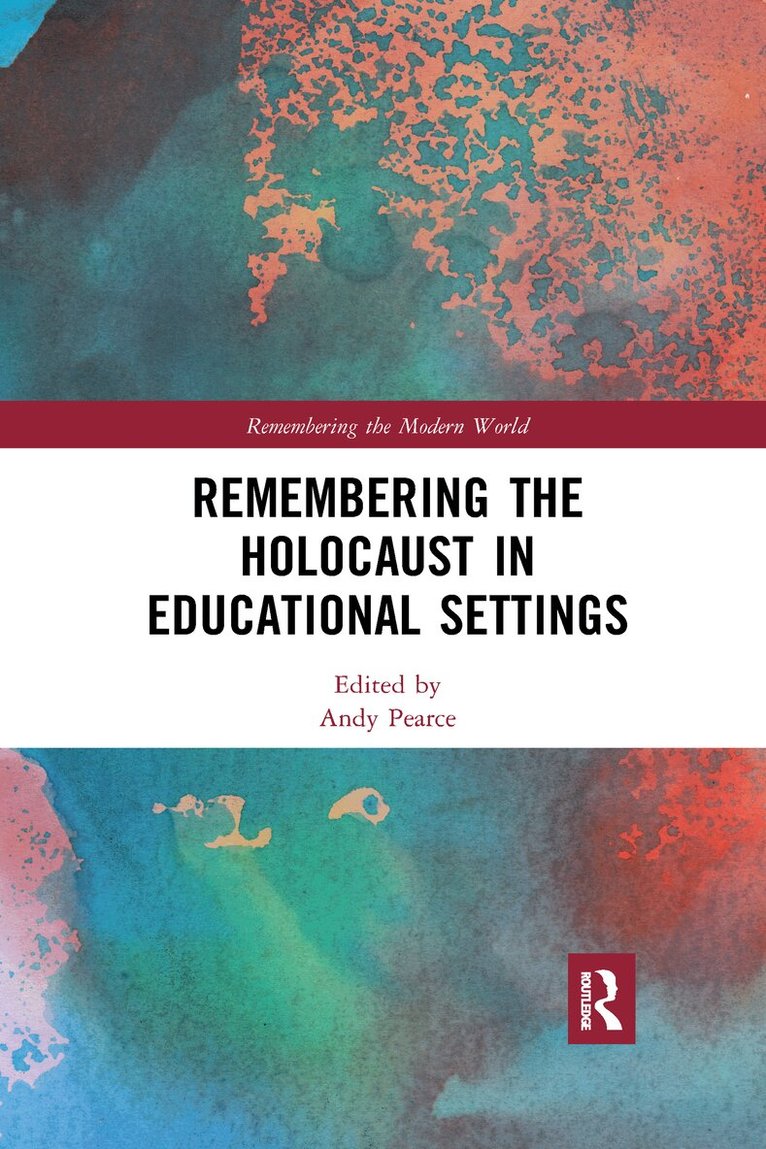
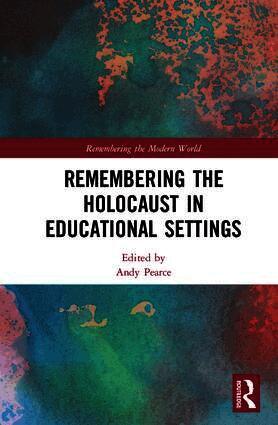
Remembering the Holocaust in Educational Settings brings together a group of international experts to investigate the relationship between Holocaust remembrance and different types of educational activity through consideration of how education has become charged with preserving and perpetuating Holocaust memory and an examination of the challenges and opportunities this presents.The book is divided into two key parts. The first part considers the issues of and approaches to the remembrance of the Holocaust within an educational setting, with essays covering topics such as historical culture, genocide education, familial narratives, the survivor generation, and memory spaces in the United States, United Kingdom, and Germany. In the second part, contributors explore a wide range of case studies within which education and Holocaust remembrance interact, including young people’s understanding of the Holocaust in Germany, Polish identity narratives, Shoah remembrance and education in Israel, the Holocaust and Genocide Centre of Education and Memory in South Africa, and teaching at Deakin University, Melbourne, Australia.An international and interdisciplinary exploration of how and why the Holocaust is remembered through educational activity, Remembering the Holocaust in Educational Settings is the ideal book for all students, scholars, and researchers of the history and memory of the Holocaust as well as those studying and working within Holocaust education.
677 kr
Skickas inom 10-15 vardagar
Over the past four decades, East and Southeast Asia have seen a proliferation of heritage sites and remembrance practices which commemorate the region’s bloody conflicts of the period 1931–45. Remembering Asia’s World War Two examines the origins, dynamics, and repercussions of this regional war “memory boom”.The book analyzes the politics of war commemoration in contemporary East and Southeast Asia. Featuring contributions from leading international scholars, the chapters span China, Japan, Malaysia, Hong Kong, and Singapore, covering topics such as the commemoration of the Japanese military’s “comfort women” system, forms of "dark tourism" or commemorative pilgrimages (e.g. veterans’ tours to wartime battlefields), and the establishment and evolution of various war-related heritage sites and museums. Case studies reveal the distinctive trajectories of new and newly discovered forms of remembrance within and across national boundaries. They highlight the growing influence of non-state actors over representations of conflict and occupation, as well as the increasingly interconnected and transnational character of memory-making. Taken together, the studies collected here demonstrate that across much of Asia the public commemoration of the wars of 1931–45 has begun to shift from portraying them as a series of national conflicts with distinctive local meanings to commemorating the conflict as a common pan-Asian, or even global, experience.Focusing on non-textual vehicles for public commemoration and considering both the local and international dimensions of war commemoration within, Remembering Asia’s World War Two will be a crucial reference for students and scholars of History, Memory Studies, and Heritage Studies, as well as all those interested in the history, politics, and culture of contemporary Asia.
2 288 kr
Skickas inom 10-15 vardagar
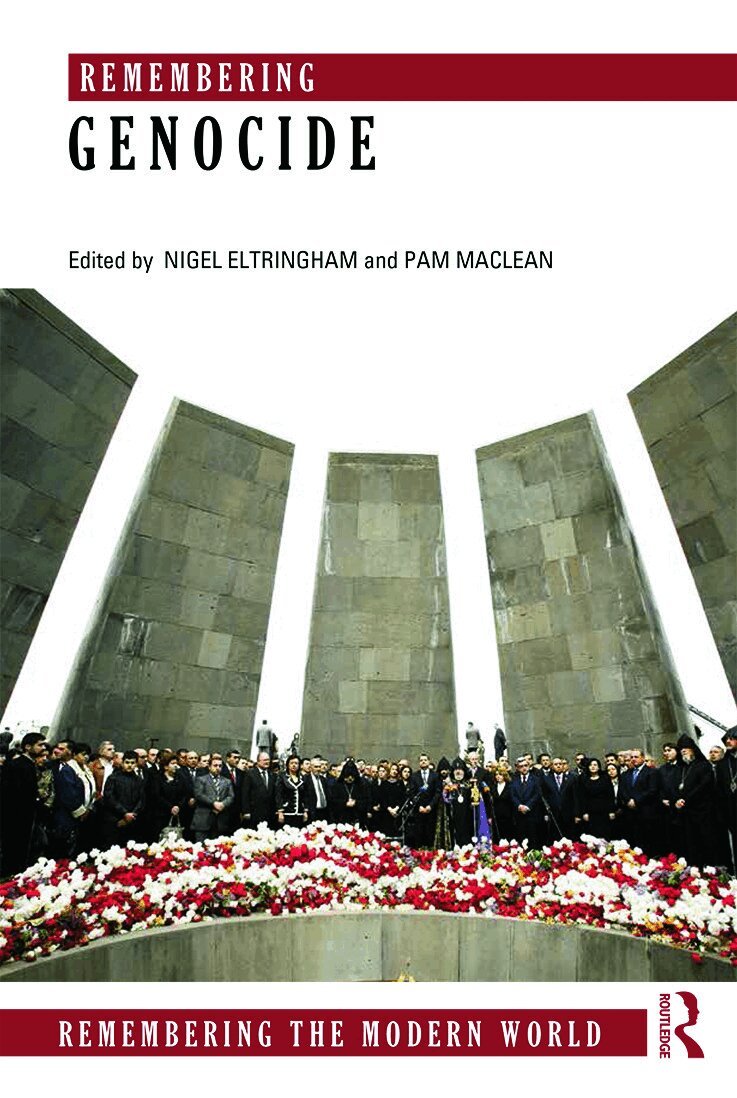
In Remembering Genocide an international group of scholars draw on current research from a range of disciplines to explore how communities throughout the world remember genocide. Whether coming to terms with atrocities committed in Namibia and Rwanda, Australia, Canada, the Punjab, Armenia, Cambodia and during the Holocaust, those seeking to remember genocide are confronted with numerous challenges. Survivors grapple with the possibility, or even the desirability, of recalling painful memories. Societies where genocide has been perpetrated find it difficult to engage with an uncomfortable historical legacy.Still, to forget genocide, as this volume edited by Nigel Eltringham and Pam Maclean shows, is not an option. To do so reinforces the vulnerability of groups whose very existence remains in jeopardy and denies them the possibility of bringing perpetrators to justice. Contributors discuss how genocide is represented in media including literature, memorial books, film and audiovisual testimony. Debates surrounding the role museums and monuments play in constructing and transmitting memory are highlighted. Finally, authors engage with controversies arising from attempts to mobilise and manipulate memory in the service of reconciliation, compensation and transitional justice.
705 kr
Skickas inom 10-15 vardagar
In Remembering Genocide an international group of scholars draw on current research from a range of disciplines to explore how communities throughout the world remember genocide. Whether coming to terms with atrocities committed in Namibia and Rwanda, Australia, Canada, the Punjab, Armenia, Cambodia and during the Holocaust, those seeking to remember genocide are confronted with numerous challenges. Survivors grapple with the possibility, or even the desirability, of recalling painful memories. Societies where genocide has been perpetrated find it difficult to engage with an uncomfortable historical legacy.Still, to forget genocide, as this volume edited by Nigel Eltringham and Pam Maclean shows, is not an option. To do so reinforces the vulnerability of groups whose very existence remains in jeopardy and denies them the possibility of bringing perpetrators to justice. Contributors discuss how genocide is represented in media including literature, memorial books, film and audiovisual testimony. Debates surrounding the role museums and monuments play in constructing and transmitting memory are highlighted. Finally, authors engage with controversies arising from attempts to mobilise and manipulate memory in the service of reconciliation, compensation and transitional justice.
2 150 kr
Skickas inom 10-15 vardagar
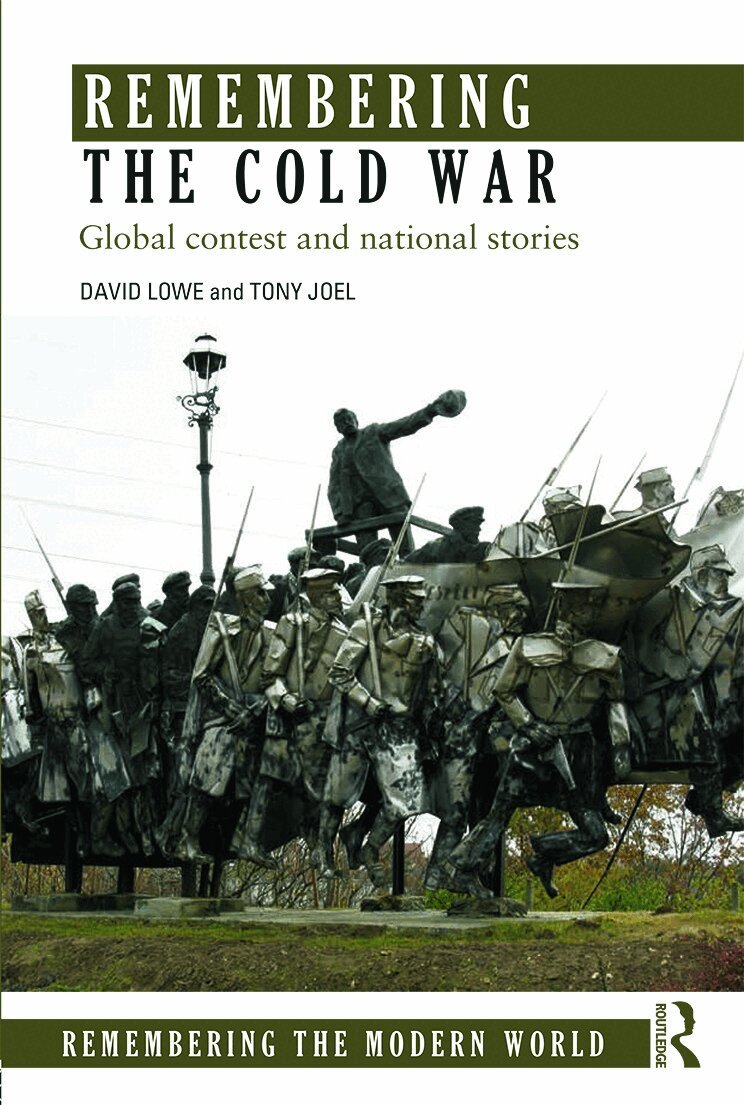
Remembering the Cold War examines how, more than two decades since the collapse of the Soviet Union, Cold War legacies continue to play crucial roles in defining national identities and shaping international relations around the globe. Given the Cold War’s blurred definition – it has neither a widely accepted commencement date nor unanimous conclusion - what is to be remembered? This book illustrates that there is, in fact, a huge body of ‘remembrance,’ and that it is more pertinent to ask: what should be included and what can be overlooked? Over five sections, this richly illustrated volume considers case studies of Cold War remembering from different parts of the world, and engages with growing theorisation in the field of memory studies, specifically in relation to war. David Lowe and Tony Joel afford careful consideration to agencies that identify with being ‘victims’ of the Cold War. In addition, the concept of arenas of articulation, which envelops the myriad spaces in which the remembering, commemorating, memorialising, and even revising of Cold War history takes place, is given prominence.
593 kr
Skickas inom 10-15 vardagar
Remembering the Cold War examines how, more than two decades since the collapse of the Soviet Union, Cold War legacies continue to play crucial roles in defining national identities and shaping international relations around the globe. Given the Cold War’s blurred definition – it has neither a widely accepted commencement date nor unanimous conclusion - what is to be remembered? This book illustrates that there is, in fact, a huge body of ‘remembrance,’ and that it is more pertinent to ask: what should be included and what can be overlooked? Over five sections, this richly illustrated volume considers case studies of Cold War remembering from different parts of the world, and engages with growing theorisation in the field of memory studies, specifically in relation to war. David Lowe and Tony Joel afford careful consideration to agencies that identify with being ‘victims’ of the Cold War. In addition, the concept of arenas of articulation, which envelops the myriad spaces in which the remembering, commemorating, memorialising, and even revising of Cold War history takes place, is given prominence.
2 150 kr
Skickas inom 10-15 vardagar
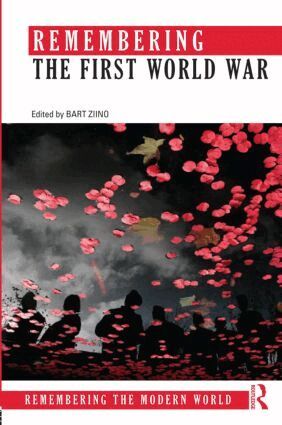
Remembering the First World War brings together a group of international scholars to understand how and why the past quarter of a century has witnessed such an extraordinary increase in global popular and academic interest in the First World War, both as an event and in the ways it is remembered. The book discusses this phenomenon across three key areas. The first section looks at family history, genealogy and the First World War, seeking to understand the power of family history in shaping and reshaping remembrance of the War at the smallest levels, as well as popular media and the continuing role of the state and its agencies. The second part discusses practices of remembering and the more public forms of representation and negotiation through film, literature, museums, monuments and heritage sites, focusing on agency in representing and remembering war. The third section covers the return of the War and the increasing determination among individuals to acknowledge and participate in public rituals of remembrance with their own contemporary politics. What, for instance, does it mean to wear a poppy on armistice/remembrance day? How do symbols like this operate today? These chapters will investigate these aspects through a series of case studies.Placing remembrance of the First World War in its longer historical and broader transnational context and including illustrations and an afterword by Professor David Reynolds, this is the ideal book for all those interested in the history of the Great War and its aftermath.
593 kr
Skickas inom 10-15 vardagar
Remembering the First World War brings together a group of international scholars to understand how and why the past quarter of a century has witnessed such an extraordinary increase in global popular and academic interest in the First World War, both as an event and in the ways it is remembered. The book discusses this phenomenon across three key areas. The first section looks at family history, genealogy and the First World War, seeking to understand the power of family history in shaping and reshaping remembrance of the War at the smallest levels, as well as popular media and the continuing role of the state and its agencies. The second part discusses practices of remembering and the more public forms of representation and negotiation through film, literature, museums, monuments and heritage sites, focusing on agency in representing and remembering war. The third section covers the return of the War and the increasing determination among individuals to acknowledge and participate in public rituals of remembrance with their own contemporary politics. What, for instance, does it mean to wear a poppy on armistice/remembrance day? How do symbols like this operate today? These chapters will investigate these aspects through a series of case studies.Placing remembrance of the First World War in its longer historical and broader transnational context and including illustrations and an afterword by Professor David Reynolds, this is the ideal book for all those interested in the history of the Great War and its aftermath.
2 150 kr
Skickas inom 10-15 vardagar
Remembering the Holocaust in Educational Settings brings together a group of international experts to investigate the relationship between Holocaust remembrance and different types of educational activity through consideration of how education has become charged with preserving and perpetuating Holocaust memory and an examination of the challenges and opportunities this presents.The book is divided into two key parts. The first part considers the issues of and approaches to the remembrance of the Holocaust within an educational setting, with essays covering topics such as historical culture, genocide education, familial narratives, the survivor generation, and memory spaces in the United States, United Kingdom, and Germany. In the second part, contributors explore a wide range of case studies within which education and Holocaust remembrance interact, including young people’s understanding of the Holocaust in Germany, Polish identity narratives, Shoah remembrance and education in Israel, the Holocaust and Genocide Centre of Education and Memory in South Africa, and teaching at Deakin University, Melbourne, Australia.An international and interdisciplinary exploration of how and why the Holocaust is remembered through educational activity, Remembering the Holocaust in Educational Settings is the ideal book for all students, scholars, and researchers of the history and memory of the Holocaust as well as those studying and working within Holocaust education.
2 150 kr
Skickas inom 10-15 vardagar
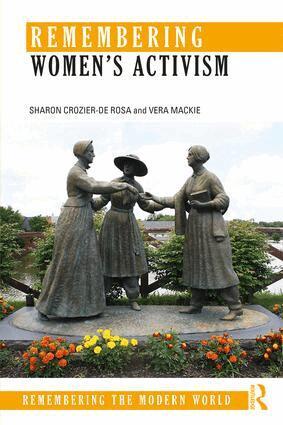
Remembering Women’s Activism examines the intersections between gender politics and acts of remembrance by tracing the cultural memories of women who are known for their actions. Memories are constantly being reinterpreted and are profoundly shaped by gender. This book explores the gendered dimensions of history and memory through nation-based and transnational case studies from the Asia-Pacific region and Anglophone world. Chapters consider how different forms of women’s activism have been remembered: the efforts of suffragists in Britain, the USA and Australia to document their own histories and preserve their memory; Constance Markievicz and Qiu Jin, two early twentieth-century political activists in Ireland and China respectively; the struggles of women workers; and the movement for redress of those who have suffered militarized sexual abuse. The book concludes by reflecting on the mobilization of memories of activism in the present.Transnational in scope and with reference to both state-centred and organic acts of remembering, including memorial practices, physical sites of memory, popular culture and social media, Remembering Women’s Activism is an ideal volume for all students of gender and history, the history of feminism, and the relationship between memory and history.
593 kr
Skickas inom 10-15 vardagar
Remembering Women’s Activism examines the intersections between gender politics and acts of remembrance by tracing the cultural memories of women who are known for their actions. Memories are constantly being reinterpreted and are profoundly shaped by gender. This book explores the gendered dimensions of history and memory through nation-based and transnational case studies from the Asia-Pacific region and Anglophone world. Chapters consider how different forms of women’s activism have been remembered: the efforts of suffragists in Britain, the USA and Australia to document their own histories and preserve their memory; Constance Markievicz and Qiu Jin, two early twentieth-century political activists in Ireland and China respectively; the struggles of women workers; and the movement for redress of those who have suffered militarized sexual abuse. The book concludes by reflecting on the mobilization of memories of activism in the present.Transnational in scope and with reference to both state-centred and organic acts of remembering, including memorial practices, physical sites of memory, popular culture and social media, Remembering Women’s Activism is an ideal volume for all students of gender and history, the history of feminism, and the relationship between memory and history.
2 150 kr
Skickas inom 10-15 vardagar
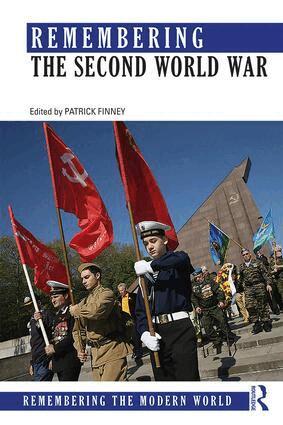
Remembering the Second World War brings together an international and interdisciplinary cast of leading scholars to explore the remembrance of this conflict on a global scale. Conceptually, it is premised on the need to challenge nation-centric approaches in memory studies, drawing strength from recent transcultural, affective and multidirectional turns. Divided into four thematic parts, this book largely focuses on the post-Cold War period, which has seen a notable upsurge in commemorative activity relating to the Second World War and significant qualitative changes in its character. The first part explores the enduring utility and the limitations of the national frame in France, Germany and China. The second explores transnational transactions in remembrance, looking at memories of the British Empire at war, contested memories in East-Central Europe and the transnational campaign on behalf of Japan’s former ‘comfort women’. A third section considers local and sectional memories of the war and the fourth analyses innovative practices of memory, including re-enactment, video gaming and Holocaust tourism. Offering insightful contributions on intriguing topics and illuminating the current state of the art in this growing field, this book will be essential reading for all students and scholars of the history and memory of the Second World War.
593 kr
Skickas inom 10-15 vardagar
Remembering the Second World War brings together an international and interdisciplinary cast of leading scholars to explore the remembrance of this conflict on a global scale. Conceptually, it is premised on the need to challenge nation-centric approaches in memory studies, drawing strength from recent transcultural, affective and multidirectional turns. Divided into four thematic parts, this book largely focuses on the post-Cold War period, which has seen a notable upsurge in commemorative activity relating to the Second World War and significant qualitative changes in its character. The first part explores the enduring utility and the limitations of the national frame in France, Germany and China. The second explores transnational transactions in remembrance, looking at memories of the British Empire at war, contested memories in East-Central Europe and the transnational campaign on behalf of Japan’s former ‘comfort women’. A third section considers local and sectional memories of the war and the fourth analyses innovative practices of memory, including re-enactment, video gaming and Holocaust tourism. Offering insightful contributions on intriguing topics and illuminating the current state of the art in this growing field, this book will be essential reading for all students and scholars of the history and memory of the Second World War.
2 150 kr
Skickas inom 10-15 vardagar
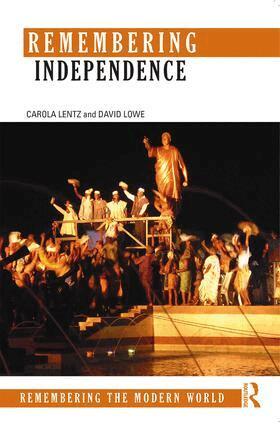
Remembering Independence explores the commemoration and remembrance of independence following the great wave of decolonisation after the Second World War. Drawing on case studies from Africa, Asia, and with reference to the Pacific, the authors find that remembering independence was, and still is, highly dynamic. From flag-raising moments to the present day, the transfer of authority from colonial rule to independent nation-states has served as a powerful mnemonic focal point. Remembering independence, in state as well as non-state constructions, connects to changing contemporary purposes and competing politic visions. Independence is a flexible idea, both a moment in time and a project, a carrier of hopes and ideals of social justice and freedom, but also of disappointments and frustrated futures.This richly illustrated volume draws attention to the broad range of media employed in remembering independence, ranging from museums and monuments to textual, oral and ritual formats of commemorative events, such as national days. Combining insights from history and anthropology, this book will be essential reading for all students of the history of empire, decolonisation, nation-building and post-colonial politics of memory.
593 kr
Skickas inom 10-15 vardagar
Remembering Independence explores the commemoration and remembrance of independence following the great wave of decolonisation after the Second World War. Drawing on case studies from Africa, Asia, and with reference to the Pacific, the authors find that remembering independence was, and still is, highly dynamic. From flag-raising moments to the present day, the transfer of authority from colonial rule to independent nation-states has served as a powerful mnemonic focal point. Remembering independence, in state as well as non-state constructions, connects to changing contemporary purposes and competing politic visions. Independence is a flexible idea, both a moment in time and a project, a carrier of hopes and ideals of social justice and freedom, but also of disappointments and frustrated futures.This richly illustrated volume draws attention to the broad range of media employed in remembering independence, ranging from museums and monuments to textual, oral and ritual formats of commemorative events, such as national days. Combining insights from history and anthropology, this book will be essential reading for all students of the history of empire, decolonisation, nation-building and post-colonial politics of memory.