Reproduction and Development in Aquatic Invertebrates – serie
Visar alla böcker i serien Reproduction and Development in Aquatic Invertebrates. Handla med fri frakt och snabb leverans.
12 produkter
12 produkter
2 521 kr
Skickas inom 10-15 vardagar
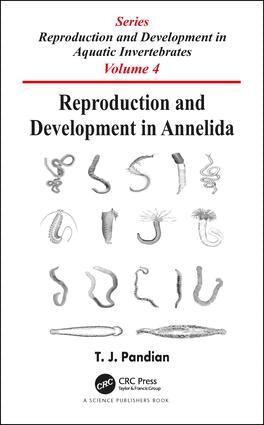
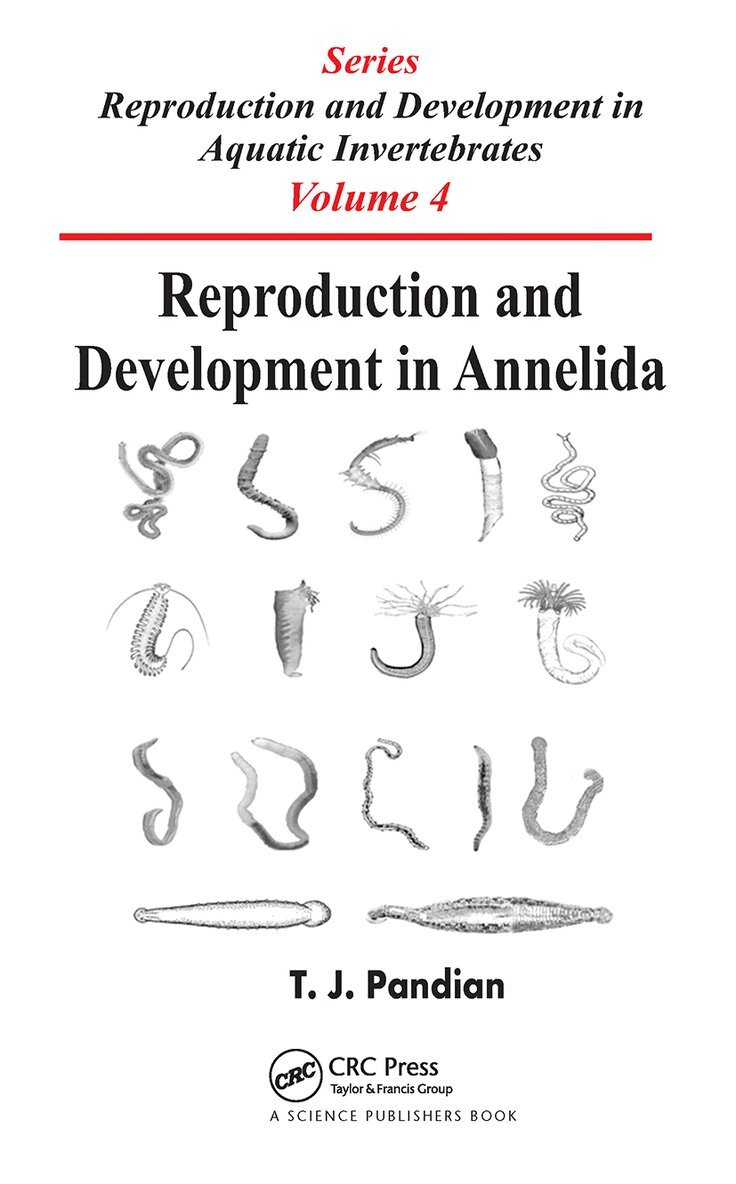
This book is a concise informative elucidation of all aspects of reproduction and development in annelids covering from arenicola to tubifex. Annelids flourish between 4,900 m depth to 2,000 m altitude; some of them occur in unusual habitats like hydrothermal vents and subterranean aquatic system (stigobionts). A few have no gut and acquire adequate nutrients through osmotrophism and/or engaging symbiotic microbes. In the absence of exoskeleton to escape predation, the 17,000 speciose annelids have explored bewildering modes of reproduction; not surprisingly, 42–47% of them are brooders. With 13,000 species, polychaetes are gonochores but some 207 species of them are hermaphrodites. Clitellates are all hermaphrodites; of them, 76 species are parthenogens, of which 56 are earthworms.Regenerative potency of annelids ranges from an organ to an entire worm from a single ‘seminal’ segment. The head, tail and both together can be regenerated 21, 42 and 20 times, respectively. However, the potency is limited to ~1% of polychaetes and < 2% of oligochaetes. In oligochaetes, the chloragogue temporally separates regeneration and reproduction but sedentary polychaetes undertake them together at the reduced reproductive output. Only 79 polychaete and 111 oligochaete species have the potency for clonal reproduction. Within families, the potency ranges from 2% in spionids to 54% in naidids. Epitoky, a spectacular and unique phenomenon, involves the transformation from benthic to meroplanktonic reproductive morphism. It occurs in 106 errant polychaete species. The larger glycerides, nereidids and eunicids use muscular energy to climb < 50 m vertical distance. But the small phyllodocids and cteniodrilids may reduce buoyancy to climb 1,000–4,000 m vertical distance.Heterogamatic sex determination is reported to occur only in six polychaete species, although karyotype is known for 83 annelid species. In temperate polychaetes, a dozen neuroendocrines, arising mostly from the ‘brain’ regulates reproductive cycle. A complete chapter devoted to vermiculture, (i) recognizes the fast-growing candidate species, (ii) distinguishes 'layers' from 'brooders', (iii) indicates that the harvest of oligochaetes may reduce the input of nitrogenous fertilizer in the ricefield, and (iv) explores the scope for increasing wealth from waste.
2 181 kr
Skickas inom 10-15 vardagar
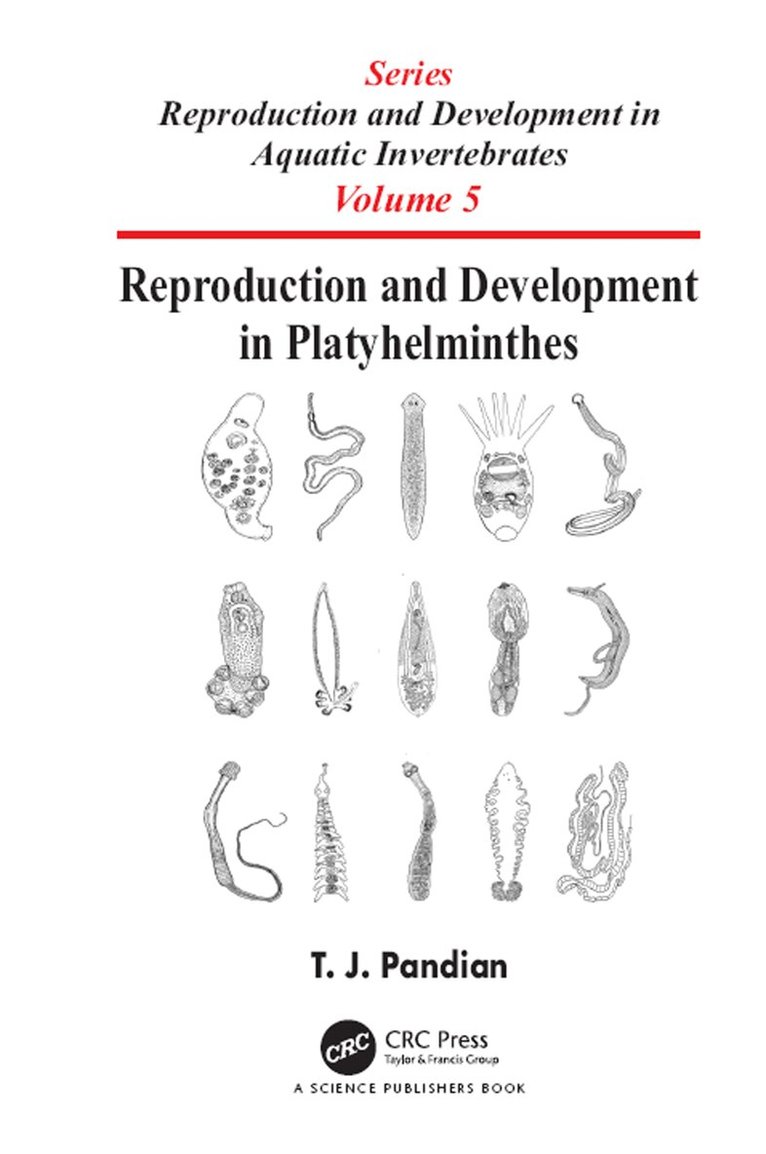
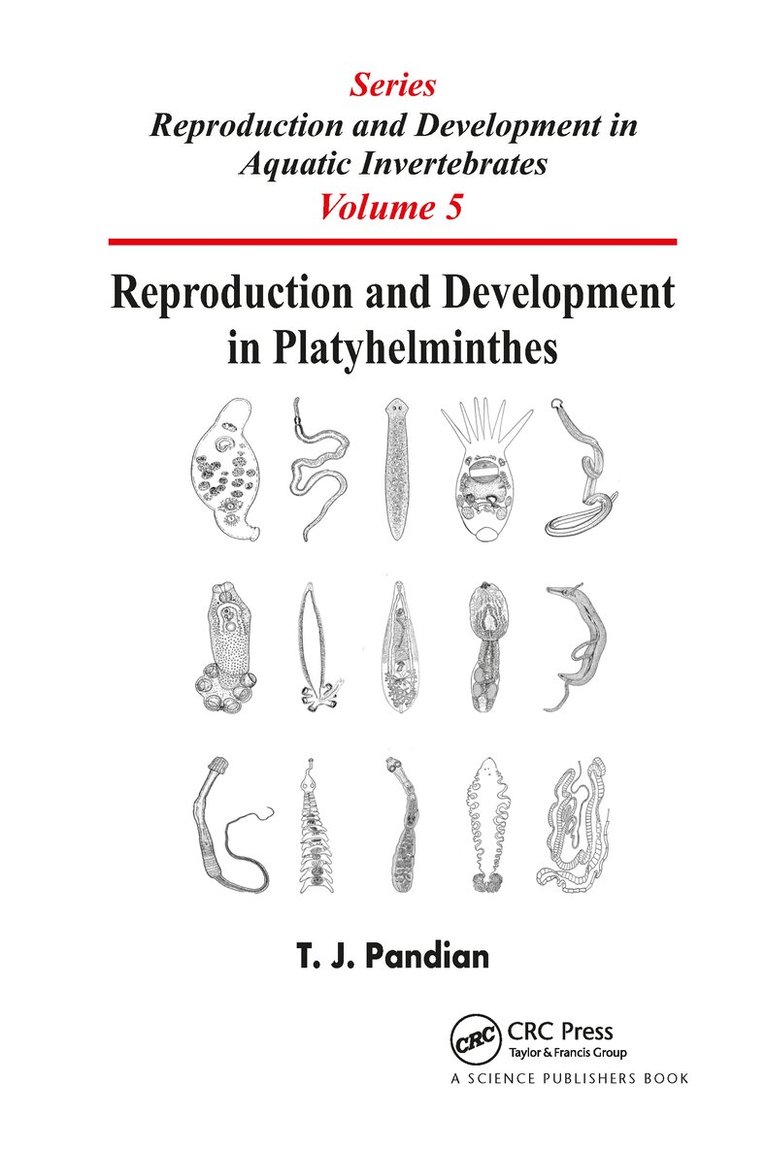
This book is a comprehensive elucidation on aspects of reproduction and development in platyhelminthes covering from acoelids to taeniids. With the unique presence of neoblasts, turbellarians serve as a model for studies on cancer and senescence. Of ~ 27,000 species, ~ 77% are parasites; they are harmful to man and his food basket from livestock and fish. The stress hormone, cortisol level is responsible for susceptibility and resistance of the host. In digeneans, the propagatory multiplication potency is retained by all the larval forms and in either direction in sporocyst. The higher clonal diversity, mixing and selection in Second Intermediate Host (SIH) may purge inbreeding depression suffered by the fluke on propagatory multiplication in First Intermediate Host (FIH). Of 12,012 digeneans, 88% may engage 33,014 potential SIH species. They have the choice to select one among the available/awaiting 3.5 host species. The motility of vertebrate host and euryxenic flexibility/scope for selection of SIH species has increased lineage diversification in digeneans. The life cycle of cestodes is divided into aquatic and terrestrial patterns. The former includes (i) oncosphere and (ii) coracidium types and the latter (iii) hexacanth-cysticercoid, (iv) hexacanth-tetrathyridium and (v) hexacanth-cysticercus types. The share for the oncosphere, coracidium and hexacanth types is 17.0, 29.5 and 46.5%, respectively. The staggering fecundity and adoption of the intermediate host in the herbivorous/insectivorous food chain have enriched Taenioidea as the most (2,264) speciose order. Sex specific genes Smed-dmd 1 and macbol have been identified, and neuropeptides and dipeptides are involved in sexualization. Trematodes are unable to parasitize elasmobranchs, as they cannot suck body fluid/blood containing a high level of urea. Relatively higher fecundity supplemented with propagatory multiplication, incorporation of SIH in 88% species, clonal selection in SIH, and euryxenic flexibility and the widest choice for selection of SIH have led to the highest lineage diversification to render digeneans as the most speciose order in Platyhelminthes.
1 966 kr
Skickas inom 10-15 vardagar
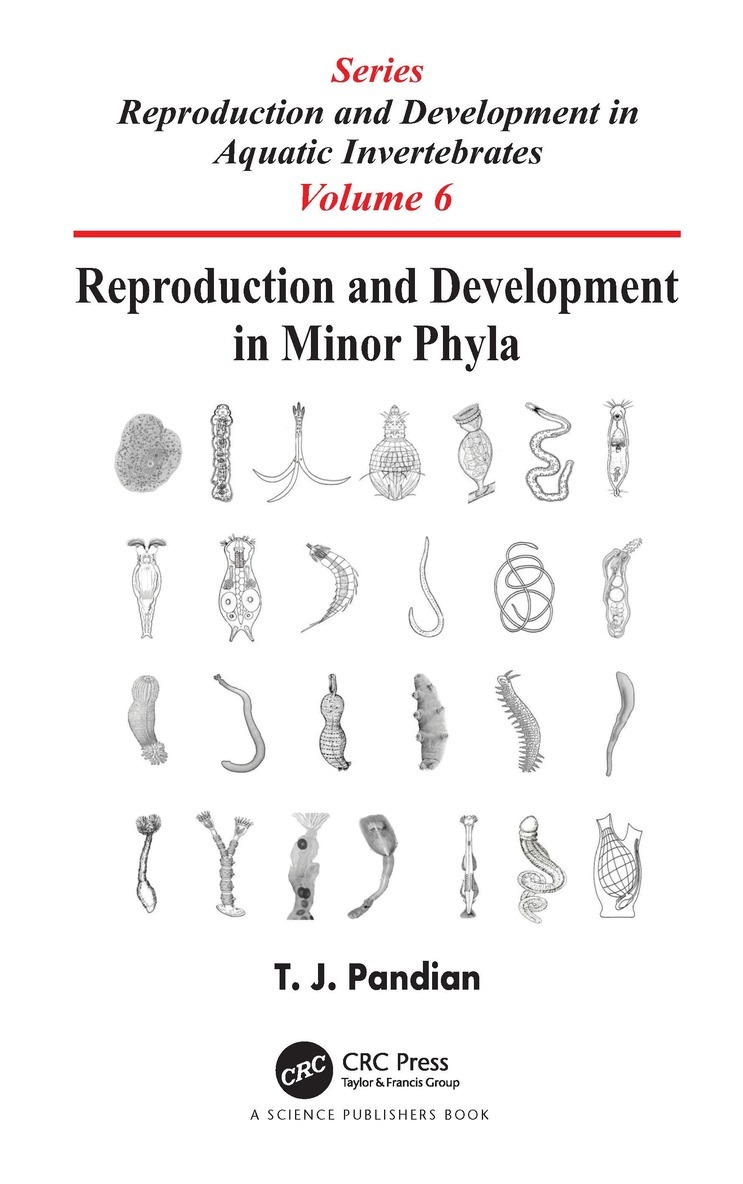
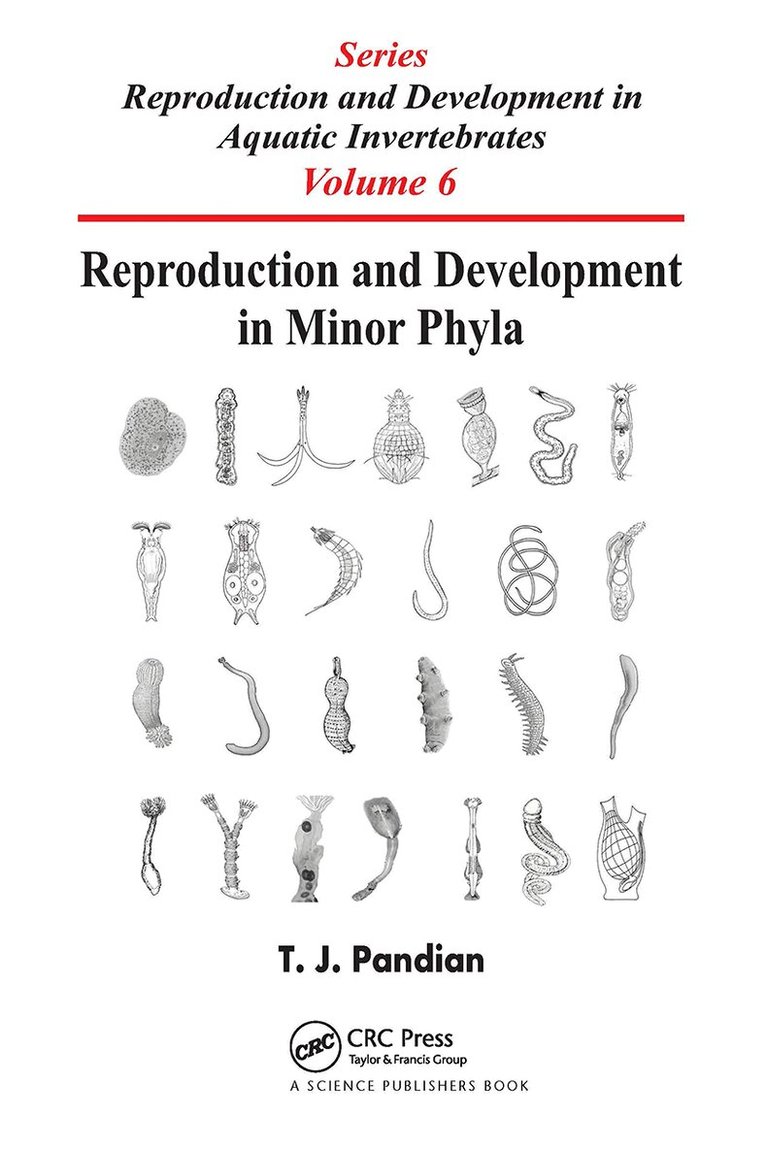
The 26 recognized minor phyla comprise aberrant clades, as most of them terminate as blind offshoots. Untied from the discussion on their phylogenesis of minor phyla, this book is largely devoted, for the first time, to aspects of reproduction and development in minor phyletics. The minor phyla are not as speciose (1,795 species/phylum) as the major phyla (157,066 species/phylum) are. The accumulation of deleterious genes causes inbreeding depression among progenies arising from parthenogenesis, clonal multiplication and selfing hermaphrodites. The reason for the limited species diversity in minor phyla is traced to (i) eutelism in 65.7% of minor phyletics and (ii) existence of 21.6% clonals, (iii) 6.4% parthenogens and (iv) 1.2% selfing hermaphroditism. Gonochorism obligately requires motility to search for a mate. The combination of low motility and gonochorism from Placozoa to hemocoelomatic minor phyla has limited diversity to < 1,000 species. Over 19% of minor phyletics are hermaphrodites. With the need to manifest and maintain dual sexuality, fecundity of hermaphrodites may be reduced to 50% of that in gonochores. Adopting an array of strategies, < 100 hermaphrodites are selfers. In eutelics, mitotic division is ceased in somatic cells after hatching. For the first time, the prevalence of eutelism has been brought to light in numbers of all the six pseudocoelomate phyla and priapulids. Eutelism limits fecundity to 30–300 eggs in free-living pseudocoelomates, priapulids and possibly other hemocoelomates. In them, sperm production is less than that of egg production; as a result, a large fraction of their eggs is sterile. With a high proportion of non-eutelic gametic cells (35%), Nematoda and possibly Nematomorpha and Acanthocephala are more fecund than rotifers, in which the proportion is 15%. Briefly, the reasons for the limited species diversity in minor phyletics are traced to eutelism, parthenogenesis and clonal multiplication. Surprisingly, parthenogenesis and clonal multiplication mutually eliminate each other. This is also true of hermaphroditism and parthenogenesis. However, clonal multiplication is prevalent from structurally simplest Placozoa to the most complex Ascidiacea, except in pseudocoelomates and hemocoelomates. A limited number of cells and cell types, and the consequent structural simplicity facilitate manifestation of parthenogenesis in pseudocoelomates and parasitism in Mesozoa, Myxozoa, 59% of Nematoda, Nematomorpha, Acanthocephala and Pentastomida. Despite hermaphroditism, Bryozoa (5,700 species) and Ascidiacea (3,000 species) are speciose among minor phyla. For the first time, the importance of fusion of fragments or colonies – an event equivalent to gamete fusion at fertilization – is recognized as a source of new gene combination. Besides, the colonies in these minor phyla degenerate and regenerate more or less regularly. Only the fittest degenerated colonies may be rejuvenated and regenerated.
721 kr
Skickas inom 10-15 vardagar
The 26 recognized minor phyla comprise aberrant clades, as most of them terminate as blind offshoots. Untied from the discussion on their phylogenesis of minor phyla, this book is largely devoted, for the first time, to aspects of reproduction and development in minor phyletics. The minor phyla are not as speciose (1,795 species/phylum) as the major phyla (157,066 species/phylum) are. The accumulation of deleterious genes causes inbreeding depression among progenies arising from parthenogenesis, clonal multiplication and selfing hermaphrodites. The reason for the limited species diversity in minor phyla is traced to (i) eutelism in 65.7% of minor phyletics and (ii) existence of 21.6% clonals, (iii) 6.4% parthenogens and (iv) 1.2% selfing hermaphroditism. Gonochorism obligately requires motility to search for a mate. The combination of low motility and gonochorism from Placozoa to hemocoelomatic minor phyla has limited diversity to < 1,000 species. Over 19% of minor phyletics are hermaphrodites. With the need to manifest and maintain dual sexuality, fecundity of hermaphrodites may be reduced to 50% of that in gonochores. Adopting an array of strategies, < 100 hermaphrodites are selfers. In eutelics, mitotic division is ceased in somatic cells after hatching. For the first time, the prevalence of eutelism has been brought to light in numbers of all the six pseudocoelomate phyla and priapulids. Eutelism limits fecundity to 30–300 eggs in free-living pseudocoelomates, priapulids and possibly other hemocoelomates. In them, sperm production is less than that of egg production; as a result, a large fraction of their eggs is sterile. With a high proportion of non-eutelic gametic cells (35%), Nematoda and possibly Nematomorpha and Acanthocephala are more fecund than rotifers, in which the proportion is 15%. Briefly, the reasons for the limited species diversity in minor phyletics are traced to eutelism, parthenogenesis and clonal multiplication. Surprisingly, parthenogenesis and clonal multiplication mutually eliminate each other. This is also true of hermaphroditism and parthenogenesis. However, clonal multiplication is prevalent from structurally simplest Placozoa to the most complex Ascidiacea, except in pseudocoelomates and hemocoelomates. A limited number of cells and cell types, and the consequent structural simplicity facilitate manifestation of parthenogenesis in pseudocoelomates and parasitism in Mesozoa, Myxozoa, 59% of Nematoda, Nematomorpha, Acanthocephala and Pentastomida. Despite hermaphroditism, Bryozoa (5,700 species) and Ascidiacea (3,000 species) are speciose among minor phyla. For the first time, the importance of fusion of fragments or colonies – an event equivalent to gamete fusion at fertilization – is recognized as a source of new gene combination. Besides, the colonies in these minor phyla degenerate and regenerate more or less regularly. Only the fittest degenerated colonies may be rejuvenated and regenerated.
700 kr
Skickas inom 10-15 vardagar
This book is a concise informative elucidation of all aspects of reproduction and development in annelids covering from arenicola to tubifex. Annelids flourish between 4,900 m depth to 2,000 m altitude; some of them occur in unusual habitats like hydrothermal vents and subterranean aquatic system (stigobionts). A few have no gut and acquire adequate nutrients through osmotrophism and/or engaging symbiotic microbes. In the absence of exoskeleton to escape predation, the 17,000 speciose annelids have explored bewildering modes of reproduction; not surprisingly, 42–47% of them are brooders. With 13,000 species, polychaetes are gonochores but some 207 species of them are hermaphrodites. Clitellates are all hermaphrodites; of them, 76 species are parthenogens, of which 56 are earthworms.Regenerative potency of annelids ranges from an organ to an entire worm from a single ‘seminal’ segment. The head, tail and both together can be regenerated 21, 42 and 20 times, respectively. However, the potency is limited to ~1% of polychaetes and < 2% of oligochaetes. In oligochaetes, the chloragogue temporally separates regeneration and reproduction but sedentary polychaetes undertake them together at the reduced reproductive output. Only 79 polychaete and 111 oligochaete species have the potency for clonal reproduction. Within families, the potency ranges from 2% in spionids to 54% in naidids. Epitoky, a spectacular and unique phenomenon, involves the transformation from benthic to meroplanktonic reproductive morphism. It occurs in 106 errant polychaete species. The larger glycerides, nereidids and eunicids use muscular energy to climb < 50 m vertical distance. But the small phyllodocids and cteniodrilids may reduce buoyancy to climb 1,000–4,000 m vertical distance.Heterogamatic sex determination is reported to occur only in six polychaete species, although karyotype is known for 83 annelid species. In temperate polychaetes, a dozen neuroendocrines, arising mostly from the ‘brain’ regulates reproductive cycle. A complete chapter devoted to vermiculture, (i) recognizes the fast-growing candidate species, (ii) distinguishes 'layers' from 'brooders', (iii) indicates that the harvest of oligochaetes may reduce the input of nitrogenous fertilizer in the ricefield, and (iv) explores the scope for increasing wealth from waste.
700 kr
Skickas inom 10-15 vardagar
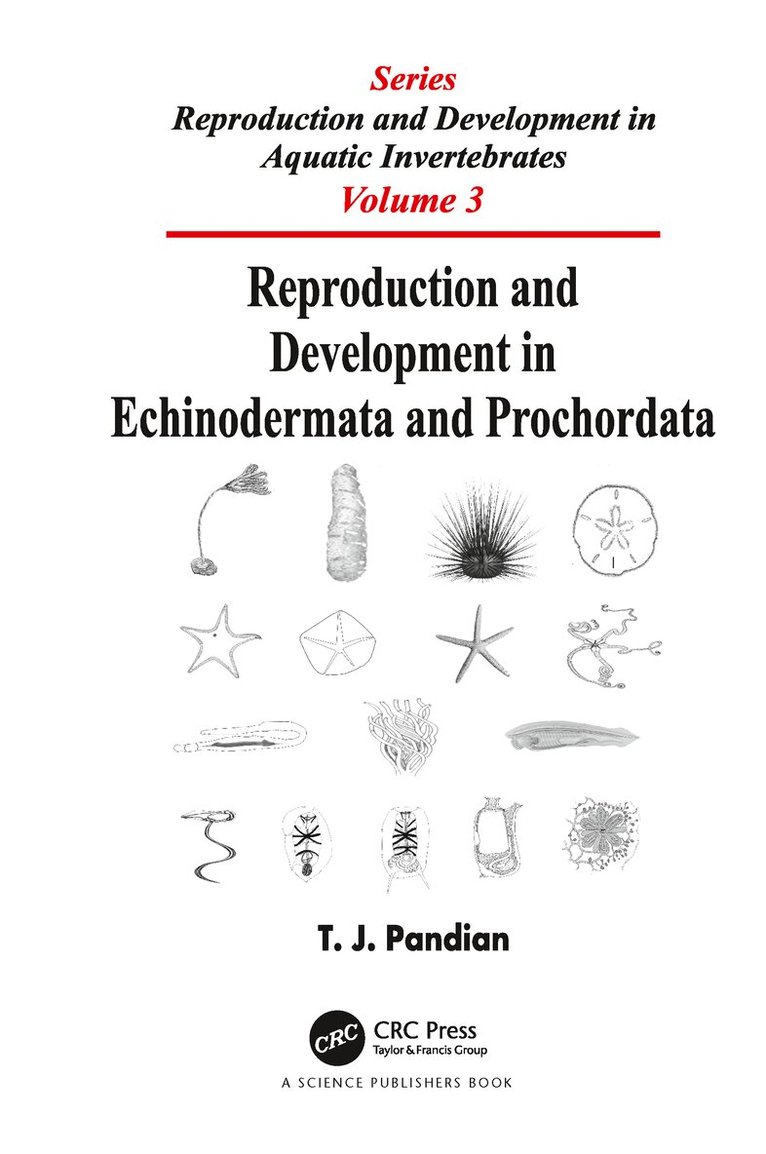
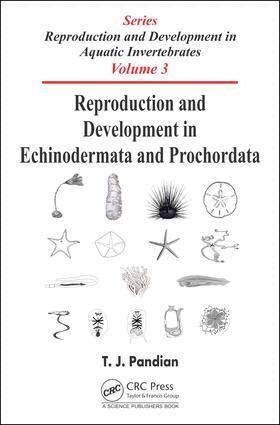
Echinoderms and prochordates occupy a key position in vertebrate evolution. The genomes of sea urchin share 70% homology with humans. Researches on cell cycle in sea urchin and phagocytosis in asteroids have fetched Nobel Prizes. In this context, this book assumes immense importance. Echinoderms are unique, as their symmetry is bilateral in larvae but pentamerous radial in adults. The latter has eliminated the development of an anterior head and bilateral appendages. Further, the obligate need to face the substratum for locomotion and acquisition of food has eliminated their planktonic and nektonic existence. Egg size, a decisive factor in recruitment, increases with decreasing depths up to 2,000-5,000 m in lecithotrophic asteroids and ophiuroids but remains constant in their planktotrophics. Smaller (< 18 mm) ophiuroids do not produce a lecithotrophic eggs but larger (> 110 mm) asteroids generate planktotrophic eggs only. Publications on sex ratio of echinoderms indicate the genetic determination of sex at fertilization but those on hybridization, karyotype and ploidy induction do not provide evidence for heterogametism. But the herbivorous echinoids and larvacea with their gonads harboring both germ cells and Nutritive Phagocytes (NPs) have economized the transportation and hormonal costs on gonadal function. Despite the amazing potential just 2 and 3% of echinoderms undergo clonal reproduction and regeneration, respectively. Fission is triggered, when adequate reserve nutrients are accumulated. It is the most prevalent mode of clonal reproduction in holothuroids, asteroids and ophiuroids. However, budding is a more prevalent mode of clonal reproduction in colonial hemichordates and urochordates. In echinoderms, fission and budding eliminate each other. Similarly, autoregulation of early development eliminates clonal reproduction in echinoids and solitary urochordates. In pterobranchs, thaliaceans and ascidians, the repeated and rapid budding leads to colonial formation. Coloniality imposes reductions in species number and body size, generation time and life span, gonad number and fecundity as well as switching from gonochorism to simultaneous hermaphorditism and oviparity to ovoviviparity/viviparity.
700 kr
Skickas inom 10-15 vardagar
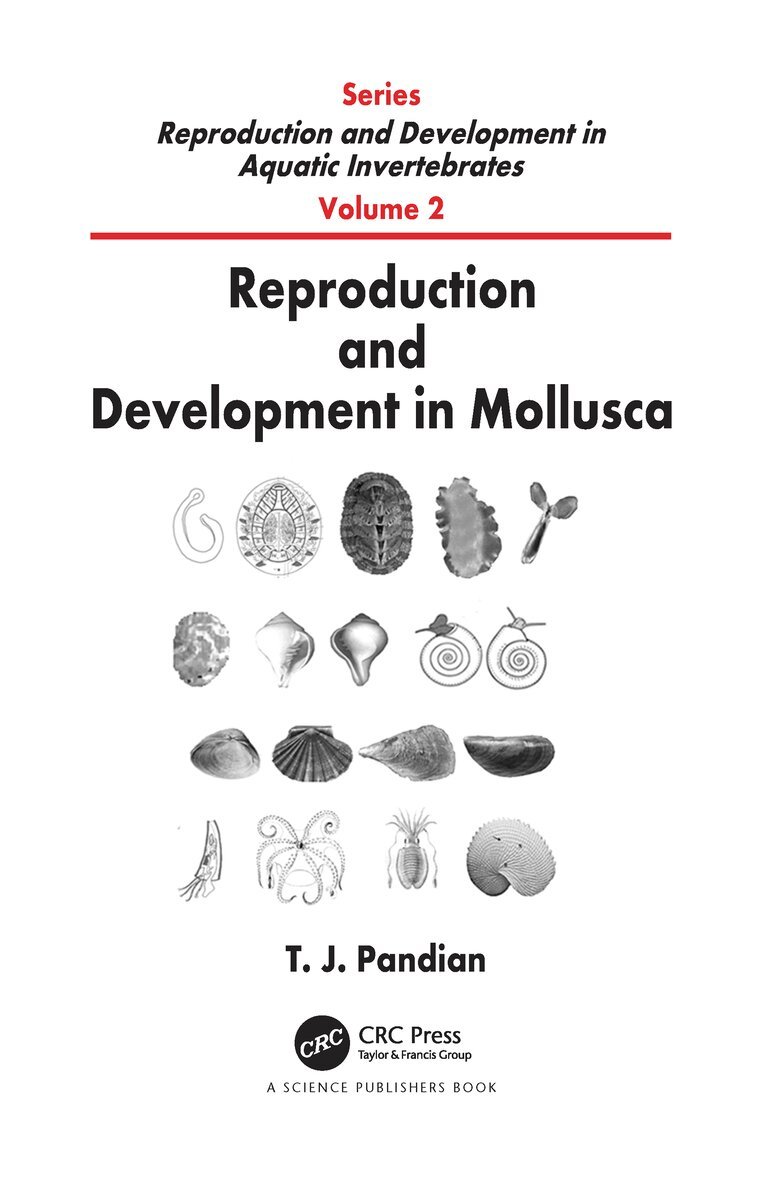
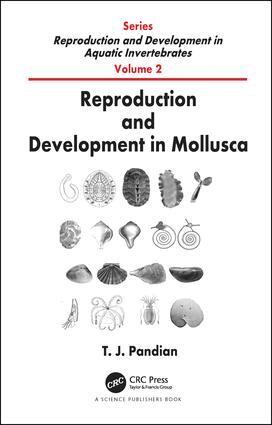
This book is perhaps the first attempt to comprehensively project the uniqueness of molluscs, covering almost all aspects of reproduction and development from aplacophorans to vampyromorphic cephalopods. Molluscs are unique for the presence of protective external shell, defensive inking, geographic distribution from the depth of 9,050 m to an altitude of 4,300 m, gamete diversity, the use of nurse eggs and embryos to accelerate the first few mitotic divisions in embryos, the natural occurrence of androgenics in a couple of bivalves, viable induced tetraploids, gigantism induced by elevated ploidy, the complementary role played by mitochondrial genome in sex determination by nuclear genes and the uptake and accumulation of steroid hormone from surrounding waters. In molluscs, sexuality comprises of gonochorism (< 75 %) and hermaphroditism, which itself includes simultaneous (> 24%), protandry (< 1 %), Marian and serial. In them, the presence of shell affords iteroparity and relatively longer life span in prosobranchs and bivalves but its absence semelparity and short life span in opisthobranchs and cephalopods. Within semelparity, gonochorism facilitates faster growth and larger body size but hermaphroditism small body size. In them, sex is irrevocably determined at fertilization by a few unknown genes and is not amenable to any environmental influence. However, the sex determining mechanism is more a family trait in bivalves. Primary sex differentiation is also fixed and not amenable to environmental factor but secondary differentiation is labile, protracted and amenable to environmental factors. Both sex differentiation and reproductive cycle are accomplished and controlled solely by neurohormones. In these processes, the role of steroid hormones may be alien to molluscs.
700 kr
Skickas inom 10-15 vardagar
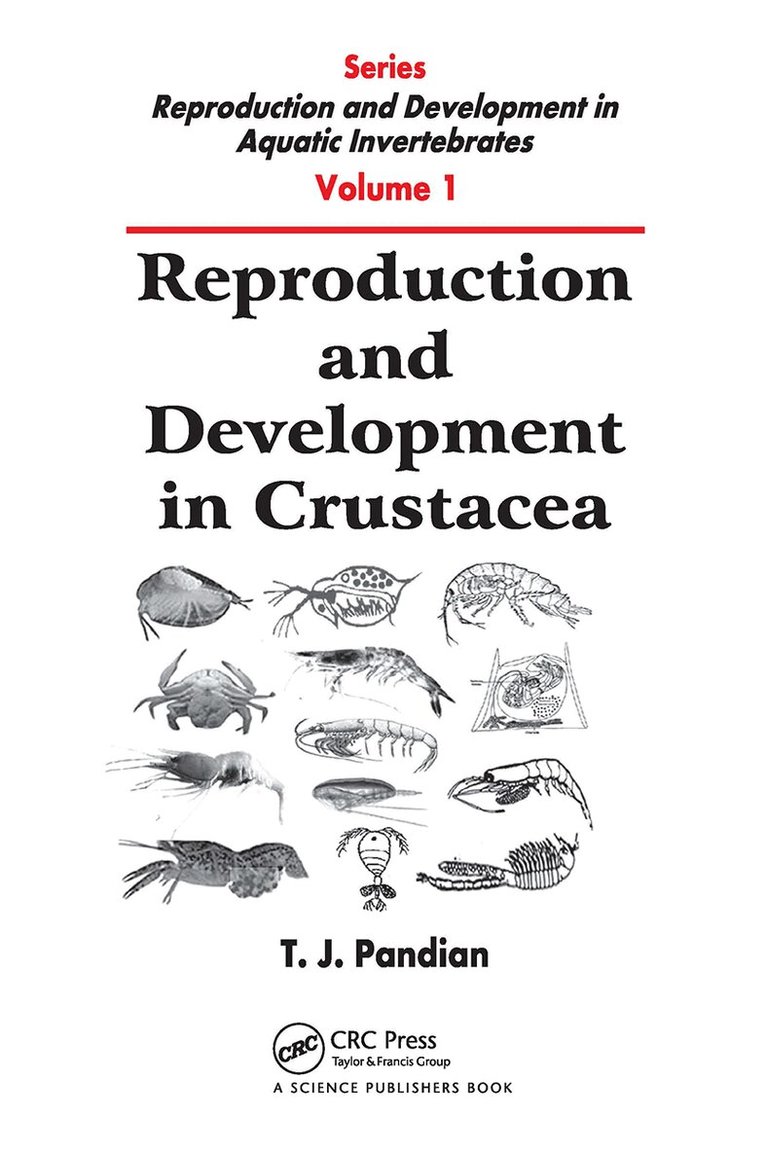
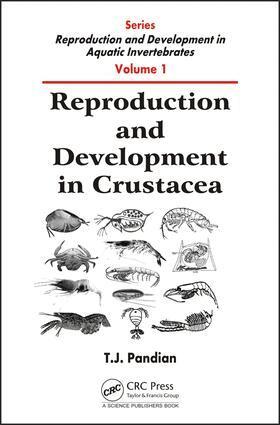
Dating back to the early Cambrian period, crustaceans had ample time to undertake endless experimentation with form and function. Today, no other group of plants or animals on the planet exhibit the range of morphological diversity seen among extant Crustacea. With more than 52,000 species, they are placed fourth in terms of overall species diversity. This book comprehensively elucidates the reproduction and development of all the taxonomic groups of Crustacea and bridges the gap between conventional zoologists and molecular biologists. Reproductive modes from the point of embryonic stem cells and primordial germ cells is discussed with a special section on cysts.
2 588 kr
Skickas inom 10-15 vardagar
Echinoderms and prochordates occupy a key position in vertebrate evolution. The genomes of sea urchin share 70% homology with humans. Researches on cell cycle in sea urchin and phagocytosis in asteroids have fetched Nobel Prizes. In this context, this book assumes immense importance. Echinoderms are unique, as their symmetry is bilateral in larvae but pentamerous radial in adults. The latter has eliminated the development of an anterior head and bilateral appendages. Further, the obligate need to face the substratum for locomotion and acquisition of food has eliminated their planktonic and nektonic existence. Egg size, a decisive factor in recruitment, increases with decreasing depths up to 2,000-5,000 m in lecithotrophic asteroids and ophiuroids but remains constant in their planktotrophics. Smaller (< 18 mm) ophiuroids do not produce a lecithotrophic eggs but larger (> 110 mm) asteroids generate planktotrophic eggs only. Publications on sex ratio of echinoderms indicate the genetic determination of sex at fertilization but those on hybridization, karyotype and ploidy induction do not provide evidence for heterogametism. But the herbivorous echinoids and larvacea with their gonads harboring both germ cells and Nutritive Phagocytes (NPs) have economized the transportation and hormonal costs on gonadal function. Despite the amazing potential just 2 and 3% of echinoderms undergo clonal reproduction and regeneration, respectively. Fission is triggered, when adequate reserve nutrients are accumulated. It is the most prevalent mode of clonal reproduction in holothuroids, asteroids and ophiuroids. However, budding is a more prevalent mode of clonal reproduction in colonial hemichordates and urochordates. In echinoderms, fission and budding eliminate each other. Similarly, autoregulation of early development eliminates clonal reproduction in echinoids and solitary urochordates. In pterobranchs, thaliaceans and ascidians, the repeated and rapid budding leads to colonial formation. Coloniality imposes reductions in species number and body size, generation time and life span, gonad number and fecundity as well as switching from gonochorism to simultaneous hermaphorditism and oviparity to ovoviviparity/viviparity.
700 kr
Skickas inom 10-15 vardagar
This book is a comprehensive elucidation on aspects of reproduction and development in platyhelminthes covering from acoelids to taeniids. With the unique presence of neoblasts, turbellarians serve as a model for studies on cancer and senescence. Of ~ 27,000 species, ~ 77% are parasites; they are harmful to man and his food basket from livestock and fish. The stress hormone, cortisol level is responsible for susceptibility and resistance of the host. In digeneans, the propagatory multiplication potency is retained by all the larval forms and in either direction in sporocyst. The higher clonal diversity, mixing and selection in Second Intermediate Host (SIH) may purge inbreeding depression suffered by the fluke on propagatory multiplication in First Intermediate Host (FIH). Of 12,012 digeneans, 88% may engage 33,014 potential SIH species. They have the choice to select one among the available/awaiting 3.5 host species. The motility of vertebrate host and euryxenic flexibility/scope for selection of SIH species has increased lineage diversification in digeneans. The life cycle of cestodes is divided into aquatic and terrestrial patterns. The former includes (i) oncosphere and (ii) coracidium types and the latter (iii) hexacanth-cysticercoid, (iv) hexacanth-tetrathyridium and (v) hexacanth-cysticercus types. The share for the oncosphere, coracidium and hexacanth types is 17.0, 29.5 and 46.5%, respectively. The staggering fecundity and adoption of the intermediate host in the herbivorous/insectivorous food chain have enriched Taenioidea as the most (2,264) speciose order. Sex specific genes Smed-dmd 1 and macbol have been identified, and neuropeptides and dipeptides are involved in sexualization. Trematodes are unable to parasitize elasmobranchs, as they cannot suck body fluid/blood containing a high level of urea. Relatively higher fecundity supplemented with propagatory multiplication, incorporation of SIH in 88% species, clonal selection in SIH, and euryxenic flexibility and the widest choice for selection of SIH have led to the highest lineage diversification to render digeneans as the most speciose order in Platyhelminthes.
2 724 kr
Skickas inom 10-15 vardagar
This book is perhaps the first attempt to comprehensively project the uniqueness of molluscs, covering almost all aspects of reproduction and development from aplacophorans to vampyromorphic cephalopods. Molluscs are unique for the presence of protective external shell, defensive inking, geographic distribution from the depth of 9,050 m to an altitude of 4,300 m, gamete diversity, the use of nurse eggs and embryos to accelerate the first few mitotic divisions in embryos, the natural occurrence of androgenics in a couple of bivalves, viable induced tetraploids, gigantism induced by elevated ploidy, the complementary role played by mitochondrial genome in sex determination by nuclear genes and the uptake and accumulation of steroid hormone from surrounding waters. In molluscs, sexuality comprises of gonochorism (< 75 %) and hermaphroditism, which itself includes simultaneous (> 24%), protandry (< 1 %), Marian and serial. In them, the presence of shell affords iteroparity and relatively longer life span in prosobranchs and bivalves but its absence semelparity and short life span in opisthobranchs and cephalopods. Within semelparity, gonochorism facilitates faster growth and larger body size but hermaphroditism small body size. In them, sex is irrevocably determined at fertilization by a few unknown genes and is not amenable to any environmental influence. However, the sex determining mechanism is more a family trait in bivalves. Primary sex differentiation is also fixed and not amenable to environmental factor but secondary differentiation is labile, protracted and amenable to environmental factors. Both sex differentiation and reproductive cycle are accomplished and controlled solely by neurohormones. In these processes, the role of steroid hormones may be alien to molluscs.
2 588 kr
Skickas inom 10-15 vardagar
Dating back to the early Cambrian period, crustaceans had ample time to undertake endless experimentation with form and function. Today, no other group of plants or animals on the planet exhibit the range of morphological diversity seen among extant Crustacea. With more than 52,000 species, they are placed fourth in terms of overall species diversity. This book comprehensively elucidates the reproduction and development of all the taxonomic groups of Crustacea and bridges the gap between conventional zoologists and molecular biologists. Reproductive modes from the point of embryonic stem cells and primordial germ cells is discussed with a special section on cysts.