Rereadings - Böcker
Visar alla böcker i serien Rereadings. Handla med fri frakt och snabb leverans.
12 produkter
12 produkter
655 kr
Skickas inom 7-10 vardagar
Vineland is hardly anyone’s favorite Thomas Pynchon novel. Marking Pynchon’s return after vanishing for nearly two decades following his epic Gravity’s Rainbow, it was initially regarded as slight, a middling curiosity. However, for Peter Coviello, the oft-overlooked Vineland opens up new ways of thinking about Pynchon’s writing and about how we read and how we live in the rough currents of history.Beginning with his early besotted encounters with Vineland, Coviello reads Pynchon’s offbeat novel of sixties insurgents stranded in the Reaganite summer of 1984 as a delirious stoner comedy that is simultaneously a work of heartsick fury and political grief: a portrait of the hard afterlives of failed revolution in a period of stifling reaction. Offering a roving meditation on the uses of criticism and the practice of friendship, the fashioning of publics and counterpublics, the sentence and the police, Coviello argues that Vineland is among the most abundant and far-sighted of late-century American excursions into novelistic possibility. Departing from visions of Pynchon as the arch-postmodernist, erudite and obscure, he discloses an author far more companionable and humane. In Pynchon’s harmonizing of joyousness and outrage, comedy and sorrow, Coviello finds a model for thinking through our catastrophic present.
169 kr
Skickas inom 7-10 vardagar
Vineland is hardly anyone’s favorite Thomas Pynchon novel. Marking Pynchon’s return after vanishing for nearly two decades following his epic Gravity’s Rainbow, it was initially regarded as slight, a middling curiosity. However, for Peter Coviello, the oft-overlooked Vineland opens up new ways of thinking about Pynchon’s writing and about how we read and how we live in the rough currents of history.Beginning with his early besotted encounters with Vineland, Coviello reads Pynchon’s offbeat novel of sixties insurgents stranded in the Reaganite summer of 1984 as a delirious stoner comedy that is simultaneously a work of heartsick fury and political grief: a portrait of the hard afterlives of failed revolution in a period of stifling reaction. Offering a roving meditation on the uses of criticism and the practice of friendship, the fashioning of publics and counterpublics, the sentence and the police, Coviello argues that Vineland is among the most abundant and far-sighted of late-century American excursions into novelistic possibility. Departing from visions of Pynchon as the arch-postmodernist, erudite and obscure, he discloses an author far more companionable and humane. In Pynchon’s harmonizing of joyousness and outrage, comedy and sorrow, Coviello finds a model for thinking through our catastrophic present.
731 kr
Skickas inom 7-10 vardagar
Considered by some to be the greatest novel of the twenty-first century, Helen DeWitt’s brilliant The Last Samurai tells the story of Sibylla, an Oxford-educated single mother raising a possible child prodigy, Ludo. Disappointed when he meets his biological father, the boy decides that he can do better. Inspired by Akira Kurosawa’s Seven Samurai, he embarks on a quixotic, moving quest to find a suitable father. The novel’s cult-classic status did not come easy: it underwent a notoriously tortuous publication process and briefly went out of print.Lee Konstantinou combines a riveting reading of The Last Samurai with a behind-the-scenes look at DeWitt’s fraught experiences with corporate publishing. He shows how interpreting the ambition and richness of DeWitt’s work in light of her struggles with literary institutions provides a potent social critique. The novel helps us think about our capacity for learning and creativity, revealing the constraints that capitalism and material deprivation impose on intellectual flourishing. Drawing on interviews with DeWitt and other key figures, Konstantinou explores the book’s composition and its history with Talk Miramax Books, the publishing arm of Bob and Harvey Weinstein’s media empire. He argues that The Last Samurai allegorizes its troubled relationship with the institutions and middlemen that ferried it into the world. What’s ultimately at stake in Ludo’s quest is not only who might make a good father but also how we might fulfill our potential in a world that often seems cruelly designed to thwart that very possibility.
189 kr
Skickas inom 7-10 vardagar
Considered by some to be the greatest novel of the twenty-first century, Helen DeWitt’s brilliant The Last Samurai tells the story of Sibylla, an Oxford-educated single mother raising a possible child prodigy, Ludo. Disappointed when he meets his biological father, the boy decides that he can do better. Inspired by Akira Kurosawa’s Seven Samurai, he embarks on a quixotic, moving quest to find a suitable father. The novel’s cult-classic status did not come easy: it underwent a notoriously tortuous publication process and briefly went out of print.Lee Konstantinou combines a riveting reading of The Last Samurai with a behind-the-scenes look at DeWitt’s fraught experiences with corporate publishing. He shows how interpreting the ambition and richness of DeWitt’s work in light of her struggles with literary institutions provides a potent social critique. The novel helps us think about our capacity for learning and creativity, revealing the constraints that capitalism and material deprivation impose on intellectual flourishing. Drawing on interviews with DeWitt and other key figures, Konstantinou explores the book’s composition and its history with Talk Miramax Books, the publishing arm of Bob and Harvey Weinstein’s media empire. He argues that The Last Samurai allegorizes its troubled relationship with the institutions and middlemen that ferried it into the world. What’s ultimately at stake in Ludo’s quest is not only who might make a good father but also how we might fulfill our potential in a world that often seems cruelly designed to thwart that very possibility.
731 kr
Skickas inom 7-10 vardagar
Jennifer Egan described her Pulitzer Prize–winning novel A Visit from the Goon Squad as a combination of Proust and The Sopranos. In rereading the book, Ivan Kreilkamp takes Egan up on her comparison, showing how it blends a concern with the status of the novel in the twenty-first century with an elegiac meditation on how we experience the passage of time.Kreilkamp, a former music critic, examines how Egan’s characters turn to rock and especially punk in search of community and meaning. He considers what the novel’s portrayal of music says about the role of art in contemporary culture as digitization makes older technologies obsolete. Combining personal and critical reflection, he reveals how A Visit from the Goon Squad articulates and responds to the sense of loss many feel as cherished physical objects are replaced with immaterial data. For Kreilkamp, Egan’s novel compellingly combines the psychological realism of the nineteenth-century novel with more recent and transient forms such as the celebrity magazine profile or a PowerPoint presentation to provide a self-reflective diagnosis of the decay and endurance of literature.Arranged like Egan’s novel into A and B sides, this book highlights not only how A Visit from the Goon Squad speaks to our mass-media and digital present but also its page-turning pleasure.
189 kr
Skickas inom 7-10 vardagar
Jennifer Egan described her Pulitzer Prize–winning novel A Visit from the Goon Squad as a combination of Proust and The Sopranos. In rereading the book, Ivan Kreilkamp takes Egan up on her comparison, showing how it blends a concern with the status of the novel in the twenty-first century with an elegiac meditation on how we experience the passage of time.Kreilkamp, a former music critic, examines how Egan’s characters turn to rock and especially punk in search of community and meaning. He considers what the novel’s portrayal of music says about the role of art in contemporary culture as digitization makes older technologies obsolete. Combining personal and critical reflection, he reveals how A Visit from the Goon Squad articulates and responds to the sense of loss many feel as cherished physical objects are replaced with immaterial data. For Kreilkamp, Egan’s novel compellingly combines the psychological realism of the nineteenth-century novel with more recent and transient forms such as the celebrity magazine profile or a PowerPoint presentation to provide a self-reflective diagnosis of the decay and endurance of literature.Arranged like Egan’s novel into A and B sides, this book highlights not only how A Visit from the Goon Squad speaks to our mass-media and digital present but also its page-turning pleasure.
731 kr
Skickas inom 7-10 vardagar
To Write As If Already Dead circles around Kate Zambreno’s failed attempts to write a study of Hervé Guibert’s To the Friend Who Did Not Save My Life. In this diaristic, transgressive work, the first in a cycle written in the years preceding his death, Guibert documents with speed and intensity his diagnosis and disintegration from AIDS and elegizes a character based on Michel Foucault.The first half of To Write As If Already Dead is a novella in the mode of a detective story, searching after the mysterious disappearance of an online friendship after an intense dialogue on anonymity, names, language, and connection. The second half, a notebook documenting the doubled history of two bodies amid another historical plague, continues the meditation on friendship, solitude, time, mortality, precarity, art, and literature.Throughout this rigorous, mischievous, thrilling not-quite study, Guibert lingers as a ghost companion. Zambreno, who has been pushing the boundaries of literary form for a decade, investigates his methods by adopting them, offering a keen sense of the energy and confessional force of Guibert’s work, an ode to his slippery, scarcely classifiable genre. The book asks, as Foucault once did, “What is an author?” Zambreno infuses this question with new urgency, exploring it through the anxieties of the internet age, the ethics of friendship, and “the facts of the body”: illness, pregnancy, and death.
189 kr
Skickas inom 7-10 vardagar
To Write As If Already Dead circles around Kate Zambreno’s failed attempts to write a study of Hervé Guibert’s To the Friend Who Did Not Save My Life. In this diaristic, transgressive work, the first in a cycle written in the years preceding his death, Guibert documents with speed and intensity his diagnosis and disintegration from AIDS and elegizes a character based on Michel Foucault.The first half of To Write As If Already Dead is a novella in the mode of a detective story, searching after the mysterious disappearance of an online friendship after an intense dialogue on anonymity, names, language, and connection. The second half, a notebook documenting the doubled history of two bodies amid another historical plague, continues the meditation on friendship, solitude, time, mortality, precarity, art, and literature.Throughout this rigorous, mischievous, thrilling not-quite study, Guibert lingers as a ghost companion. Zambreno, who has been pushing the boundaries of literary form for a decade, investigates his methods by adopting them, offering a keen sense of the energy and confessional force of Guibert’s work, an ode to his slippery, scarcely classifiable genre. The book asks, as Foucault once did, “What is an author?” Zambreno infuses this question with new urgency, exploring it through the anxieties of the internet age, the ethics of friendship, and “the facts of the body”: illness, pregnancy, and death.
731 kr
Skickas inom 7-10 vardagar
Few writers rankle like Jonathan Franzen. Despite popular acclaim, robust sales, and august literary laurels, Franzen’s polarizing persona shares the spotlight with—and sometimes steals it from—his tragicomic novels of Midwestern family life.In this reconsideration of Freedom (2010), L. Gibson explores the difficulty of coming to terms with Jonathan Franzen. Freedom Reread considers the author’s distinctive narrative technique in light of the contradictions for which he is renowned: widely read curmudgeon, tweeted-about luddite, self-proclaimed partisan of fiction who frequently announces the novel’s death. Bookended by autofictional forays into the process of—and resistance to—taking a definite stance on Franzen, this book places Freedom in conversation with a playful, idiosyncratic array of interlocutors, including Middlemarch and You’ve Got Mail, Amitav Ghosh on climate change and Susan Sontag on metaphor, speculative fiction and Succession.Avowedly ambivalent about Franzen, Gibson offers both a fresh appreciation of the author’s work and a searching critical analysis of his pronouncements on the novel’s fate. Wide-ranging and stylistically ambitious, Freedom Reread delivers an assured, artful inquiry into Franzen’s novelistic technique and public persona.
189 kr
Skickas inom 7-10 vardagar
Few writers rankle like Jonathan Franzen. Despite popular acclaim, robust sales, and august literary laurels, Franzen’s polarizing persona shares the spotlight with—and sometimes steals it from—his tragicomic novels of Midwestern family life.In this reconsideration of Freedom (2010), L. Gibson explores the difficulty of coming to terms with Jonathan Franzen. Freedom Reread considers the author’s distinctive narrative technique in light of the contradictions for which he is renowned: widely read curmudgeon, tweeted-about luddite, self-proclaimed partisan of fiction who frequently announces the novel’s death. Bookended by autofictional forays into the process of—and resistance to—taking a definite stance on Franzen, this book places Freedom in conversation with a playful, idiosyncratic array of interlocutors, including Middlemarch and You’ve Got Mail, Amitav Ghosh on climate change and Susan Sontag on metaphor, speculative fiction and Succession.Avowedly ambivalent about Franzen, Gibson offers both a fresh appreciation of the author’s work and a searching critical analysis of his pronouncements on the novel’s fate. Wide-ranging and stylistically ambitious, Freedom Reread delivers an assured, artful inquiry into Franzen’s novelistic technique and public persona.
731 kr
Skickas inom 7-10 vardagar
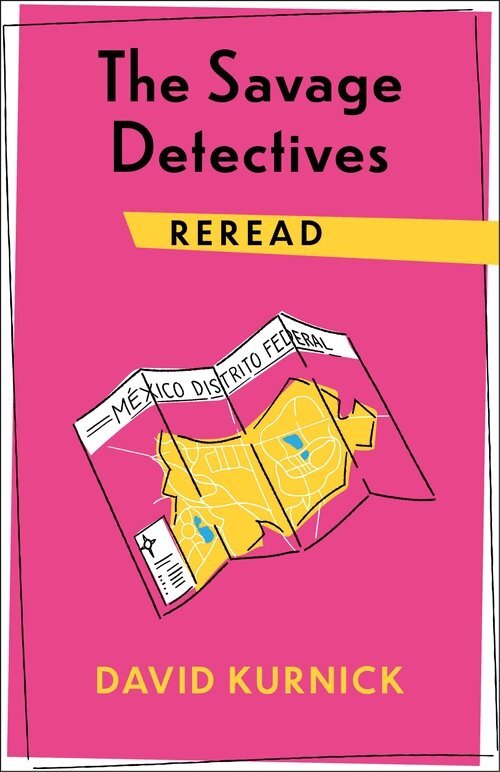
The Savage Detectives elicits mixed feelings. An instant classic in the Spanish-speaking world upon its 1998 publication, a critical and commercial smash on its 2007 translation into English, Roberto Bolaño’s novel has also been called an exercise in 1970s nostalgia, an escapist fantasy of a romanticized Latin America, and a publicity event propped up by the myth of the bad-boy artist.David Kurnick argues that the controversies surrounding Bolaño’s life and work have obscured his achievements—and that The Savage Detectives is still underappreciated for the subtlety and vitality of its portrait of collective life. Kurnick explores The Savage Detectives as an epic of social structure and its decomposition, a novel that restlessly moves between the big configurations—of states, continents, and generations—and the everyday stuff—parties, jobs, moods, sex, conversation—of which they’re made. For Kurnick, Bolaño’s book is a necromantic invocation of life in history, one that demands surrender as much as analysis.Kurnick alternates literary-critical arguments with explorations of the novel’s microclimates and neighborhoods—the little atmospheric zones where some of Bolaño’s most interesting rethinking of sexuality, politics, and literature takes place. He also claims that The Savage Detectives holds particular interest for U.S. readers: not because it panders to them but because it heralds the exhilarating prospect of a world in which American culture has lost its presumptive centrality.
189 kr
Skickas inom 7-10 vardagar
The Savage Detectives elicits mixed feelings. An instant classic in the Spanish-speaking world upon its 1998 publication, a critical and commercial smash on its 2007 translation into English, Roberto Bolaño’s novel has also been called an exercise in 1970s nostalgia, an escapist fantasy of a romanticized Latin America, and a publicity event propped up by the myth of the bad-boy artist.David Kurnick argues that the controversies surrounding Bolaño’s life and work have obscured his achievements—and that The Savage Detectives is still underappreciated for the subtlety and vitality of its portrait of collective life. Kurnick explores The Savage Detectives as an epic of social structure and its decomposition, a novel that restlessly moves between the big configurations—of states, continents, and generations—and the everyday stuff—parties, jobs, moods, sex, conversation—of which they’re made. For Kurnick, Bolaño’s book is a necromantic invocation of life in history, one that demands surrender as much as analysis.Kurnick alternates literary-critical arguments with explorations of the novel’s microclimates and neighborhoods—the little atmospheric zones where some of Bolaño’s most interesting rethinking of sexuality, politics, and literature takes place. He also claims that The Savage Detectives holds particular interest for U.S. readers: not because it panders to them but because it heralds the exhilarating prospect of a world in which American culture has lost its presumptive centrality.