Responsible Investment Series - Böcker
Visar alla böcker i serien Responsible Investment Series. Handla med fri frakt och snabb leverans.
13 produkter
13 produkter
Climate Change and the Governance of Corporations
Lessons from the Retail Sector
Inbunden, Engelska, 2020
257 kr
Skickas
Climate change represents the most important environmental challenge of our time. Organisations are responding by implementing governance processes and taking action to reduce their own emissions and the emissions from their supply chains and value chains. Yet very little is known about how these efforts contribute to reducing greenhouse gas emissions (if, indeed, they make any substantive contribution at all) or about how they might be harnessed to deliver more ambitious reductions in emissions. This book explains when and where particular forms of governance intervention – including internal governance processes and external governance pressures – are likely to impact climate change. From this analysis, it offers practical proposals on the climate policy frameworks that need to be in place to facilitate or accelerate changes in corporate behaviour. The book is truly global: it focuses on the world’s 25 largest retailers (including Walmart, Tesco, Carrefour, Sears and Aldi) and is based on detailed interviews with senior managers from these corporations, and with key global and national NGOs, corporate responsibility experts, politicians and regulators. These interviews provide clear insights into how external governance pressures and actions (public opinion, regulation, incentives) interact with internal governance conditions (management systems and processes, corporate policies, board/CEO leadership) to change and shape corporate actions on climate change and, in turn, the climate change impacts of these corporations. This book can be used as a core reference for any courses dealing with corporate governance and business strategy, in particular those relating to climate change and to environmental management more generally. It is also of relevance to business practitioners, public policy makers, investors and NGOs interested in ensuring that companies play a constructive role in the transition to a low-carbon economy.
1 950 kr
Skickas inom 10-15 vardagar
This book provides the world’s first comprehensive account of responsible investment for fixed income investors. It enables readers to understand the key characteristics of fixed income investments and the relevance of sustainability-related issues to fixed income markets.The expert contributors to this volume explain how sustainability-related issues can be taken into account in fixed income research and decision-making, in portfolio construction, and in active ownership (engagement). They provide a series of detailed case-studies from different parts of the fixed income market (corporate investment grade and high yield, emerging markets, sovereign and municipal debt), from a range of organisations with a variety of investment approaches. The contributors also provide in-depth critical analysis of key issues such as the role and influence of credit rating agencies, green bonds, data and public policy in shaping investment practice.For investors, this book provides practical guidance on how to improve the financial and the sustainability performance of their fixed income investments. For stakeholders such as companies, civil society organisations, and governments it allows them to understand the role that fixed income might play in delivering the Sustainable Development Goals (SDGs), and to understand how they might encourage fixed income investors to pay greater attention to sustainability-related issues in their investment practices and processes.
1 950 kr
Skickas inom 10-15 vardagar
The Responsible Investor is a practical introductory guide for private as well as institutional investors and financiers interested in environmental, social and governance (ESG) issues.The authors have academia, advisory, asset management, asset owner and central bank backgrounds, bringing diverse perspectives and extensive senior-level experience in implementing Responsible Investment across different types of portfolios. Together, they have distilled what can seem a complex area into a clear guide to the topic, accessible to readers who don’t necessarily have prior in-depth knowledge in the field of Responsible Investment but are interested to know more. The book presents the development of Responsible Investment, its different approaches and the drivers of Responsible Investment, as well as the implementation opportunities in different asset classes. The book introduces Responsible Investment trends that investors can take into consideration in their investment decisions. In addition, the book covers ESG data and assessment, impact and reporting for Responsible Investments.This book suits both rookies and veterans – be they private investors, managers of investment funds or institutional investors or financiers. It is also valuable reading for students in finance, Responsible Investment and corporate social responsibility as an accessible overview of the topic.
812 kr
Skickas inom 10-15 vardagar
The Responsible Investor is a practical introductory guide for private as well as institutional investors and financiers interested in environmental, social and governance (ESG) issues.The authors have academia, advisory, asset management, asset owner and central bank backgrounds, bringing diverse perspectives and extensive senior-level experience in implementing Responsible Investment across different types of portfolios. Together, they have distilled what can seem a complex area into a clear guide to the topic, accessible to readers who don’t necessarily have prior in-depth knowledge in the field of Responsible Investment but are interested to know more. The book presents the development of Responsible Investment, its different approaches and the drivers of Responsible Investment, as well as the implementation opportunities in different asset classes. The book introduces Responsible Investment trends that investors can take into consideration in their investment decisions. In addition, the book covers ESG data and assessment, impact and reporting for Responsible Investments.This book suits both rookies and veterans – be they private investors, managers of investment funds or institutional investors or financiers. It is also valuable reading for students in finance, Responsible Investment and corporate social responsibility as an accessible overview of the topic.
812 kr
Skickas inom 10-15 vardagar
This book provides the world’s first comprehensive account of responsible investment for fixed income investors. It enables readers to understand the key characteristics of fixed income investments and the relevance of sustainability-related issues to fixed income markets.The expert contributors to this volume explain how sustainability-related issues can be taken into account in fixed income research and decision-making, in portfolio construction, and in active ownership (engagement). They provide a series of detailed case-studies from different parts of the fixed income market (corporate investment grade and high yield, emerging markets, sovereign and municipal debt), from a range of organisations with a variety of investment approaches. The contributors also provide in-depth critical analysis of key issues such as the role and influence of credit rating agencies, green bonds, data and public policy in shaping investment practice.For investors, this book provides practical guidance on how to improve the financial and the sustainability performance of their fixed income investments. For stakeholders such as companies, civil society organisations, and governments it allows them to understand the role that fixed income might play in delivering the Sustainable Development Goals (SDGs), and to understand how they might encourage fixed income investors to pay greater attention to sustainability-related issues in their investment practices and processes.
812 kr
Skickas inom 10-15 vardagar
Many leading investment institutions, including asset managers, pension funds and insurance companies, have made commitments to sustainable investment or to the delivery of sustainability goals alongside their investment objectives.This mainstreaming of sustainable investment raises many important questions, such as the following: Do sustainable finance strategies lead to meaningful real-world change? Are fears about greenwashing justified? Does sustainable investment deliver better financial outcomes? And is it consistent with investors’ fiduciary duties? Can the sustainability data and ratings used in finance be trusted? Does sustainability information drive improved sustainability performance? How should sustainable investment be governed? What are the roles and responsibilities of public and private actors?This book unpacks the key terms, concepts and debates – both theoretical and applied – that underpin sustainable investment. Through evidence-based analysis, it cuts through the hype to critically explore sustainable finance’s transformative potential as well as its limitations. In doing so, the book enables public policymakers, financial institutions, companies, civil society organisations and academics to engage in a more informed discussion about the contribution that sustainable investment can make to sustainability goals.
2 159 kr
Skickas inom 10-15 vardagar
Many leading investment institutions, including asset managers, pension funds and insurance companies, have made commitments to sustainable investment or to the delivery of sustainability goals alongside their investment objectives.This mainstreaming of sustainable investment raises many important questions, such as the following: Do sustainable finance strategies lead to meaningful real-world change? Are fears about greenwashing justified? Does sustainable investment deliver better financial outcomes? And is it consistent with investors’ fiduciary duties? Can the sustainability data and ratings used in finance be trusted? Does sustainability information drive improved sustainability performance? How should sustainable investment be governed? What are the roles and responsibilities of public and private actors?This book unpacks the key terms, concepts and debates – both theoretical and applied – that underpin sustainable investment. Through evidence-based analysis, it cuts through the hype to critically explore sustainable finance’s transformative potential as well as its limitations. In doing so, the book enables public policymakers, financial institutions, companies, civil society organisations and academics to engage in a more informed discussion about the contribution that sustainable investment can make to sustainability goals.
1 692 kr
Skickas inom 10-15 vardagar
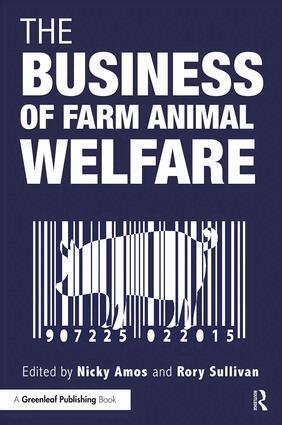
Globally, nearly 70 billion animals are farmed annually for meat, milk and eggs. Two-thirds of these are farmed intensively. The views held by food companies on animal stewardship, and the management practices and processes that they adopt are, therefore, of critical importance in determining the welfare of these animals.Yet, despite the scale of the food industry’s impact, farm animal welfare remains a relatively immature management issue. There is a lack of consensus around the specific responsibilities companies have for farm animal welfare, and around how companies should treat the animals in their or in their suppliers’ care.This book, The Business of Farm Animal Welfare, provides an extensive, authoritative analysis of current corporate practice on farm animal welfare. It critically reviews and assesses the ethical and business case for action. Through a series of practitioner case-studies, it describes how companies have addressed farm animal welfare in their operations and supply chains. It analyses the key barriers to companies adopting higher standards of farm animal welfare, and offers a series of practical recommendations to companies, consumers and policy makers on the role that they might play in raising farm animal welfare standards across the food industry. As the first comprehensive account of business and farm animal welfare, this book is an essential resource for researchers, practitioners and general readers looking to understand and influence corporate practice on farm animal welfare.
762 kr
Skickas inom 10-15 vardagar
Globally, nearly 70 billion animals are farmed annually for meat, milk and eggs. Two-thirds of these are farmed intensively. The views held by food companies on animal stewardship, and the management practices and processes that they adopt are, therefore, of critical importance in determining the welfare of these animals.Yet, despite the scale of the food industry’s impact, farm animal welfare remains a relatively immature management issue. There is a lack of consensus around the specific responsibilities companies have for farm animal welfare, and around how companies should treat the animals in their or in their suppliers’ care.This book, The Business of Farm Animal Welfare, provides an extensive, authoritative analysis of current corporate practice on farm animal welfare. It critically reviews and assesses the ethical and business case for action. Through a series of practitioner case-studies, it describes how companies have addressed farm animal welfare in their operations and supply chains. It analyses the key barriers to companies adopting higher standards of farm animal welfare, and offers a series of practical recommendations to companies, consumers and policy makers on the role that they might play in raising farm animal welfare standards across the food industry. As the first comprehensive account of business and farm animal welfare, this book is an essential resource for researchers, practitioners and general readers looking to understand and influence corporate practice on farm animal welfare.
923 kr
Skickas inom 10-15 vardagar
Most investment today is conducted by a relatively small number of institutional investors – pension funds and investment managers – who manage the pensions and saving funds of millions of ordinary people. The manner in which these institutional investors invest and discharge their responsibilities as the owners of companies is, therefore, of critical importance to society as a whole.In recent years, some of the biggest institutional investors have actively encouraged companies to improve their management of social, ethical and environmental issues. A number have also sought to explicitly analyse companies' performance on these issues and to incorporate this analysis into investment decision-making. These activities have contributed to important changes: a number of companies have committed to stabilising or reducing greenhouse gas emissions from their activities and operations, labour conditions in many retail supply chains have improved significantly, and many companies have significantly improved their governance of corporate responsibility issues.However, to date, there has been little systematic analysis of fundamental questions such as: Do responsible investment strategies systematically result in improvements in the social, ethical and environmental performance of companies? To what extent is it in investors' interest to encourage higher standards of corporate responsibility? Do responsible investment strategies enhance financial performance for investors?In this ground-breaking collection, Rory Sullivan and Craig Mackenzie have brought together some of the leading practitioners and commentators in the field of responsible investment to explore these questions. The contributors to this book present their views on the practicalities of implementing responsible investment strategies, the outcomes that have been achieved, the practical issues and barriers faced in implementing such strategies, and the challenges to be faced if responsible investment is to become a mainstream investment approach. The results are both unique and surprising.This book will be mandatory reading for all those involved in the field of social and environmentally responsible investment, corporate governance and corporate social responsibility whether they be academics, researchers or practitioners.
562 kr
Skickas inom 10-15 vardagar
Imagine that you are a responsible investment money manager. One of your clients is asking you to sell her holdings in a company because it has been accused in the press of contracting with suppliers that have abusive labour conditions. You have to evaluate and benchmark the CSR performance of a number of companies from the same industry but among them there are companies, primarily the smallest, that provide little or no CSR information. One of your major clients is asking you to exclude companies involved in nanotechnology What would you do? Responsible investment (RI) – the integration of environmental, societal and governance (ESG) issues into investment decision-making – can be difficult and complex. Including or excluding companies, engaging with companies, partnering with stakeholders, evaluating environmental and societal controversies, defining criteria and, all the while, producing a competitive return for investors can raise multiple questions that cannot be dealt with simply. The practice of RI faces many such dilemmas as it seeks to balance the competing goals of business, society, and finance and to judge how best to reconcile what are often conflicting concerns. Dilemmas in Responsible Investment examines the problems responsible investment practitioners face daily. It emphasises the importance of asking the right questions as well as getting the right answers; and the importance of process as well as product. The authors pay attention to the diversity of opinion and variety of approaches available. They also raise fundamental questions about the very purpose of investment and the responsibilities of investors, both economic and societal. Although dilemmas in RI are not always easily resolved, Louche and Lydenberg believe that they are also a source of valuable and necessary debate about the appropriate role of corporations in society and the ability of the financial markets to appropriately serve the societies in which they operate. Such dilemmas provide a valuable framework for public debate and can encourage the emergence of innovative answers and approaches. Responsible investors join in these debates when they examine the societal and environmental implications of business activities, actions and behaviour Facilitate dialogue between corporations and their stakeholders Encourage corporate transparency on societal and environmental issues Reward companies that are making genuine efforts towards sustainability Integrate societal and environmental data into financial analysis. The book first of all provides a state-of-the-art overview of responsible investment, its history and development, explanations of key terms and a guide to the different actors involved in the field. Second, it presents 12 diverse hypothetical case studies that examine a wide spectrum of the challenges facing RI professionals, raising questions about the relationship between business and society, about the purpose of investment, and about the responsibilities of investors to various segments of society and the environment. The (often interconnected) cases present a dilemma, possible approaches available, variable factors, a variety of quotations and suggested responses from 35 leading professionals in the responsible investment community, real-world examples and comparisons and recommendations. Accessible, vivid and illuminating, Dilemmas in Responsible Investment is the first book specifically written for teaching and professional training in responsible investment. It will be required reading for students, academics and practitioners in the areas of finance, ethics and CSR.
Valuing Corporate Responsibility
How Do Investors Really Use Corporate Responsibility Information?
Inbunden, Engelska, 2011
923 kr
Skickas inom 10-15 vardagar
Investors have taken a long time to pay attention to corporate responsibility. Despite the growing number of companies that were taking action to manage the social and environmental impacts of their activities and operations and that were reporting on their corporate responsibility performance, mainstream investors' interest in governance issues was, on the whole, piqued only in those situations where a major accident or scandal hit the headlines. This has changed dramatically. With over 600 large investment institutions, including asset managers, insurance companies and pension funds having signed the UN-backed Principles for Responsible Investment, it can now be plausibly argued that "responsible investment" has become mainstream. This change is potentially of huge significance, and the investment community is now widely seen as one of the key audiences for the thousands of corporate responsibility reports produced each year. Yet the reality is that there is a striking lack of understanding among companies of investors' interests. The consequence has been that, despite many companies identifying investors as one of the critical audiences for their corporate responsibility reports, most investors – even those that have made commitments to responsible investment – see these reports as irrelevant to their investment decision-making. The problem is compounded by the singularly poor job that investors do of explaining to companies what sort of information they are really interested in, and where corporate responsibility performance fits into their overall assessments of companies. This has led to frustrations on both sides. Investors have been accused of not paying sufficient attention to companies' corporate responsibility performance, and companies have been accused of producing information that not only has no immediate relevance to investors but, worse, seems to have no relevance to the key business challenges that these companies face. Valuing Corporate Responsibility aims to address the "dialogue of the deaf" that characterizes too many of the discussions between companies and their investors on corporate responsibility issues, through:1. Explaining to companies what responsible investment looks like in practice and, from this analysis, explaining what sort of corporate responsibility information investors are interested in and how this information is used in practice.2. Explaining to investors some of the practical difficulties faced by companies when preparing corporate responsibility reports and the implications for the quality and utility of the data provided in these reports.Valuing Corporate Responsibility also analyses how issues such as investors' views on materiality and investment time-frames influence the dialogue that investors have with companies on corporate responsibility matters. It concludes that there is a need for a major rethink of current approaches to responsible investment, as the manner in which most investors are implementing their responsible investment commitments is unlikely to see them making a substantial contribution to improving corporate responsibility performance or to the wider goals of sustainable development. Written by one of the world's leading experts on responsible investment, Valuing Corporate Responsibility is one of the most important books to be written on corporate responsibility over the past decade. It is of relevance not only to companies and to responsible investment professionals but to all those interested in really understanding how companies and their investors relate to each other and the implications of this relationship for sustainable development.
896 kr
Skickas inom 10-15 vardagar
Part of the Greenleaf Publishing Responsible Investment Series.Mitigating and adapting to risks and changing circumstances is a natural part of doing business. But methods of mitigating and adapting can be quite different in terms of time, cost and observed impacts. The impacts of mitigation activities are more immediate while the benefits of adaptation activities may take many years to take effect. Nowhere is this difference more apparent than in the case of the corporate response to climate change.In the context of climate change, adaptation is the process of changing behaviour in response to actual or expected climate change impacts. Climate change adaptation is now emerging as a critical partner to mitigation, and indeed may even become the primary protection mechanism for future generations.In this unique book, Jason West provides a comprehensive assessment of the management of climate change adaptation in the corporate sector. The book provides a formal overview of the range of approaches available along with a series of practical case studies and examples that can be used by companies and other organizations to identify, assess and manage climate change adaptation.A major focus is on the financial and investment implications of climate change adaptation. West examines how firms can evaluate the investment decisions associated with long-term climate change adaptation measures, including how such investments can be valued and funded, the appropriate accounting treatment of such measures and appropriate risk management and governance practices in relation to such measures. The book also considers the needs and interests of investors and other stakeholders, and considers how they can assess the adequacy and appropriateness of corporate action on climate change.The Long Hedge will be essential reading and a key text for risk-practitioners, investors, financiers, scholars and policy makers in the field of climate change.