RIREC Project on Post-Accord Peacebuilding – serie
Visar alla böcker i serien RIREC Project on Post-Accord Peacebuilding. Handla med fri frakt och snabb leverans.
8 produkter
8 produkter
Telling the Truths
Truth Telling and Peace Building in Post-Conflict Societies
Inbunden, Engelska, 2005
1 077 kr
Skickas inom 10-15 vardagar
Confronting the past has become an established norm for countries undergoing transitions from violence to peace, from authoritarianism to democracy, or both. This book draws from two bodies of literature—peace building and transitional justice—to examine whether truth-telling mechanisms can contribute to sustainable peace and, if so, how and under what conditions. The authors approach these questions by examining whether truth telling contributes to the following elements, all of which are deemed to be constitutive of sustainable peace: reconciliation, human rights, gender equity, restorative justice, the rule of law, the mitigation of violence, and the healing of trauma.While the transitional-justice literature appears to have grasped the importance of truth telling for securing sustainable peace, few studies have undertaken empirical analysis and evaluations of the long-term impact of such mechanisms. Contributors to this interdisciplinary volume—from the fields of political science, law, anthropology, psychology, philosophy, and theology—accomplish that by closely examining how societies emerging from violence must in some way examine, acknowledge, and account for violence committed in the past in order to move forward.
368 kr
Skickas inom 10-15 vardagar
Confronting the past has become an established norm for countries undergoing transitions from violence to peace, from authoritarianism to democracy, or both. This book draws from two bodies of literature—peace building and transitional justice—to examine whether truth-telling mechanisms can contribute to sustainable peace and, if so, how and under what conditions. The authors approach these questions by examining whether truth telling contributes to the following elements, all of which are deemed to be constitutive of sustainable peace: reconciliation, human rights, gender equity, restorative justice, the rule of law, the mitigation of violence, and the healing of trauma.While the transitional-justice literature appears to have grasped the importance of truth telling for securing sustainable peace, few studies have undertaken empirical analysis and evaluations of the long-term impact of such mechanisms. Contributors to this interdisciplinary volume—from the fields of political science, law, anthropology, psychology, philosophy, and theology—accomplish that by closely examining how societies emerging from violence must in some way examine, acknowledge, and account for violence committed in the past in order to move forward.
213 kr
Skickas inom 5-8 vardagar
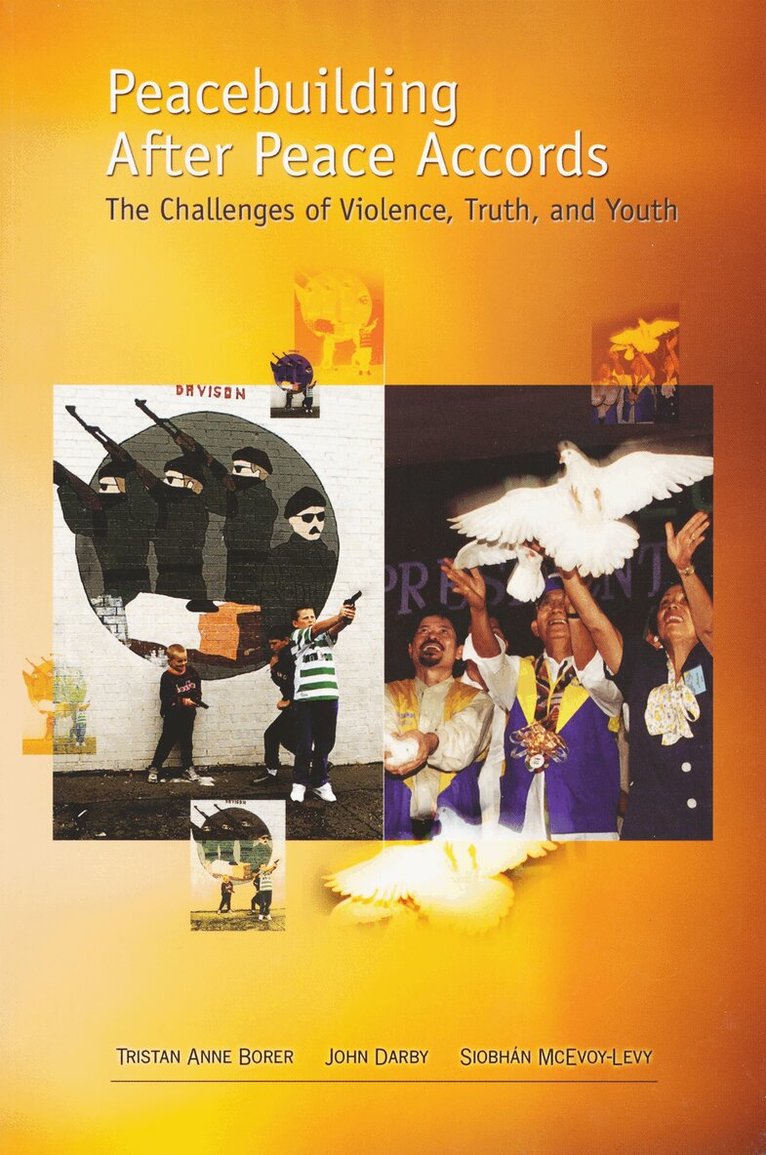
During the 1990s, optimism abounded because international violence was in decline. The number of armed conflicts decreased worldwide from more than fifty in the early 1990s to fewer than thirty a decade later. This drop resulted largely from negotiations leading to peace accords. However, in a disturbingly large number of places, war was actually succeeded not by peace but by a stalemate. Peace accords were plagued by problems, including economic hardship, burgeoning crime, postwar trauma, and persistent fear and suspicion. Too often, negotiated settlements merely opened another difficult chapter in the peace process, or worse, led to new phases of conflict. This disappointing record is the subject of a multiyear project conducted by the University of Notre Dame's Research Initiative on the Resolution of Ethnic Conflict (RIREC). Located at the Joan B. Kroc Institute for International Peace Studies, RIREC explored three significant challenges of the postwar landscape: the effects of violence in internal conflicts after peace agreements have been signed; the contributions of truth-telling mechanisms; and the multidimensional roles played by youth as activists, soldiers, criminals, and community-builders. The project led to the 2006 publication of three edited volumes by the University of Notre Dame Press: John Darby's Violence and Reconstruction; Tristan Anne Borer's Telling the Truths: Truth Telling and Peace Building in Post-Conflict Societies; and Siobhán McEvoy-Levy's Troublemakers or Peacemakers? Youth and Post-Accord Peace Building. In Peacebuilding After Peace Accords, the three editors revisit the topics presented in their books. They examine the dilemmas each of the three challenges presents for postwar reconstruction and the difficulties in building a sustainable peace in societies recently destabilized by deadly violence. The authors argue that researchers and practitioners should pay greater attention to these challenges, especially how they relate to each other and to different post-accord problems. A foreword by Archbishop Emeritus Desmond Tutu sets the context for this volume, and an afterword by Eileen Babbitt reflects on its findings.
1 077 kr
Skickas inom 10-15 vardagar
This is the first book to focus on the effects of violence in internal conflicts after peace agreements have been signed. Since the mid-1990s many peace processes, including those in Israel-Palestine, Guatemala, El Salvador, and Northern Ireland, have reverted to violence while seeking to implement formal peace agreements. In all these cases the persistence and forms of violence have been among the main determinants of the success or failure of the peace process. Violence and Reconstruction adopts a four-part analysis, examining in turn violence emanating from the state, from militants, from destabilized societies, and from the challenge of implementing a range of policies including demobilization, disarmament, and policing. Leading scholars explore in detail each of these aspects of postwar violence. Their findings draw attention to the increased willingness of the state to turn to militias to carry on violence by proxy; to the importance of distinguishing between the aims and actions of different militant groups; to a postwar rise in violent conventional crime; and to the importance of the proper restoration of civil society.
314 kr
Skickas inom 10-15 vardagar
This is the first book to focus on the effects of violence in internal conflicts after peace agreements have been signed. Since the mid-1990s many peace processes, including those in Israel-Palestine, Guatemala, El Salvador, and Northern Ireland, have reverted to violence while seeking to implement formal peace agreements. In all these cases the persistence and forms of violence have been among the main determinants of the success or failure of the peace process. Violence and Reconstruction adopts a four-part analysis, examining in turn violence emanating from the state, from militants, from destabilized societies, and from the challenge of implementing a range of policies including demobilization, disarmament, and policing. Leading scholars explore in detail each of these aspects of postwar violence. Their findings draw attention to the increased willingness of the state to turn to militias to carry on violence by proxy; to the importance of distinguishing between the aims and actions of different militant groups; to a postwar rise in violent conventional crime; and to the importance of the proper restoration of civil society.
1 344 kr
Skickas inom 10-15 vardagar
In contemporary armed conflicts, youth are often on the frontlines of combat and, after peace accords are signed, they are both potential threats to peace and significant peace-building resources. Troublemakers or Peacemakers? breaks new ground by exploring youth actions, perceptions, and needs as central components of the challenge of post-war peace building. The contributors develop theory and policy recommendations based on field research in Sierra Leone, Rwanda, Guatemala, Colombia, Angola, Northern Ireland, Bosnia, and Israel-Palestine.
368 kr
Skickas inom 10-15 vardagar
In contemporary armed conflicts, youth are often on the frontlines of combat and, after peace accords are signed, they are both potential threats to peace and significant peace-building resources. Troublemakers or Peacemakers? breaks new ground by exploring youth actions, perceptions, and needs as central components of the challenge of post-war peace building. The contributors develop theory and policy recommendations based on field research in Sierra Leone, Rwanda, Guatemala, Colombia, Angola, Northern Ireland, Bosnia, and Israel-Palestine.
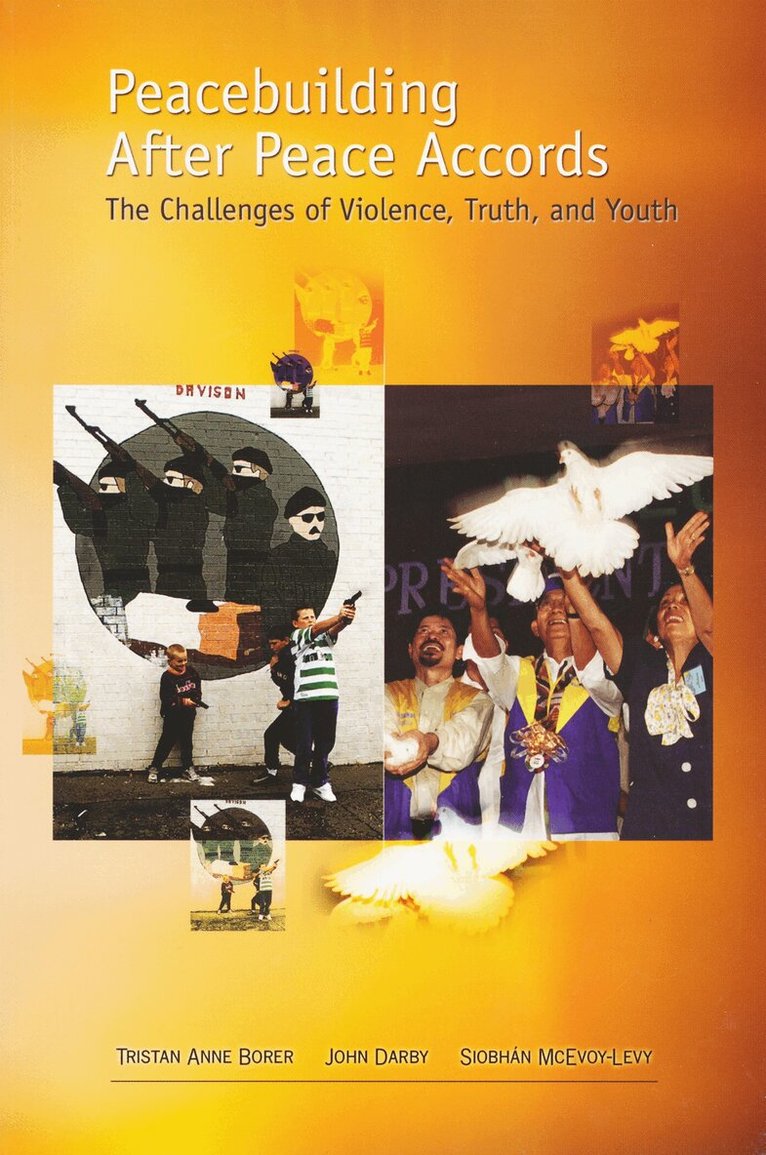
Peacebuilding After Peace Accords
The Challenges of Violence, Truth and Youth
Inbunden, Engelska, 2022
809 kr
Skickas inom 10-15 vardagar
During the 1990s, optimism abounded because international violence was in decline. The number of armed conflicts decreased worldwide from more than fifty in the early 1990s to fewer than thirty a decade later. This drop resulted largely from negotiations leading to peace accords. However, in a disturbingly large number of places, war was actually succeeded not by peace but by a stalemate. Peace accords were plagued by problems, including economic hardship, burgeoning crime, postwar trauma, and persistent fear and suspicion. Too often, negotiated settlements merely opened another difficult chapter in the peace process, or worse, led to new phases of conflict. This disappointing record is the subject of a multiyear project conducted by the University of Notre Dame's Research Initiative on the Resolution of Ethnic Conflict (RIREC). Located at the Joan B. Kroc Institute for International Peace Studies, RIREC explored three significant challenges of the postwar landscape: the effects of violence in internal conflicts after peace agreements have been signed; the contributions of truth-telling mechanisms; and the multidimensional roles played by youth as activists, soldiers, criminals, and community-builders. The project led to the 2006 publication of three edited volumes by the University of Notre Dame Press: John Darby's Violence and Reconstruction; Tristan Anne Borer's Telling the Truths: Truth Telling and Peace Building in Post-Conflict Societies; and Siobhán McEvoy-Levy's Troublemakers or Peacemakers? Youth and Post-Accord Peace Building. In Peacebuilding After Peace Accords, the three editors revisit the topics presented in their books. They examine the dilemmas each of the three challenges presents for postwar reconstruction and the difficulties in building a sustainable peace in societies recently destabilized by deadly violence. The authors argue that researchers and practitioners should pay greater attention to these challenges, especially how they relate to each other and to different post-accord problems. A foreword by Archbishop Emeritus Desmond Tutu sets the context for this volume, and an afterword by Eileen Babbitt reflects on its findings.