Siobhan McEvoy-Levy – författare
Visar alla böcker från författaren Siobhan McEvoy-Levy. Handla med fri frakt och snabb leverans.
7 produkter
7 produkter
213 kr
Skickas inom 5-8 vardagar
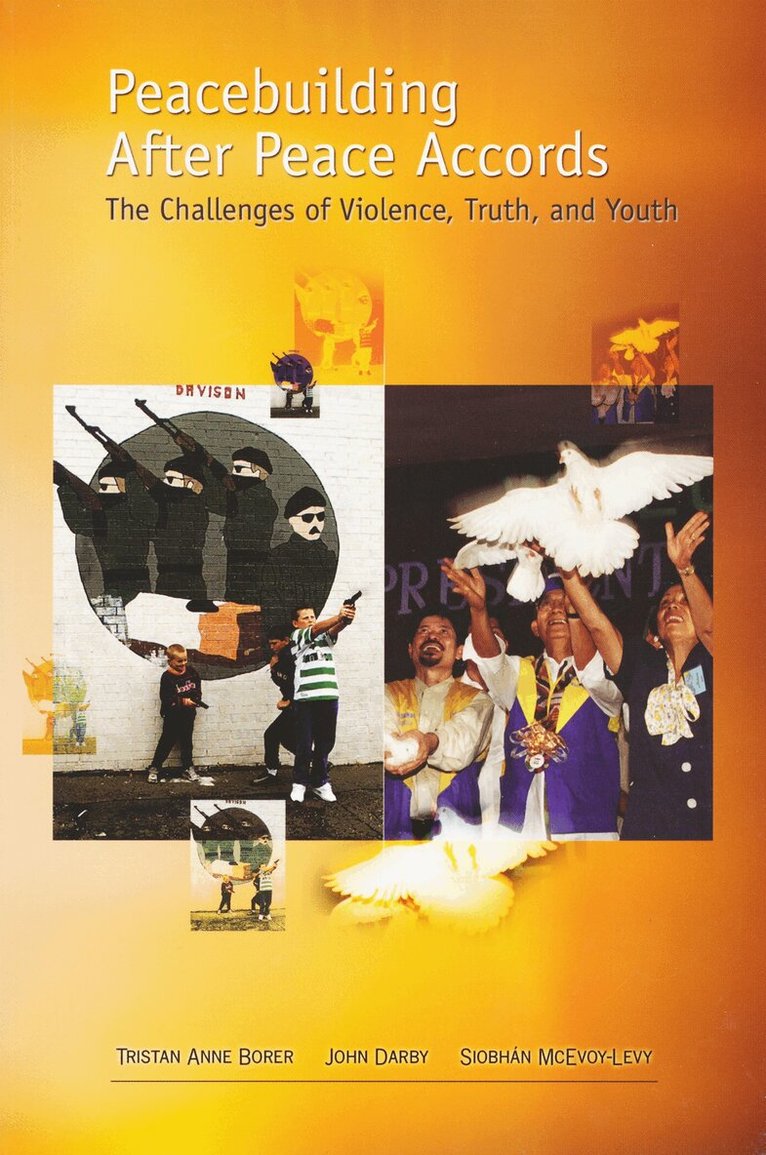
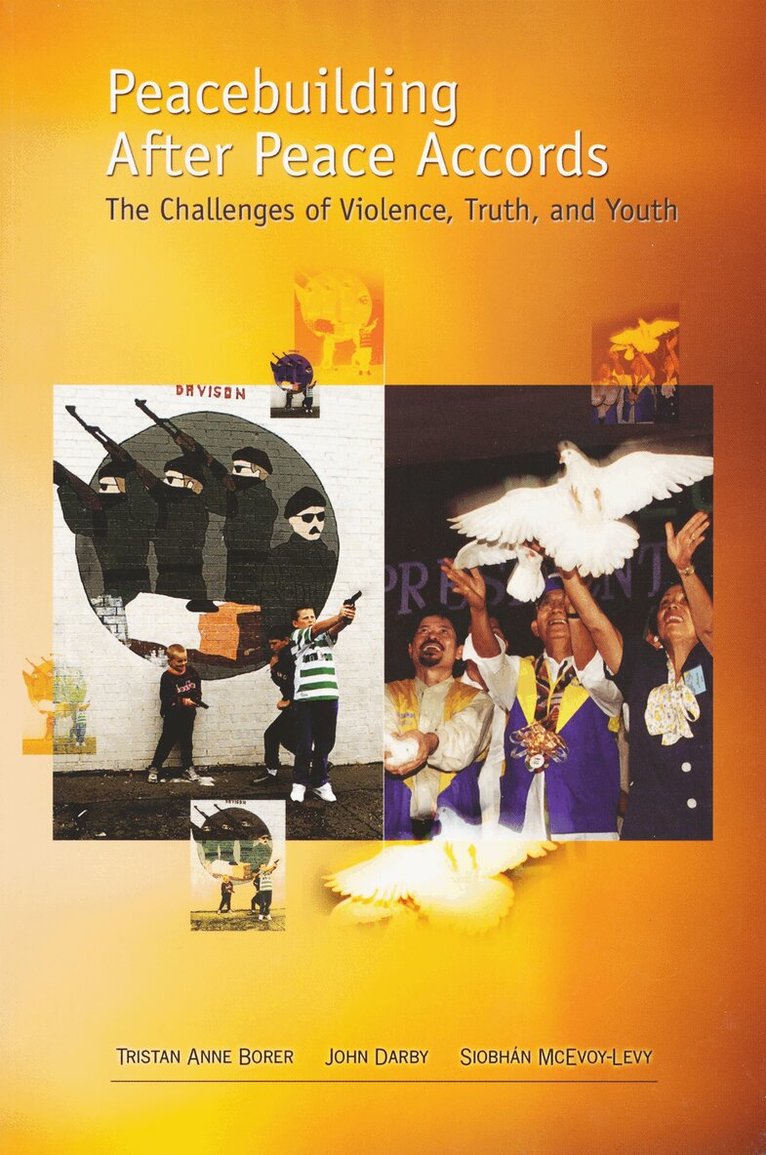
During the 1990s, optimism abounded because international violence was in decline. The number of armed conflicts decreased worldwide from more than fifty in the early 1990s to fewer than thirty a decade later. This drop resulted largely from negotiations leading to peace accords. However, in a disturbingly large number of places, war was actually succeeded not by peace but by a stalemate. Peace accords were plagued by problems, including economic hardship, burgeoning crime, postwar trauma, and persistent fear and suspicion. Too often, negotiated settlements merely opened another difficult chapter in the peace process, or worse, led to new phases of conflict. This disappointing record is the subject of a multiyear project conducted by the University of Notre Dame's Research Initiative on the Resolution of Ethnic Conflict (RIREC). Located at the Joan B. Kroc Institute for International Peace Studies, RIREC explored three significant challenges of the postwar landscape: the effects of violence in internal conflicts after peace agreements have been signed; the contributions of truth-telling mechanisms; and the multidimensional roles played by youth as activists, soldiers, criminals, and community-builders. The project led to the 2006 publication of three edited volumes by the University of Notre Dame Press: John Darby's Violence and Reconstruction; Tristan Anne Borer's Telling the Truths: Truth Telling and Peace Building in Post-Conflict Societies; and Siobhán McEvoy-Levy's Troublemakers or Peacemakers? Youth and Post-Accord Peace Building. In Peacebuilding After Peace Accords, the three editors revisit the topics presented in their books. They examine the dilemmas each of the three challenges presents for postwar reconstruction and the difficulties in building a sustainable peace in societies recently destabilized by deadly violence. The authors argue that researchers and practitioners should pay greater attention to these challenges, especially how they relate to each other and to different post-accord problems. A foreword by Archbishop Emeritus Desmond Tutu sets the context for this volume, and an afterword by Eileen Babbitt reflects on its findings.
1 344 kr
Skickas inom 10-15 vardagar
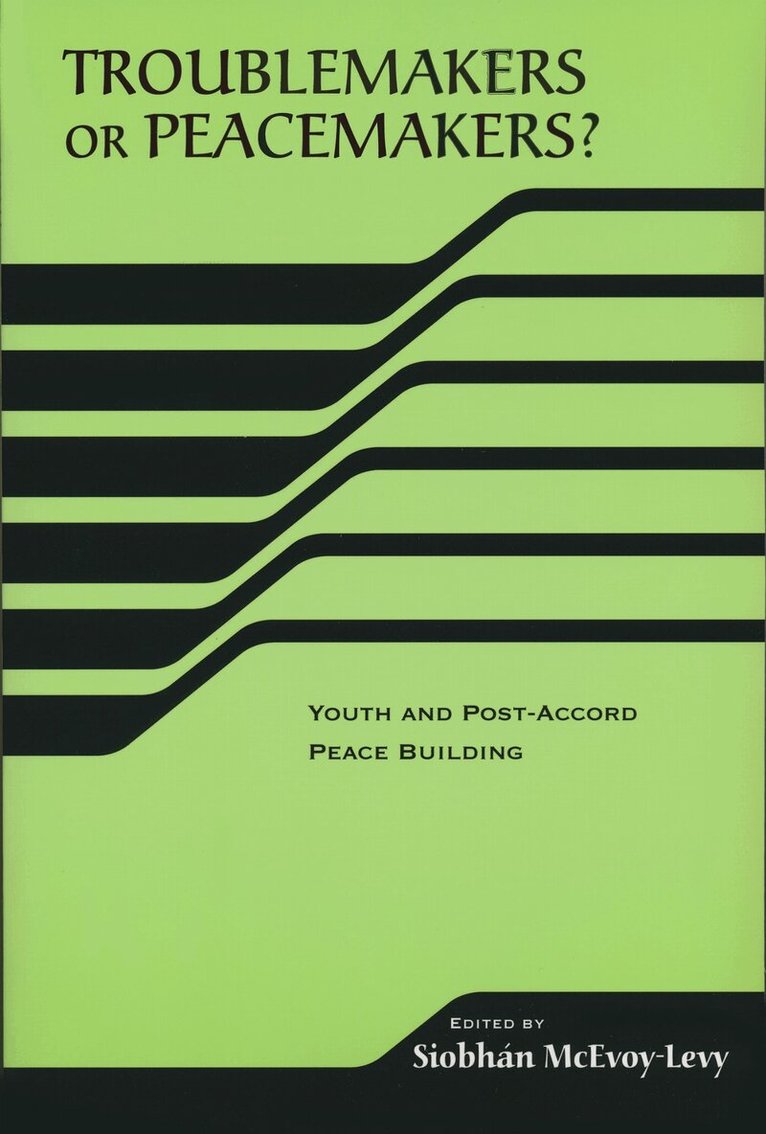
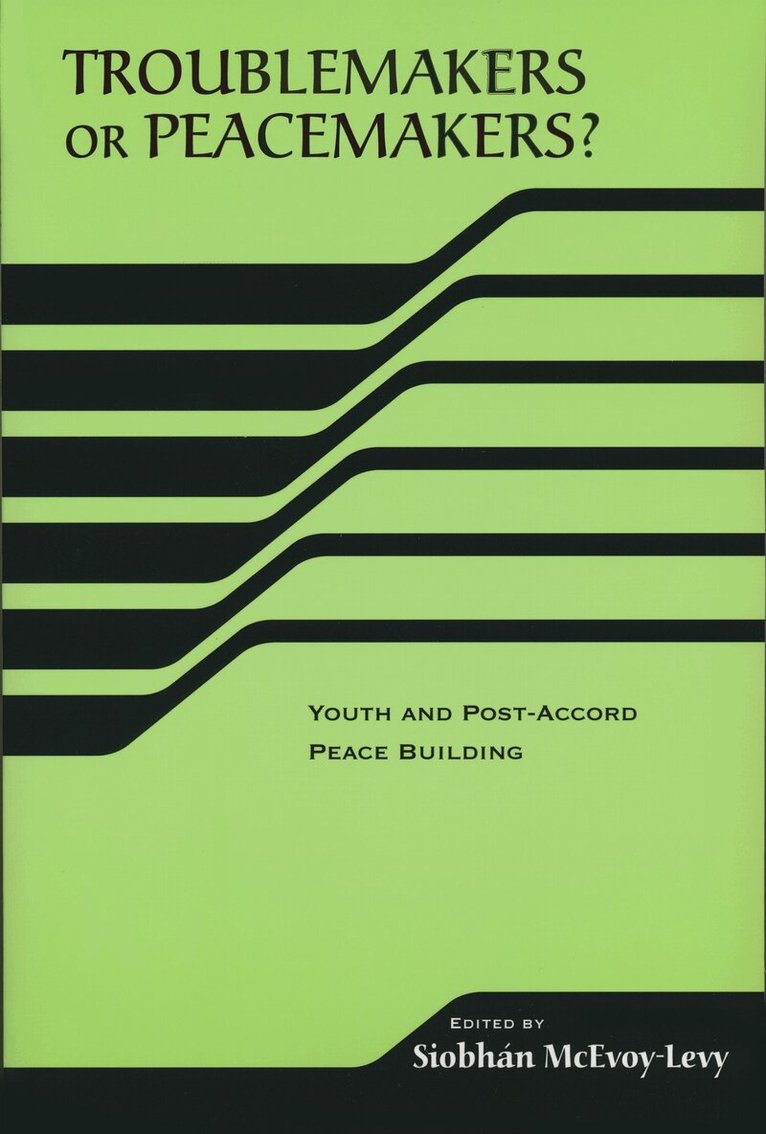
In contemporary armed conflicts, youth are often on the frontlines of combat and, after peace accords are signed, they are both potential threats to peace and significant peace-building resources. Troublemakers or Peacemakers? breaks new ground by exploring youth actions, perceptions, and needs as central components of the challenge of post-war peace building. The contributors develop theory and policy recommendations based on field research in Sierra Leone, Rwanda, Guatemala, Colombia, Angola, Northern Ireland, Bosnia, and Israel-Palestine.
368 kr
Skickas inom 10-15 vardagar
In contemporary armed conflicts, youth are often on the frontlines of combat and, after peace accords are signed, they are both potential threats to peace and significant peace-building resources. Troublemakers or Peacemakers? breaks new ground by exploring youth actions, perceptions, and needs as central components of the challenge of post-war peace building. The contributors develop theory and policy recommendations based on field research in Sierra Leone, Rwanda, Guatemala, Colombia, Angola, Northern Ireland, Bosnia, and Israel-Palestine.
Peacebuilding After Peace Accords
The Challenges of Violence, Truth and Youth
Inbunden, Engelska, 2022
809 kr
Skickas inom 10-15 vardagar
During the 1990s, optimism abounded because international violence was in decline. The number of armed conflicts decreased worldwide from more than fifty in the early 1990s to fewer than thirty a decade later. This drop resulted largely from negotiations leading to peace accords. However, in a disturbingly large number of places, war was actually succeeded not by peace but by a stalemate. Peace accords were plagued by problems, including economic hardship, burgeoning crime, postwar trauma, and persistent fear and suspicion. Too often, negotiated settlements merely opened another difficult chapter in the peace process, or worse, led to new phases of conflict. This disappointing record is the subject of a multiyear project conducted by the University of Notre Dame's Research Initiative on the Resolution of Ethnic Conflict (RIREC). Located at the Joan B. Kroc Institute for International Peace Studies, RIREC explored three significant challenges of the postwar landscape: the effects of violence in internal conflicts after peace agreements have been signed; the contributions of truth-telling mechanisms; and the multidimensional roles played by youth as activists, soldiers, criminals, and community-builders. The project led to the 2006 publication of three edited volumes by the University of Notre Dame Press: John Darby's Violence and Reconstruction; Tristan Anne Borer's Telling the Truths: Truth Telling and Peace Building in Post-Conflict Societies; and Siobhán McEvoy-Levy's Troublemakers or Peacemakers? Youth and Post-Accord Peace Building. In Peacebuilding After Peace Accords, the three editors revisit the topics presented in their books. They examine the dilemmas each of the three challenges presents for postwar reconstruction and the difficulties in building a sustainable peace in societies recently destabilized by deadly violence. The authors argue that researchers and practitioners should pay greater attention to these challenges, especially how they relate to each other and to different post-accord problems. A foreword by Archbishop Emeritus Desmond Tutu sets the context for this volume, and an afterword by Eileen Babbitt reflects on its findings.
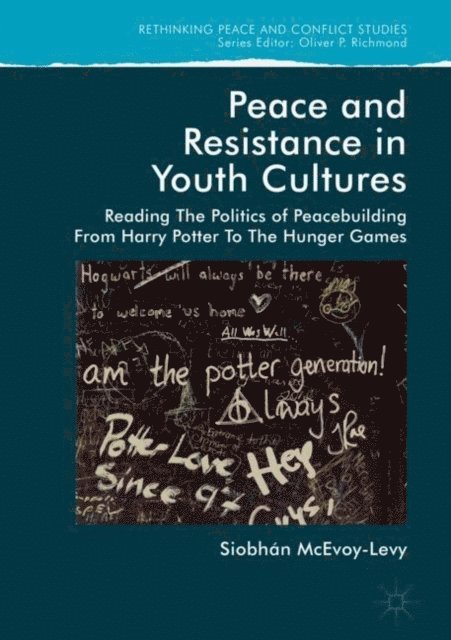
Peace and Resistance in Youth Cultures
Reading the Politics of Peacebuilding from Harry Potter to The Hunger Games
Inbunden, Engelska, 2018
1 706 kr
Skickas inom 10-15 vardagar
This book offers a rationale for and ways of reading popular culture for peace. It argues that we can improve peacebuilding theory and practice through examining popular culture’s youth revolutionaries and their outcomes - from their digital and plastic renderings to their living embodiments in local struggles for justice. The study combines insights from post-structural, post-colonial, feminist, youth studies and peace and conflict studies theories to analyze the literary themes, political uses, and cultural impacts of two hit book series – Harry Potter and The Hunger Games – tracing how these works have been transformed into visible political practices, including social justice advocacy and government propaganda in the War on Terror. Pop culture production and consumption help maintain global hierarchies of inequality and structural violence but can also connect people across divisions through fandom participation. Including chapters on fan activism, fan fiction, Guantanamo Bay detention center, youth as a discursive construct in IR, and the merchandizing and tourism opportunities connected with The Hunger Games, the book argues that through taking youth-oriented pop culture seriously, we can better understand the local, global and transnational spaces, discourses, and the relations of power, within which meanings and practices of peace are known, negotiated, encoded and obstructed.
1 235 kr
Skickas inom 5-8 vardagar
A CHOICE Outstanding Academic Title 2025Sustainable peace involves more than simply including youth in official peacebuilding mechanisms or recognizing their local peacebuilding work; it requires a transformation in thinking about the youth as actors in the world of security and peace. Using case studies from around the globe, the contributors to this volume analyse why states are afraid of their young people, why 'youth participation' in formal peace processes matters but is insufficient, and ways that young people are working outside of official systems to create and nurture peace on their own terms. The volume offers guidance for ways to bridge the disconnect that exists between institutional assumptions and expectations for youth as peacebuilders and the actual sustainable peace leadership of youth. Throughout, it emphasises a critical approach to peacebuilding with, for and by youth.
354 kr
Skickas inom 5-8 vardagar
A CHOICE Outstanding Academic Title 2025Sustainable peace involves more than simply including youth in official peacebuilding mechanisms or recognizing their local peacebuilding work; it requires a transformation in thinking about the youth as actors in the world of security and peace. Using case studies from around the globe, the contributors to this volume analyse why states are afraid of their young people, why 'youth participation' in formal peace processes matters but is insufficient, and ways that young people are working outside of official systems to create and nurture peace on their own terms. The volume offers guidance for ways to bridge the disconnect that exists between institutional assumptions and expectations for youth as peacebuilders and the actual sustainable peace leadership of youth. Throughout, it emphasises a critical approach to peacebuilding with, for and by youth.