Rostovtzeff Lectures - Böcker
Visar alla böcker i serien Rostovtzeff Lectures. Handla med fri frakt och snabb leverans.
7 produkter
7 produkter
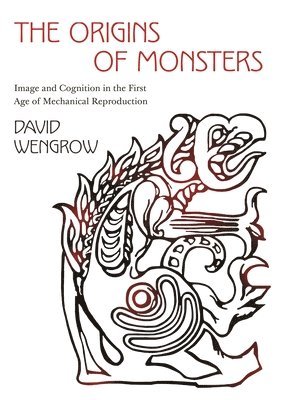
Origins of Monsters
Image and Cognition in the First Age of Mechanical Reproduction
Inbunden, Engelska, 2013
452 kr
Skickas inom 7-10 vardagar
It has often been claimed that "monsters"--supernatural creatures with bodies composed from multiple species--play a significant part in the thought and imagery of all people from all times. The Origins of Monsters advances an alternative view. Composite figurations are intriguingly rare and isolated in the art of the prehistoric era. Instead it was with the rise of cities, elites, and cosmopolitan trade networks that "monsters" became widespread features of visual production in the ancient world. Showing how these fantastic images originated and how they were transmitted, David Wengrow identifies patterns in the records of human image-making and embarks on a search for connections between mind and culture. Wengrow asks: Can cognitive science explain the potency of such images? Does evolutionary psychology hold a key to understanding the transmission of symbols? How is our making and perception of images influenced by institutions and technologies? Wengrow considers the work of art in the first age of mechanical reproduction, which he locates in the Middle East, where urban life began.Comparing the development and spread of fantastic imagery across a range of prehistoric and ancient societies, including Mesopotamia, Egypt, Greece, and China, he explores how the visual imagination has been shaped by a complex mixture of historical and universal factors. Examining the reasons behind the dissemination of monstrous imagery in ancient states and empires, The Origins of Monsters sheds light on the relationship between culture and cognition.
436 kr
Skickas inom 7-10 vardagar
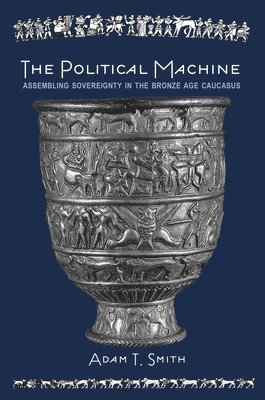
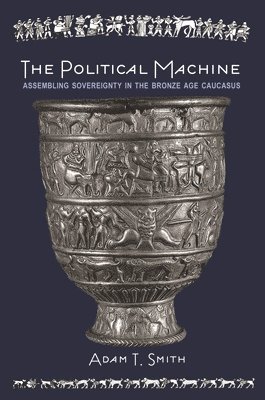
The Political Machine investigates the essential role that material culture plays in the practices and maintenance of political sovereignty. Through an archaeological exploration of the Bronze Age Caucasus, Adam Smith demonstrates that beyond assemblies of people, polities are just as importantly assemblages of things--from ballots and bullets to crowns, regalia, and licenses. Smith looks at the ways that these assemblages help to forge cohesive publics, separate sovereigns from a wider social mass, and formalize governance--and he considers how these developments continue to shape politics today. Smith shows that the formation of polities is as much about the process of manufacturing assemblages as it is about disciplining subjects, and that these material objects or "machines" sustain communities, orders, and institutions. The sensibilities, senses, and sentiments connecting people to things enabled political authority during the Bronze Age and fortify political power even in the contemporary world.Smith provides a detailed account of the transformation of communities in the Caucasus, from small-scale early Bronze Age villages committed to egalitarianism, to Late Bronze Age polities predicated on radical inequality, organized violence, and a centralized apparatus of rule. From Bronze Age traditions of mortuary ritual and divination to current controversies over flag pins and Predator drones, The Political Machine sheds new light on how material goods authorize and defend political order.
485 kr
Kommande
An innovative study of medieval Chinese tombs that provides new insights into the history of Eurasian cultural contact and exchangeSilk Roads, Steppe Roads takes the reader on a journey to three sites in northwestern China and Mongolia to investigate medieval Chinese tombs containing evidence of Eastern Eurasian cultural contacts and exchanges. The construction, artifacts, and texts on paper and stone found at these tombs of the Sui (581–618) and early Tang (618–907) dynasties reveal glimpses of people, rituals, and objects that were in motion on the Silk and Steppe roads until being laid to rest over a millennium ago.Jonathan Karam Skaff shows how the major transit hubs of the Silk and Steppe roads were particularly active sites of cultural contestation, experimentation, and mutual influence that had an impact on the historical development of China and Inner Asia. Challenging the idealized image of the Silk Road, he also examines travel permits and sales contracts that document the trade of enslaved people over the route.Innovatively drawing on both textual and archaeological sources, Silk Roads, Steppe Roads shows how Eurasian peoples, despite believing their societies to be unique, spun overlapping and entangled webs of culture.
477 kr
Skickas inom 7-10 vardagar
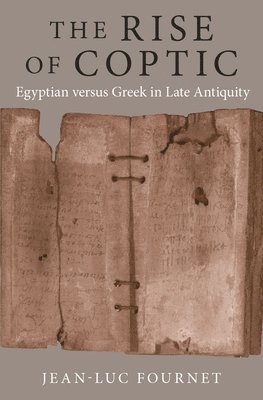
Coptic emerged as the written form of the Egyptian language in the third century, when Greek was still the official language in Egypt. By the time of the Arab conquest of Egypt in 641, Coptic had almost achieved official status, but only after an unusually prolonged period of stagnation. Jean-Luc Fournet traces this complex history, showing how the rise of Coptic took place amid profound cultural, religious, and political changes in late antiquity.For some three hundred years after its introduction into the written culture of Egypt, Coptic was limited to biblical translation and private and monastic correspondence, while Greek retained its monopoly on administrative, legal, and literary writing. This changed during the sixth century, when Coptic began to penetrate domains that were once closed to it, such as literature, liturgy, regulated transactions between individuals, and communications between the state and its subjects. Fournet examines the reasons for Coptic's late development as a competing language—which was unlike what happened with other vernacular languages in Near Eastern Greek-speaking societies—and explains why Coptic eventually succeeded in being recognized with Greek as an official language.Incisively written and rich with insights, The Rise of Coptic draws on a wealth of archival evidence to shed new light on the role of monasticism in the growing use of Coptic before the Arab conquest.
Origins of Monsters
Image and Cognition in the First Age of Mechanical Reproduction
Häftad, Engelska, 2020
388 kr
Skickas inom 7-10 vardagar
It has often been claimed that "monsters"--supernatural creatures with bodies composed from multiple species--play a significant part in the thought and imagery of all people from all times. The Origins of Monsters advances an alternative view. Composite figurations are intriguingly rare and isolated in the art of the prehistoric era. Instead it was with the rise of cities, elites, and cosmopolitan trade networks that "monsters" became widespread features of visual production in the ancient world. Showing how these fantastic images originated and how they were transmitted, David Wengrow identifies patterns in the records of human image-making and embarks on a search for connections between mind and culture.Wengrow asks: Can cognitive science explain the potency of such images? Does evolutionary psychology hold a key to understanding the transmission of symbols? How is our making and perception of images influenced by institutions and technologies? Wengrow considers the work of art in the first age of mechanical reproduction, which he locates in the Middle East, where urban life began. Comparing the development and spread of fantastic imagery across a range of prehistoric and ancient societies, including Mesopotamia, Egypt, Greece, and China, he explores how the visual imagination has been shaped by a complex mixture of historical and universal factors.Examining the reasons behind the dissemination of monstrous imagery in ancient states and empires, The Origins of Monsters sheds light on the relationship between culture and cognition.
323 kr
Skickas inom 7-10 vardagar
The Political Machine investigates the essential role that material culture plays in the practices and maintenance of political sovereignty. Through an archaeological exploration of the Bronze Age Caucasus, Adam Smith demonstrates that beyond assemblies of people, polities are just as importantly assemblages of things—from ballots and bullets to crowns, regalia, and licenses. Smith looks at the ways that these assemblages help to forge cohesive publics, separate sovereigns from a wider social mass, and formalize governance—and he considers how these developments continue to shape politics today.Smith shows that the formation of polities is as much about the process of manufacturing assemblages as it is about disciplining subjects, and that these material objects or "machines" sustain communities, orders, and institutions. The sensibilities, senses, and sentiments connecting people to things enabled political authority during the Bronze Age and fortify political power even in the contemporary world. Smith provides a detailed account of the transformation of communities in the Caucasus, from small-scale early Bronze Age villages committed to egalitarianism, to Late Bronze Age polities predicated on radical inequality, organized violence, and a centralized apparatus of rule.From Bronze Age traditions of mortuary ritual and divination to current controversies over flag pins and Predator drones, The Political Machine sheds new light on how material goods authorize and defend political order.
323 kr
Skickas inom 7-10 vardagar
Coptic emerged as the written form of the Egyptian language in the third century, when Greek was still the official language in Egypt. By the time of the Arab conquest of Egypt in 641, Coptic had almost achieved official status, but only after an unusually prolonged period of stagnation. Jean-Luc Fournet traces this complex history, showing how the rise of Coptic took place amid profound cultural, religious, and political changes in late antiquity.For some three hundred years after its introduction into the written culture of Egypt, Coptic was limited to biblical translation and private and monastic correspondence, while Greek retained its monopoly on administrative, legal, and literary writing. This changed during the sixth century, when Coptic began to penetrate domains that were once closed to it, such as literature, liturgy, regulated transactions between individuals, and communications between the state and its subjects. Fournet examines the reasons for Coptic's late development as a competing language—which was unlike what happened with other vernacular languages in Near Eastern Greek-speaking societies—and explains why Coptic eventually succeeded in being recognized with Greek as an official language.Incisively written and rich with insights, The Rise of Coptic draws on a wealth of archival evidence to shed new light on the role of monasticism in the growing use of Coptic before the Arab conquest.