Routledge Library Editions: Syria - Böcker
Visar alla böcker i serien Routledge Library Editions: Syria. Handla med fri frakt och snabb leverans.
9 produkter
9 produkter
1 698 kr
Skickas inom 10-15 vardagar
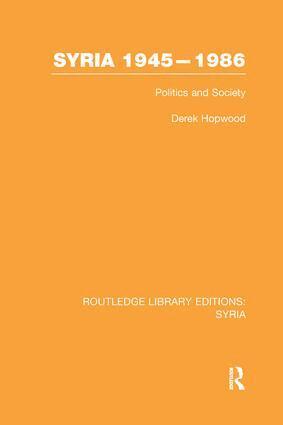
This book traces the development of modern Syria focusing on the contribution of the Ba’th party and Ba’thist ideology. It examines the roots of the Ba’th in the intellectual ferment of the 1940s and charts its growing influence on Syrian politics. Special attention is devoted to the crucial Sixth Congress of the Ba’th Party in 1963 and the key ideological document, the Muntalaqat, produced by Michel Aflaq. After 1963 the military became increasingly dominant until Hafiz al-Asad came to power in 1970. Since then the Party has been less dominant internally but Syria itself has established a pivotal position in regional affairs. The book concludes by reviewing the prospects for Syria after Asad and the potential for a Ba’thist revival.
1 698 kr
Skickas inom 10-15 vardagar
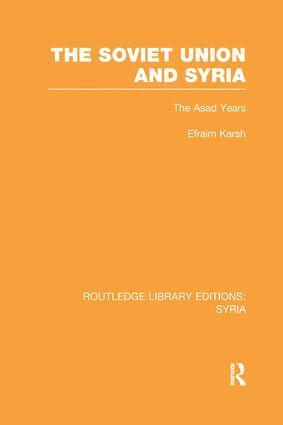
This Chatham House Paper examines the nature of Soviet relations with Syria, assessing the commitments made and the gains reaped by Moscow and Damascus in the economic, military and political spheres. After discussing Soviet interests in the region in general and with regard to Syria in particular, the author traces the evolution of the relationship between Moscow and its major Middle Eastern ally since Asad came to power in 1970.While the study argues that huge Soviet military aid has intensified the pro-Soviet alignment of Syrian policy, it contends that Asad’s perception of his country’s national interests has also played a large part in shaping the relationship. The author concludes that both sides have gained from what is an interdependent relationship. If Damascus remains almost wholly dependent on Soviet military aid, regional constraints give Syria some leverage over Moscow. Without Moscow’s support Syria might perhaps not have played such a leading role in the region; without Damascus the Soviet Union might have found itself on the sidelines of the Arab-Israeli conflict.
2 166 kr
Skickas inom 10-15 vardagar
Syria has often lacked sympathetic observers. This book tries to interpret the country and its people in terms of how they see their own history and of what they are trying to achieve. More than a political or diplomatic history, it discusses the economy, society, education and culture to help the reader understand and explain modern Syria.A description of the country deals with the physical and other factors which have influenced Syria’s development. An historical survey concentrates mainly on the period after the Second World War and explains why a knowledge of Syrian history is important and why Syrians look at their history in the way they do. The achievements, problems and failures of President Asad are fully discussed. Further chapters explain the ideological factors which have been of vital importance in Syrian politics, the development of education, the economy and society. The author looks at examples of contemporary Syrian literature and the way in which writers view the problems of their society and culture.This is a clear, succinct and readable account of modern Syria which will be essential for all those studying the Middle East, the developing world or international relations.
2 166 kr
Skickas inom 10-15 vardagar
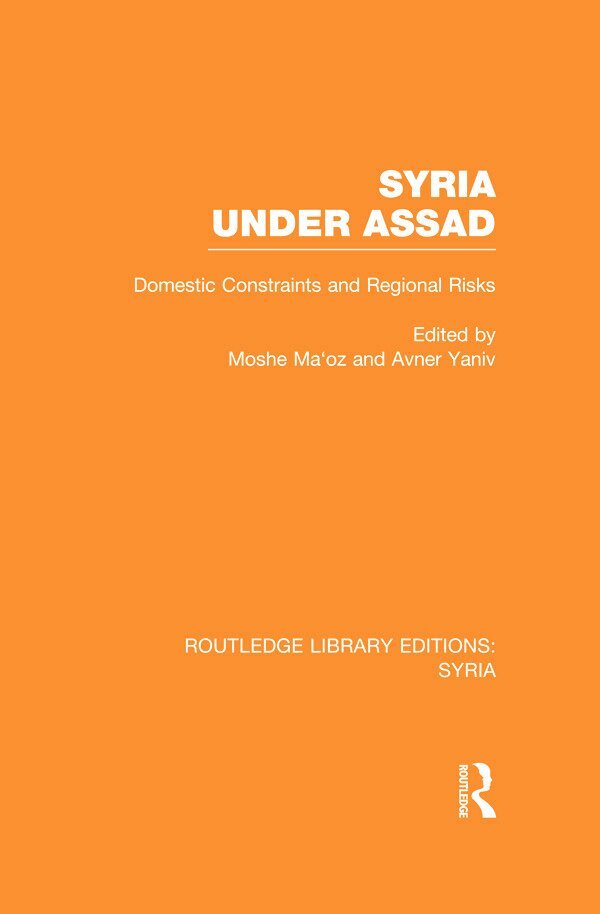
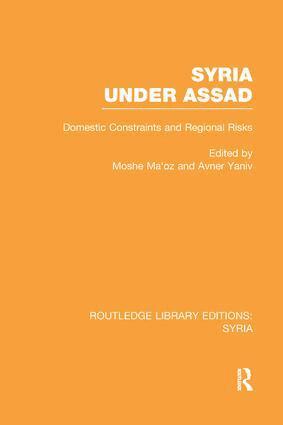
One of the most striking recent developments in the modern Middle East has been the transformation of Syria under Hafez al-Assad from a weak, vulnerable and internally divided state to a leading regional power. While this is increasingly acknowledged by observers of the Middle Eastern scene , the scholarly discussion of the origins, the scope, the durability and the implications of this change is only beginning to take place.Syria Under Assad addresses itself to this discussion. Based on a carefully selected collection of original articles, this volume focuses on the elements of Syria’s power, on Syria’s relations with each of its neighbours as well as on Syria’s relations with the superpowers. In the final analysis, conclude the editors, Syrian policies appear paradoxical. Its conduct ever since the advent of Hafez al-Assad exhibits subtle and hard-nosed pragmatism. Yet, in order to consolidate the domestic legitimacy of the Alawi Ba’athist regime, Syria has been impelled to articulate its foreign policy goals in the far-flung rhetoric of the Ba’athist ideology. As a result Syria is widely perceived of as a menace and, treated as such, it often responds in kind.
8 811 kr
Skickas inom 10-15 vardagar
Routledge Library Editions: Syria brings together as one set, or individual volumes, a series of previously out-of-print classics from a variety of academic imprints. With a variety of titles covering Syria's politics, history and culture, this set provides in one place a wealth of important reference sources from a wide range of authors expert in the field.
688 kr
Skickas inom 10-15 vardagar
Syria has often lacked sympathetic observers. This book tries to interpret the country and its people in terms of how they see their own history and of what they are trying to achieve. More than a political or diplomatic history, it discusses the economy, society, education and culture to help the reader understand and explain modern Syria.A description of the country deals with the physical and other factors which have influenced Syria’s development. An historical survey concentrates mainly on the period after the Second World War and explains why a knowledge of Syrian history is important and why Syrians look at their history in the way they do. The achievements, problems and failures of President Asad are fully discussed. Further chapters explain the ideological factors which have been of vital importance in Syrian politics, the development of education, the economy and society. The author looks at examples of contemporary Syrian literature and the way in which writers view the problems of their society and culture.This is a clear, succinct and readable account of modern Syria which will be essential for all those studying the Middle East, the developing world or international relations.
688 kr
Skickas inom 10-15 vardagar
One of the most striking recent developments in the modern Middle East has been the transformation of Syria under Hafez al-Assad from a weak, vulnerable and internally divided state to a leading regional power. While this is increasingly acknowledged by observers of the Middle Eastern scene , the scholarly discussion of the origins, the scope, the durability and the implications of this change is only beginning to take place.Syria Under Assad addresses itself to this discussion. Based on a carefully selected collection of original articles, this volume focuses on the elements of Syria’s power, on Syria’s relations with each of its neighbours as well as on Syria’s relations with the superpowers. In the final analysis, conclude the editors, Syrian policies appear paradoxical. Its conduct ever since the advent of Hafez al-Assad exhibits subtle and hard-nosed pragmatism. Yet, in order to consolidate the domestic legitimacy of the Alawi Ba’athist regime, Syria has been impelled to articulate its foreign policy goals in the far-flung rhetoric of the Ba’athist ideology. As a result Syria is widely perceived of as a menace and, treated as such, it often responds in kind.
695 kr
Skickas inom 10-15 vardagar
This book traces the development of modern Syria focusing on the contribution of the Ba’th party and Ba’thist ideology. It examines the roots of the Ba’th in the intellectual ferment of the 1940s and charts its growing influence on Syrian politics. Special attention is devoted to the crucial Sixth Congress of the Ba’th Party in 1963 and the key ideological document, the Muntalaqat, produced by Michel Aflaq. After 1963 the military became increasingly dominant until Hafiz al-Asad came to power in 1970. Since then the Party has been less dominant internally but Syria itself has established a pivotal position in regional affairs. The book concludes by reviewing the prospects for Syria after Asad and the potential for a Ba’thist revival.
668 kr
Skickas inom 10-15 vardagar
This Chatham House Paper examines the nature of Soviet relations with Syria, assessing the commitments made and the gains reaped by Moscow and Damascus in the economic, military and political spheres. After discussing Soviet interests in the region in general and with regard to Syria in particular, the author traces the evolution of the relationship between Moscow and its major Middle Eastern ally since Asad came to power in 1970.While the study argues that huge Soviet military aid has intensified the pro-Soviet alignment of Syrian policy, it contends that Asad’s perception of his country’s national interests has also played a large part in shaping the relationship. The author concludes that both sides have gained from what is an interdependent relationship. If Damascus remains almost wholly dependent on Soviet military aid, regional constraints give Syria some leverage over Moscow. Without Moscow’s support Syria might perhaps not have played such a leading role in the region; without Damascus the Soviet Union might have found itself on the sidelines of the Arab-Israeli conflict.