Routledge Research in Transnational Crime and Criminal Law – serie
Visar alla böcker i serien Routledge Research in Transnational Crime and Criminal Law. Handla med fri frakt och snabb leverans.
6 produkter
6 produkter
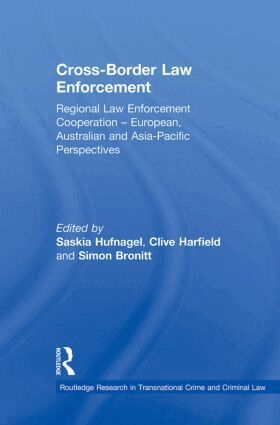
Cross-Border Law Enforcement
Regional Law Enforcement Cooperation – European, Australian and Asia-Pacific Perspectives
Inbunden, Engelska, 2011
2 006 kr
Skickas inom 10-15 vardagar
This innovative volume explores issues of law enforcement cooperation across borders from a variety of disciplinary perspectives. In doing so it adopts a comparative framework hitherto unexplored; namely the EU and the Australsian/Asia-Pacific region whose relative geopolitical remoteness from each other decreases with every incremental increase in globalisation. The borders under examination include both macro-level cooperation between nation-states, as well as micro-level cooperation between different Executive agencies within a nation-state. In terms of disciplinary borders the contributions demonstrate the breadth of academic insight that can be brought to bear on this topic. The volume contributes to the wider context for evidence-based policy-making and knowledge-based policing by bringing together leading academics, public policy-makers, legal practitioners and law enforcement officials from Europe, Australia and the Asian-Pacific region, to shed new light on the pressing problems impeding cross-border policing and law enforcement globally and regionally. Problems common to all jurisdictions are discussed and innovative ‘best practice’ solutions and models are considered.The book is structured in four parts: Police cooperation in the EU; in Australia; in the Asia-Pacific Region; and finally it considers issues of jurisdiction and due process/human rights issues, with a focus on regional cooperation strategies for countering human trafficking, organised crime and terrorism.The book will be of interest to both academic and practitioner communities in policing, criminology, international relations, and comparative Asia-Pacific and EU legal studies.
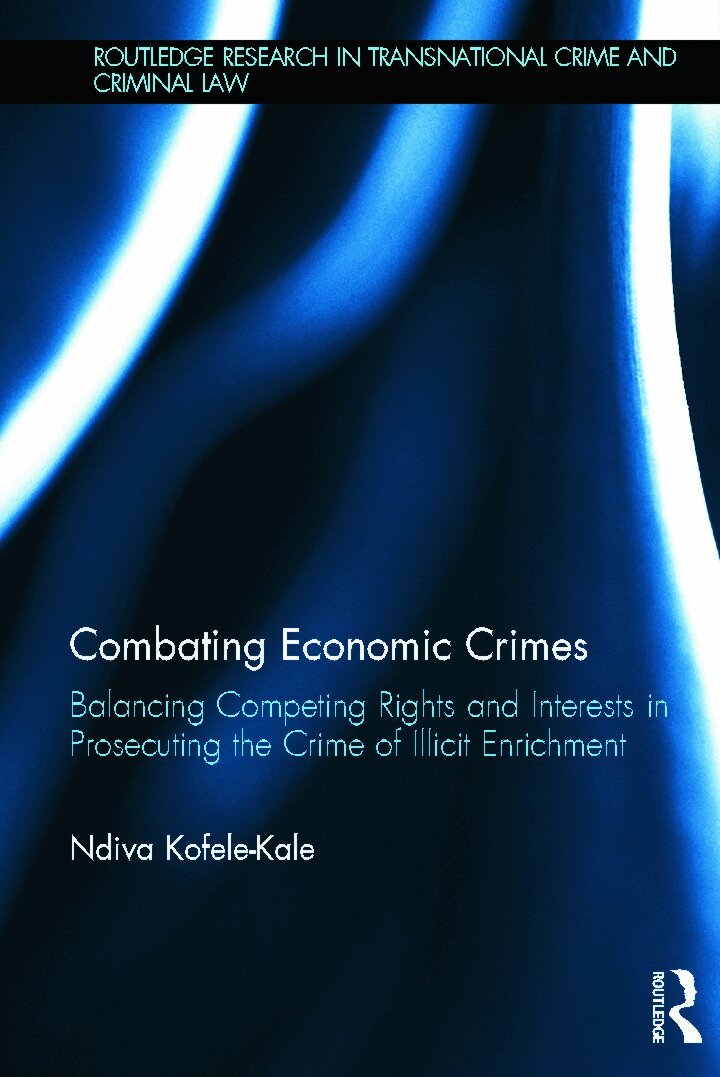
Combating Economic Crimes
Balancing Competing Rights and Interests in Prosecuting the Crime of Illicit Enrichment
Inbunden, Engelska, 2011
2 006 kr
Skickas inom 10-15 vardagar
In the last decade a new tool has been developed in the global war against official corruption through the introduction of the offense of "illicit enrichment" in almost every multilateral anti-corruption convention. Illicit enrichment is defined in these conventions to include a reverse burden clause which triggers an automatic presumption that any public official found in "possession of inexplicable wealth" must have acquired it illicitly. However, the reversal of the burden of proof clauses raises an important human rights issue because they conflict with the accused individual’s right to be presumed innocent. Unfortunately, the recent spate of international legislation against official corruption provides no clear guidelines on how to proceed in balancing the right of the accused to be presumed innocent against the competing right of society to trace and recapture illicitly acquired national wealth. Combating Economic Crimestherefore sets out to address what has been left unanswered by these multilateral conventions, to wit, the level of burden of proof that should be placed on a public official who is accused of illicitly enriching himself from the resources of the State, balanced against the protection of legitimate community interests and expectations for a corruption-free society. The book explores the doctrinal foundations of the right to a presumption of innocence and reviews the basic due process protections afforded to all accused persons in criminal trials by treaty, customary international law, and municipal law. The book then goes on to propose a framework for balancing and ‘situationalizing’ competing human rights and public interests in situations involving possible official corruption.
Combating Economic Crimes
Balancing Competing Rights and Interests in Prosecuting the Crime of Illicit Enrichment
Häftad, Engelska, 2013
744 kr
Skickas inom 10-15 vardagar
In the last decade a new tool has been developed in the global war against official corruption through the introduction of the offense of "illicit enrichment" in almost every multilateral anti-corruption convention. Illicit enrichment is defined in these conventions to include a reverse burden clause which triggers an automatic presumption that any public official found in "possession of inexplicable wealth" must have acquired it illicitly. However, the reversal of the burden of proof clauses raises an important human rights issue because they conflict with the accused individual’s right to be presumed innocent. Unfortunately, the recent spate of international legislation against official corruption provides no clear guidelines on how to proceed in balancing the right of the accused to be presumed innocent against the competing right of society to trace and recapture illicitly acquired national wealth. Combating Economic Crimestherefore sets out to address what has been left unanswered by these multilateral conventions, to wit, the level of burden of proof that should be placed on a public official who is accused of illicitly enriching himself from the resources of the State, balanced against the protection of legitimate community interests and expectations for a corruption-free society. The book explores the doctrinal foundations of the right to a presumption of innocence and reviews the basic due process protections afforded to all accused persons in criminal trials by treaty, customary international law, and municipal law. The book then goes on to propose a framework for balancing and ‘situationalizing’ competing human rights and public interests in situations involving possible official corruption.
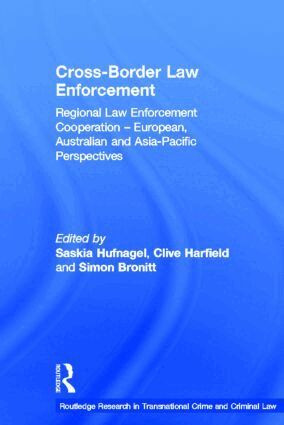
Cross-Border Law Enforcement
Regional Law Enforcement Cooperation – European, Australian and Asia-Pacific Perspectives
Häftad, Engelska, 2013
744 kr
Skickas inom 10-15 vardagar
This innovative volume explores issues of law enforcement cooperation across borders from a variety of disciplinary perspectives. In doing so it adopts a comparative framework hitherto unexplored; namely the EU and the Australsian/Asia-Pacific region whose relative geopolitical remoteness from each other decreases with every incremental increase in globalisation. The borders under examination include both macro-level cooperation between nation-states, as well as micro-level cooperation between different Executive agencies within a nation-state. In terms of disciplinary borders the contributions demonstrate the breadth of academic insight that can be brought to bear on this topic. The volume contributes to the wider context for evidence-based policy-making and knowledge-based policing by bringing together leading academics, public policy-makers, legal practitioners and law enforcement officials from Europe, Australia and the Asian-Pacific region, to shed new light on the pressing problems impeding cross-border policing and law enforcement globally and regionally. Problems common to all jurisdictions are discussed and innovative ‘best practice’ solutions and models are considered.The book is structured in four parts: Police cooperation in the EU; in Australia; in the Asia-Pacific Region; and finally it considers issues of jurisdiction and due process/human rights issues, with a focus on regional cooperation strategies for countering human trafficking, organised crime and terrorism.The book will be of interest to both academic and practitioner communities in policing, criminology, international relations, and comparative Asia-Pacific and EU legal studies.
619 kr
Skickas inom 10-15 vardagar
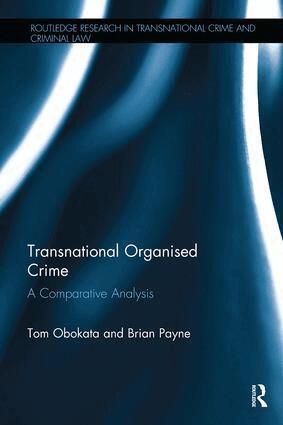
Organised crime covers a wide range of activities, including drug trafficking, illegal trafficking of people, and fraud. The existence of a land border does not impede these operations; instead in many cases it is used to their advantage. In response, law enforcement strategies must include a transnational, multi-agency approach. This book critically analyses the extent to which Northern Ireland and the Republic of Ireland have been successful in implementing effective action against transnational organised crime. It explores the adoption of key law enforcement strategies and measures in these jurisdictions, and evaluates how regional (EU law) and international (UN Convention) standards have been implemented at the national level. Drawing on interviews with over 90 stakeholders including the Department of Justice Northern Ireland, the Department of Justice and Equality in Ireland, the Police Service of Northern Ireland and An Garda Síochána, Tom Obokata and Brian Payne discuss the factors affecting the effective prevention and suppression of organised crime, particularly in relation to cross-border cooperation. In exploring challenges of transnational crime and cooperation, this book will be of great use to students and researchers in international and transnational criminal law, criminology, and crime prevention.
2 131 kr
Skickas inom 10-15 vardagar
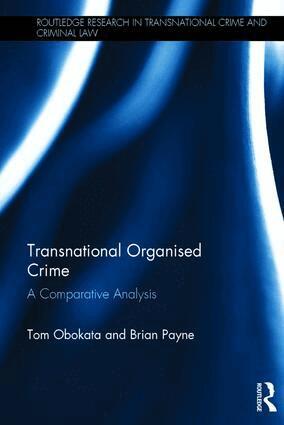
Organised crime covers a wide range of activities, including drug trafficking, illegal trafficking of people, and fraud. The existence of a land border does not impede these operations; instead in many cases it is used to their advantage. In response, law enforcement strategies must include a transnational, multi-agency approach. This book critically analyses the extent to which Northern Ireland and the Republic of Ireland have been successful in implementing effective action against transnational organised crime. It explores the adoption of key law enforcement strategies and measures in these jurisdictions, and evaluates how regional (EU law) and international (UN Convention) standards have been implemented at the national level. Drawing on interviews with over 90 stakeholders including the Department of Justice Northern Ireland, the Department of Justice and Equality in Ireland, the Police Service of Northern Ireland and An Garda Síochána, Tom Obokata and Brian Payne discuss the factors affecting the effective prevention and suppression of organised crime, particularly in relation to cross-border cooperation. In exploring challenges of transnational crime and cooperation, this book will be of great use to students and researchers in international and transnational criminal law, criminology, and crime prevention.