Tom Obokata – författare
Visar alla böcker från författaren Tom Obokata. Handla med fri frakt och snabb leverans.
4 produkter
4 produkter
626 kr
Skickas inom 10-15 vardagar
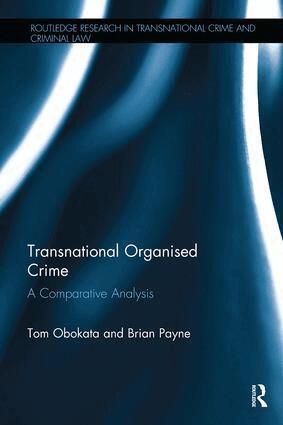
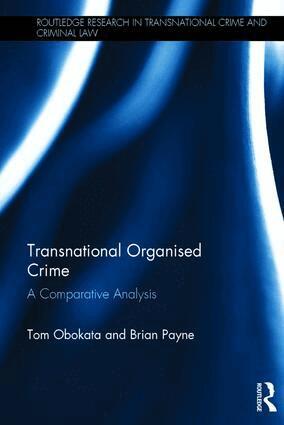
Organised crime covers a wide range of activities, including drug trafficking, illegal trafficking of people, and fraud. The existence of a land border does not impede these operations; instead in many cases it is used to their advantage. In response, law enforcement strategies must include a transnational, multi-agency approach. This book critically analyses the extent to which Northern Ireland and the Republic of Ireland have been successful in implementing effective action against transnational organised crime. It explores the adoption of key law enforcement strategies and measures in these jurisdictions, and evaluates how regional (EU law) and international (UN Convention) standards have been implemented at the national level. Drawing on interviews with over 90 stakeholders including the Department of Justice Northern Ireland, the Department of Justice and Equality in Ireland, the Police Service of Northern Ireland and An Garda Síochána, Tom Obokata and Brian Payne discuss the factors affecting the effective prevention and suppression of organised crime, particularly in relation to cross-border cooperation. In exploring challenges of transnational crime and cooperation, this book will be of great use to students and researchers in international and transnational criminal law, criminology, and crime prevention.
2 143 kr
Skickas inom 10-15 vardagar
Organised crime covers a wide range of activities, including drug trafficking, illegal trafficking of people, and fraud. The existence of a land border does not impede these operations; instead in many cases it is used to their advantage. In response, law enforcement strategies must include a transnational, multi-agency approach. This book critically analyses the extent to which Northern Ireland and the Republic of Ireland have been successful in implementing effective action against transnational organised crime. It explores the adoption of key law enforcement strategies and measures in these jurisdictions, and evaluates how regional (EU law) and international (UN Convention) standards have been implemented at the national level. Drawing on interviews with over 90 stakeholders including the Department of Justice Northern Ireland, the Department of Justice and Equality in Ireland, the Police Service of Northern Ireland and An Garda Síochána, Tom Obokata and Brian Payne discuss the factors affecting the effective prevention and suppression of organised crime, particularly in relation to cross-border cooperation. In exploring challenges of transnational crime and cooperation, this book will be of great use to students and researchers in international and transnational criminal law, criminology, and crime prevention.
1 251 kr
Skickas inom 10-15 vardagar
There is extensive and detailed academic literature on the legal development of international crimes such as war crimes and crime against humanity. However, not much attention has been paid to other serious crimes, including narcotics-related offences, human trafficking and money laundering, which do not necessarily amount to international crimes in the traditional sense. The purpose of this monograph is to fill this gap and offer a critical analysis of developments in the field of transnational organised crime under international law. The book is divided into two parts. Part I is entitled "Norms, Principles, and Concepts." It traces the history of organised crime and explores key concepts and norms relating to the practice from a multi-disciplinary perspective. It then looks at legal obligations imposed upon States as well as non-State actors in relation to transnational organised crime. Part II illustrates how these norms, principles and obligations are translated and enforced in practice. This will be done through case studies at the level of national law (Thailand, Serbia and the UK), regional law (European Union) and international law (United Nations)."A book of many parts, its thematic coherence comes from its devotion to identifying the social threat posed by organised crime and the legal steps taken at the international and national levels against that threat. Rich with example and illustration and written in a light, direct, style, it will provide a lucid guide for practitioners, policy-makers and students to the largely untraversed territory of the international legal system set up to suppress transnational organised crime." Professor Neil Bolster, University of Canterbury, New Zealand. "...the international law governing organized crime is a close relative of the body of law applicable to the International Criminal Court and similar institutions. It provides a forum to address issues of more general concern, such as the scope of universal jurisdiction, immunities, statutory limitation and extradition. Tom Obokata's study, with its original and in some ways unique perspective, enriches our knowledge of the field". Professor William Schabas, Irish Centre for Human Rights. "The book is well written, its documentation is quite exhaustive, and its thesis is timely and compelling." Professor M.Cherif Bassiouni, DePaul University College of Law.
Del 89 - International Studies in Human Rights
Trafficking of Human Beings from a Human Rights Perspective
Towards a Holistic Approach
Inbunden, Engelska, 2006
2 347 kr
Skickas inom 3-6 vardagar
Trafficking of human beings is a widespread practice in the modern world. It has been estimated that between 600,000 and 800,000 people, the majority of whom are women and children, are trafficked worldwide each year. The rapid growth in trafficking of human beings and its transnational nature have prompted the international community to take urgent action, and a major step was taken when the United Nations adopted the Protocol to Prevent and Suppress Trafficking in Persons, Especially Women and Children (Trafficking Protocol), attached to the United Nations Convention against Transnational Organised Crime (Organised Crime Convention) in December 2000. Yet addressing the human rights aspects of the phenomenon has proven to be difficult in practice, and so far a holistic approach which addresses wider issues surrounding the phenomenon has not been taken. The purpose of this book is to go further than simply recognising that trafficking is a human rights issue. It attempts to establish a human rights framework to analyse and address the act by identifying applicable human rights norms and principles from the beginning to the end of the trafficking process, such as the rights to life, work, health, as well as freedom from torture and slavery. It then articulates key obligations under international human rights law, including the obligations to prohibit trafficking, punish traffickers, protect victims, and to address the causes and the consequences of the practice.