Routledge Studies in Human Security - Böcker
Visar alla böcker i serien Routledge Studies in Human Security. Handla med fri frakt och snabb leverans.
12 produkter
12 produkter
616 kr
Skickas inom 10-15 vardagar
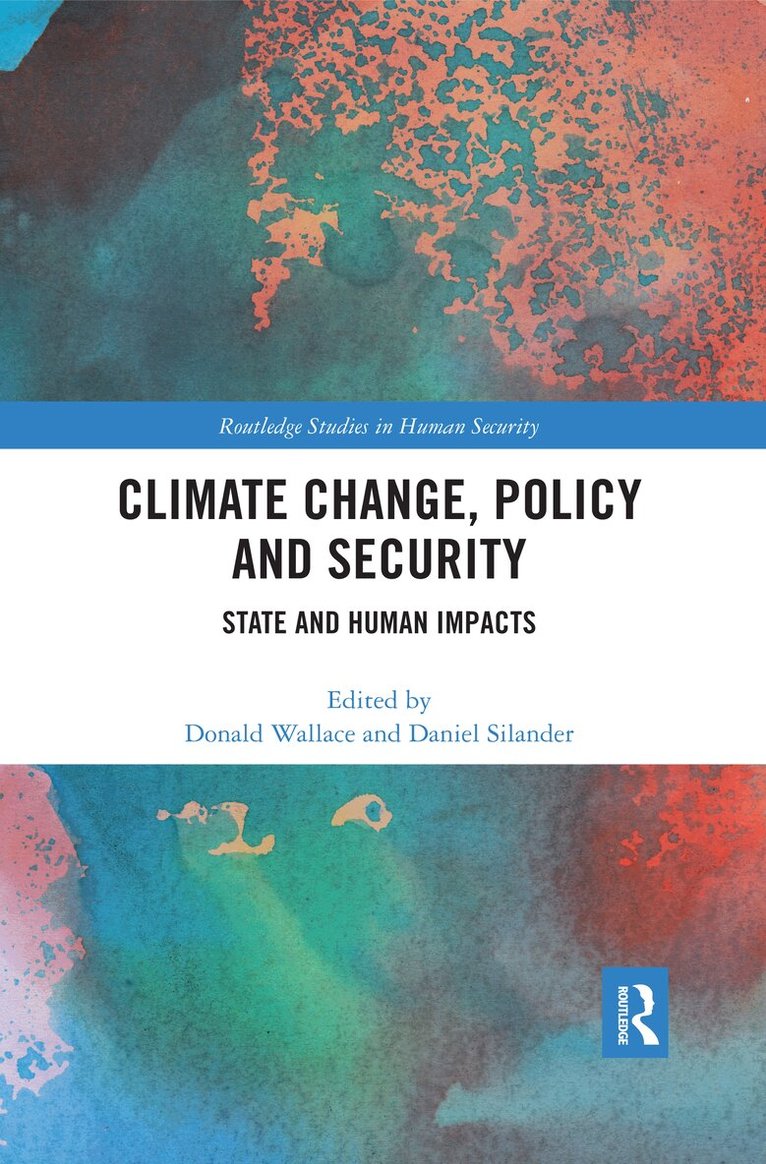
This book examines the multiple strategies proposed by the international community for addressing global climate change (GCC) from both human and state-security perspectives.It examines what is needed from major states working within the UN framework to engage with the multiple dimensions of a strategy that addresses GCC and its impacts, where such engagement promotes both human and state security. Two broad frameworks for approaching these issues provide the basis of discussion for the individual chapters, which discuss the strategies being undertaken by major state powers (the US, the EU, China, India, Japan, and Russia). The first framework considers the multiple strategies, mitigation, adaptation, and capacity-building required of the international community to address the effects of GCC. The second framework considers the differentiation of GCC policies in terms of security and how the efficacy of these strategies could be impacted by whether priority is given to state security over human security concerns. This book will be of much interest to students of human security, climate change, foreign policy, and International Relations.
616 kr
Skickas inom 10-15 vardagar
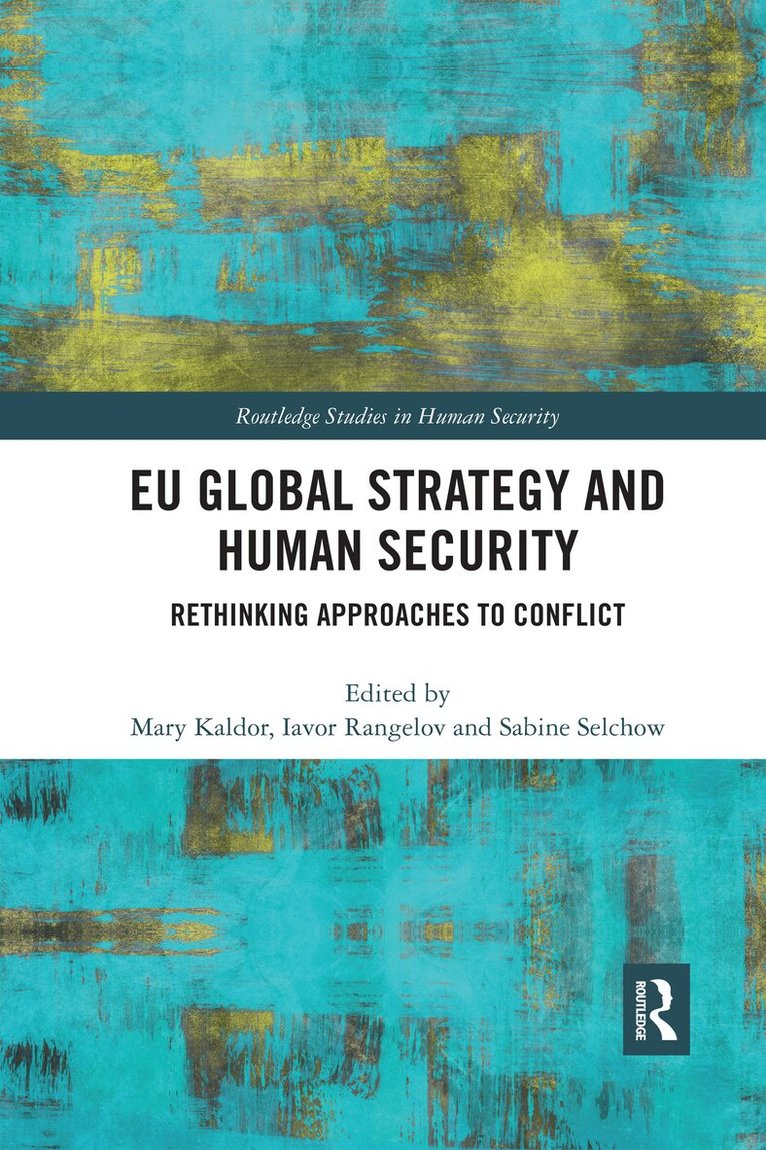
This volume examines the EU’s Global Strategy in relation to human security approaches to conflict. Contemporary conflicts are best understood as a social condition in which armed groups mobilise sectarian and fundamentalist sentiments and construct a predatory economy through which they enrich themselves at the expense of ordinary citizens. This volume provides a timely contribution to debates over the role of the EU on the global stage and its contribution to peace and security, at a time when these discussions are reinvigorated by the adoption of the EU Global Strategy. It discusses the significance of the Strategic Review and the Global Strategy for the re-articulation of EU conflict prevention, crisis management, peacebuilding, and development policies in the next few years. It also addresses the key issues facing EU security in the 21st century, including the conflicts in Ukraine, Libya and Syria, border security, cyber-security and the role of the private security sector. The book concludes by proposing that the EU adopts a second-generation human security approach to conflicts, as an alternative to geopolitics or the ‘War on Terror’, taking forward the principles of human security and adapting them to 21st-century realities. This book will be of interest to students of human security, European foreign and security policy, peace and conflict studies, global governance and IR in general.
634 kr
Skickas inom 10-15 vardagar
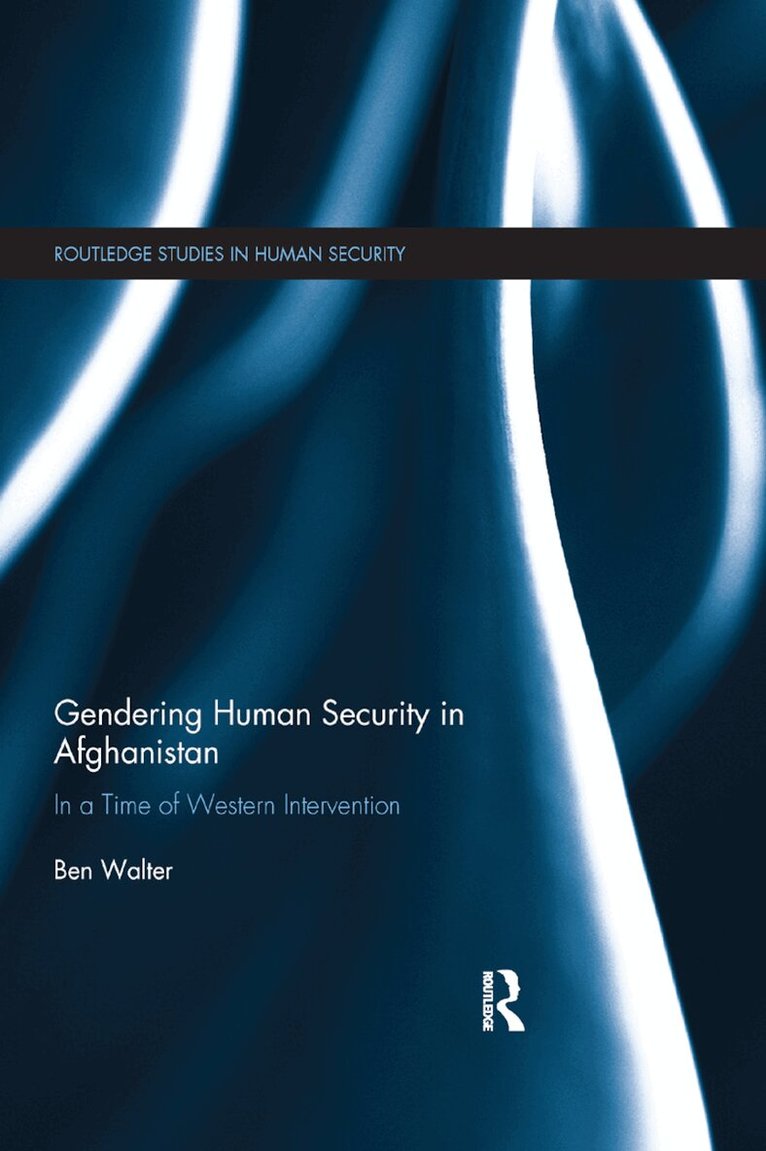
This book employs the concept of human security to show what the term means from the perspective of women in Afghanistan.It engages with a well-established debate in academic and policy-making contexts regarding the utility of human security as a framework for understanding and redressing conflict. The book argues that this concept allows the possibility of articulating the substantive experiences of violence and marginalisation experienced by people in local settings as well as their own struggles towards a secure and happy life. In this regard, it goes a long way to making sense of the complex dynamics of conflict which have confounded Western policy-makers in their ongoing state-building mission in Afghanistan. However, despite this inherent potential, the idea of human security still needs refinement. Crucially, it has benefitted from critical feminist and critical social theories which provide the conceptual and methodological depth necessary to apprehend what a progressive ethical program of security looks like and how it can be furthered. Using this framework, the work provides a critical reconstruction of the effect of the US-led Western Intervention on women’s experiences of (in)security in the three provincial contexts of Nangarhar, Bamiyan and Kabul. This reconstruction is drawn from a wealth of historical and contemporary sociological research alongside original fieldwork undertaken in Delhi, India, during 2011 with women and men from the country’s different communities. This book will be of much interest to students of human security, state-building, gender politics, war and conflict studies and IR in general.
2 306 kr
Skickas inom 10-15 vardagar
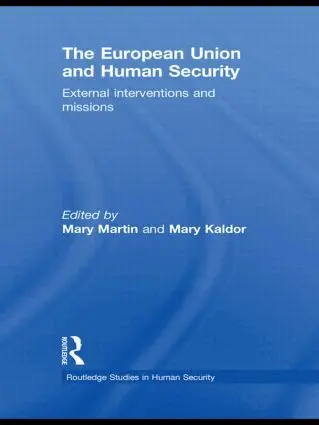
This edited book examines European external interventions in human security, in order to illustrate the evolution and nature of the European Union as a global political actor.In 2003, the EU deployed its first external mission under the European Security and Defence Policy (ESDP) with a military force to the former Yugoslav Republic of Macedonia. Since then it has instigated over 18 civilian and military missions to deal with humanitarian crises all over the world. This book presents a series of eight case studies of external interventions by the EU covering the Balkans, Africa, the Middle East, Afghanistan and Indonesia, to illustrate the nature of the EU as a global actor. Using the concept of human security to assess the effectiveness of these missions in meeting the EU’s aim of being a ‘force for good in the world’, this study addresses two key issues: the need for an empirical assessment of EU foreign and security policies based on EU intervention in conflict and post-conflict situations and the idea of 'human security' and how this is applied in European foreign policy. This book will be of great interest to students of European Security, EU politics, human security, post-conflict reconstruction, and IR in general.Mary Kaldor is Co-Director of the Centre for the Study of Global Governance, London School of Economics and Political Science (LSE). Prior to this she worked at Sussex University as Jean Monnet Reader in Contemporary European Studies.Mary Martin is a Research Fellow at the Centre for the Study of Global Governance, the London School of Economics. From 2006-2009 she was co-ordinator of the Human Security Study Group. She was formerly a foreign correspondent and European editor for The Daily Telegraph and Guardian newspapers.
2 171 kr
Skickas inom 10-15 vardagar
This book examines how national security strategies relate to an emerging common European or global vision of security, and to human security ideas.Human security and national security are often regarded as competing and mutually antagonistic; the former was proposed and has been operationalised in ways which represent a paradigm shift away from state-centric approaches and the dominance of national-security perspectives. This has led to human security being associated with a broadening of the security agenda to encompass not only physical security, the use of force and military capabilities, but also the provision of material well-being and dignity to vulnerable communities. This edited volume seeks to identify key concepts and themes in the national discourse of several European countries, addressing security at a meta-narrative and conceptual level, illustrating the changes taking place in approaches to security, and in particular, mapping moves away from a paradigm of ‘national security’ to one which might be called ‘human security’. It also enables an assessment of whether national security is currently converging at either European or global levels.This book will be of much interest to students of human security, European politics, discourse analysis, war and conflict studies, and IR/security studies in general.
751 kr
Skickas inom 10-15 vardagar
This edited book examines European external interventions in human security, in order to illustrate the evolution and nature of the European Union as a global political actor.In 2003, the EU deployed its first external mission under the European Security and Defence Policy (ESDP) with a military force to the former Yugoslav Republic of Macedonia. Since then it has instigated over 18 civilian and military missions to deal with humanitarian crises all over the world. This book presents a series of eight case studies of external interventions by the EU covering the Balkans, Africa, the Middle East, Afghanistan and Indonesia, to illustrate the nature of the EU as a global actor. Using the concept of human security to assess the effectiveness of these missions in meeting the EU’s aim of being a ‘force for good in the world’, this study addresses two key issues: the need for an empirical assessment of EU foreign and security policies based on EU intervention in conflict and post-conflict situations and the idea of 'human security' and how this is applied in European foreign policy. This book will be of great interest to students of European Security, EU politics, human security, post-conflict reconstruction, and IR in general.
2 171 kr
Skickas inom 10-15 vardagar
The aim of this book is to analyse why and how states respond to human security, both at home and abroad. Although states still define security as "the defense of territory" from military attack, increasingly security pertains to the protection of human beings from violence. This violence can emerge from rebels, drug traffickers, terrorism, and even environmental and demographic changes. While previous literature in this field has provided rich empirical detail about human security crises, it is generally quiet about how states respond to these crises.State Responses to Human Security fills this lacuna by bringing in concepts from international security studies and focusing on states’ perceptions of power and the changing nature of human security. Instead of debating whether or not human security exists, the authors in this volume agree that human security has been redefined to include policies associated with violence toward individuals and groups, and draw on recent events in the Middle East, China and Mexico to understand how and when human security issues prompt state responses and affect international relations. The case studies analysed in this book suggest that states respond to human security threats differently, but in both the domestic context and abroad, power and perceptions matter greatly in shaping states’ reactions to human security concerns. This book will be of much interest to students of human security, foreign policy, international relations and security studies in general.
2 103 kr
Skickas inom 10-15 vardagar
This volume examines the EU’s Global Strategy in relation to human security approaches to conflict. Contemporary conflicts are best understood as a social condition in which armed groups mobilise sectarian and fundamentalist sentiments and construct a predatory economy through which they enrich themselves at the expense of ordinary citizens. This volume provides a timely contribution to debates over the role of the EU on the global stage and its contribution to peace and security, at a time when these discussions are reinvigorated by the adoption of the EU Global Strategy. It discusses the significance of the Strategic Review and the Global Strategy for the re-articulation of EU conflict prevention, crisis management, peacebuilding, and development policies in the next few years. It also addresses the key issues facing EU security in the 21st century, including the conflicts in Ukraine, Libya and Syria, border security, cyber-security and the role of the private security sector. The book concludes by proposing that the EU adopts a second-generation human security approach to conflicts, as an alternative to geopolitics or the ‘War on Terror’, taking forward the principles of human security and adapting them to 21st-century realities. This book will be of interest to students of human security, European foreign and security policy, peace and conflict studies, global governance and IR in general.
670 kr
Skickas inom 10-15 vardagar
This book examines how national security strategies relate to an emerging common European or global vision of security, and to human security ideas.Human security and national security are often regarded as competing and mutually antagonistic; the former was proposed and has been operationalised in ways which represent a paradigm shift away from state-centric approaches and the dominance of national-security perspectives. This has led to human security being associated with a broadening of the security agenda to encompass not only physical security, the use of force and military capabilities, but also the provision of material well-being and dignity to vulnerable communities. This edited volume seeks to identify key concepts and themes in the national discourse of several European countries, addressing security at a meta-narrative and conceptual level, illustrating the changes taking place in approaches to security, and in particular, mapping moves away from a paradigm of ‘national security’ to one which might be called ‘human security’. It also enables an assessment of whether national security is currently converging at either European or global levels.This book will be of much interest to students of human security, European politics, discourse analysis, war and conflict studies, and IR/security studies in general.
2 103 kr
Skickas inom 10-15 vardagar
This book examines the multiple strategies proposed by the international community for addressing global climate change (GCC) from both human and state-security perspectives.It examines what is needed from major states working within the UN framework to engage with the multiple dimensions of a strategy that addresses GCC and its impacts, where such engagement promotes both human and state security. Two broad frameworks for approaching these issues provide the basis of discussion for the individual chapters, which discuss the strategies being undertaken by major state powers (the US, the EU, China, India, Japan, and Russia). The first framework considers the multiple strategies, mitigation, adaptation, and capacity-building required of the international community to address the effects of GCC. The second framework considers the differentiation of GCC policies in terms of security and how the efficacy of these strategies could be impacted by whether priority is given to state security over human security concerns. This book will be of much interest to students of human security, climate change, foreign policy, and International Relations.
2 096 kr
Skickas inom 10-15 vardagar
This book employs the concept of human security to show what the term means from the perspective of women in Afghanistan.It engages with a well-established debate in academic and policy-making contexts regarding the utility of human security as a framework for understanding and redressing conflict. The book argues that this concept allows the possibility of articulating the substantive experiences of violence and marginalisation experienced by people in local settings as well as their own struggles towards a secure and happy life. In this regard, it goes a long way to making sense of the complex dynamics of conflict which have confounded Western policy-makers in their ongoing state-building mission in Afghanistan. However, despite this inherent potential, the idea of human security still needs refinement. Crucially, it has benefitted from critical feminist and critical social theories which provide the conceptual and methodological depth necessary to apprehend what a progressive ethical program of security looks like and how it can be furthered. Using this framework, the work provides a critical reconstruction of the effect of the US-led Western Intervention on women’s experiences of (in)security in the three provincial contexts of Nangarhar, Bamiyan and Kabul. This reconstruction is drawn from a wealth of historical and contemporary sociological research alongside original fieldwork undertaken in Delhi, India, during 2011 with women and men from the country’s different communities. This book will be of much interest to students of human security, state-building, gender politics, war and conflict studies and IR in general.
Human Security, Changing States and Global Responses
Institutions and Practices
Inbunden, Engelska, 2014
2 171 kr
Skickas inom 10-15 vardagar
This book critically assesses the human security challenges faced by states, focusing on how and to what extent the state is influenced by global structures and operations.Having grown rapidly since the 1990s, the field of human security has spawned a wide variety of academic research. This research has helped to reconceptualize the notion of security, both broadening and deepening it, and it has created a space where unconventional and multidimensional forms of security inform international policy practices. However, while various issues and cases of human security have received growing academic attention and policy interest, many of the existing books on human security focus primarily on non-state actors. This leaves a key question unanswered: why do sovereign states take on leadership roles in promoting human security?To answer the question of why and how national governments influence international human security policy, this volume examines the domestic political factors and structures that mediate the range of policy choices. Important domestic variables include the ‘cultural match’ (e.g., ‘Does the country often favor multilateralism and promote a rule-bound international society?’), the nature of the political interests and realities that are present (e.g., ‘Does the country see the promotion of human security as a strategic choice?’), and the occurrence of important historical events such as wars, revolutions, or natural disasters (e.g., ‘Does the country, during the crisis, help to foster a new way of managing enduring security threats?’). Using this line of analysis, the book illuminates the role of the state in handling critical human security issues and its rationale for doing so. This book will be of much interest to students of human security, peace studies, global governance, development studies and IR in general.