Routledge Studies in Humanitarian Action – serie
Visar alla böcker i serien Routledge Studies in Humanitarian Action. Handla med fri frakt och snabb leverans.
4 produkter
4 produkter
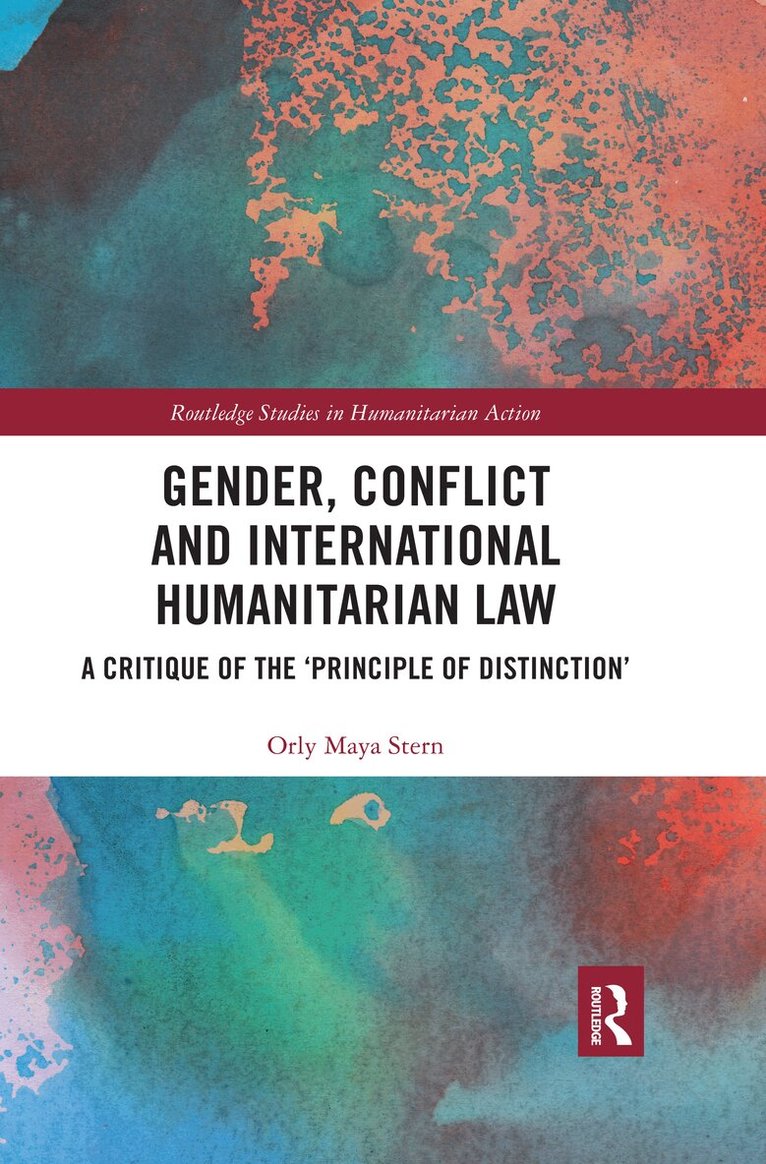
Gender, Conflict and International Humanitarian Law
A critique of the 'principle of distinction'
Häftad, Engelska, 2020
594 kr
Skickas inom 10-15 vardagar
This book conducts a gendered critique of the ‘principle of distinction’ in international humanitarian law (IHL), with a focus on recent conflicts in Africa.The ‘principle of distinction’ is core to IHL, and regulates who can and cannot be targeted in armed conflict. It states that civilians may not be targeted in attack, while combatants and those civilians directly participating in hostilities can be. The law defines what it means to be a combatant and a civilian, and sets out what behaviour constitutes direct participation. Close examination of the origins of the principle reveals that IHL was based on a gendered view of conflict, which envisages men as fighters and women as victims of war. Problematically, this view often does not accord with the reality in ‘new wars’ today in which women are playing increasingly active roles, often forming the backbone of fighting groups, and performing functions on which armed groups are highly reliant. Using women’s participation in ‘new wars’ in Africa as a study, this volume critically examines the principle through a gendered lens, questioning the extent to which the principle serves to protect women in modern conflicts and how it fails them. By doing so, it questions whether the principle of distinction is suitable to effectively regulate the conduct of hostilities in new wars.This book will be of much interest to students of international law, gender studies, African politics, war and conflict studies, and international relations.
619 kr
Skickas inom 10-15 vardagar
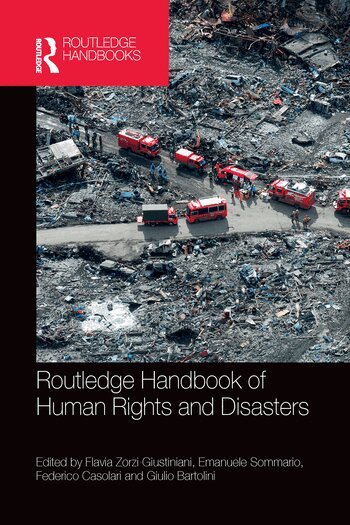
The Routledge Handbook of Human Rights and Disasters provides the first comprehensive review of the role played by international human rights law in the prevention and management of natural and technological disasters.Each chapter is written by a leading expert and offers a state-of-the-art overview of a significant topic within the field. In addition to focussing on the role of human rights obligations in disaster preparedness and response, the volume offers a broader perspective by examining how human rights law interacts with other legal regimes and by addressing the challenges facing humanitarian organizations. Preceded by a foreword by the International Law Commission’s Special Rapporteur on the Protection of Persons in the Event of Disasters, the volume is divided into four parts: Part I: Human rights law and disasters in the framework of public international law Part II: Role and application of human rights law in disaster settings Part III: (Categories of) rights of particular significance in a disaster context Part IV: Protection of vulnerable groups in disaster settings Providing up-to-date and authoritative contributions covering the key aspects of human rights protection in disaster settings, this volume will be of great interest to scholars and students of humanitarianism, international law, EU law, disaster management and international relations, as well as to practitioners in the field of disaster management.
2 944 kr
Skickas inom 10-15 vardagar
The Routledge Handbook of Human Rights and Disasters provides the first comprehensive review of the role played by international human rights law in the prevention and management of natural and technological disasters.Each chapter is written by a leading expert and offers a state-of-the-art overview of a significant topic within the field. In addition to focussing on the role of human rights obligations in disaster preparedness and response, the volume offers a broader perspective by examining how human rights law interacts with other legal regimes and by addressing the challenges facing humanitarian organizations. Preceded by a foreword by the International Law Commission’s Special Rapporteur on the Protection of Persons in the Event of Disasters, the volume is divided into four parts: Part I: Human rights law and disasters in the framework of public international law Part II: Role and application of human rights law in disaster settings Part III: (Categories of) rights of particular significance in a disaster context Part IV: Protection of vulnerable groups in disaster settingsProviding up-to-date and authoritative contributions covering the key aspects of human rights protection in disaster settings, this volume will be of great interest to scholars and students of humanitarianism, international law, EU law, disaster management and international relations, as well as to practitioners in the field of disaster management.
Gender, Conflict and International Humanitarian Law
A critique of the 'principle of distinction'
Inbunden, Engelska, 2018
1 944 kr
Skickas inom 10-15 vardagar
This book conducts a gendered critique of the ‘principle of distinction’ in international humanitarian law (IHL), with a focus on recent conflicts in Africa.The ‘principle of distinction’ is core to IHL, and regulates who can and cannot be targeted in armed conflict. It states that civilians may not be targeted in attack, while combatants and those civilians directly participating in hostilities can be. The law defines what it means to be a combatant and a civilian, and sets out what behaviour constitutes direct participation. Close examination of the origins of the principle reveals that IHL was based on a gendered view of conflict, which envisages men as fighters and women as victims of war. Problematically, this view often does not accord with the reality in ‘new wars’ today in which women are playing increasingly active roles, often forming the backbone of fighting groups, and performing functions on which armed groups are highly reliant. Using women’s participation in ‘new wars’ in Africa as a study, this volume critically examines the principle through a gendered lens, questioning the extent to which the principle serves to protect women in modern conflicts and how it fails them. By doing so, it questions whether the principle of distinction is suitable to effectively regulate the conduct of hostilities in new wars.This book will be of much interest to students of international law, gender studies, African politics, war and conflict studies, and international relations.