Routledge Studies on Modern Korea – serie
Visar alla böcker i serien Routledge Studies on Modern Korea. Handla med fri frakt och snabb leverans.
4 produkter
4 produkter
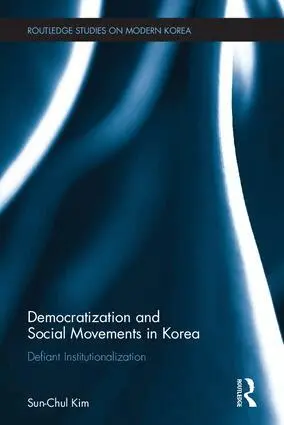
Democratization and Social Movements in South Korea
Defiant Institutionalization
Inbunden, Engelska, 2016
2 316 kr
Skickas inom 10-15 vardagar
South Korea provides an intellectual challenge in the fields of social movements and democracy in that intense mobilization and the strong influence of social movements have accompanied steady democratization for more than two decades, despite major theories having predicted otherwise. This book examines how social movements in previously authoritarian contexts evolve after democratic transition, using South Korea as a case study. It explores how democratic change influences the form of social movements, and how social movements affect the pace and direction of democracy in turn. It explains how South Korean social movements were able to attain strong political influence by focusing on four causal factors: the configuration of major political actors during the transition period, the relational dynamics among social movement groups, the relationship between social movements and institutionalized political actors, and the impact of transnational forces in the post-transition period. Unlike previous scholarship, the book takes a historical, actor-centered, and process-oriented approach that closely follows the interactions among contending actors through event sequences, rather than being driven by abstract theoretical frameworks. In doing so, it analyses uses a broad range of evidence, including police records, untapped activist documents, presidential memoirs, newspaper accounts and original data sets.Shedding light on the complex political reality that gave rise to a contentious civil society in South Korea after democratization, this book also illuminates the institutional conditions that can help promote domestic peace and stability. Therefore it will be of great use to students and scholars of Korean Studies, Korean politics and social movements, as well as policy makers.
2 181 kr
Skickas inom 10-15 vardagar
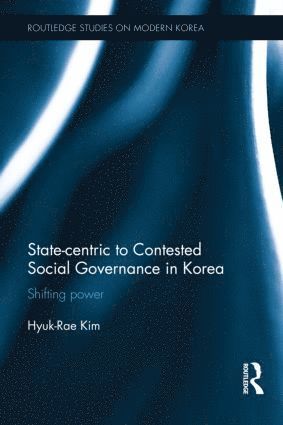
In this interdisciplinary study of governance, Hyuk-Rae Kim traces how civil society and NGOs have evolved over time, how they differ in motivation from their Western counterparts, and the role civil society NGOs have played in consolidating democracy as the governance system in Korea changes from a state-centric to a contested one.This book presents civil society's rise in Korea through in-depth analyses of today's most pressing issues, in order to chart the shifting role of a formerly state-centric to a contested governance system in modern Korea. With detailed case studies and policy discussions, this book explores the role of NGOs in campaigning for political reform and the eradication of political corruption; the provision of public goods and services; challenging the government’s policies on migration; tackling the issue of North Korean refugees and human rights; and the provision of regional environmental governance. These case studies demonstrate that the state is no longer the sole guardian and provider of public institutions and goods and underline the growing role of civil society in Korea. Both a study of contested governance and an exploration of contemporary Korean society, this book will be of imminent interest to students and scholars alike of Korean politics, East Asian politics, governance, and civil society.
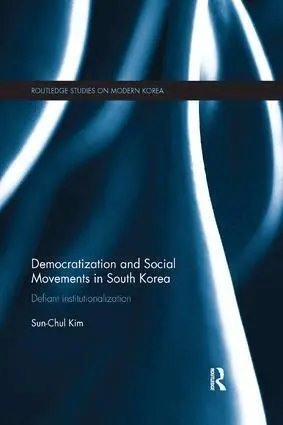
Democratization and Social Movements in South Korea
Defiant Institutionalization
Häftad, Engelska, 2018
693 kr
Skickas inom 10-15 vardagar
South Korea provides an intellectual challenge in the fields of social movements and democracy in that intense mobilization and the strong influence of social movements have accompanied steady democratization for more than two decades, despite major theories having predicted otherwise. This book examines how social movements in previously authoritarian contexts evolve after democratic transition, using South Korea as a case study. It explores how democratic change influences the form of social movements, and how social movements affect the pace and direction of democracy in turn. It explains how South Korean social movements were able to attain strong political influence by focusing on four causal factors: the configuration of major political actors during the transition period, the relational dynamics among social movement groups, the relationship between social movements and institutionalized political actors, and the impact of transnational forces in the post-transition period. Unlike previous scholarship, the book takes a historical, actor-centered, and process-oriented approach that closely follows the interactions among contending actors through event sequences, rather than being driven by abstract theoretical frameworks. In doing so, it analyses uses a broad range of evidence, including police records, untapped activist documents, presidential memoirs, newspaper accounts and original data sets.Shedding light on the complex political reality that gave rise to a contentious civil society in South Korea after democratization, this book also illuminates the institutional conditions that can help promote domestic peace and stability. Therefore it will be of great use to students and scholars of Korean Studies, Korean politics and social movements, as well as policy makers.
727 kr
Skickas inom 10-15 vardagar
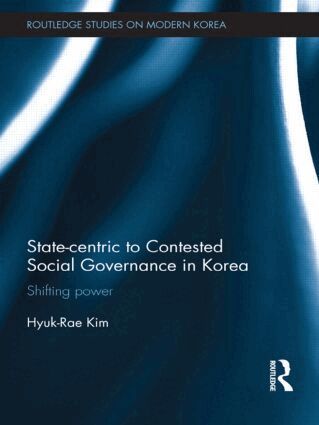
In this interdisciplinary study of governance, Hyuk-Rae Kim traces how civil society and NGOs have evolved over time, how they differ in motivation from their Western counterparts, and the role civil society NGOs have played in consolidating democracy as the governance system in Korea changes from a state-centric to a contested one.This book presents civil society's rise in Korea through in-depth analyses of today's most pressing issues, in order to chart the shifting role of a formerly state-centric to a contested governance system in modern Korea. With detailed case studies and policy discussions, this book explores the role of NGOs in campaigning for political reform and the eradication of political corruption; the provision of public goods and services; challenging the government’s policies on migration; tackling the issue of North Korean refugees and human rights; and the provision of regional environmental governance. These case studies demonstrate that the state is no longer the sole guardian and provider of public institutions and goods and underline the growing role of civil society in Korea. Both a study of contested governance and an exploration of contemporary Korean society, this book will be of imminent interest to students and scholars alike of Korean politics, East Asian politics, governance, and civil society.