Rutgers Depth of Field Series - Böcker
Visar alla böcker i serien Rutgers Depth of Field Series. Handla med fri frakt och snabb leverans.
13 produkter
13 produkter
660 kr
Skickas inom 3-6 vardagar
419 kr
Skickas inom 10-15 vardagar
Movies and Mass Culture looks at the ways in which American identity shapes and is shaped by motion pictures. Movies serve not only as texts that document who we think we are or were, but they also reflect changes in our self-image, tracing the transformation from one kind of America to another. They assist audiences in negotiating major changes in identity, carrying them across difficult periods of cultural transition so that a more or less coherent national identity again emerges. Films thus help their viewers to span the gaps and fissures that cultural changes cause, allowing passage over any disjointedness that in some way might disrupt our sense of what we believe in as a nation. This volume examines this process, illustrating the ways in which films aided America's transition from an agrarian to an industrial economy; from a nation of producers to one of consumers; and from a community of individuals to a mass society.
395 kr
Skickas inom 10-15 vardagar
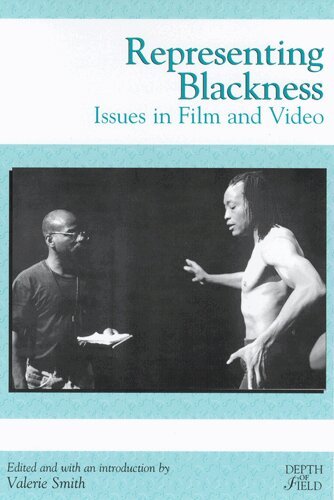
The essays in this collection provide a variety of perspectives on black representation and questions of racial authenticity in mainstream as well as African American independent cinema. This volume includes seminal essays on racial stereotypes, trenchant critiques of that discourse, original essays on important directors such as Haile Gerima and Charles Burnett, and an insightful discussion of black gay and lesbian film and video. The contributors include Donald Bogle, Thomas Cripps, Jane Gaines, Nathan Grant, Stuart Hall, Tommy L. Lott, Wahneema Lubiano, Mike Murashige, Valerie Smith, James Snead, and David Van Leer. This volume is an important contribution to the Depth of Field series and should be indispensible for courses and individual scholars in film and multicultural studies. The book contains a mix of original and previously published pieces.
462 kr
Skickas inom 10-15 vardagar
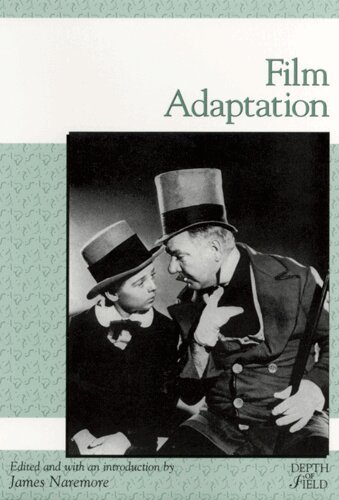
Some of the earliest feature films were derived from classic literature. Even today, most of the movies we see are adaptations of one kind or another. People who have never read Jane Austen can see her characters on the screen; but filmgoers can also see material taken from theater, television, comic books, and every other medium. The essays in this volume, most of which have never before been published, raise fundamental questions about cinema and adaptation: what is the nature of the "literary" and the "cinematic"? Why do so many of thefilms described as adaptions seem to derive from canonical literature rather than from other sources? How do the different media affect the ways stories are told?Film Adaptation offers fresh approaches to the art, theory, and cultural politics of movie adaptations, even challenging what is meant by the term "adaptation" itself. Contributors examine the process of adaptation in both theory and practice, discussing a wide variety of films. James Naremore's introduction provides an accessible historical overview of the field and reveals the importance of adaptation study to the many different academic disciplines now attracted to the analysis of film as commodity, document, and cultural artifact. (Contributors are AndrÉ Bazin, Dudley Andrew, Robert B. Ray, Robert Stam, Richard Maltby, Guerric DeBona, O. M. B., Gilberto Perez, Michael Anderegg, Matthew Bernstein, Darlene J. Sadlier, Jonathan Rosenbaum, and Lesley Stern.)
408 kr
Skickas inom 10-15 vardagar
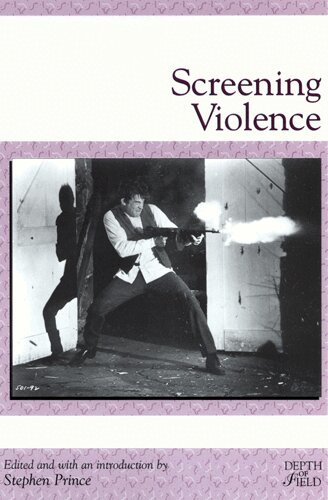
Graphic cinematic violence is a magnet for controversy. From passionate defenses to outraged protests, theories abound concerning this defining feature of modern film: Is it art or exploitation, dangerous or liberating? Screening Violence provides an even-handed examination of the history, merits, and effects of cinematic “ultraviolence.” Movie reviewers, cinematographers, film scholars, psychologists, and sociologists all contribute essays exploring topics such as:· the origins and innovations of film violence and attempts to regulate it (from Hollywood’s Production Code to the evolution of the ratings system)· the explosion of screen violence following the 1967 releases of Bonnie and Clyde and The Dirty Dozen, and the lasting effects of those landmark films· the aesthetics of increasingly graphic screen violence· the implications of our growing desensitization to murder and mayhem, from The Wild Bunch to The Terminator
448 kr
Skickas inom 10-15 vardagar
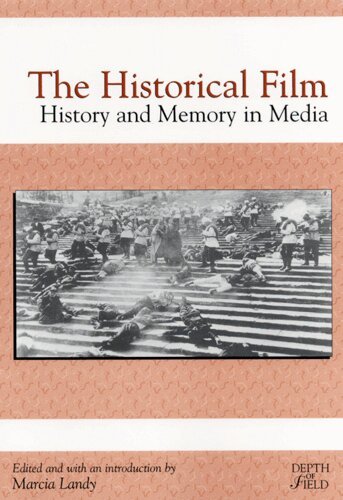
What is history? How do we represent it? How do our notions of history change over time? The essays in The Historical Film: History and Memory in Media probe the roles that cinema and television play in altering and complicating our understanding of historical events.The book brings together representative examples of how both media critics and historians write about history as it is created and disseminated through film and television. The essays explore what is at stake culturally and politically in media history and how this form of history-making is different from traditional historiography. The volume is divided into four parts--Regarding History; History as Trauma; History, Fiction, and Postcolonial Memory; and History and Television--that progressively deepen our understanding of just how complex the issues are. Essays by top scholars analyze many different kinds of film: historical film, documentary, costume drama, and heritage films. The section on television is equally broad, examining phenomena as diverse as news broadcasts and Ken Burns's documentary The Civil War.Contributors are Mbye Cham, George F. Custen, Mary Ann Doane, Richard Dienst, Taylor Downing, Gary Edgerton, Naomi Greene, Miriam Bratu Hansen, Sue Harper, Sumiko Higashi, Anton Kaes, Marcia Landy, Shawn Rosenheim, Robert A. Rosenstone, Pierre Sorlin, Maria Wyke, and Ismail Xavier.
370 kr
Skickas inom 5-8 vardagar
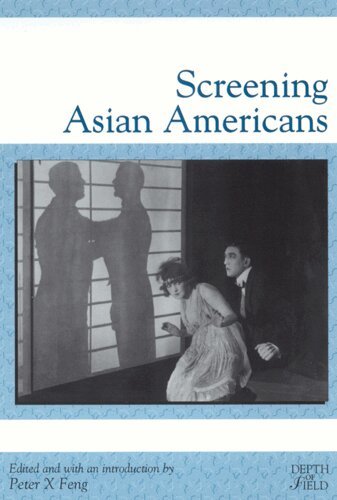
This innovative essay collection explores Asian American cinematic representations historically and socially, on and off screen, as they contribute to the definition of American character. The history of Asian Americans on movie screens, as outlined in Peter X Feng’s introduction, provides a context for the individual readings that follow. Asian American cinema is charted in its diversity, ranging across activist, documentary, experimental, and fictional modes, and encompassing a wide range of ethnicities (Filipino, Vietnamese, Indian, Japanese, Korean, Chinese, and Taiwanese). Covered in the discussion are filmmakers-Theresa Hak Kyung Cha, Ang Lee, Trinh T. Minh-ha, and Wayne Wang-and films such as The Wedding Banquet, Surname Viet Given Name Nam, and Chan is Missing.Throughout the volume, as Feng explains, the term screening has a twofold meaning-referring to the projection of Asian Americans as cinematic bodies and the screening out of elements connected with these images. In this doubling, film representation can function to define what is American and what is foreign. Asian American filmmaking is one of the fastest growing areas of independent and studio production. This volume is key to understanding the vitality of this new cinema.
393 kr
Skickas inom 5-8 vardagar
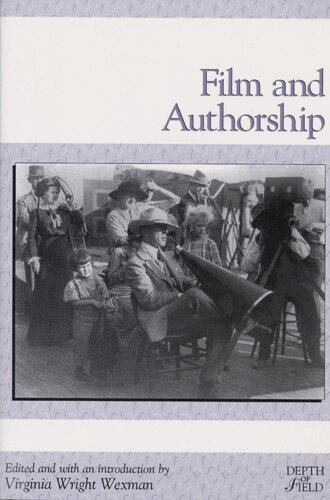
During the 1960s, when cinema first entered the academy as a serious object of study, the primary focus was on auteurism, or on films authorship. Burgeoning cinema studies courses demonstrated how directors were the authors of work that undermined (or succeeded in spite of) all the constraints that Hollywood threw at them. New critical methods were introduced as the field matured, and studies of the author/director, for the most part, were considered obsolete.Virginia Wright Wexman has pulled together some of the freshest writing available on the topic of film authorship. Spanning approaches including poststructuralism, feminism, queer theory, postcolonialism, and cultural studies, the contributors ask, what does auteurship look like today in light of all these developments? The contents of the volume are divided into three major sections: Theoretical Statements, Historical and Institutional Contexts, and Case Studies. Wexmans comprehensive introduction contextualizes the selections and summarizes the scholarly methods through which auteurism has been addressed in the past; it also provides a sketch of the history of media authorship. An extensive bibliography rounds off the volume.
410 kr
Skickas inom 5-8 vardagar
Reflecting the burgeoning academic interest in issues of nation, race, gender, sexuality, and other axes of identity, Multiculturalism, Postcoloniality, and Transnational Media brings all of these concerns under the same umbrella, contending that these issues must be discussed in relation to each other. Communities, societies, nations, and even entire continents, the book suggests, exist not autonomously but rather in a densely woven web of connectedness.To explore this complexity, the editors have forged links between usually compartmentalized fields (especially media studies, literary theory, visual culture, and critical anthropology) and areas of inquiry-particularly postcolonial and diasporic studies and a diverse set of ethnic and area studies. This book, which links all these issues in suggestive ways, provides an indispensable guide for students and scholars in a wide variety of disciplines. Essays in this groundbreaking volume include Julianne Burton-Carvajal on ethnic identity in Lone Star; Manthia Diawara on diasporic documentary; Hamid Naficy on independent transnational film genres; Robyn Wiegman on whiteness studies; Faye Ginsburg on indigenous media; and Jennifer Gonzßles on race in cyberspace; Ana M. Lopez on modernity and Latin American cinema; and Inderpal Grewal and Caren Kaplan on Warrior Marks and multiculturalism and globalization.
393 kr
Skickas inom 5-8 vardagar
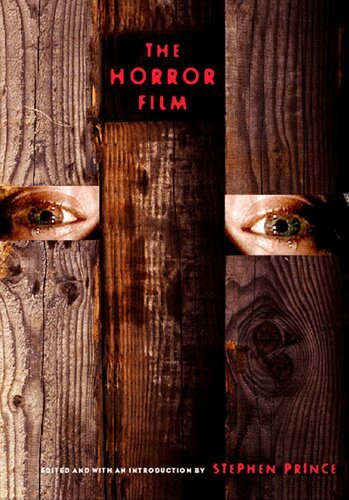
In this volume, Stephen Prince has collected essays reviewing the history of the horror film and the psychological reasons for its persistent appeal, as well as discussions of the developmental responses of young adult viewers and children to the genre. The book focuses on recent postmodern examples such as The Blair Witch Project. In a daring move, the volume also examines Holocaust films in relation to horror. Part One features essays on the silent and classical Hollywood eras. Part Two covers the postWorld War II era and discusses the historical, aesthetic, and psychological characteristics of contemporary horror films. In contrast to horror during the classical Hollywood period, contemporary horror features more graphic and prolonged visualizations of disturbing and horrific imagery, as well as other distinguishing characteristics. Princes introduction provides an overview of the genre, contextualizing the readings that follow.Stephen Prince is professor of communications at Virginia Tech. He has written many film books, including Classical Film Violence: Designing and Regulating Brutality in Hollywood Cinema, 19301968, and has edited Screening Violence, also in the Depth of Field Series.
402 kr
Skickas inom 7-10 vardagar
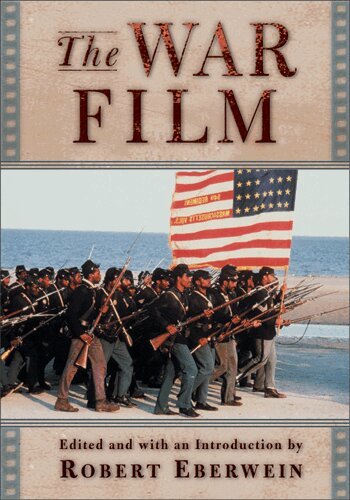
War has had a powerful impact on the film industry. But it is not only wars that affect films; films influence war-time behavior and incisively shape the way we think about the battles that have been waged.In The War Film, Robert Eberwein brings together essays by scholars using a variety of critical approaches to explore this enduringly popular film genre. Contributors examine the narrative and aesthetic elements of war films from four perspectives: consideration of generic conventions in works such as All Quiet on the Western Front, Bataan, and The Thin Red Line; treatment of race in various war films, including Glory, Home of the Brave, Platoon,and Hamburger Hill; aspects of gender, masculinity and feminism in The Red Badge of Courage, Rambo, Dogfight, and Courage under Fire; and analysis of the impact of contemporary history on the production and reception of films such as The Life and Times of Rosie the Riveter, Saving Private Ryan, and We Were Soldiers.Drawing attention to the dynamic interrelationships among politics, nationalism, history, gender, and film, this comprehensive anthology is bound to become a classroom favorite.
405 kr
Skickas inom 5-8 vardagar
Porn is big business. By some estimates, it grosses more revenue per year than the entire "legitimate" film and entertainment industry. Most large hotel chains offer pay-for-view adult movies, many video stores have adult movie rental sections, and Internet porn sites have proliferated by the thousands. With porn so ubiquitous in mainstream American culture, why is it that when "respectable" people talk about this phenomenon, they act puzzled, as if they cannot imagine who would watch such worthless and meaningless smut? In this collection of path-breaking essays, thirteen respected scholars bring critical insights to the reality of porn and what it can tell us about ourselves sexually, culturally, and economically. Moving beyond simplistic feminist and religious positions that cast these films as categorical evils-a collective preserve of sexual perversion, misogyny, pedophilia, and racism-the contributors to this volume raise the bar of the debate and push porn studies into intriguing new territory. The essays are divided into two sections. The first reprints important debates on the topic and traces the evolution of pornographic film, including comparing its development to that of Hollywood cinema. The second part presents new essays that consider current trends in the field, including pornography's expansion into new technologies. This book separates this compelling genre from the sensation and shame that have long surrounded and obscured it. It will be of interest to general readers and film scholars alike.
370 kr
Skickas inom 5-8 vardagar
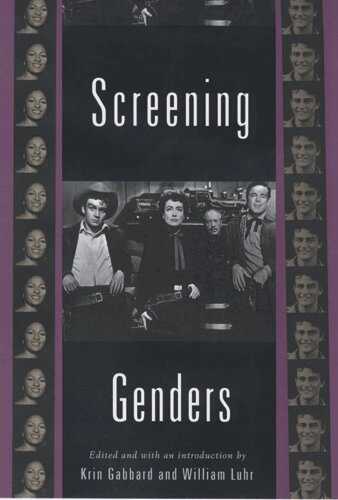
Gender roles have been tested, challenged, and redefined everywhere during the past thirty years, but perhaps nowhere more dramatically than in film. Screening Genders is a lively and engaging introduction to the evolving representations of masculinity, femininity, and places once thought to be "in between." The book begins with a general introduction that traces the movement of gender theory from the margins of film studies to its center. The ten essays that follow address a range of topics, including screen stars; depictions of gay, straight, queer, and transgender subjects; and the relationship between gender and genre. Widely respected scholars, including Robert T. Eberwein, Lucy Fischer, Chris Holmlund, E. Ann Kaplan, Kathleen Rowe Karlyn, David Lugowski, Patricia Mellencamp, Jerry Mosher, Jacqueline Reich, and Chris Straayer, focus on the radical ideological advances of contemporary cinema, as well as on those groundbreaking films that have shaped our ideas about masculinity and femininity, not only in movies but in American culture at large. The first comprehensive overview of the history of gender theory in film, this book is an ideal text for courses and will serve as a foundation for further discussion among students and scholars alike.