John Belton – författare
Visar alla böcker från författaren John Belton. Handla med fri frakt och snabb leverans.
10 produkter
10 produkter
743 kr
Skickas inom 3-6 vardagar
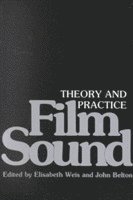
This classic anthology provides essential models for analyzing sound stylistics through the detailed study of critical sound films. Elisabeth Weis and John Belton carefully curate major essays from the world's most respected film historians, aestheticians, and theorists, including Douglas Gomery, Barry Salt, Rick Altman, Mary Ann Doane, S. M. Eisenstein, V. I. Pudovkin, Rene Clair, Bela Belazs, Siegfried Kracauer, Christian Metz, David Bordwell, Kristin Thompson, Noel Burch, and Arthur Knight. Their selections recount the innovations and triumphs of Ernst Lubitsch, Fritz Lang, Orson Welles, Alfred Hitchcock, Rouben Mamoulian, Dziga Vertov, Robert Bresson, Jean-Luc Godard, Robert Altman, and Francis Ford Coppola, among many others, and explicate the techniques and practices of sound filmmaking from initial recordings to final theater playback. Film Sound is the ideal companion for anyone seeking both a comprehensive introduction to the form and a rich survey of its historical and global evolution.
610 kr
Skickas inom 10-15 vardagar
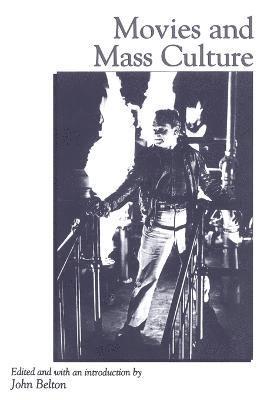
This text examines the two-way process of action and reaction by which films shape the identity of a society, its culture and its sense of nationhood; and, in turn, how films are themselves shaped by these forces and matrices. The nation here is America, in which films both effect and reflect changes in the national self-image, the transformation from one kind of nation to another: from an agrarian to an industrial economy; from a nation of producers to one of consumers; from a community of individuals to a mass society.
1 137 kr
Skickas inom 7-10 vardagar
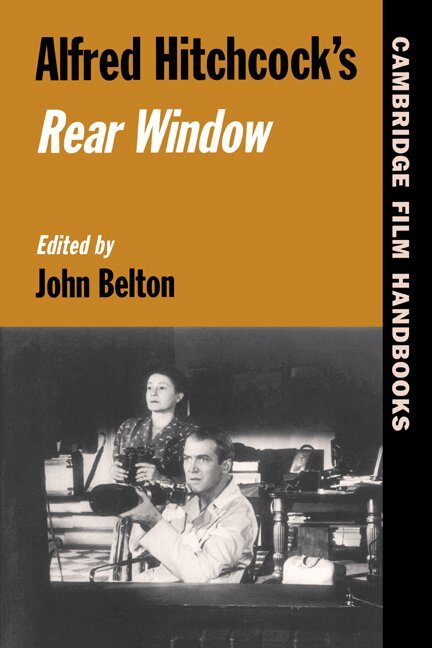
Alfred Hitchcock's Rear Window is one of the icons of American filmmaking. A perfect example of Hollywood cinema at its best, it is an engaging piece of entertainment as well as a fascinating meditation on the nature of the film itself. A suspense thriller about a chair-bound observer who suspects his neighbour of murdering his wife, the narrative becomes the vehicle for Hitchcock's exploration of the basic ingredients of cinema, from voyeurism and dreamlike fantasy to the process of narration itself. This volume provides a fresh analysis of Rear Window, which is examined from a variety of perspectives in a series of essays published here for the first time. Providing an account of the actual production of the film, as well as feminist and cultural readings of it, it also demonstrates the influence of Rear Window on a wide range of filmmakers, including Antonioni, De Palma, and Coppola.
231 kr
Skickas inom 7-10 vardagar
Alfred Hitchcock's Rear Window is one of the icons of American filmmaking. A perfect example of Hollywood cinema at its best, it is an engaging piece of entertainment as well as a fascinating meditation on the nature of the film itself. A suspense thriller about a chair-bound observer who suspects his neighbour of murdering his wife, the narrative becomes the vehicle for Hitchcock's exploration of the basic ingredients of cinema, from voyeurism and dreamlike fantasy to the process of narration itself. This volume provides a fresh analysis of Rear Window, which is examined from a variety of perspectives in a series of essays published here for the first time. Providing an account of the actual production of the film, as well as feminist and cultural readings of it, it also demonstrates the influence of Rear Window on a wide range of filmmakers, including Antonioni, De Palma, and Coppola.
879 kr
Tillfälligt slut
"Ladies and gentlemen: THIS IS CINERAMA." With these words, on September 30, 1952, the heavy red curtains in New York's Broadway Theatre opened on a panoramic Technicolor image of the Rockaways Playland Atom-Smasher Roller Coaster--and moviegoers were abruptly plunged into a new and revolutionary experience. The cinematic transformation heralded by this giddy ride was, however, neither as sudden nor as straightforward as it seemed. Widescreen Cinema leads us through the twists and turns and decades it took for film to change its shape and, along the way, shows how this fitful process reflects the vagaries of cultural history. Widescreen and wide-film processes had existed since the 1890s. Why, then, John Belton asks, did 35mm film become a standard? Why did a widescreen revolution fail in the 1920s but succeed in the 1950s? And why did movies shrink again in the 1960s, leaving us with the small screen multiplexes and mall cinemas that we know today? The answers, he discovers, have as much to do with popular notions of leisure time and entertainment as with technology. Beginning with film's progress from peepshow to projection in 1896 and focusing on crucial stages in film history, such as the advent of sound, Belton puts widescreen cinema into its proper cultural context. He shows how Cinerama, CinemaScope, Vista Vision, Todd-AO, and other widescreen processes marked significant changes in the conditions of spectatorship after World War 11 -and how the film industry itself sought to redefine those conditions. The technical, the economic, the social, the aesthetic -every aspect of the changes shaping and reshaping film comes under Belton's scrutiny as he reconstructs the complex history of widescreen cinema and relates this history to developments in mass-produced leisure-time entertainment in the twentieth century. Highly readable even at its most technical, this book illuminates a central episode in the evolution of cinema and, in doing so, reveals a great deal about the shifting fit between film and society.
552 kr
Tillfälligt slut
This collection of essays on visual style in the cinema examines the work of diverse directors and actors.
420 kr
Skickas inom 10-15 vardagar
Movies and Mass Culture looks at the ways in which American identity shapes and is shaped by motion pictures. Movies serve not only as texts that document who we think we are or were, but they also reflect changes in our self-image, tracing the transformation from one kind of America to another. They assist audiences in negotiating major changes in identity, carrying them across difficult periods of cultural transition so that a more or less coherent national identity again emerges. Films thus help their viewers to span the gaps and fissures that cultural changes cause, allowing passage over any disjointedness that in some way might disrupt our sense of what we believe in as a nation. This volume examines this process, illustrating the ways in which films aided America's transition from an agrarian to an industrial economy; from a nation of producers to one of consumers; and from a community of individuals to a mass society.
872 kr
Skickas inom 3-6 vardagar
American Cinema/American Culture introduces the reader to basic issues related to the phenomenon of American cinema. It looks at American film history from the 1890s through today, but it does not always explore this history in a purely chronological way. In fact, it is not (strictly speaking) a history. Rather, it is a cultural history, which focuses more on topics and issues than on what happened when. American Cinema/American Culture reflects the crucial role movies play in the process of identity-formation. Films not only serve as texts that document who we think we are or were, they also reflect changes in the nation’s self-image, tracing the transformation from one kind of America to another.
214 kr
Skickas inom 3-6 vardagar
172 kr
Skickas inom 5-8 vardagar