Ryde Lectures - Böcker
Visar alla böcker i serien Ryde Lectures. Handla med fri frakt och snabb leverans.
6 produkter
6 produkter
2 161 kr
Skickas inom 7-10 vardagar
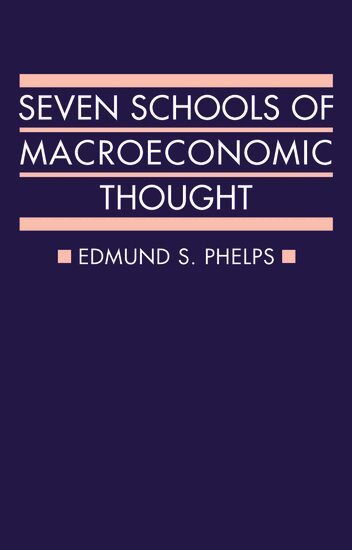
This book offers an excellent survey of various macroeconomic topics which feature prominently in the research agenda and have inspired both theoretical and policy debate. The book presents an authoritative and comprehensive summary and original critique of modern macroeconomic approaches by a scholar whose own contribution to the field is considerable.In each of his seven chapters, the author reviews one school of economic thought. These are: the Keynesian school of macroeconomics; the monetarist school; the New Classical school; the New-Keynesian school; supply side macroeconomics, and `non-monetary' models of macroeconomics - the real business cycle theory and the `structuralist school' which views changes in unemployment as the outcome of shifts in the structural characteristics of the economy.The book is the text of the first series of Ryde Lectures, established by Lund University in Sweden.
1 648 kr
Skickas inom 5-8 vardagar
This book looks at very high inflations, exemplified by those suffered by Argentina, Bolivia, Brazil, Israel, Mexico, and Peru in the eighties and by the Soviet Union today. The authors argue that a better grasp of high inflation processes is necessary in order for countries intricated in it to design stabilization strategies. The extremes of monetary instability can also give a clearer picture of the purpose that money and financial institutions serve under more normal circumstances, thus deepening our understanding of the benefits of monetary stability.The authors examine the financial problems that governments have to wrestle with in high inflation, the private sector's adaptations to high inflation conditions, and the difficulties of finding a policy strategy that can be sustained through disinflation to lasting stabilization.In describing, analysing, and explaining a number of high inflationary experiences, the authors show that standard macroeconomic theory cannot account for the phenomenon of these extreme cases and ask how received inflation theory needs to be changed in order for it to accommodate the various effects on the functioning of the economy.Finally, the authors make a series of policy prescriptions which will help policy-makers to avoid inflationary situations.
1 750 kr
Skickas inom 7-10 vardagar
Rational Risk Policy is based on Viscusi's Arne Ryde Memorial Lectures, delivered at Lund University in 1996. The organizing principle of these lectures is that the irrationality of individual decisions is often embodied in government regulations. Rather than overcoming the inadequacies in individual risk beliefs and behaviour, governmental regulations often institutionalize them. Viscusi examines how consumers and workers perceive risk and the implications of these risk beliefs and behavioural responses to risk for government policy. Hazard warnings efforts, direct regulation, and liability are among the alternative modes of intervention. The role of risk tradeoffs with respect to the value of life as well as the consequences of wasteful regulatory expenditures are considered in a discussion of riskrisk analysis. Rational Risk Policy also includes a critique of the risk analysis practices used by government agencies as well as a consideration of how liability and social insurance should be integrated into a rational risk management strategy.
2 498 kr
Skickas inom 5-8 vardagar
In the field of economic analysis, computability in the formation of economic hypotheses is seen as the way forward. In this book, Professor Velupillai implements a theoretical research program along these lines. Choice theory, learning rational expectations equlibria, the persistence of adaptive behaviour, arithmetical games, aspects of production theory, and economic dynamics are given recursion theoretic (i.e. computable) interpretations. These interpretations lead to new kinds of questions being posed by the economic theorist. In particular, recurison theoretic decision problems replace standard optimisation paradigms in economic analysis. Economic theoretic questions, posed recursion-theoretically, lead to answers that are ambiguous: undecidable choices, uncomputable learning processes, and algorithmically unplayable games become standard answers. Professor Velupillai argues that a recursion theoretic formalisation of economic analysisComputable Economicsmakes the subject intrinsically inductive and computational.
531 kr
Skickas inom 7-10 vardagar
This book offers an excellent survey of various macroeconomic topics that feature prominently in the research agenda and have inspired both theoretical and policy debate. The book presents an authoritative and comprehensive summary and original critique of macroeconomic approaches by a scholar whose own contribution to the field is considerable.In each of his seven chapters, the author reviews one school of economic thought. These are: the Keynesian school of macroeconomics; the monetarist school; the New Classical school; the New-Keynesian school; supply side macroeconomics, and `non-monetary' models of macroeconomics - the real business cycle theory and the `structuralist school' which views changes in unemployment as the outcome of shifts in the structural characteristics of the economy.
738 kr
Skickas inom 5-8 vardagar
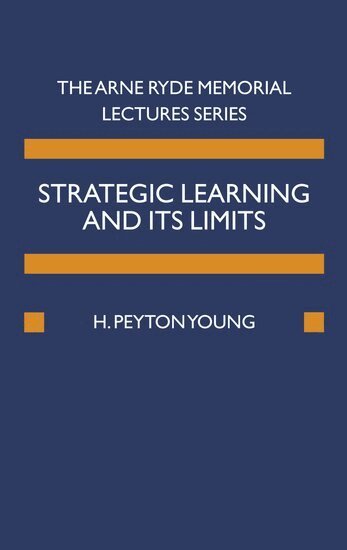
In this concise book based on his Arne Ryde Lectures in 2002, Young suggests a conceptual framework for studying strategic learning and highlights theoretical developments in the area. He discusses the interactive learning problem; reinforcement and regret; equilibrium; conditional no-regret learning; prediction, postdiction, and calibration; fictitious play and its variants; Bayesian learning; and hypothesis testing.Young's framework emphasizes the amount of information required to implement different types of learning rules, criteria for evaluating their performance, and alternative notions of equilibrium to which they converge. He also stresses the limits of what can be achieved: for a given type of game and a given amount of information, there may exist no learning procedure that satisfies certain reasonable criteria of performance and convergence.In short, Young has provided a valuable primer that delineates what we know, what we would like to know, and the limits of what we can know, when we try to learn about a system that is composed of other learners.