Short Oxford History of Europe – serie
Visar alla böcker i serien Short Oxford History of Europe. Handla med fri frakt och snabb leverans.
10 produkter
10 produkter
478 kr
Skickas inom 7-10 vardagar
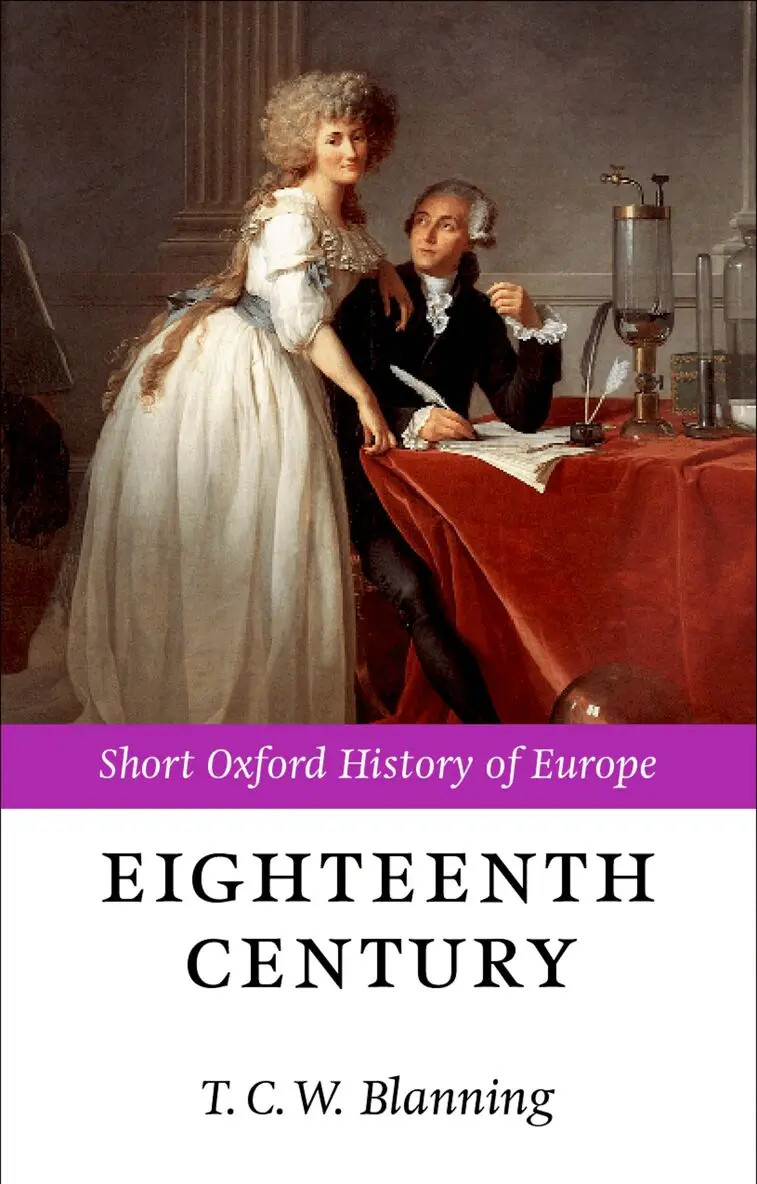
The complete Short Oxford History of Europe (series editor: Professor T.C.W. Blanning) will cover the history of Europe from Classical Greece to the present in eleven volumes. In each, experts write to their strengths tackling the key issues including society, economy, religion, politics, and culture head-on in chapters that will be at once wide-ranging surveys and searching analyses. Each book is specifically designed with the non-specialist reader in mind; but the authority of the contributors and the vigour of the interpretations will make them necessary and challenging reading for fellow academics across a range of disciplines. The word which best summarizes the wonderful variety of human experience in the eighteenth century is `expansion'. The size of armies, literacy rates, state intervention, the acreage of overseas empires, productivity or just the number of Europeans on the planet were all significantly higher in 1800 than in 1700. It is the century which forms the hinge between the old world and the new for, by its end, change was not only detectable, it was also seen to be irreversible. In this book, six experts analyse concisely and incisively the major developments in politics, society, the economy, religion and culture, warfare and international relations, and in Europe's relations with the world overseas.
688 kr
Skickas
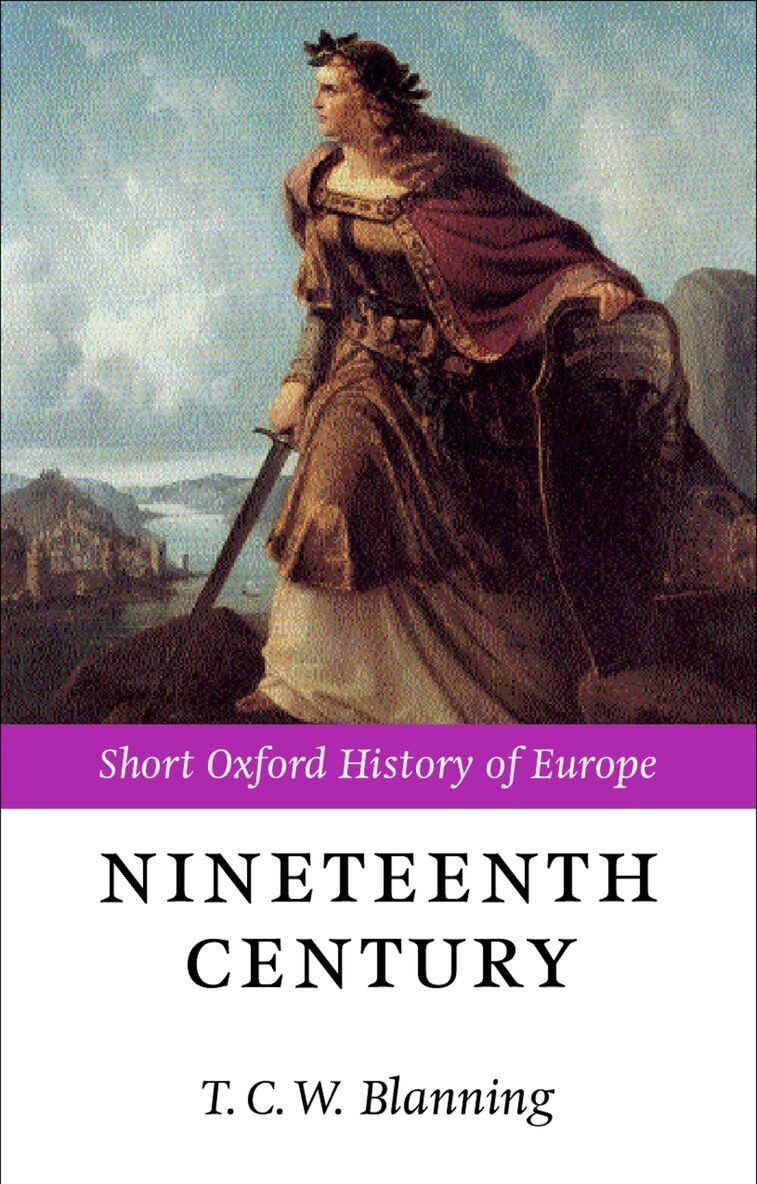
The complete Short Oxford History of Europe (series editor, Professor TCW Blanning) will cover the history of Europe from Classical Greece to the present in eleven volumes. In each, experts write to their strengths tackling the key issues including society, economy, religion, politics, and culture head-on in chapters that will be at once wide-ranging surveys and searching analyses. Each book is specifically designed with the non-specialist reader in mind; but the authority of the contributors and the vigour of the interpretations will make them necessary and challenging reading for fellow academics across a range of disciplines. Europe changed more rapidly and more radically during the nineteenth century than during any prior period. A population explosion, a communications revolution, mass literacy, secularisation, urbanisation, Imperialism - these were just a few of the many ways in which the lives of Europeans of every class were dramatically changed. It was the century when most of the ideologies of the modern world - liberalism, conservatism, nationalism, socialism, and racism - came of age. Yet in some respects, especially international relations, there was a surprising degree of continuity and harmony. In six pithy chapters experts on the political, international, social, economic, cultural, and imperial history of the period address and answer the big questions of the period.
509 kr
Skickas inom 5-8 vardagar
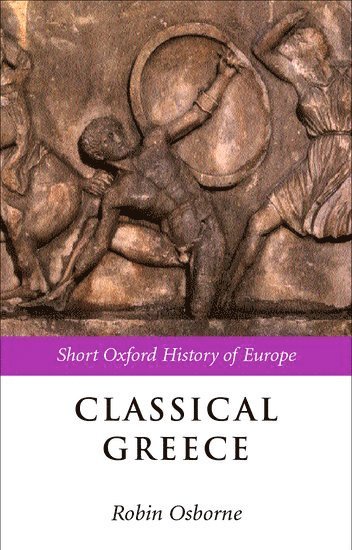
The complete Short Oxford History of Europe (series editor: Professor T C W Blanning) will cover the history of Europe from Classical Greece to the present in eleven volumes. In each, experts write to their strengths tackling the key issues, including society, economy, religion, politics, and culture, head-on in chapters that will be at once wide-ranging surveys and searching analyses. Each book is specifically designed with the non-specialist reader in mind; but the authority of the contributors and the vigour of the interpretations will make them necessary and challenging reading for fellow academics across a range of disciplines. Osborne's is the third book to be launched in the series, following on from the publication of Blanning's Eighteenth and Nineteenth century volumes. Robin Osborne provides an analysis which introduces the physical world of the Greek city and the inheritance of the classical city from its archaic past. With specially commissioned chapters, a team of experts introduce the reader to the economy of the Greek city, its political and religious institutions, the waging of warfare between cities, the nature and ancient analysis of struggles within cities, and the private life of individuals. The focus then moves to diachronic change within the city, tracing the broad narratives of Greek history through the fifth and fourth centuries, and concludes by demonstrating the changing ways in which the Greeks themselves construed individual and civic life. Looking at classical Greece as a whole, the reader is introduced to general issues through use of precise examples and through the words of Greek writers themselves. Maps, a timeline, and a selective bibliography help readers to ground the information that is given and direct their further studies.
661 kr
Skickas inom 7-10 vardagar
The complete Short Oxford History of Europe (series editor: Professor T C W Blanning) will cover the history of Europe from Classical Greece to the present in eleven volumes. In each, experts write to their strengths tackling the key issues, including society, economy, religion, politics, and culture, head-on in chapters that will be at once wide-ranging surveys and searching analyses. Each book is specifically designed with the non-specialist reader in mind; but the authority of the contributors and the vigour of the interpretations will make them necessary and challenging reading for fellow academics across a range of disciplines. Osborne's is the third book to be launched in the series, following on from the publication of Blanning's Eighteenth and Nineteenth century volumes. Robin Osborne provides an analysis which introduces the physical world of the Greek city and the inheritance of the classical city from its archaic past. With specially commissioned chapters, a team of experts introduce the reader to the economy of the Greek city, its political and religious institutions, the waging of warfare between cities, the nature and ancient analysis of struggles within cities, and the private life of individuals. The focus then moves to diachronic change within the city, tracing the broad narratives of Greek history through the fifth and fourth centuries, and concludes by demonstrating the changing ways in which the Greeks themselves construed individual and civic life. Looking at classical Greece as a whole, the reader is introduced to general issues through use of precise examples and through the words of Greek writers themselves. Maps, a timeline, and a selective bibliography help readers to ground the information that is given and direct their further studies.
384 kr
Skickas inom 5-8 vardagar
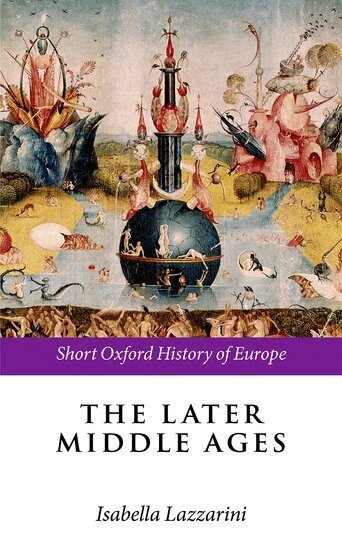
Of all the sub-periods in which European medieval history has been divided over time, the later middle ages is possibly the one on which the burden of past and current grand narratives weighs the most. Its chronological and geopolitical boundaries are shaped by a heavy narrative of decline or transition, and consequently this period is often interpreted through the lenses of previous or following developments, becoming in turn the tail-end of the 'feudal', 'communal', 'imperial versus papal' era or the announcement of modernity. The Later Middle Ages addresses the urgent need to revise and rewrite the story of this period, forging new critical and technical vocabularies not derived from the study of other periods. By adopting a conscious approach towards temporal and spatial variety, and by breaking the traditional and unitary narrative of decline and transition into one of many changes and continuities, it charts the principal developments of late medieval Europe while opening up to different political cultures and societies, throwing new light on older concepts, and revealing analogies and differences with other geopolitical contexts. Including maps, illustrations, a detailed chronology and a rich range of reading suggestions, The Later Middle Ages aims at providing a first introduction to a very complex, dynamic, and fascinating period for Europe and beyond.
1 246 kr
Skickas inom 5-8 vardagar
Of all the sub-periods in which European medieval history has been divided over time, the later middle ages is possibly the one on which the burden of past and current grand narratives weighs the most. Its chronological and geopolitical boundaries are shaped by a heavy narrative of decline or transition, and consequently this period is often interpreted through the lenses of previous or following developments, becoming in turn the tail-end of the 'feudal', 'communal', 'imperial versus papal' era or the announcement of modernity. The Later Middle Ages addresses the urgent need to revise and rewrite the story of this period, forging new critical and technical vocabularies not derived from the study of other periods. By adopting a conscious approach towards temporal and spatial variety, and by breaking the traditional and unitary narrative of decline and transition into one of many changes and continuities, it charts the principal developments of late medieval Europe while opening up to different political cultures and societies, throwing new light on older concepts, and revealing analogies and differences with other geopolitical contexts. Including maps, illustrations, a detailed chronology and a rich range of reading suggestions, The Later Middle Ages aims at providing a first introduction to a very complex, dynamic, and fascinating period for Europe and beyond.
509 kr
Skickas inom 5-8 vardagar
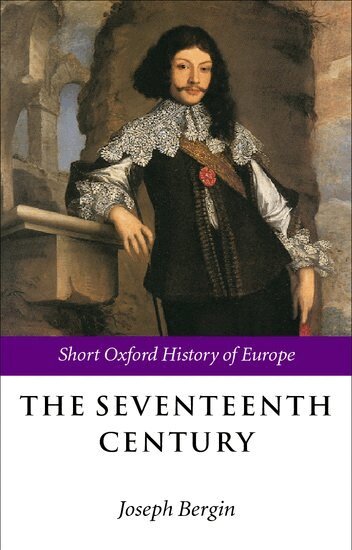
The complete short Oxford History of Europe provides a concise, readable, and authorititive point of entry for the history of Europe from the Ancient Greeks to the present day in eleven volumes. In each chapter a leading expert offers focused and penetrating insights into the major themes and influences of the period.Lying between the two great 'peaks' of European history, the Reformation and the Enlightenment in the centuries before and after, the seventeenth century lacks a clear identity of its own. And yet, it is the very proliferation of major events, crises, and processes throughout Europe that has made this transitional age so difficult to label.This book fully explores the seventeenth century, highly significant for the future of Europe. In a set of chapters covering and contrasting the European experience across the full century and the full continent, the reader is offered a rich, lively, and provocative introduction to this exciting period.
1 855 kr
Skickas inom 5-8 vardagar
The complete Short Oxford History of Europe (series editor: Professor T.C.W. Blanning) will cover the history of Europe from Classical Greece to the present in eleven volumes. In each, experts write to their strengths tackling the key issues - including society, economy, religion, politics, and culture - head-on in chapters that will be at once wide-ranging surveys and searching analyses. Each book is specifically designed with the non-specialist reader in mind; but the authority of the contributors and the vigour of the interpretations will make them necessary and challenging reading for fellow academics across a range of disciplines. Lying between the two great 'peaks' of European history, the Reformation and the Enlightenment in the centuries fore and aft, the seventeenth century seems not to have a popular identity itself. And yet, as Professor Bergin points out in his Introduction, it is the very proliferation of major events, crises and processes throughout Europe that has made this transitional age so difficult to label. In this book, the seventeenth century, heavy with significance for the future of Europe, is fully explored by Professor Bergin and six major authors as they address, in turn, economy, society, politics, war and international relations, science, thought and culture ('The Age of Curiosity'), and Europe in the wider world. In a set of chapters covering and contrasting the European experience across the full century and the full continent, the reader is offered a rich, lively, and provocative introduction to the period, and students a superbly authoritative context for more detailed work.
478 kr
Skickas inom 7-10 vardagar
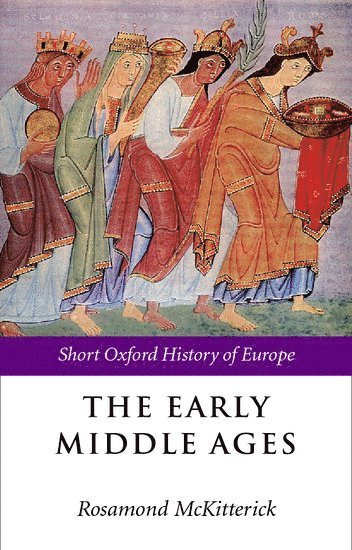
The Early Middle Ages (400-1000) was one of the most dynamic and crucial periods in the formation of Europe. It covers the transition from the relatively diverse world of Roman Empire in late antiquity, to the disparate world of early medieval Europe, where local differences assumed far greater significance, but where, nonetheless, the institution of Latin Christianity lent coherence to the successor states. In this book, McKitterick and five other leading historians have collaborated closely to produce a set of thematic interpretations covering politics, society, economy, culture, religion, and Europe and the wider world. Military matters and warfare are treated within these chapters, reflecting their entrenchment in social, economic, and political stuctures. The definition of 'Europe' is ambiguous in this period, but for the most part, 'Europe' coincides with the ever-expanding horizons of Latin Christendom. However, this book also looks at crucial interactions with other areas, such as Scandinavia, eastern Europe, the Islamic Middle East and North Africa, and Byzantium. Providing a coherent view of the most important elements within the period, this book gives a sense of the complexities and excitements of six hundred years of transition.
1 756 kr
Skickas inom 5-8 vardagar
The Early Middle Ages (400-1000) was one of the most dynamic and crucial periods in the formation of Europe. It covers the transition from the relatively diverse world of Roman Empire in late antiquity, to the disparate world of early medieval Europe, where local differences assumed far greater significance, but where, nonetheless, the institution of Latin Christianity lent coherence to the successor states. In this book, McKitterick and five other leading historians have collaborated closely to produce a set of thematic interpretations covering politics, society, economy, culture, religion, and Europe and the wider world. Military matters and warfare are treated within these chapters, reflecting their entrenchment in social, economic, and political stuctures. The definition of 'Europe' is ambiguous in this period, but for the most part, 'Europe' coincides with the ever-expanding horizons of Latin Christendom. However, this book also looks at crucial interactions with other areas, such as Scandinavia, eastern Europe, the Islamic Middle East and North Africa, and Byzantium. Providing a coherent view of the most important elements within the period, this book gives a sense of the complexities and excitements of six hundred years of transition.