Signale TRANSFER: German Thought in Translation - Böcker
Visar alla böcker i serien Signale TRANSFER: German Thought in Translation. Handla med fri frakt och snabb leverans.
11 produkter
11 produkter
559 kr
Skickas inom 10-15 vardagar
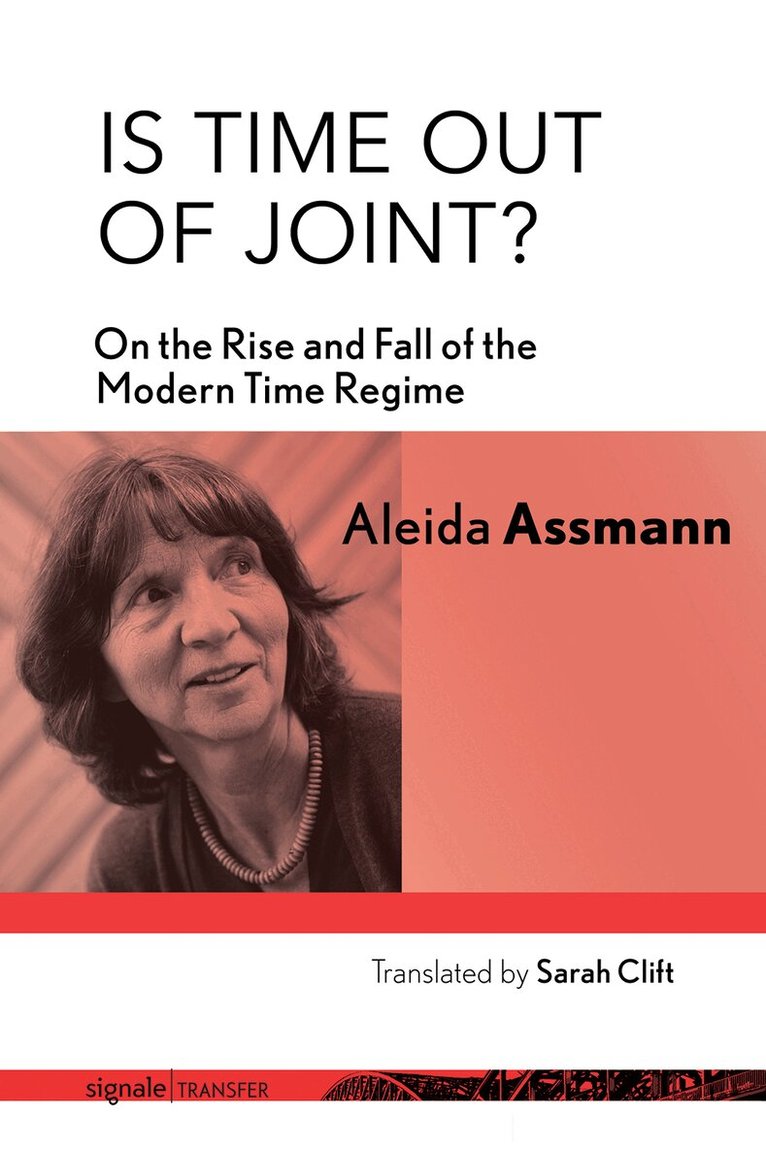
Is, as Hamlet once complained, time out joint? Have the ways we understand the past and the future—and their relationship to the present—been reordered? The past, it seems, has returned with a vengeance: as aggressive nostalgia, as traumatic memory, or as atavistic origin narratives rooted in nation, race, or tribe. The future, meanwhile, has lost its utopian glamor, with the belief in progress and hope for a better future eroded by fears of ecological collapse.In this provocative book, Aleida Assmann argues that the apparently solid moorings of our temporal orientation have collapsed within the span of a generation. To understand this profound cultural crisis, she reconstructs the rise and fall of what she calls "time regime of modernity" that underpins notions of modernization and progress, a shared understanding that is now under threat. Is Time Out of Joint? assesses the deep change in the temporality of modern Western culture as it relates to our historical experience, historical theory, and our life-world of shared experience, explaining what we have both gained and lost during this profound transformation.
Rigorism of Truth
"Moses the Egyptian" and Other Writings on Freud and Arendt
Inbunden, Engelska, 2018
1 558 kr
Skickas inom 10-15 vardagar
In "Moses the Egyptian"—the centerpiece of Rigorism of Truth, the German philosopher Hans Blumenberg addresses two defining figures in the intellectual history of the twentieth century: Sigmund Freud and Hannah Arendt. Unpublished during his lifetime, this essay analyzes Freud's Moses and Monotheism (1939) and Arendt's Eichmann in Jerusalem (1963), and discovers in both a principled rigidity that turns into recklessness because it is blind to the politics of the unknown.Offering striking insights into the importance of myth in politics and the extent to which truth can be tolerated in adversity, the essay also provides one of the few instances where Blumenberg reveals his thinking about Judaism and Zionism. Rigorism of Truth also includes commentaries by Ahlrich Meyer that give a fuller understanding of the philosopher's engagement with Freud, Arendt, and the Eichmann trial, as well as situating these reflections in the broader context of Blumenberg's life and thought.
500 kr
Skickas inom 10-15 vardagar
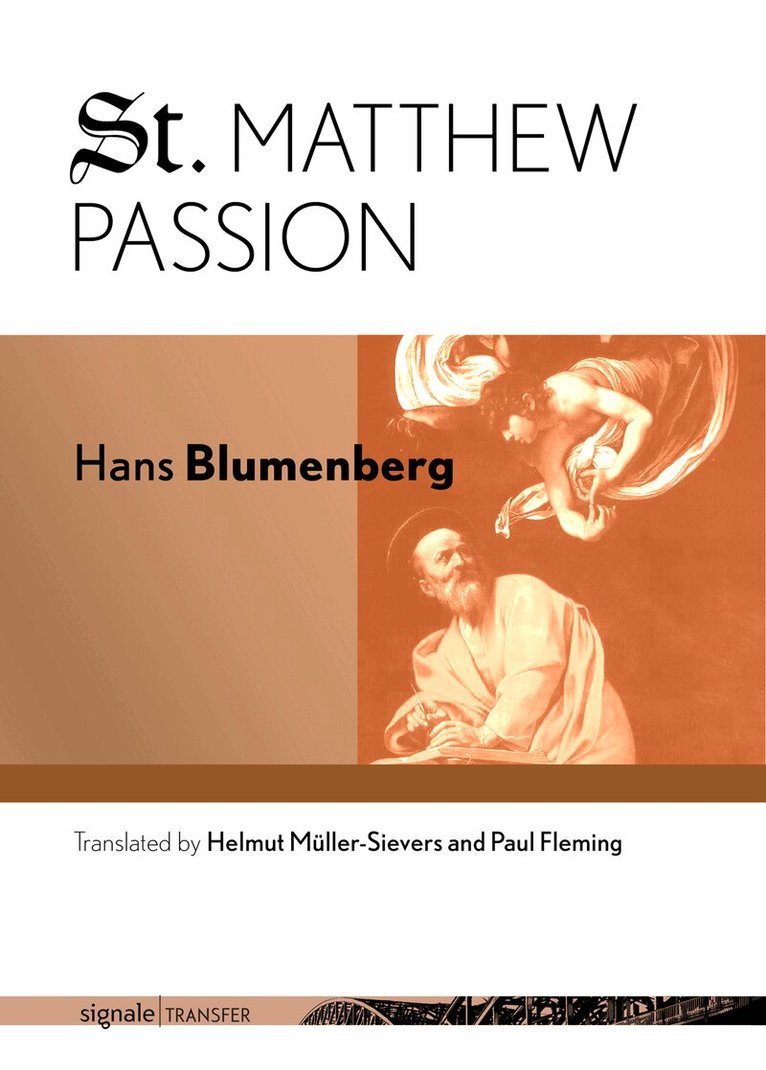
St. Matthew Passion is Hans Blumenberg's sustained and devastating meditation on Jesus's anguished cry on the cross, "My God, my God, why have you forsaken me?" Why did this abandonment happen, what does it mean within the logic of the Gospels, how have believers and nonbelievers understood it, and how does it live on in art? With rare philological acuity and vast historical learning, Blumenberg unfolds context upon context in which this cry has reverberated, from early Christian apologetics and heretics to twentieth-century literature and philosophy. Blumenberg's guide through this unending story of divine abandonment is Johann Sebastian Bach's monumental Matthäuspassion, the parabolic mirror that bundled eighteen hundred years of reflection on the fate of the crucified and the only available medium that allows us post-Christian listeners to feel the anguish of those who witnessed the events of the Passion. With interspersed references to writers such as Goethe, Rilke, Kafka, Freud, and Benjamin, Blumenberg gathers evidence to raise the singular question that, in his view, Christian theology has not been able to answer: How can an omnipotent God be so offended by his creatures that he must sacrifice and abandon his own Son?
314 kr
Skickas inom 10-15 vardagar
In "Moses the Egyptian"—the centerpiece of Rigorism of Truth, the German philosopher Hans Blumenberg addresses two defining figures in the intellectual history of the twentieth century: Sigmund Freud and Hannah Arendt. Unpublished during his lifetime, this essay analyzes Freud's Moses and Monotheism (1939) and Arendt's Eichmann in Jerusalem (1963), and discovers in both a principled rigidity that turns into recklessness because it is blind to the politics of the unknown.Offering striking insights into the importance of myth in politics and the extent to which truth can be tolerated in adversity, the essay also provides one of the few instances where Blumenberg reveals his thinking about Judaism and Zionism. Rigorism of Truth also includes commentaries by Ahlrich Meyer that give a fuller understanding of the philosopher's engagement with Freud, Arendt, and the Eichmann trial, as well as situating these reflections in the broader context of Blumenberg's life and thought.
1 654 kr
Skickas inom 10-15 vardagar
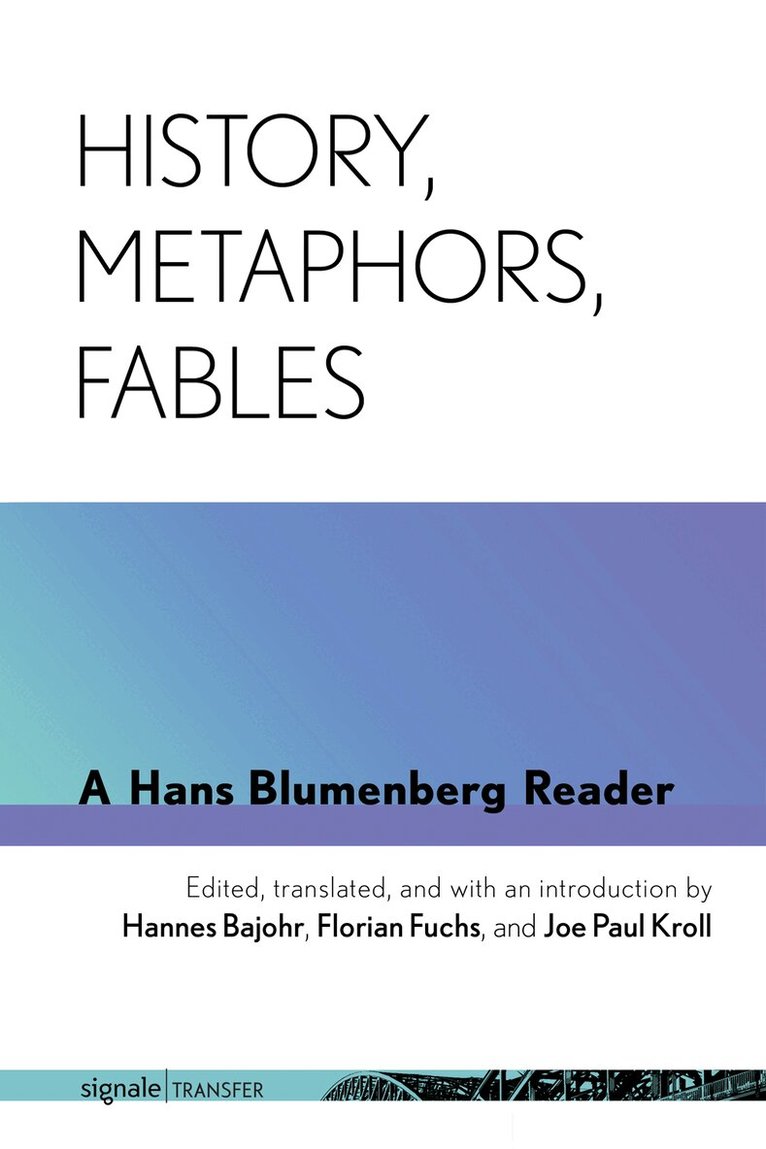
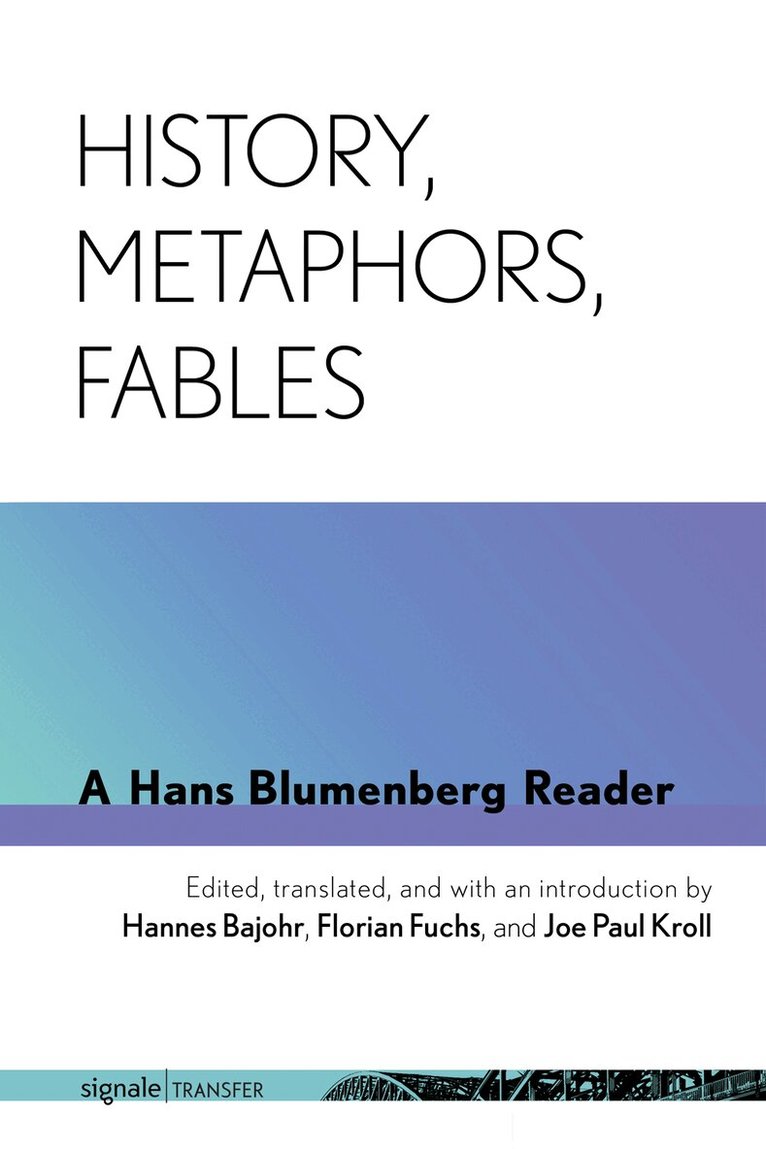
History, Metaphors, Fables collects the central writings by Hans Blumenberg and covers topics such as on the philosophy of language, metaphor theory, non-conceptuality, aesthetics, politics, and literary studies. This landmark volume demonstrates Blumenberg's intellectual breadth and gives an overview of his thematic and stylistic range over four decades. Blumenberg's early philosophy of technology becomes tangible, as does his critique of linguistic perfectibility and conceptual thought, his theory of history as successive concepts of reality", his anthropology, or his studies of literature. History, Metaphors, Fables allows readers to discover a master thinker whose role in the German intellectual post-war scene can hardly be overestimated.
1 791 kr
Skickas inom 10-15 vardagar
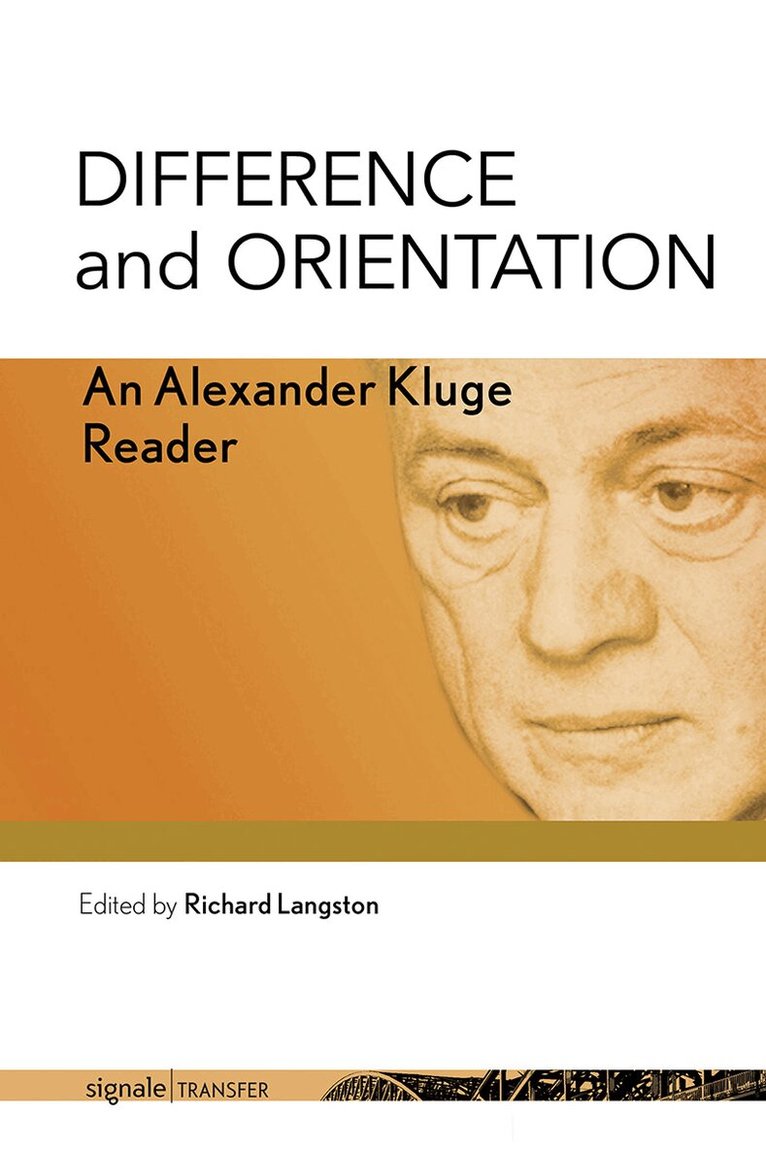
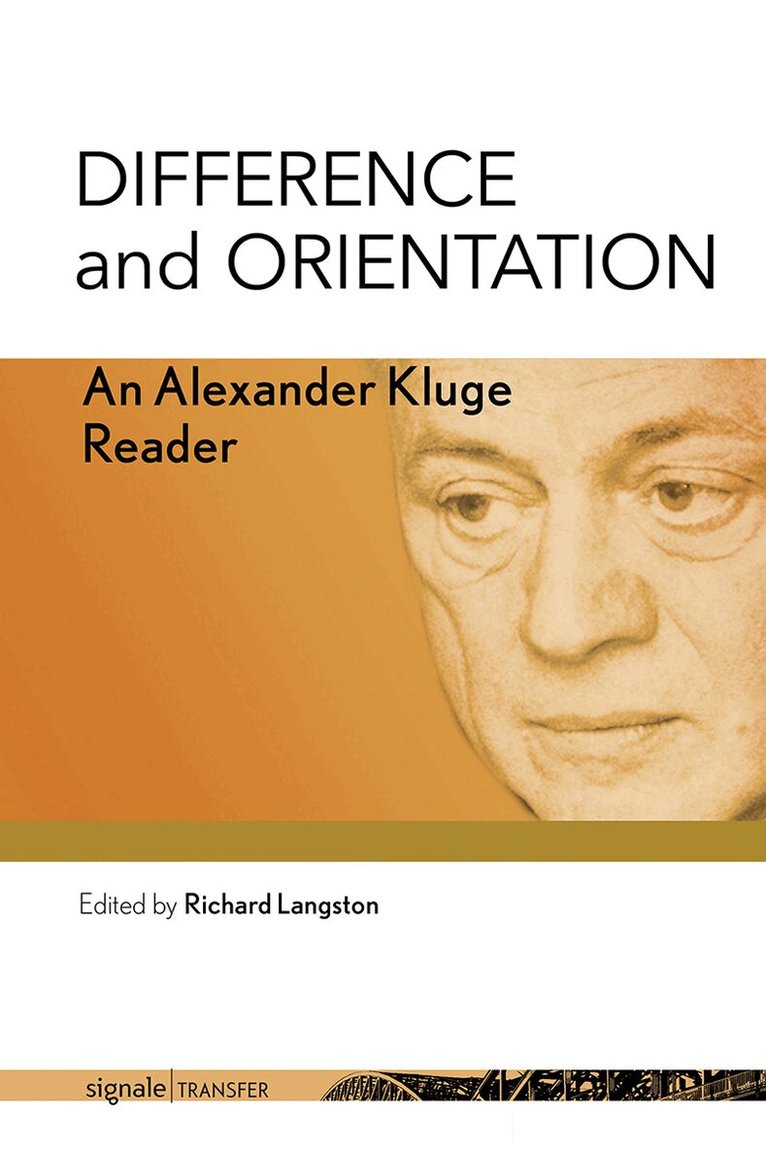
Alexander Kluge is one of contemporary Germany's leading intellectuals and artists. A key architect of the New German Cinema and a pioneer of auteur television programming, he has also cowritten three acclaimed volumes of critical theory, published countless essays and numerous works of fiction, and continues to make films even as he expands his video production to the internet. Despite Kluge's five decades of work in philosophy, literature, television, and media politics, his reputation outside of the German-speaking world still largely rests on his films of the 1960s, 70s, and 80s. With the aim of introducing Kluge's heterogeneous mind to an Anglophone readership, Difference and Orientation assembles thirty of his essays, speeches, glossaries, and interviews, revolving around the capacity for differentiation and the need for orientation toward ways out of catastrophic modernity. This landmark volume brings together some of Kluge's most fundamental statements on literature, film, pre- and post-cinematic media, and social theory, nearly all for the first time in English translation. Together, these works highlight Kluge's career-spanning commitment to unorthodox, essayistic thinking.
438 kr
Skickas inom 10-15 vardagar
Alexander Kluge is one of contemporary Germany's leading intellectuals and artists. A key architect of the New German Cinema and a pioneer of auteur television programming, he has also cowritten three acclaimed volumes of critical theory, published countless essays and numerous works of fiction, and continues to make films even as he expands his video production to the internet. Despite Kluge's five decades of work in philosophy, literature, television, and media politics, his reputation outside of the German-speaking world still largely rests on his films of the 1960s, 70s, and 80s. With the aim of introducing Kluge's heterogeneous mind to an Anglophone readership, Difference and Orientation assembles thirty of his essays, speeches, glossaries, and interviews, revolving around the capacity for differentiation and the need for orientation toward ways out of catastrophic modernity. This landmark volume brings together some of Kluge's most fundamental statements on literature, film, pre- and post-cinematic media, and social theory, nearly all for the first time in English translation. Together, these works highlight Kluge's career-spanning commitment to unorthodox, essayistic thinking.
334 kr
Skickas inom 10-15 vardagar
History, Metaphors, Fables collects the central writings by Hans Blumenberg and covers topics such as on the philosophy of language, metaphor theory, non-conceptuality, aesthetics, politics, and literary studies. This landmark volume demonstrates Blumenberg's intellectual breadth and gives an overview of his thematic and stylistic range over four decades. Blumenberg's early philosophy of technology becomes tangible, as does his critique of linguistic perfectibility and conceptual thought, his theory of history as successive concepts of reality", his anthropology, or his studies of literature. History, Metaphors, Fables allows readers to discover a master thinker whose role in the German intellectual post-war scene can hardly be overestimated.
638 kr
Skickas inom 10-15 vardagar
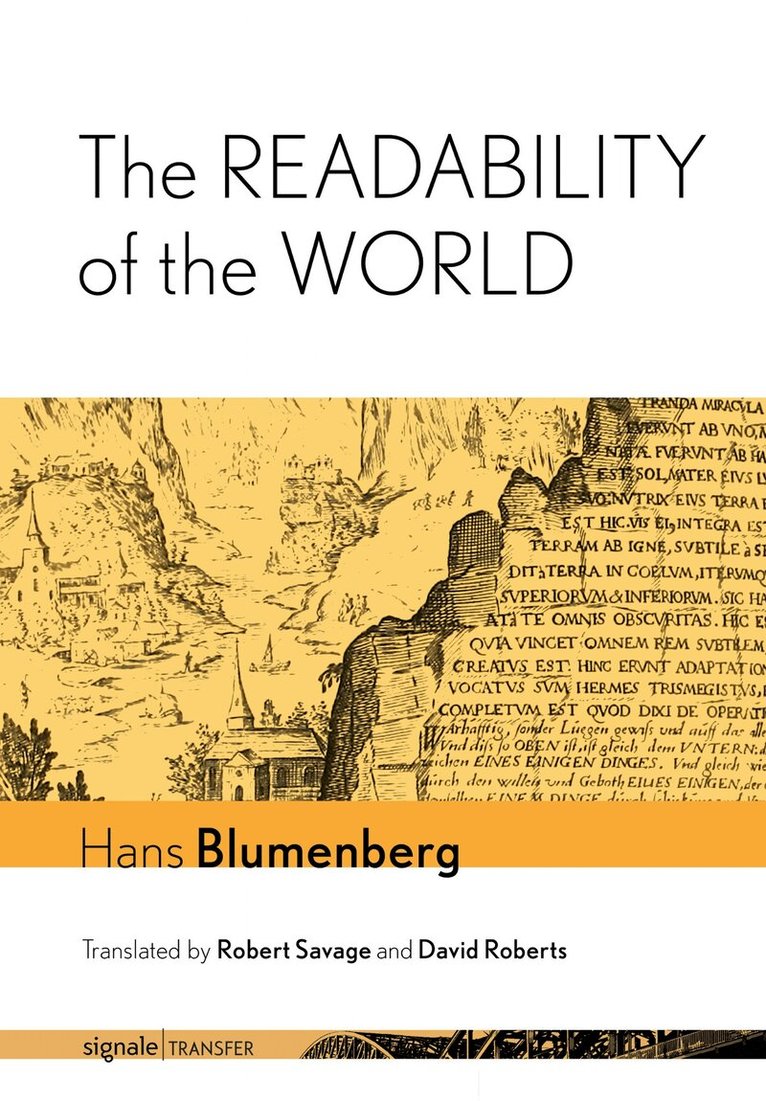
The Readability of the World represents Hans Blumenberg's first extended demonstration of the metaphorological method he pioneered in Paradigms for a Metaphorology. For Blumenberg, metaphors are symptomatic of patterns of thought and feeling that escape conceptual formulation but are nonetheless indispensable, because they allow humans to orient themselves in an otherwise overwhelming world. The Readability of the World applies this method to the idea that the world presents itself as a book. The metaphor of the book of nature has been central to Western interpretations of reality, and Blumenberg traces the evolution of this metaphor from ancient Greek cosmology to the model of the genetic code to access the different expectations of reality that it articulates, reflects, and projects.Writing with equal authority on literature and science, theology and philosophy, ancient metaphysics and twentieth-century biochemistry, Blumenberg advances rich and original interpretations of the thinking of a range of canonical figures, including Berkeley, Vico, Goethe, Spinoza, Leibniz, Bacon, Flaubert, and Freud. Through his interdisciplinary, anthropologically sharpened gaze, Blumenberg uncovers a wealth of new insights into the continuities and discontinuities across human history of the longing to contain all of nature, history, and reality in a book, from the Bible, the Talmud, and the Qur'an to Diderot's Encyclopedia and Humboldt's Cosmos to the ACGT of the DNA code.
1 604 kr
Skickas inom 10-15 vardagar
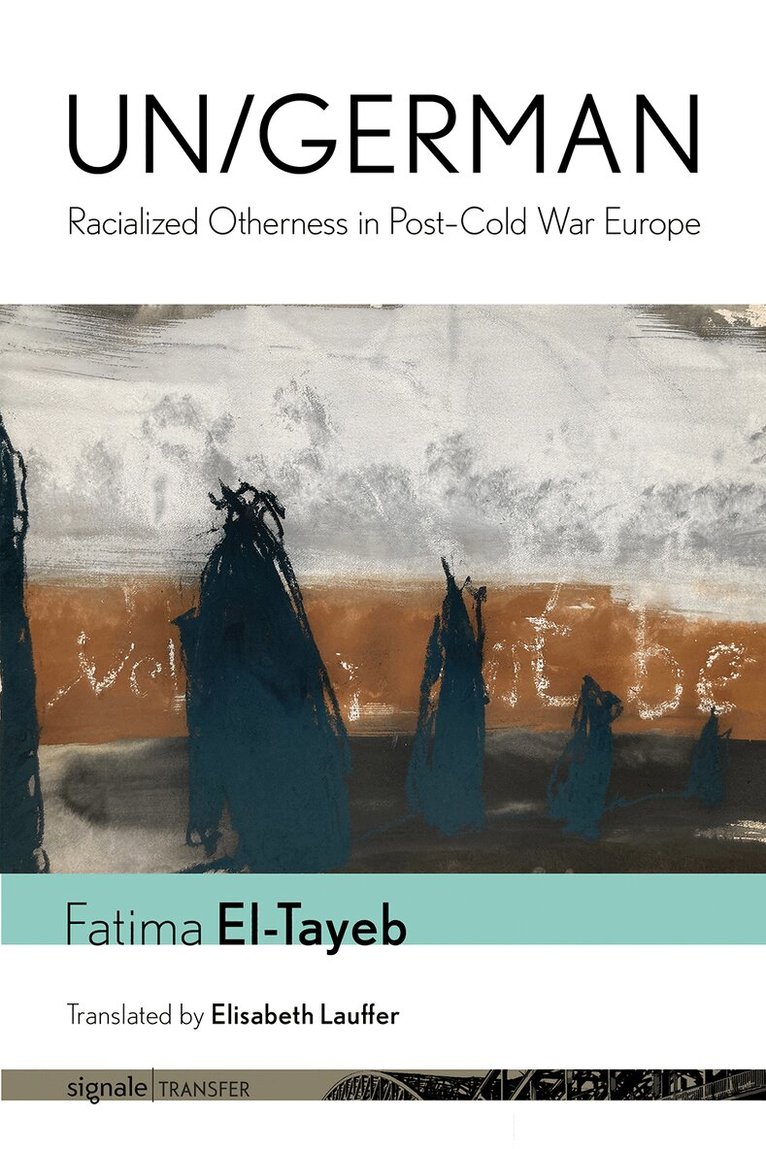
Un/German is a powerful intervention in the ongoing debates over national identity, migration, and collective memory in Europe. Against the backdrop of the 2015 "refugee crisis," Fatima El-Tayeb argues that Europe's internal fractures were deflected through recurring crises, casting racialized populations as the external menace against which the continent could unite. First published in German in 2016, the book critically examines how Germany's reaction to the arrival of nearly one million refugees—initially framed as a "culture of welcome" but one that rapidly turned to hostility—was not an anomaly but part of a broader European pattern.Drawing on public memory and its material expressions in post–1989 Germany, Un/German brings into sharp relief the disparities in how Europe remembers its fascist, socialist, and colonial pasts. El-Tayeb highlights Black, Muslim, and Roma artists and activists who disrupted public commemorations intended to reinforce dominant narratives, arguing that these disturbances brought to the fore unresolved tensions in German collective memory. In doing so, El-Tayeb reveals the limits of Europe's self-conception as pluralistic and progressive, while also opening the door to new, more inclusive ways of imagining European identity.
338 kr
Skickas inom 10-15 vardagar
Un/German is a powerful intervention in the ongoing debates over national identity, migration, and collective memory in Europe. Against the backdrop of the 2015 "refugee crisis," Fatima El-Tayeb argues that Europe's internal fractures were deflected through recurring crises, casting racialized populations as the external menace against which the continent could unite. First published in German in 2016, the book critically examines how Germany's reaction to the arrival of nearly one million refugees—initially framed as a "culture of welcome" but one that rapidly turned to hostility—was not an anomaly but part of a broader European pattern.Drawing on public memory and its material expressions in post–1989 Germany, Un/German brings into sharp relief the disparities in how Europe remembers its fascist, socialist, and colonial pasts. El-Tayeb highlights Black, Muslim, and Roma artists and activists who disrupted public commemorations intended to reinforce dominant narratives, arguing that these disturbances brought to the fore unresolved tensions in German collective memory. In doing so, El-Tayeb reveals the limits of Europe's self-conception as pluralistic and progressive, while also opening the door to new, more inclusive ways of imagining European identity.