Sinitic Languages of China [SLCH] - Böcker
Visar alla böcker i serien Sinitic Languages of China [SLCH]. Handla med fri frakt och snabb leverans.
7 produkter
7 produkter
1 706 kr
Skickas inom 5-8 vardagar
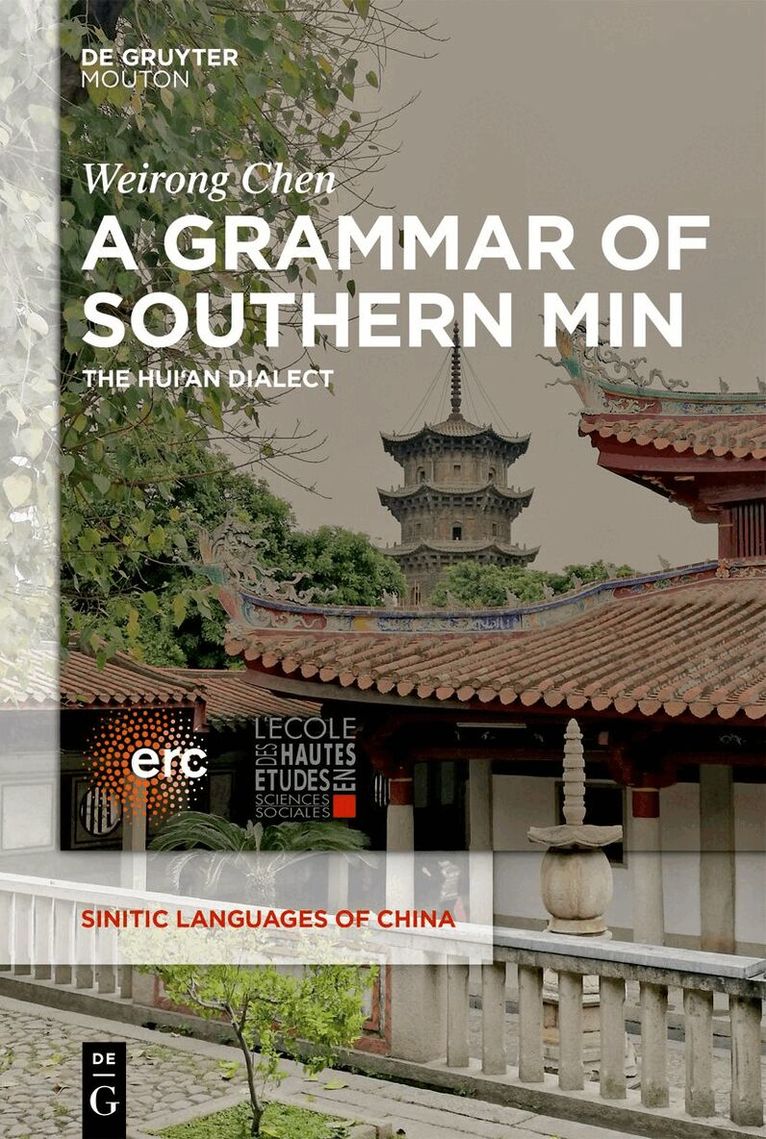
Southern Min (also known as Hokkien or Minnan) is a major branch of Chinese spoken mainly in Fujian and Taiwan, but also in Guangdong, Hainan and Hong Kong, as well as in many countries of Southeast Asia. Highly conservative in its linguistic profile, it is considered by many scholars to be a living language fossil due to the preservation of many archaic features that reflect its long-lasting history and culture. Yet to date there has been no comprehensive study of Southern Min using a typological framework, as the tendency is to base analyses on the model of Mandarin Chinese, the standard language. This grammar aims to present a systematic description of the Hui'an variety of Southern Min, mainly based on data collected via naturally occurring conversation. The volume includes four parts: nominal structure, predicate structure, clause structure and complex sentences, as well as a brief overview of phonology. It will have great appeal for heritage speakers, graduate students and scholars in both Chinese linguistics and typology.
1 728 kr
Kommande
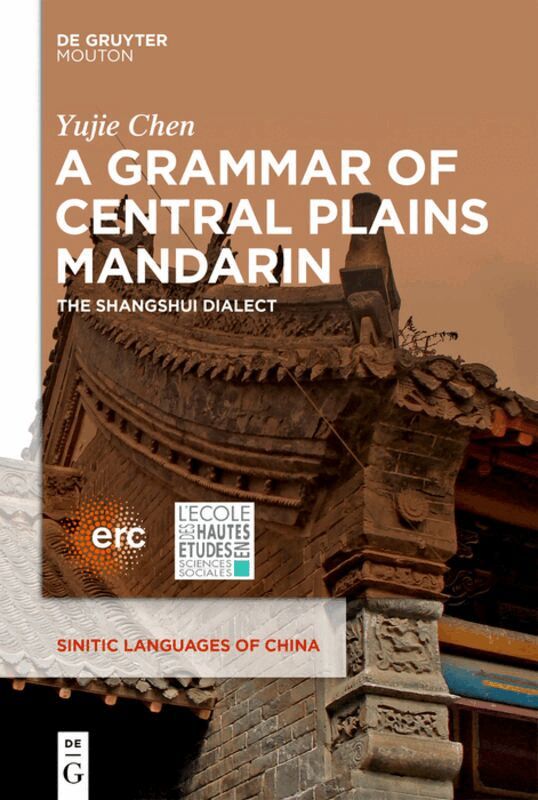
This grammar presents a linguistic study of the Shangshui dialect, which belongs to Central Plains Mandarin. The latter is a sub-branch of Mandarin and is spoken over a vast region of the middle of China in a long, narrow belt, extending across 11 provinces and covering an area of about 200,000 square kilometers. In total, more than 100 million people speak Central Plains Mandarin. Central Plains Mandarin has the most extensive distribution of the eight Mandarin branches, and it is regarded as the base of Standard Mandarin. However, compared with other dialect groups, very little research has been conducted on it. Scholars have considered that there are no grammatical distinctions between Central Plains Mandarin and Standard Mandarin, although there are slight differences in the phonological systems and vocabulary. This may be the reason why scholars have, up until now, neglected the grammar of Central Plains Mandarin. However, we are of the opinion that this lack of research is incongruous with the status of Central Plains Mandarin, and our present work proves that its grammar contains many unique features worthy of investigation.
2 041 kr
Skickas inom 5-8 vardagar
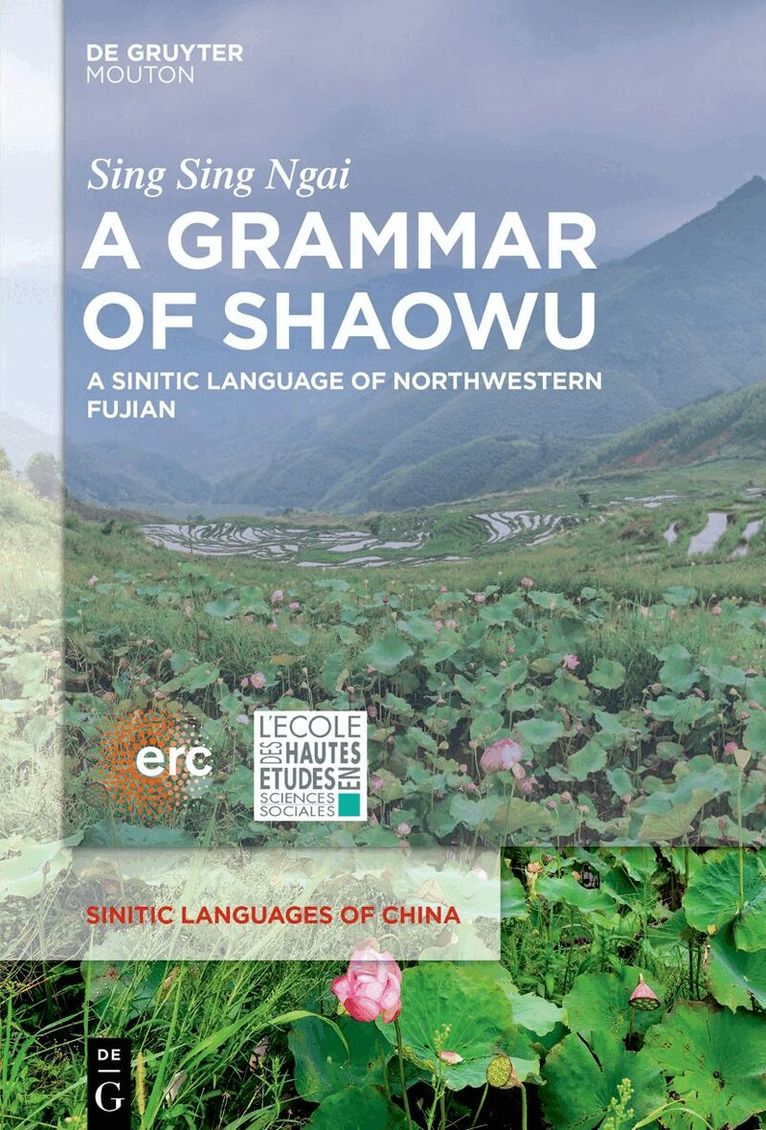
This is the first comprehensive grammar of Shaowu, a Min language spoken in Shaowu city and its environs in northwestern Fujian province, China. The book offers first-hand linguistic data collected over four years in the field, now placed at the disposal of researchers and students working in language documentation, comparative linguistics and Sinitic typology. It can serve as a reference grammar for those interested in learning the Shaowu language, thereby helping to preserve it. In addition, the book provides insights into Shaowu's classification which has been widely debated, thus elucidating its genetic affiliation. The book first presents Shaowu's geography, demography and history. It then profiles the language's phonology and lexicon, before providing a detailed description of its syntax, notably on its nominal, predicate, clausal and complex sentence structures, which are the focus of the book. The typological profile of Shaowu is also treated with the conclusion that the language has Gan, Hakka, Mandarin and even some Wu overlays on its Min base. The Shaowu language serves an excellent example to illustrate the degree of hybridity a language can attain due to intensive language contact over time.
455 kr
Skickas inom 5-8 vardagar
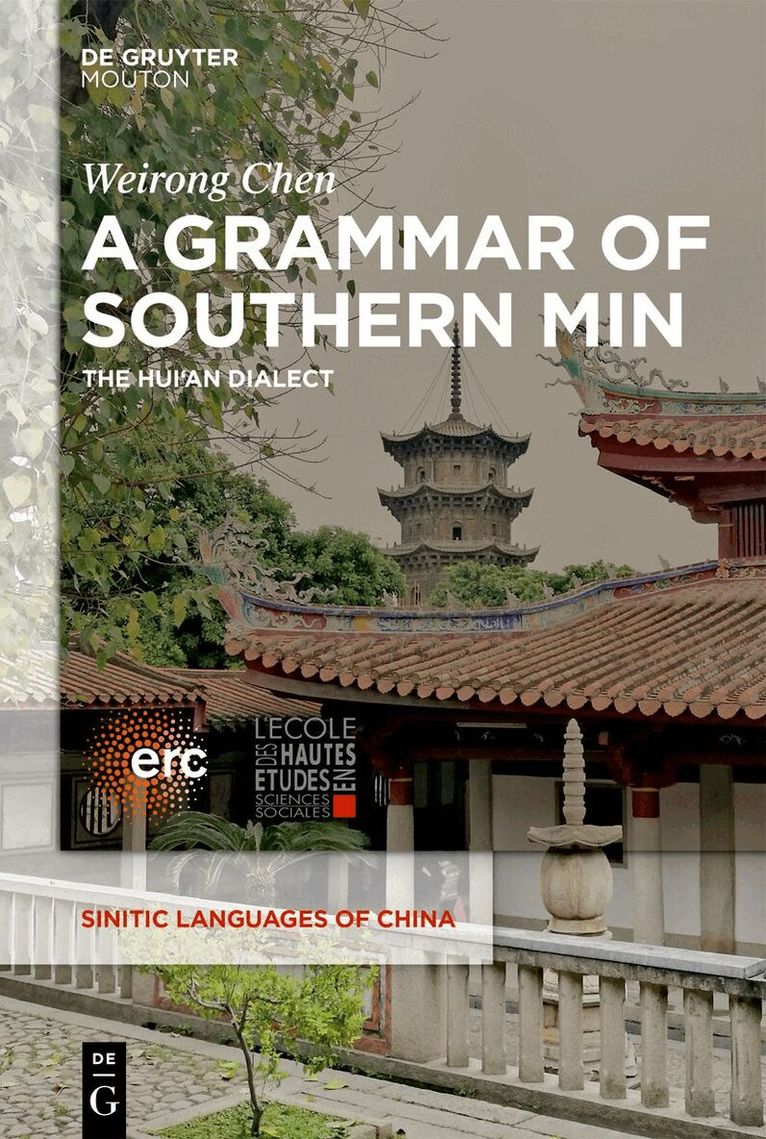
Southern Min (also known as Hokkien or Minnan) is a major branch of Chinese spoken mainly in Fujian and Taiwan, but also in Guangdong, Hainan and Hong Kong, as well as in many countries of Southeast Asia. Highly conservative in its linguistic profile, it is considered by many scholars to be a living language fossil due to the preservation of many archaic features that reflect its long-lasting history and culture. Yet to date there has been no comprehensive study of Southern Min using a typological framework, as the tendency is to base analyses on the model of Mandarin Chinese, the standard language. This grammar aims to present a systematic description of the Hui'an variety of Southern Min, mainly based on data collected via naturally occurring conversation. The volume includes four parts: nominal structure, predicate structure, clause structure and complex sentences, as well as a brief overview of phonology. It will have great appeal for heritage speakers, graduate students and scholars in both Chinese linguistics and typology.
1 644 kr
Kommande
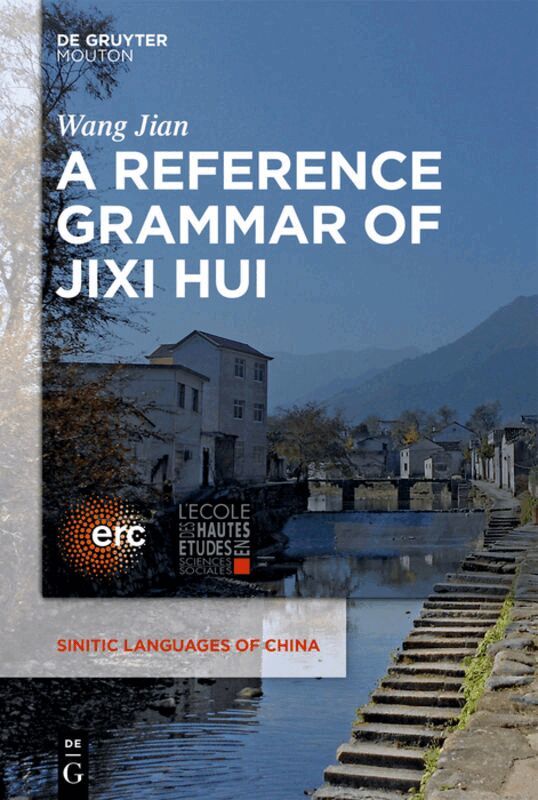
Sinitic is a branch of the Sino-Tibetan language family, consisting of thousands of local language varieties, many of which are not mutually intelligible. This book sets out to give a comprehensive and systematic description of one of these: the Jixi language. It focusses on the Shangzhuang variety and is spoken in the mountainous Jixi county in the southern Anhui province, China. It is a language of a much debated affiliation, wedged in between the Wu, Gan and Southern Mandarin areas. Basic linguistic theory is used as the main theoretical framework to provide a detailed description of the language's phonological and grammatical systems. In writing this grammar, the author has principally relied on fieldwork data collected in Shangzhuang during the years 2010-2018. This book is the first comprehensive grammar of a Hui language and will undoubtedly be of interest to linguists wishing to learn more about the many understudied varieties of Sinitic languages.
2 416 kr
Skickas inom 5-8 vardagar
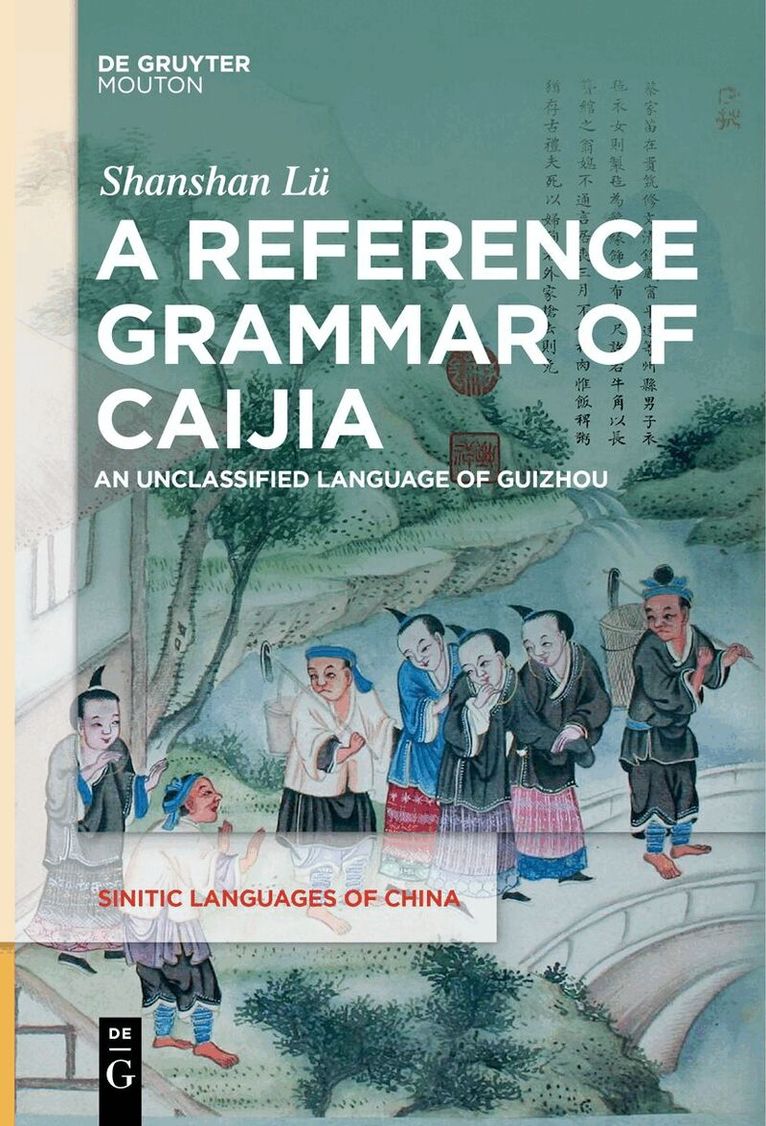
Caijia, [meŋ²¹ni³³ŋoŋ³³] ‘Caijia speech’, is an endangered language in the Sino-Tibetan family with less than 1000 speakers in Hezhang and Weining counties in northwest in Guizhou Province in Southwest China. Its sub-classification remains unclear. It was almost four decades ago when the Caijia language was officially reported for the first time in 1982 by the Language Team of Bureau of Ethnic Identification in Bijie, yet this language has nevertheless remained neither well-described nor studied. This book, a linguistic description of the Xingfa variety of Caijia based on the fieldwork data in Xingfa township of Hezhang county, is the first reference grammar of the Caijia language, covering its sound system, word formation, parts of speech and syntactic structures in fifteen chapters. Being analytic, Caijia presents many common grammatical features attested in East and Southeast Asian languages, for example, compounds, quadrisyllabic idiomatic expressions or elaborate expressions, lack of inflection, a classifier system, a strong relationship between nominalization and relativization, pro-drop and grammaticalization of verbs. Moreover, Caijia shares more similarities with Sinitic languages. Apart from these common areal features, this book will also reveal some special features of Caijia.
371 kr
Skickas inom 3-6 vardagar
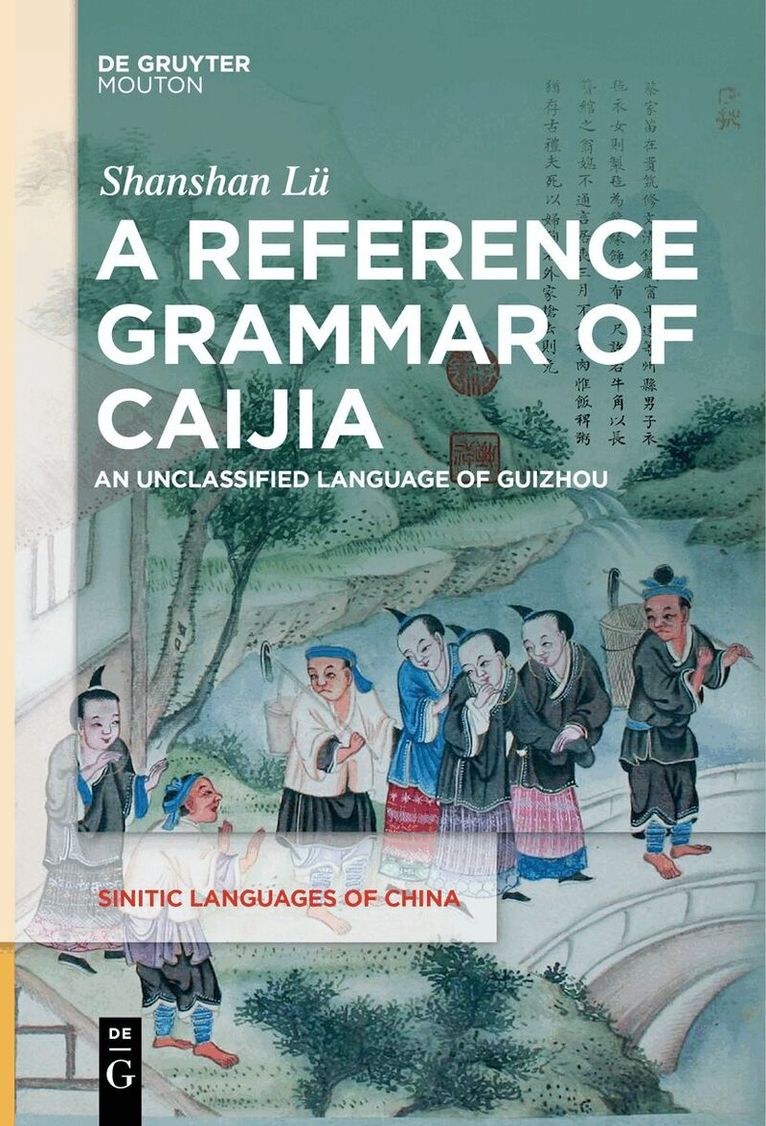
Caijia, [meŋ²¹ni³³ŋoŋ³³] ‘Caijia speech’, is an endangered language in the Sino-Tibetan family with less than 1000 speakers in Hezhang and Weining counties in northwest in Guizhou Province in Southwest China. Its sub-classification remains unclear. It was almost four decades ago when the Caijia language was officially reported for the first time in 1982 by the Language Team of Bureau of Ethnic Identification in Bijie, yet this language has nevertheless remained neither well-described nor studied. This book, a linguistic description of the Xingfa variety of Caijia based on the fieldwork data in Xingfa township of Hezhang county, is the first reference grammar of the Caijia language, covering its sound system, word formation, parts of speech and syntactic structures in fifteen chapters. Being analytic, Caijia presents many common grammatical features attested in East and Southeast Asian languages, for example, compounds, quadrisyllabic idiomatic expressions or elaborate expressions, lack of inflection, a classifier system, a strong relationship between nominalization and relativization, pro-drop and grammaticalization of verbs. Moreover, Caijia shares more similarities with Sinitic languages. Apart from these common areal features, this book will also reveal some special features of Caijia.