Social Disparities in Health and Health Care – serie
Visar alla böcker i serien Social Disparities in Health and Health Care. Handla med fri frakt och snabb leverans.
8 produkter
8 produkter
1 094 kr
Skickas inom 10-15 vardagar
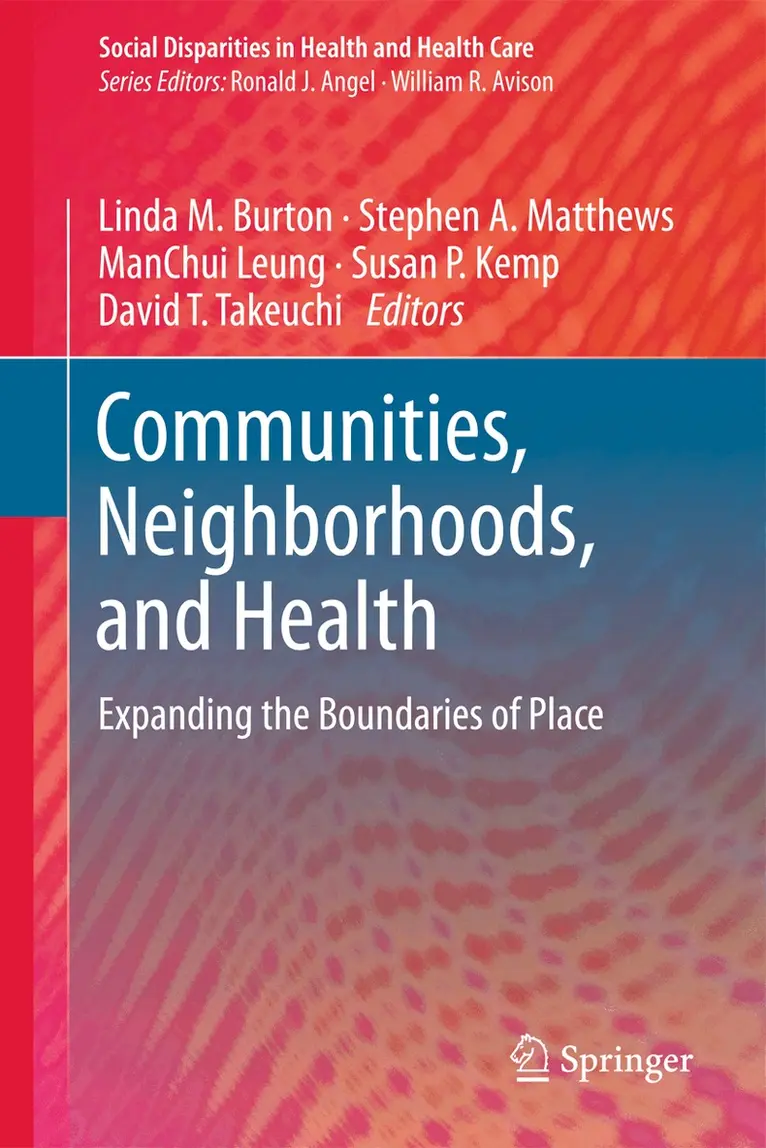
Place is an important element in understanding health and health care disparities. More that merely a geographic location, place is a socio-ecological force with detectable effects on social life, independent well-being, and health. Despite the general enthusiasm for the study of place and the potential it could have for a better understanding of the distribution of health in different communities, research is at a difficult crossroads because of disagreements in how the construct should be conceptualized and measured. This edited volume incorporates an cross-disciplinary approach to the study of place, in order to come up with a comprehensive and useful definition of place. Topics covered include: Social Inequalities, Historical Definitions of Place, Biology and Place, Rural vs. Urban Places, Racialization of a Place, Migration, Sacred Places, Technological Innovations An understanding of place is essential for health care professionals, as interventions often do not have the same effects in the clinic as they do in varied, naturalistic social settings.
1 032 kr
Skickas inom 10-15 vardagar
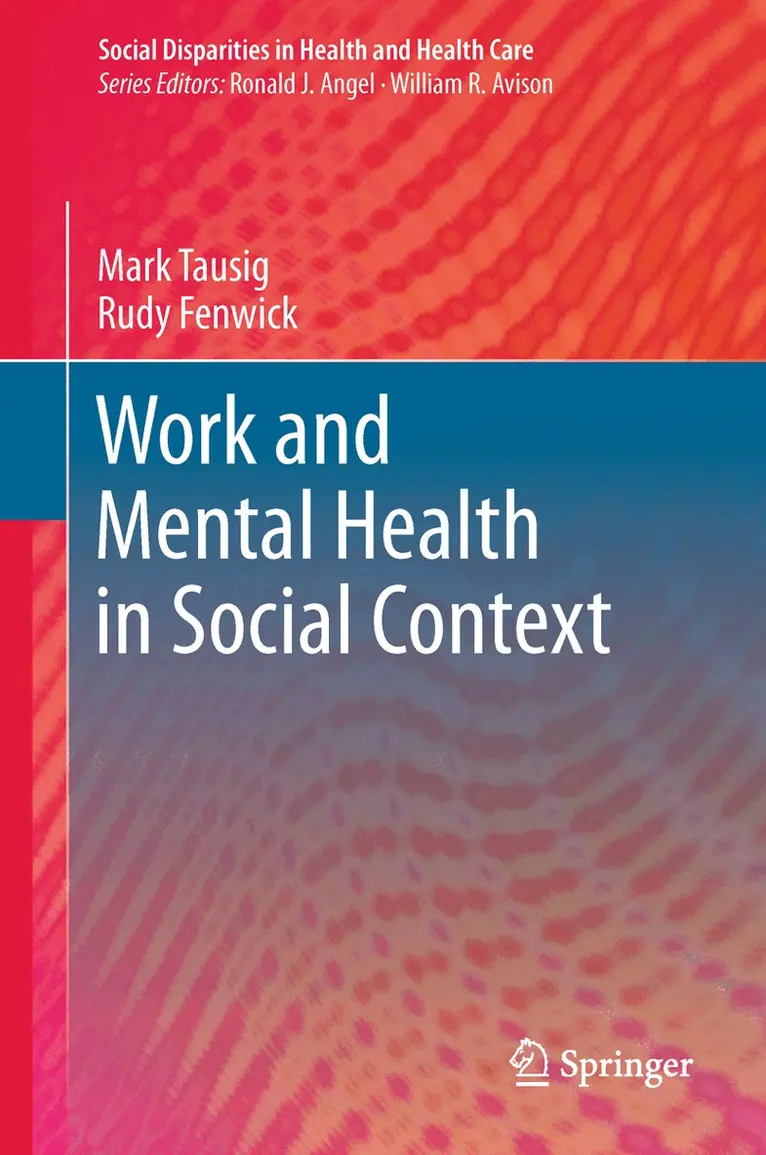
Anyone who has ever had a job has probably experienced work-related stress at some point or another. For many workers, however, job-related stress is experienced every day and reaches more extreme levels. Four in ten American workers say that their jobs are “very” or “extremely” stressful. Job stress is recognized as an epidemic in the workplace, and its economic and health care costs are staggering: by some estimates over $ 1 billion per year in lost productivity, absenteeism and worker turnover, and at least that much in treating its health effects, ranging from anxiety and psychological depression to cardiovascular disease and hypertension.Why are so many American workers so stressed out by their jobs? Many psychologists say stress is the result of a mismatch between the characteristics of a job and the personality of the worker. Many management consultants propose reducing stress by “redesigning” jobs and developing better individual strategies for “coping” with their stress. But, these explanations are not the whole story. They don’t explain why some jobs and some occupations are more stressful than other jobs and occupations, regardless of the personalities and “coping strategies” of individual workers. Why do auto assembly line workers and air traffic controllers report more job stress than university professors, self-employed business owners, or corporate managers (yes, managers!)? The authors of Work and Mental Health in Social Context take a different approach to understanding the causes of job stress. Job stress is systematically created by the characteristics of the jobs themselves: by the workers’ occupation, the organizations in which they work, their placements in different labor markets, and by broader social, economic and institutional structures, processes and events. And disparities in job stress aresystematically determined in much the same way as are other disparities in health, income, and mobility opportunities. In taking this approach, the authors draw on the observations and insights from a diverse field of sociological and economic theories and research. These go back to the nineteenth century writings of Marx, Weber and Durkheim on the relationship between work and well-being. They also include the more contemporary work in organizational sociology, structural labor market research from sociology and economics, research on unemployment and economic cycles, and research on institutional environments. This has allowed the authors to develop a unified framework that extends sociological models of income inequality and “status” attainment (or allocation) to the explanation of non-economic, health-related outcomes of work. Using a multi-level structural model, this timely and comprehensive volume explores what is stressful about work, and why; specifically address these and questions and more:-What characteristics of jobs are the most stressful; what characteristics reduce stress?-Why do work organizations structure some jobs to be highly stressful and some jobs to be much less stressful? Is work in a bureaucracy really more stressful?-How is occupational “status” occupational “power” and “authority” related to the stressfulness of work?-How does the “segmentation” of labor markets by occupation, industry, race, gender, and citizenship maintain disparities in job stress?- Why is unemployment stressful to workers who don’t lose their jobs? -How do public policies on employment status, collective bargaining, overtime affect job stress?-Is work in the current “Post (neo) Fordist” era of work more or less stressful than work during the “Fordist” era? In addition to providing a new way to understand the sociological causes of job stress and mentalhealth, the model that the authors provide has broad applications to further study of this important area of research. This volume will be of key interest to sociologists and other researchers studying social stratification, public health, political economy, institutional and organizational theory.
1 094 kr
Skickas inom 10-15 vardagar
Place is an important element in understanding health and health care disparities. More that merely a geographic location, place is a socio-ecological force with detectable effects on social life, independent well-being, and health. Despite the general enthusiasm for the study of place and the potential it could have for a better understanding of the distribution of health in different communities, research is at a difficult crossroads because of disagreements in how the construct should be conceptualized and measured. This edited volume incorporates an cross-disciplinary approach to the study of place, in order to come up with a comprehensive and useful definition of place. Topics covered include: Social Inequalities, Historical Definitions of Place, Biology and Place, Rural vs. Urban Places, Racialization of a Place, Migration, Sacred Places, Technological Innovations An understanding of place is essential for health care professionals, as interventions often do not have the same effects in the clinic as they do in varied, naturalistic social settings.
1 032 kr
Skickas inom 10-15 vardagar
Anyone who has ever had a job has probably experienced work-related stress at some point or another. For many workers, however, job-related stress is experienced every day and reaches more extreme levels. Four in ten American workers say that their jobs are “very” or “extremely” stressful. Job stress is recognized as an epidemic in the workplace, and its economic and health care costs are staggering: by some estimates over $ 1 billion per year in lost productivity, absenteeism and worker turnover, and at least that much in treating its health effects, ranging from anxiety and psychological depression to cardiovascular disease and hypertension.Why are so many American workers so stressed out by their jobs? Many psychologists say stress is the result of a mismatch between the characteristics of a job and the personality of the worker. Many management consultants propose reducing stress by “redesigning” jobs and developing better individual strategies for “coping” with their stress. But, these explanations are not the whole story. They don’t explain why some jobs and some occupations are more stressful than other jobs and occupations, regardless of the personalities and “coping strategies” of individual workers. Why do auto assembly line workers and air traffic controllers report more job stress than university professors, self-employed business owners, or corporate managers (yes, managers!)? The authors of Work and Mental Health in Social Context take a different approach to understanding the causes of job stress. Job stress is systematically created by the characteristics of the jobs themselves: by the workers’ occupation, the organizations in which they work, their placements in different labor markets, and by broader social, economic and institutional structures, processes and events. And disparities in job stress aresystematically determined in much the same way as are other disparities in health, income, and mobility opportunities. In taking this approach, the authors draw on the observations and insights from a diverse field of sociological and economic theories and research. These go back to the nineteenth century writings of Marx, Weber and Durkheim on the relationship between work and well-being. They also include the more contemporary work in organizational sociology, structural labor market research from sociology and economics, research on unemployment and economic cycles, and research on institutional environments. This has allowed the authors to develop a unified framework that extends sociological models of income inequality and “status” attainment (or allocation) to the explanation of non-economic, health-related outcomes of work. Using a multi-level structural model, this timely and comprehensive volume explores what is stressful about work, and why; specifically address these and questions and more:-What characteristics of jobs are the most stressful; what characteristics reduce stress?-Why do work organizations structure some jobs to be highly stressful and some jobs to be much less stressful? Is work in a bureaucracy really more stressful?-How is occupational “status” occupational “power” and “authority” related to the stressfulness of work?-How does the “segmentation” of labor markets by occupation, industry, race, gender, and citizenship maintain disparities in job stress?- Why is unemployment stressful to workers who don’t lose their jobs? -How do public policies on employment status, collective bargaining, overtime affect job stress?-Is work in the current “Post (neo) Fordist” era of work more or less stressful than work during the “Fordist” era? In addition to providing a new way to understand the sociological causes of job stress and mentalhealth, the model that the authors provide has broad applications to further study of this important area of research. This volume will be of key interest to sociologists and other researchers studying social stratification, public health, political economy, institutional and organizational theory.
Health Inequities Related to Intimate Partner Violence Against Women
The Role of Social Policy in the United States, Germany, and Norway
Inbunden, Engelska, 2016
550 kr
Skickas inom 10-15 vardagar
This book examines the extent to which social position impacts exposure to intimate partner violence (IPV) and whether women with IPV exposure are more vulnerable to social inequities in health. At the intersection of sociological theories on health, gender, and policy, this book explores these issues against the social policy contexts of the United States, Germany, and Norway. It applies a conceptual framework which argues that differential exposure to IPV and differential vulnerability to poor health are two primary mechanisms driving health inequities for IPV survivors. Empirical analysis reveals context-specific nuances in the interactions of social position and IPV exposure in their impact on health, and suggests that encouraging women’s economic independence and ensuring access to health care are vital policy intervention points for reducing the health inequities of IPV survivors. This book offers a cross-national comparative look at the role of social policy in the lives of IPVsurvivors, highlighting the effects of various policy approaches in three modern welfare states and suggesting policy implications.
Understanding the HIV/AIDS Epidemic in the United States
The Role of Syndemics in the Production of Health Disparities
Inbunden, Engelska, 2016
1 419 kr
Skickas inom 10-15 vardagar
This book examines the HIV/AIDS epidemic in the United States using the concept of syndemics to contextualize the risk of both well-known, and a few lesser-known, subpopulations that experience disproportionately high rates of HIV and/or AIDS within the United States. Since discovery, HIV/AIDS has exposed a number of social, psychological, and biological aspects of disease transmission. The concept of “syndemics,” or “synergistically interacting epidemics” has emerged as a powerful framework for understanding both the epidemiological patterns and the myriad of problems associated with HIV/AIDS around the world and within the United States. The book considers the disparities in HIV/AIDS in relation to social aspects, risk behavior and critical illness comorbidities. It updates and enhances our understanding of the HIV/AIDS epidemic in the United States and contributes to the expanding literature on the role of syndemics in shaping the public’s health.
Health Inequities Related to Intimate Partner Violence Against Women
The Role of Social Policy in the United States, Germany, and Norway
Häftad, Engelska, 2018
550 kr
Skickas inom 10-15 vardagar
This book examines the extent to which social position impacts exposure to intimate partner violence (IPV) and whether women with IPV exposure are more vulnerable to social inequities in health.
Understanding the HIV/AIDS Epidemic in the United States
The Role of Syndemics in the Production of Health Disparities
Häftad, Engelska, 2018
1 419 kr
Skickas inom 10-15 vardagar
This book examines the HIV/AIDS epidemic in the United States using the concept of syndemics to contextualize the risk of both well-known, and a few lesser-known, subpopulations that experience disproportionately high rates of HIV and/or AIDS within the United States.