Law, Society and Policy - Böcker
Visar alla böcker i serien Law, Society and Policy. Handla med fri frakt och snabb leverans.
6 produkter
6 produkter
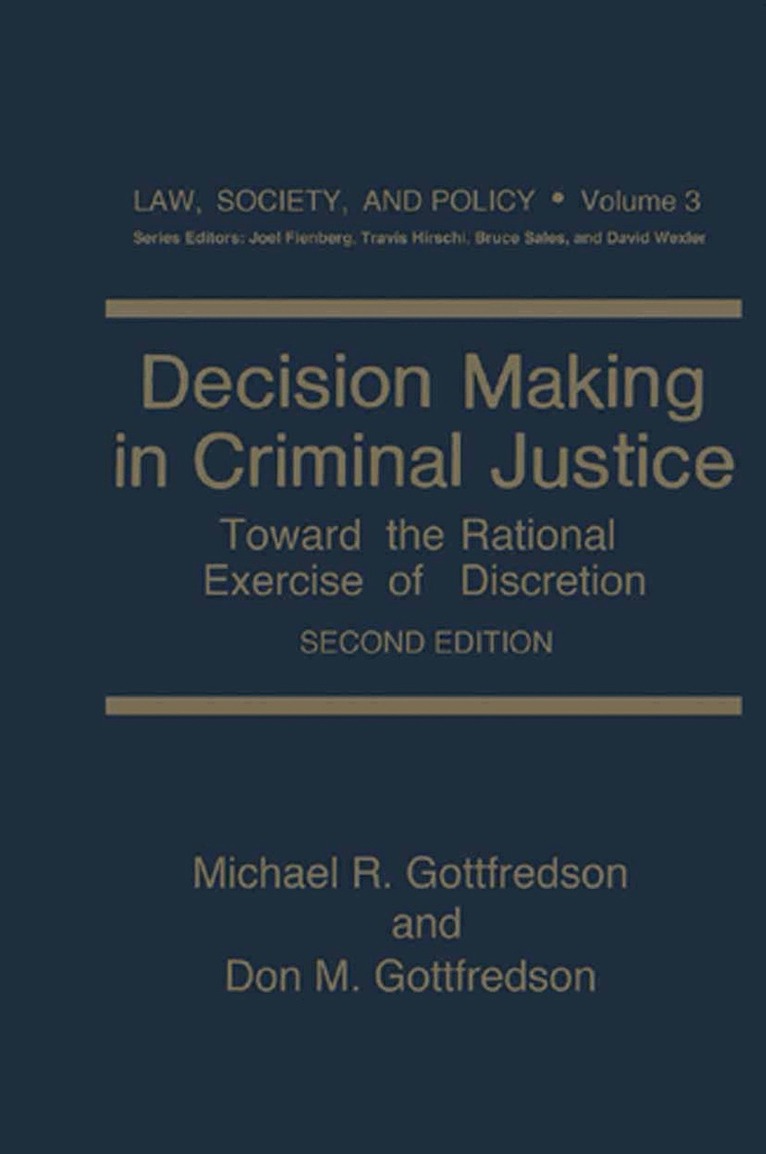
Decision Making in Criminal Justice
Toward the Rational Exercise of Discretion
Inbunden, Engelska, 1987
1 905 kr
Skickas inom 10-15 vardagar
The study of decisions in the criminal justice process provides a useful focus for the examination of many fundamental aspects of criminal jus tice. These decisions are not always highly visible. They are made, or dinarily, within wide areas of discretion. The aims of the decisions are not always clear, and, indeed, the principal objectives of these decisions are often the subject of much debate. Usually they are not guided by explicit decision policies. Often the participants are unable to verbalize the basis for the selection of decision alternatives. Adequate information for the decisions is usually unavailable. Rarely can the decisions be demonstrated to be rational. By a rationaldecision we mean "that decision among those possible for the decisionmaker which, in the light of the information available, maximizes the probability of the achievement of the purpose of the decisionmaker in that specific and particular case" (Wilkins, 1974a: 70; also 1969). This definition, which stems from statistical decision theory, points to three fundamental characteristics of decisions. First, it is as sumed that a choice of possible decisions (or, more precisely, of possible alternatives) is available. If only one choice is possible, there is no de cision problem, and the question of rationality does not arise. Usually, of course, there will be a choice, even if the alternative is to decide not to decide-a choice that, of course, often has profound consequences.
1 636 kr
Skickas inom 10-15 vardagar
Legal realism is a powerful jurisprudential tradition which urges attention to sodal conditions and predicts their influence in the legal process. The rela tively recent "sodal sdence in the law" phenomenon, in which sodal research is increasingly relied on to dedde court cases is a direct result of realistic jurisprudence, which accords much significance in law to empirical reports about sodal behavior. The empirical research used by courts has not, how ever, commonly dealt with language as an influential variable. This volume of essays, coedited by Judith N. Levi and Anne Graffam Walker, will likely change that situation. Language in the Judicial Process is a superb collection of original work which fits weIl into the realist tradition, and by focusing on language as a key variable, it establishes a new and provocative perspective on the legal process. The perspective it offers, and the data it presents, make this volume a valuable source of information both for judges and lawyers, who may be chiefly concemed with practice, and for legal scholars and sodal sdentists who do basic research about law.
519 kr
Skickas inom 10-15 vardagar
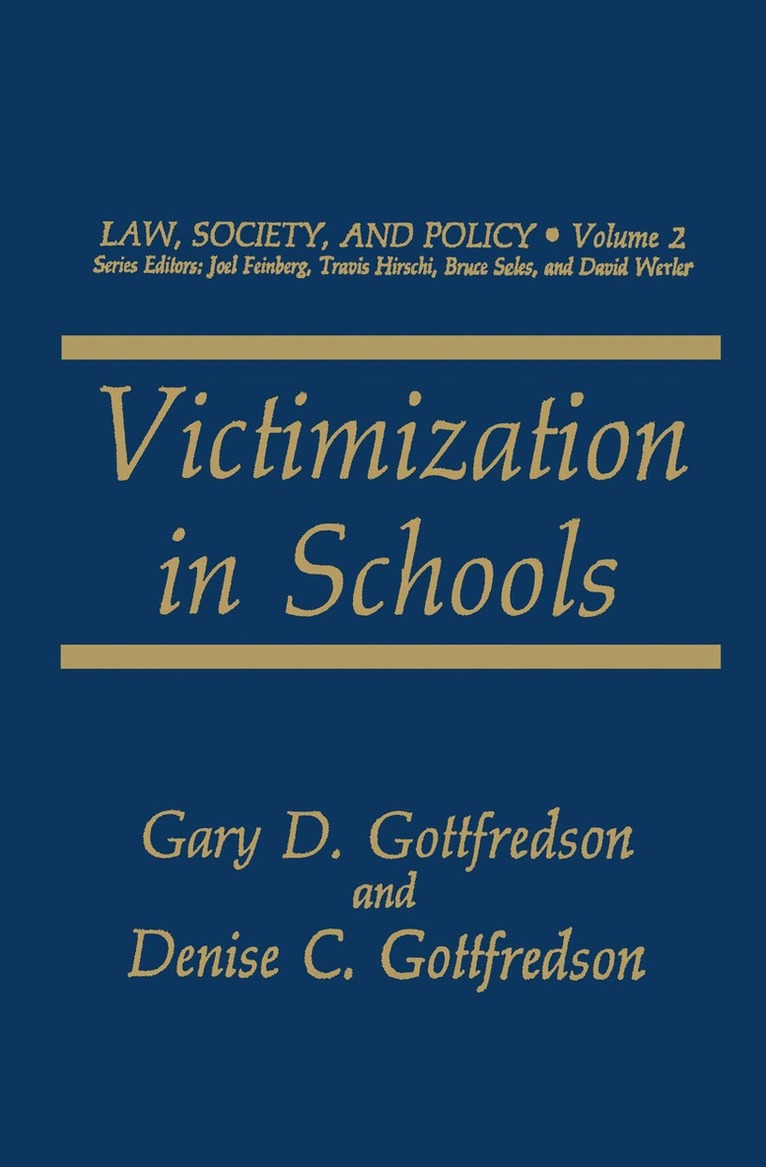
The perception that our nation's public schools are disorderly and unsafe is widespread, and the image of the public school is deteriorating. Since 1974, the Gallup organization has gathered opinions about the public schools. The percentage giving the schools an "A" rating declined from 18% to 6% between 1974 and 1983 (Gallup, 1974, 1984). In a recent survey of America's teenagers, only 9% gave the schools an "A" rating (Bahner, 1980, p. 106). Lack of discipline tops the list of the problems adults see facing schools, and class disturbances and theft are reported by teenagers to be "very big" or "fairly big" problems in their schools (Bahner, 1980, p. 107). These public perceptions are fostered by and reflected in national media attention ("City Schools in Crisis," 1977; "Help! Teacher Can't Teach!" 1980; "High Schools under Fire," 1977). Public concern is also reflected in Congressional hearings where testimony creates the image of grave disorder within our schools (U.s. Senate, Committee on the Judiciary, 1975, 1976b; U.s. House of Representatives, Subcommittee on Elementary, Secondary, and Vocational Education, 1980). The public has given the schools low marks, and the Senate Judiciary Committee (1975) gave the schools an" A" in violence and vandalism. In short, parents, students, and public officials are alarmed at what they see as a rising tide of violence and disorder in the schools and are concerned about how much learning can occur in a disruptive environ ment, and about the safety of teachers and students.
519 kr
Skickas inom 10-15 vardagar
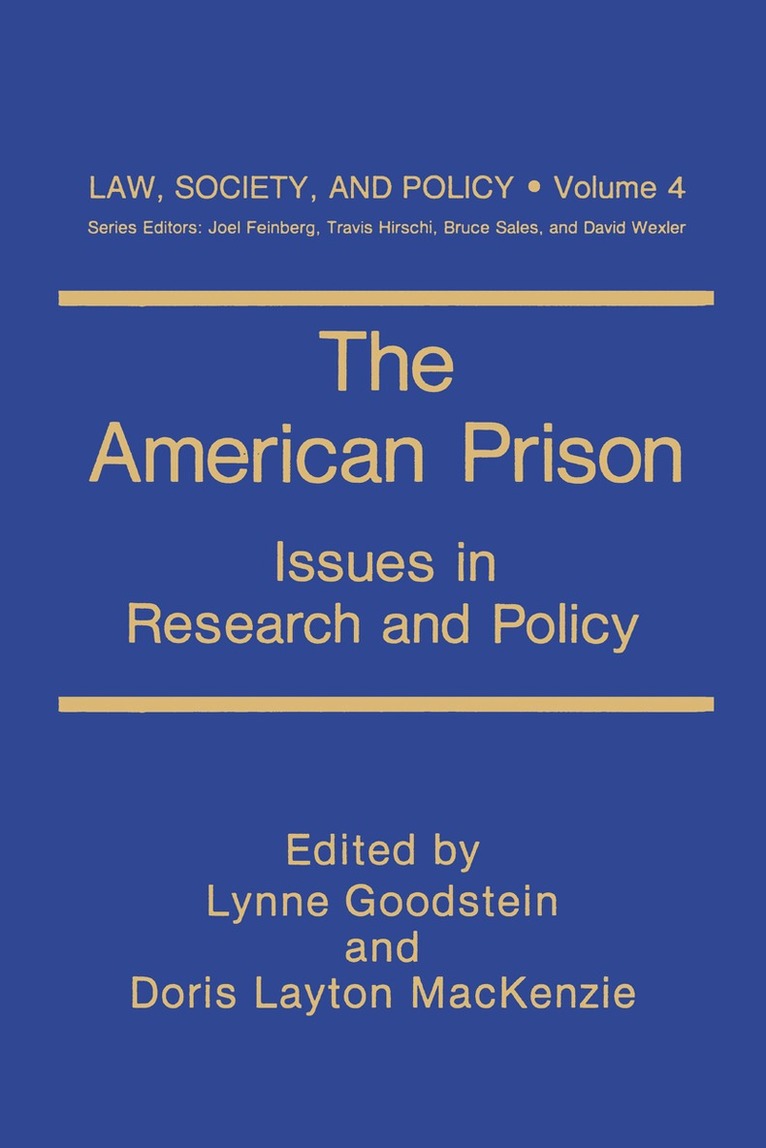
Despite the dire forecasts of others who had themselves edited books, we proceeded with the project of an edited volume on the American prison, although with more than a little trepidation. We had heard the horror stories of authors turning in their chapters months or years late or never at all, of publishers delaying publication dates, of volumes that read more like patchwork quilts than finely loomed cloth. As if to prove the others wrong, our experience in editing this volume has been mar velous, and we think the volume reflects this. Most likely, the success of our experience and of the volume stems from two elements: first, the professionalism and commitment of the authors themselves; and second, the fact that early in the life of this volume, most of the authors convened for a conference to critique and coordinate the chapters. This book brings together an illustrious group of criminologists and correctional scholars who wrote chapters explicitly for this volume. Co hesiveness was furthered by the charge we gave to each author to (1) present the major issues, (2) review the empirical research, and (3) dis cuss the implications of this work for present and future correctional policy. The goal of this project was to examine the major correctional issues facing prison systems. The chapters scrutinize the issues from the perspective of the system and the individual, from theory to practical and daily management problems, from legal to psychological concerns.
1 694 kr
Skickas inom 10-15 vardagar
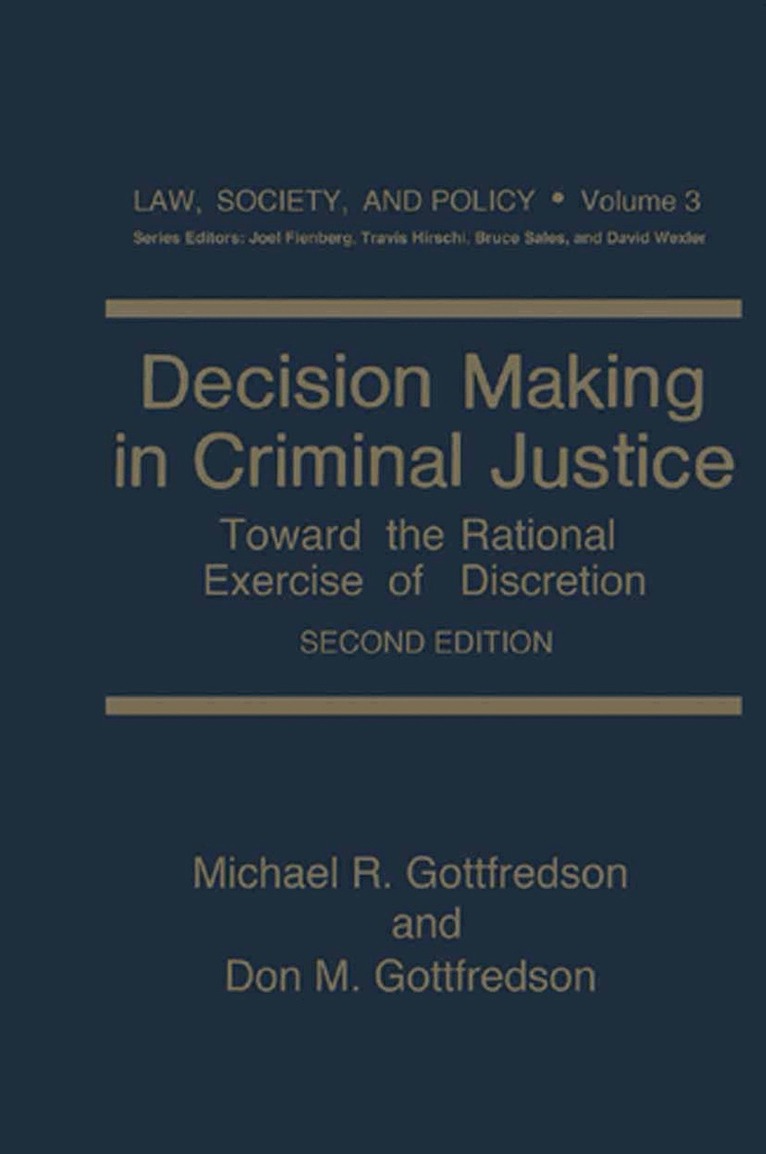
The study of decisions in the criminal justice process provides a useful focus for the examination of many fundamental aspects of criminal jus tice. These decisions are not always highly visible. They are made, or dinarily, within wide areas of discretion. The aims of the decisions are not always clear, and, indeed, the principal objectives of these decisions are often the subject of much debate. Usually they are not guided by explicit decision policies. Often the participants are unable to verbalize the basis for the selection of decision alternatives. Adequate information for the decisions is usually unavailable. Rarely can the decisions be demonstrated to be rational. By a rationaldecision we mean "that decision among those possible for the decisionmaker which, in the light of the information available, maximizes the probability of the achievement of the purpose of the decisionmaker in that specific and particular case" (Wilkins, 1974a: 70; also 1969). This definition, which stems from statistical decision theory, points to three fundamental characteristics of decisions. First, it is as sumed that a choice of possible decisions (or, more precisely, of possible alternatives) is available. If only one choice is possible, there is no de cision problem, and the question of rationality does not arise. Usually, of course, there will be a choice, even if the alternative is to decide not to decide-a choice that, of course, often has profound consequences.
1 589 kr
Skickas inom 10-15 vardagar
Legal realism is a powerful jurisprudential tradition which urges attention to sodal conditions and predicts their influence in the legal process. The rela tively recent "sodal sdence in the law" phenomenon, in which sodal research is increasingly relied on to dedde court cases is a direct result of realistic jurisprudence, which accords much significance in law to empirical reports about sodal behavior. The empirical research used by courts has not, how ever, commonly dealt with language as an influential variable. This volume of essays, coedited by Judith N. Levi and Anne Graffam Walker, will likely change that situation. Language in the Judicial Process is a superb collection of original work which fits weIl into the realist tradition, and by focusing on language as a key variable, it establishes a new and provocative perspective on the legal process. The perspective it offers, and the data it presents, make this volume a valuable source of information both for judges and lawyers, who may be chiefly concemed with practice, and for legal scholars and sodal sdentists who do basic research about law.