South Asian Intellectual History – serie
Visar alla böcker i serien South Asian Intellectual History. Handla med fri frakt och snabb leverans.
5 produkter
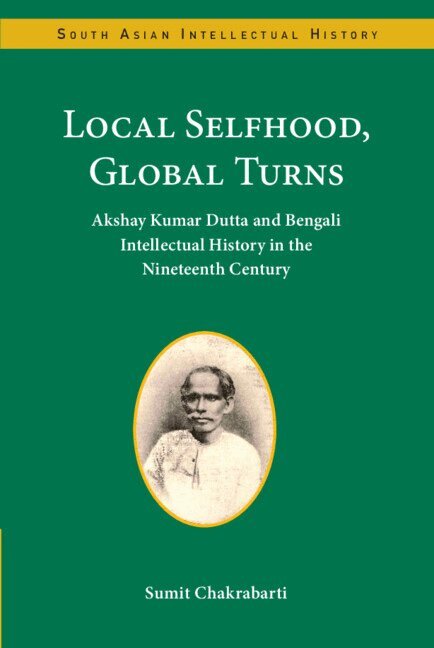
Local Selfhood, Global Turns
Akshay Kumar Dutta and Bengali Intellectual History in the Nineteenth Century
Inbunden, 2024
1442 kr
Lägg i varukorg
The book examines the works of Akshay Kumar Dutta (1820-1886), who can be seen as ideologically inhabiting the cusp between religion and rationalism - the two most crucial avenues of debate and discussion in the public sphere in nineteenth-century Bengal. While nineteenth-century Bengal has been an …
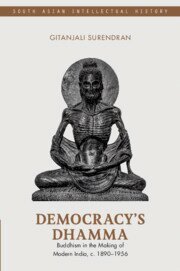
Democracy's Dhamma
Buddhism in the Making of Modern India, c. 1890–1956
Inbunden, 2025
1481 kr
Lägg i varukorg
In 1956, B. R. Ambedkar publicly converted to Buddhism raising questions about his turn from constitutionalism to religion. The answer lies in Buddhism itself. In the late colonial era, the struggle to produce an appropriate Buddhism for a nation-in-the-making reveals a secret history foundational …
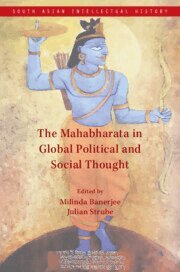
Mahabharata in Global Political and Social Thought
Av Milinda Banerjee, Julian Strube
Inbunden, 2025
1526 kr
Lägg i varukorg
The ancient Indian epic, Mahabharata, was first composed in Sanskrit and then rendered into Indian vernaculars and other Asian and European languages. This book demonstrates how the epic has shaped the birth of modern politics and thought across India, Europe, Japan, China, Thailand, Iran, and the …
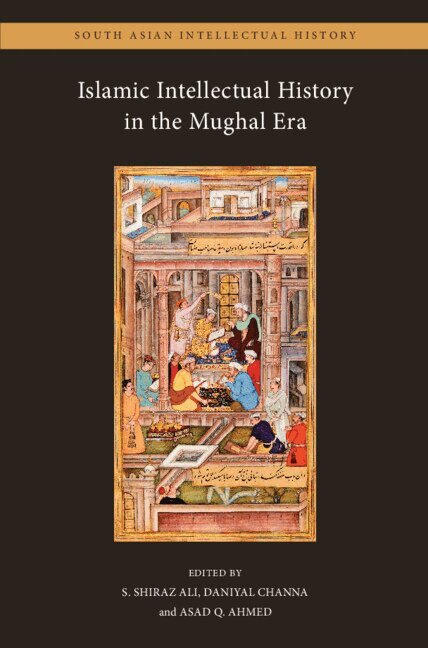
Islamic Intellectual History in the Mughal Era: Volume 1
Av S. Shiraz Ali, Daniyal Channa m. fl.
Häftad, 2026
401 kr
Kommande
Islamic Intellectual History in the Mughal Era brings together new scholarship on the rich and varied intellectual life of the Mughal world, challenging long-standing narratives of decline and dichotomies such as orthodoxy versus heterodoxy. Spanning disciplines including philosophy, logic, …
Islamic Intellectual History in the Mughal Era: Volume 1
Av S. Shiraz Ali, Daniyal Channa m. fl.
Inbunden, 2026
1266 kr
Lägg i varukorg
Islamic Intellectual History in the Mughal Era brings together new scholarship on the rich and varied intellectual life of the Mughal world, challenging long-standing narratives of decline and dichotomies such as orthodoxy versus heterodoxy. Spanning disciplines including philosophy, logic, …