Imperial Transformations – Russian, Soviet and Post-Soviet History - Böcker
Visar alla böcker i serien Imperial Transformations – Russian, Soviet and Post-Soviet History. Handla med fri frakt och snabb leverans.
8 produkter
8 produkter
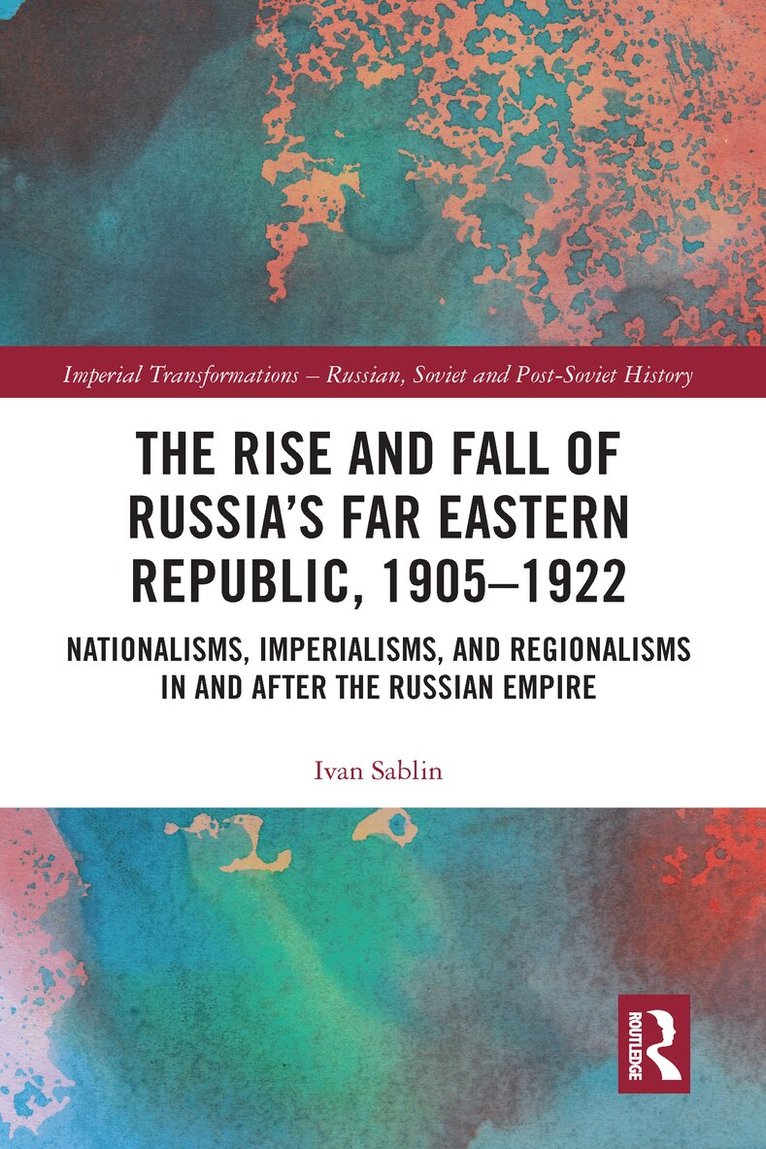
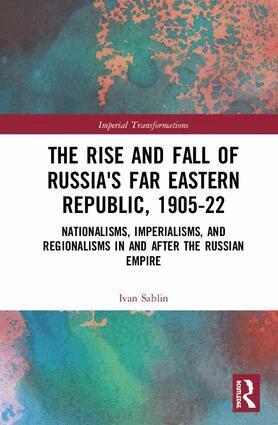
Rise and Fall of Russia's Far Eastern Republic, 1905–1922
Nationalisms, Imperialisms, and Regionalisms in and after the Russian Empire
Häftad, Engelska, 2020
665 kr
Skickas inom 10-15 vardagar
The Russian Far East was a remarkably fluid region in the period leading up to, during, and after the Russian Revolution. The different contenders in play in the region, imagining and working toward alternative futures, comprised different national groups, including Russians, Buryat-Mongols, Koreans, and Ukrainians; different imperialist projects, including Japanese and American attempts to integrate the region into their political and economic spheres of influence as well as the legacies of Russian expansionism and Bolshevik efforts to export the revolution to Mongolia, Korea, China, and Japan; and various local regionalists, who aimed for independence or strong regional autonomy for distinct Siberian and Far Eastern communities and whose efforts culminated in the short-lived Far Eastern Republic of 1920–1922. The Rise and Fall of Russia’s Far Eastern Republic, 1905–1922 charts developments in the region, examines the interplay of the various forces, and explains how a Bolshevik version of state-centered nationalism prevailed.
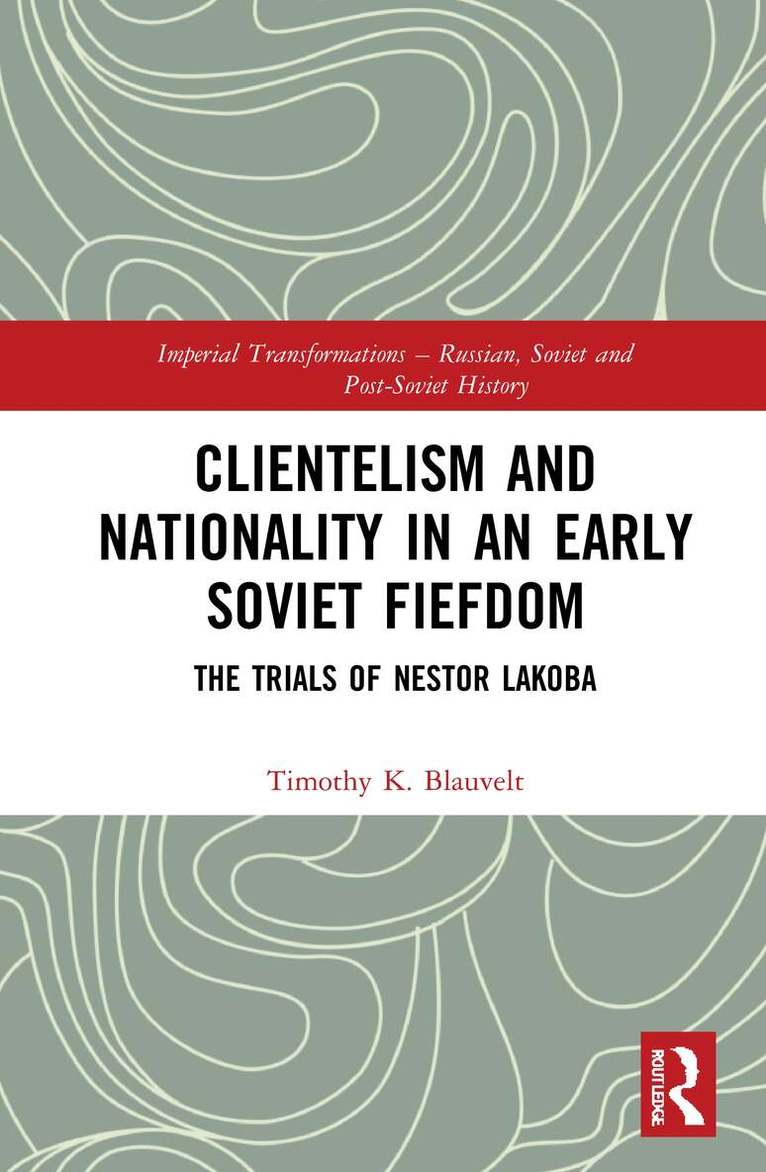
Clientelism and Nationality in an Early Soviet Fiefdom
The Trials of Nestor Lakoba
Inbunden, Engelska, 2021
2 176 kr
Skickas inom 10-15 vardagar
Based on extensive original research, this book tells the astonishing story of early Soviet Abkhazia and of its leader, the charismatic Bolshevik revolutionary Nestor Lakoba. A tiny republic on the Black Sea coast of the USSR, Abkhazia became a vacation retreat for Party leaders and a major producer of tobacco. Nestor Lakoba became the unquestioned boss of Abkhazia, constructing a powerful local ethnic "machine" that became an influential component of Soviet patronage politics, provoking along the way accusations of nepotism, corruption, blood feuds, embezzlement, racketeering, and extrajudicial murder on a scale that shocked even hardened Communist Party investigators. Lakoba and his group faced a series of trials, investigatory commissions, and tribunals over allegations of malfeasance, yet they were repeatedly able to convince their powerful patrons of their irreplaceability, until at last they were destroyed through a public show trial during the peak of the Stalinist Terror. Through the prism of tiny Abkhazia, this book provides invaluable insights into the nature of the early Soviet system and the governance of Soviet national republics.
Clientelism and Nationality in an Early Soviet Fiefdom
The Trials of Nestor Lakoba
Häftad, Engelska, 2023
595 kr
Skickas inom 10-15 vardagar
Based on extensive original research, this book tells the astonishing story of early Soviet Abkhazia and of its leader, the charismatic Bolshevik revolutionary Nestor Lakoba. A tiny republic on the Black Sea coast of the USSR, Abkhazia became a vacation retreat for Party leaders and a major producer of tobacco. Nestor Lakoba became the unquestioned boss of Abkhazia, constructing a powerful local ethnic "machine" that became an influential component of Soviet patronage politics, provoking along the way accusations of nepotism, corruption, blood feuds, embezzlement, racketeering, and extrajudicial murder on a scale that shocked even hardened Communist Party investigators. Lakoba and his group faced a series of trials, investigatory commissions, and tribunals over allegations of malfeasance, yet they were repeatedly able to convince their powerful patrons of their irreplaceability, until at last they were destroyed through a public show trial during the peak of the Stalinist Terror. Through the prism of tiny Abkhazia, this book provides invaluable insights into the nature of the early Soviet system and the governance of Soviet national republics.
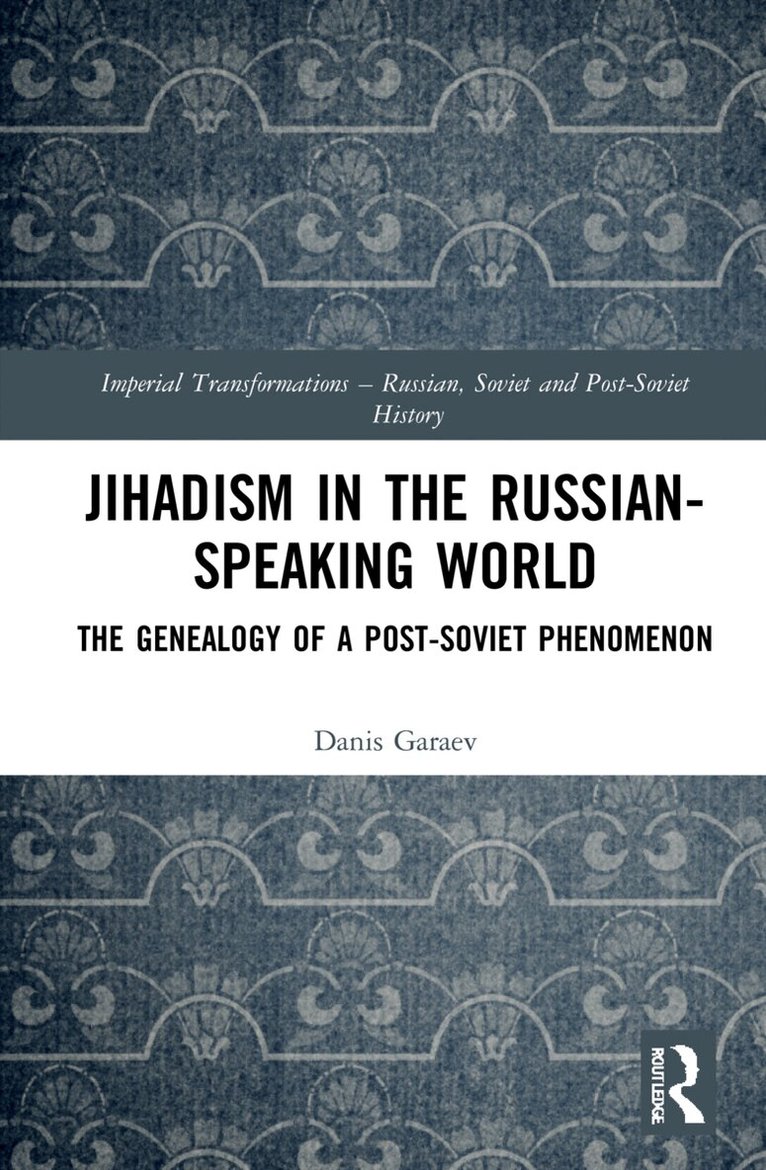
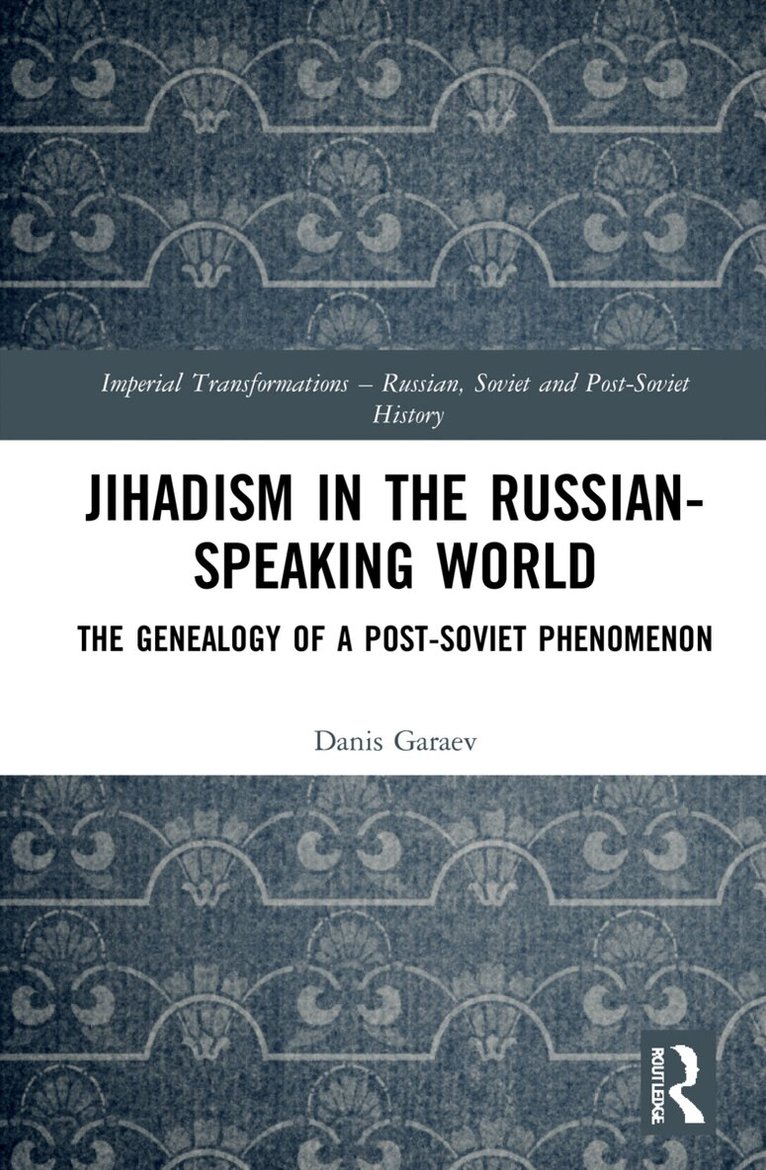
Jihadism in the Russian-Speaking World
The Genealogy of a Post-Soviet Phenomenon
Inbunden, Engelska, 2022
2 113 kr
Skickas inom 10-15 vardagar
This book contends that the discourses of jihadism in Russia's North Caucasus, and their offshoots in other parts of the Russian Federation, are not just reflections of jihadi ideologies that came from abroad, rather that post-Soviet jihadism is a phenomenon best understood when placed in the broader cultural environment in which it emerged, an environment which comprises the North Caucasus, the whole of Russia, and beyond. It examines how post-Soviet jihadism is also part of global processes, in this case, global jihadism, explores how post-Soviet jihadism bears the imprint of the preceding Soviet context especially in terms of symbols, discursive tools, interpretational frameworks, and dissemination strategies, and discusses how, ironically, Russian-speaking jihadism is an expansionist idea for uniting all Russian regions on a supra-ethnic principle, but an idea that was not born in Moscow or St. Petersburg. Overall, the book demonstrates that Russian-speaking jihadism is a completely new ideology, which nevertheless has its origins in the intellectual and cultural heritage of the Soviet era and in the broader trends of post-Soviet society and culture.
Jihadism in the Russian-Speaking World
The Genealogy of a Post-Soviet Phenomenon
Häftad, Engelska, 2024
578 kr
Skickas inom 10-15 vardagar
This book contends that the discourses of jihadism in Russia's North Caucasus, and their offshoots in other parts of the Russian Federation, are not just reflections of jihadi ideologies that came from abroad, rather that post-Soviet jihadism is a phenomenon best understood when placed in the broader cultural environment in which it emerged, an environment which comprises the North Caucasus, the whole of Russia, and beyond. It examines how post-Soviet jihadism is also part of global processes, in this case, global jihadism, explores how post-Soviet jihadism bears the imprint of the preceding Soviet context especially in terms of symbols, discursive tools, interpretational frameworks, and dissemination strategies, and discusses how, ironically, Russian-speaking jihadism is an expansionist idea for uniting all Russian regions on a supra-ethnic principle, but an idea that was not born in Moscow or St. Petersburg. Overall, the book demonstrates that Russian-speaking jihadism is a completely new ideology, which nevertheless has its origins in the intellectual and cultural heritage of the Soviet era and in the broader trends of post-Soviet society and culture.
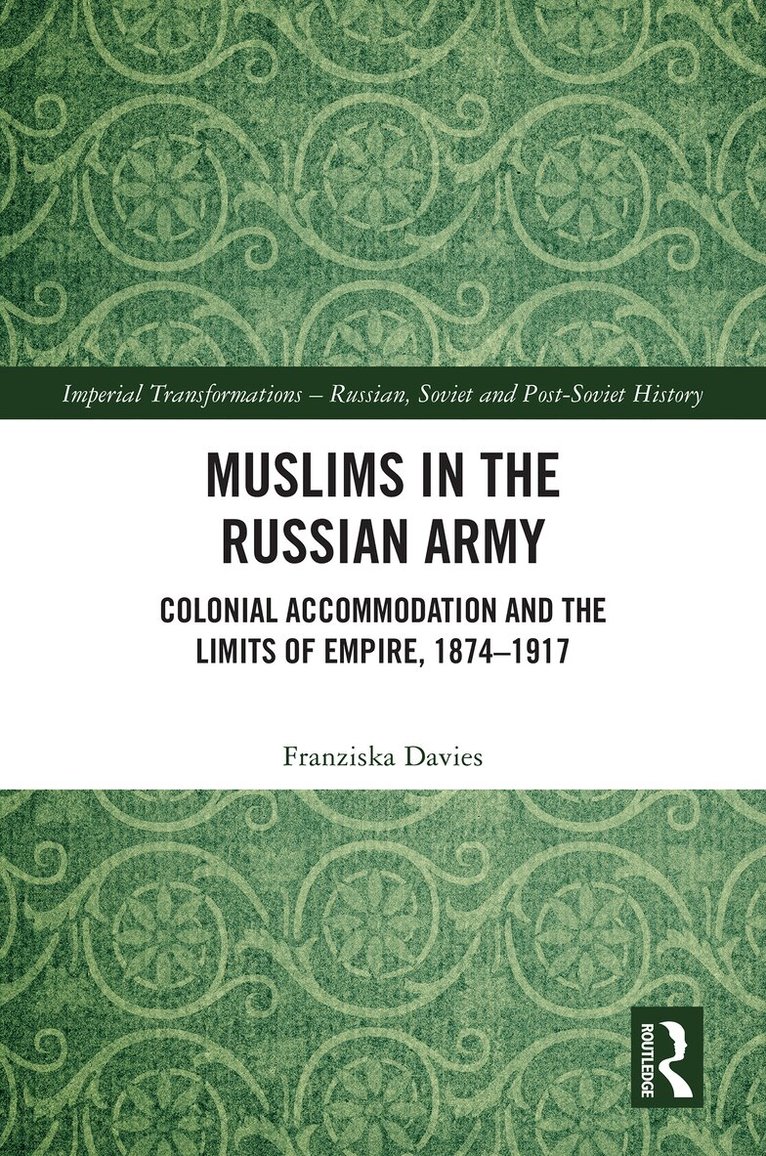
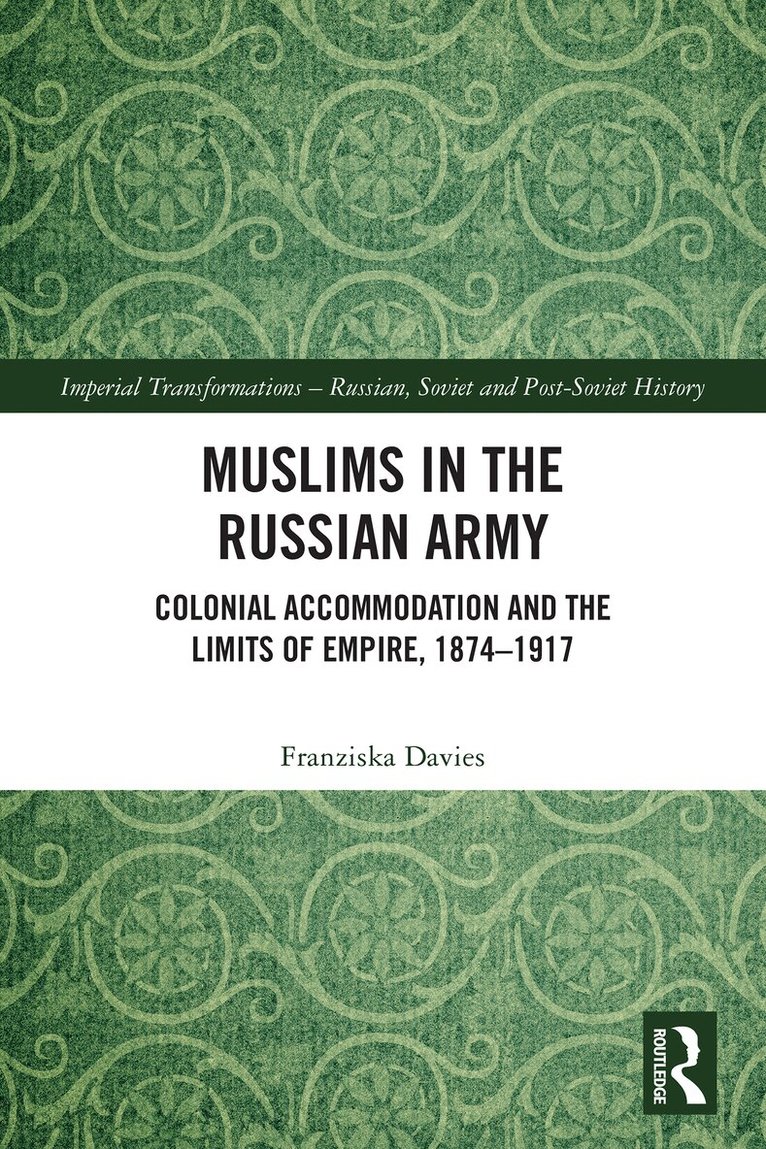
Muslims in the Russian Army
Colonial Accommodation and the Limits of Empire, 1874 –1917
Inbunden, Engelska, 2025
2 113 kr
Skickas inom 10-15 vardagar
Muslims in the Russian Army is the first comprehensive account of the tsarist army’s relationship to Muslim soldiers in late imperial Russia.When Russia mobilized her army in the summer of 1914 more than half a million of the soldiers recruited for the front were Muslims from the Volga-Ural region, that is present-day Tatarstan and Bashkortostan. They were the only ones among the millions of Muslim subjects of the tsar who were recruited into the regular army, despite the fact that universal liability to military service had been introduced in the Russian Empire in 1874. However, in practice, special regulations had been adopted for the Crimean Tatars, while the Muslim subjects of Central Asia and the Caucasus remained exempted, revealing the limited ability of the imperial state to extend the “Great Reforms” under Alexander II to its colonial peripheries. The book highlights the empire’s policies of accommodating the religious needs of Muslim soldiers in the army but argues that this should be understood as a form of colonial accommodation and not as an embrace of tolerance as has been done before. By not only reconstructing the perspectives of military and bureaucratic elites and the Muslim intelligentsia but also considering accounts written by Muslim soldiers, this book includes the voices of the colonized whose stories are still too often ignored in the historiography of the Russian Empire.This book is a valuable contribution to three much-debated fields of imperial and colonial history: the accommodation of religious and ethnic diversity, the impact of the state’s modernization projects, and the perception of imperial institutions by non-Russian subjects. It will be of interest to researchers in European History, Modern History, Military and Naval History, and Central Asian, Russian, and Eastern European Studies.
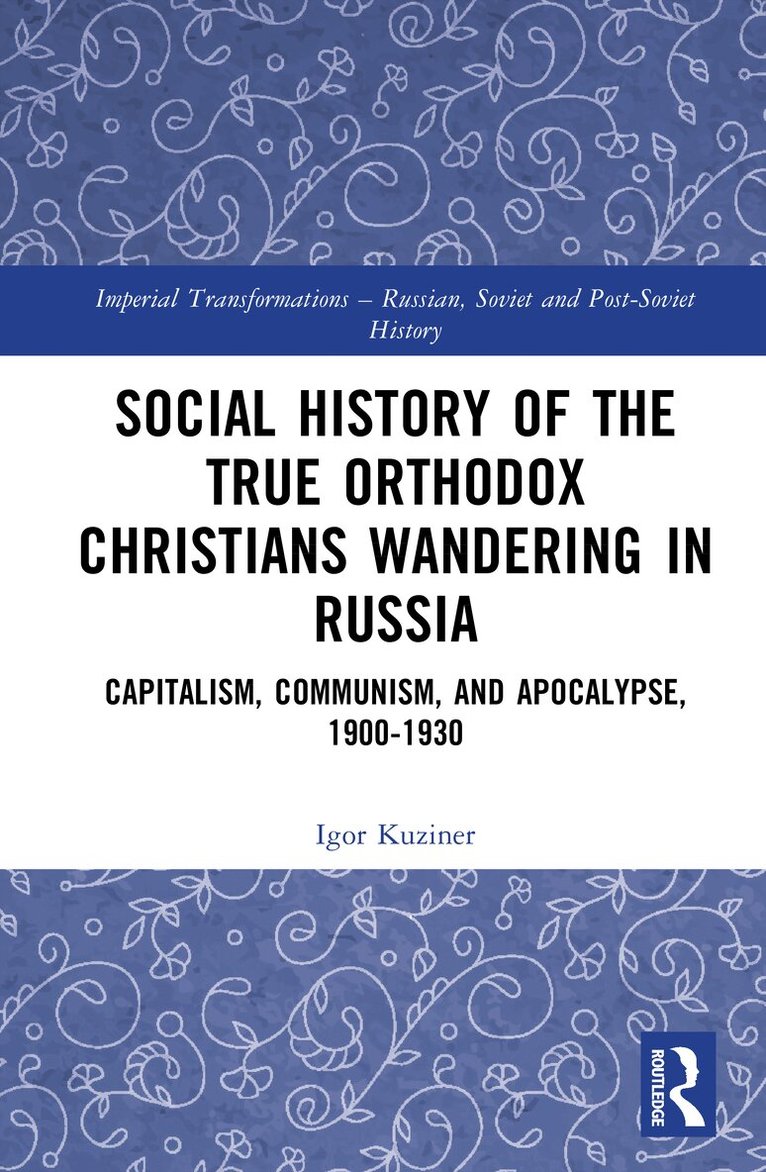
Social History of the True Orthodox Christians Wandering in Russia
Capitalism, Communism, and Apocalypse, 1900-1930
Inbunden, Engelska, 2025
2 113 kr
Skickas inom 10-15 vardagar
This book explores the social history of the radical religious community of Old Believer-Wanderers during the period of rapid Late Imperial, Early Soviet, and Stalinist modernization.The self-titled True Orthodox Christians believed the 17th-century reforms of the Russian Orthodox Church ushered in the reign of an invisible Antichrist. Rejecting the corrupted world, they advocated extreme asceticism — renouncing property, marriage, and all contact with the state. Yet, despite their apocalyptic ideology, the Wanderers thrived in Late Imperial and Early Soviet society, engaging in capitalism, pioneering agricultural cooperatives, and even participating in Stalinist repression. Focusing on three key figures, this book examines how these seemingly isolated millenarians adapted to rapid modernization — from imperial capitalism to Soviet revolution and Stalinist terror. Their surprising integration challenges assumptions about radical religious groups, revealing both the adaptability of fringe communities and the unexpected flexibility of modernizing regimes. Through their stories, this book offers new insights into the relationship between marginalized beliefs and societal transformation.This book offers a nuanced and realistic model of the social outcasts’ existence that recovers their agency and subjectivity from the layers of discursive projections by elite commentators. It is a significant contribution to the history of religion and popular religiosity in the Russian Empire and the early Soviet Union, and it presents a new and rare perspective on Russian modernity. It will be of interest to researchers in the fields of Russian history, Christianity, Orthodoxy, and the history of religion.
Rise and Fall of Russia's Far Eastern Republic, 1905–1922
Nationalisms, Imperialisms, and Regionalisms in and after the Russian Empire
Inbunden, Engelska, 2018
2 176 kr
Skickas inom 10-15 vardagar
The Russian Far East was a remarkably fluid region in the period leading up to, during, and after the Russian Revolution. The different contenders in play in the region, imagining and working toward alternative futures, comprised different national groups, including Russians, Buryat-Mongols, Koreans, and Ukrainians; different imperialist projects, including Japanese and American attempts to integrate the region into their political and economic spheres of influence as well as the legacies of Russian expansionism and Bolshevik efforts to export the revolution to Mongolia, Korea, China, and Japan; and various local regionalists, who aimed for independence or strong regional autonomy for distinct Siberian and Far Eastern communities and whose efforts culminated in the short-lived Far Eastern Republic of 1920–1922. The Rise and Fall of Russia’s Far Eastern Republic, 1905–1922 charts developments in the region, examines the interplay of the various forces, and explains how a Bolshevik version of state-centered nationalism prevailed.