Space Science Series - Böcker
Visar alla böcker i serien Space Science Series. Handla med fri frakt och snabb leverans.
5 produkter
5 produkter
387 kr
Skickas inom 7-10 vardagar
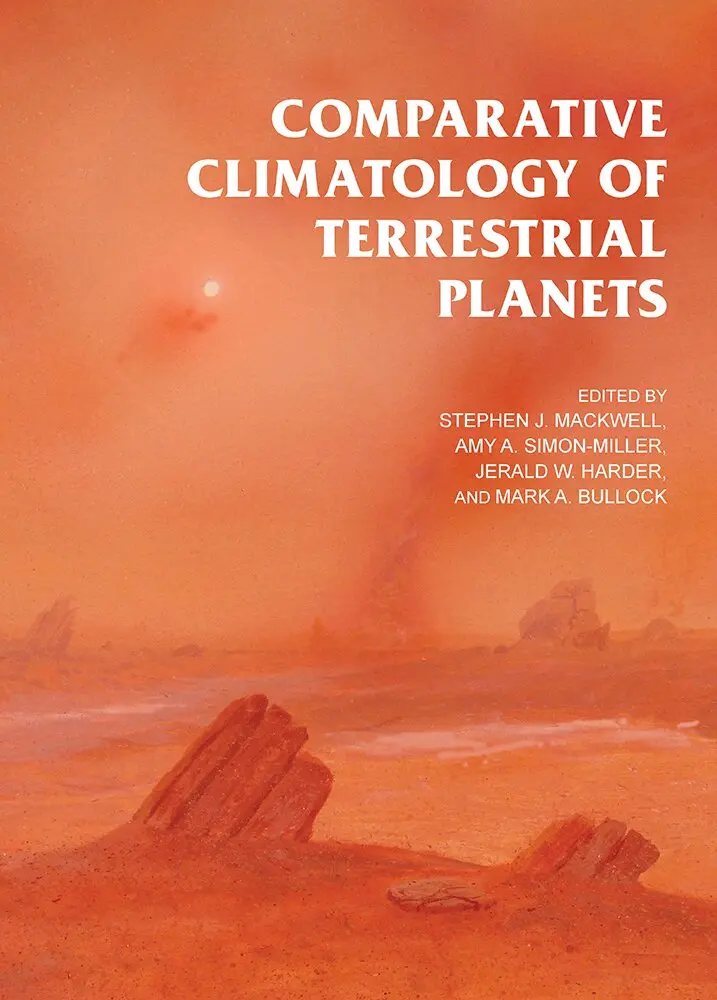
The early development of life, a fundamental question for humankind, requires the presence of a suitable planetary climate. Our understanding of how habitable planets come to be begins with the worlds closest to home. Venus, Earth, and Mars differ only modestly in their mass and distance from the Sun, yet their current climates could scarcely be more divergent. Only Earth has abundant liquid water, Venus has a runaway greenhouse, and evidence for life-supporting conditions on Mars points to a bygone era. In addition, an Earth-like hydrologic cycle has been revealed in a surprising place: Saturn’s cloud-covered satellite Titan has liquid hydrocarbon rain, lakes, and river networks. Deducing the initial conditions for these diverse worlds and unravelling how and why they diverged to their current climates is a challenge at the forefront of planetary science. Through the contributions of more than sixty leading experts in the field, Comparative Climatology of Terrestrial Planets sets forth the foundations for this emerging new science and brings the reader to the forefront of our current understanding of atmospheric formation and climate evolution. Particular emphasis is given to surface-atmosphere interactions, evolving stellar flux, mantle processes, photochemistry, and interactions with the interplanetary environment, all of which influence the climatology of terrestrial planets. From this cornerstone, both current professionals and most especially new students are brought to the threshold, enabling the next generation of new advances in our own solar system and beyond.
714 kr
Skickas inom 7-10 vardagar
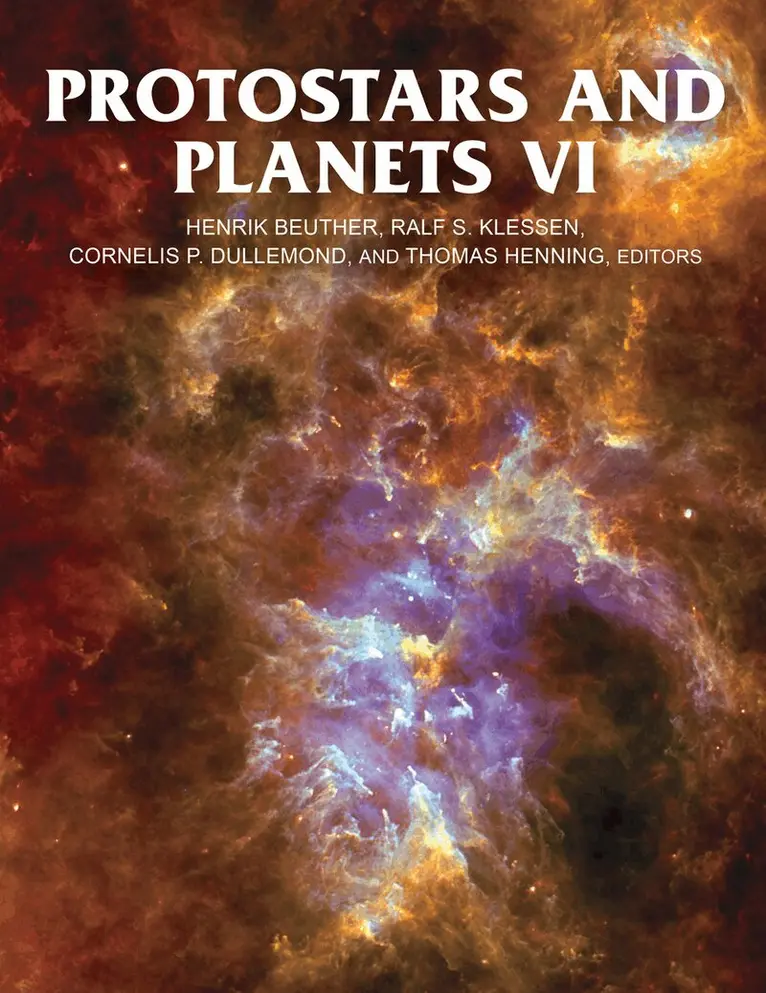
The revolutionary discovery of thousands of confirmed and candidate planets beyond the solar system brings forth the most fundamental question: How do planets and their host stars form and evolve?Protostars and Planets VI brings together more than 250 contributing authors at the forefront of their field, conveying the latest results in this research area and establishing a new foundation for advancing our understanding of stellar and planetary formation.Continuing the tradition of the Protostars and Planets series, this latest volume uniquely integrates the cross-disciplinary aspects of this broad field. Covering an extremely wide range of scales, from the formation of large clouds in our Milky Way galaxy down to small chondrules in our solar system, Protostars and Planets VI takes an encompassing view with the goal of not only highlighting what we know but, most importantly, emphasizing the frontiers of what we do not know.As a vehicle for propelling forward new discoveries on stars, planets, and their origins, this latest volume in the Space Science Series is an indispensable resource for both current scientists and new students in astronomy, astrophysics, planetary science, and the study of meteorites.
847 kr
Skickas inom 11-20 vardagar
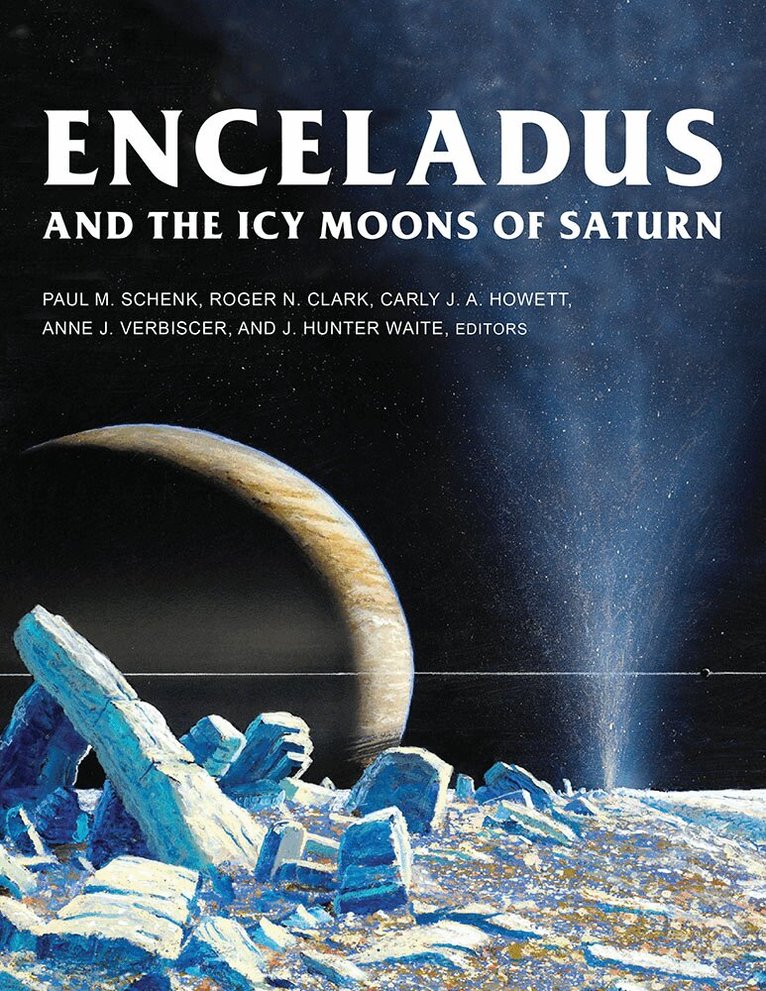
With active geysers coating its surface with dazzlingly bright ice crystals, Saturn’s large moon Enceladus is one of the most enigmatic worlds in our solar system. Underlying this activity are numerous further discoveries by the Cassini spacecraft, tantalizing us with evidence that Enceladus harbors a subsurface ocean of liquid water. Enceladus is thus newly realized as a forefront candidate among potentially habitable ocean worlds in our own solar system, although it is only one of a family of icy moons orbiting the giant ringed planet, each with its own story.As a new volume in the Space Science Series, Enceladus and the Icy Moons of Saturn brings together nearly eighty of the world’s top experts writing more than twenty chapters to set the foundation for what we currently understand, while building the framework for the highest-priority questions to be addressed through ongoing spacecraft exploration. Topics include the physics and processes driving the geologic and geophysical phenomenon of icy worlds, including, but not limited to, ring-moon interactions, interior melting due to tidal heating, ejection and reaccretion of vapor and particulates, ice tectonics, and cryovolcanism.By contextualizing each topic within the profusion of puzzles beckoning from among Saturn’s many dozen moons, Enceladus and the Icy Moons of Saturn synthesizes planetary processes on a broad scale to inform and propel both seasoned researchers and students toward achieving new advances in the coming decade and beyond.
847 kr
Skickas inom 11-20 vardagar
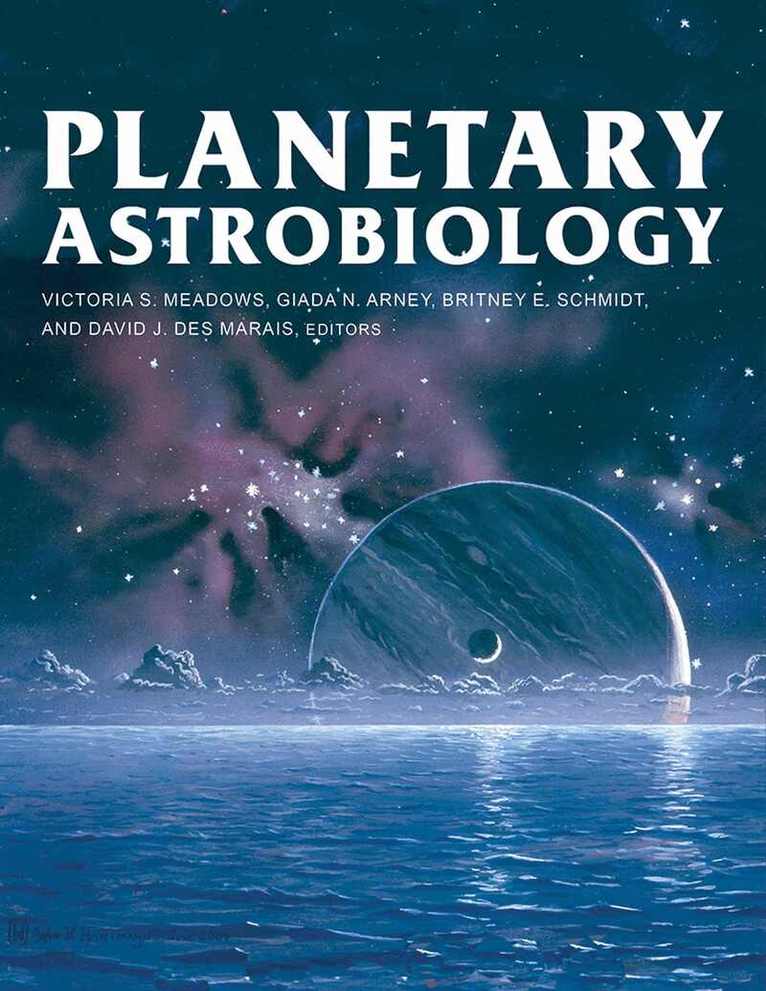
Are we alone in the universe? How did life arise on our planet? How do we search for life beyond Earth? These profound questions excite and intrigue broad cross sections of science and society. Answering these questions is the province of the emerging, strongly interdisciplinary field of astrobiology. Life is inextricably tied to the formation, chemistry, and evolution of its host world, and multidisciplinary studies of solar system worlds can provide key insights into processes that govern planetary habitability, informing the search for life in our solar system and beyond. Planetary Astrobiology brings together current knowledge across astronomy, biology, geology, physics, chemistry, and related fields, and considers the synergies between studies of solar systems and exoplanets to identify the path needed to advance the exploration of these profound questions.Planetary Astrobiology represents the combined efforts of more than seventy-five international experts consolidated into twenty chapters and provides an accessible, interdisciplinary gateway for new students and seasoned researchers who wish to learn more about this expanding field. Readers are brought to the frontiers of knowledge in astrobiology via results from the exploration of our own solar system and exoplanetary systems. The overarching goal of Planetary Astrobiology is to enhance and broaden the development of an interdisciplinary approach across the astrobiology, planetary science, and exoplanet communities, enabling a new era of comparative planetology that encompasses conditions and processes for the emergence, evolution, and detection of life.
714 kr
Skickas inom 7-10 vardagar
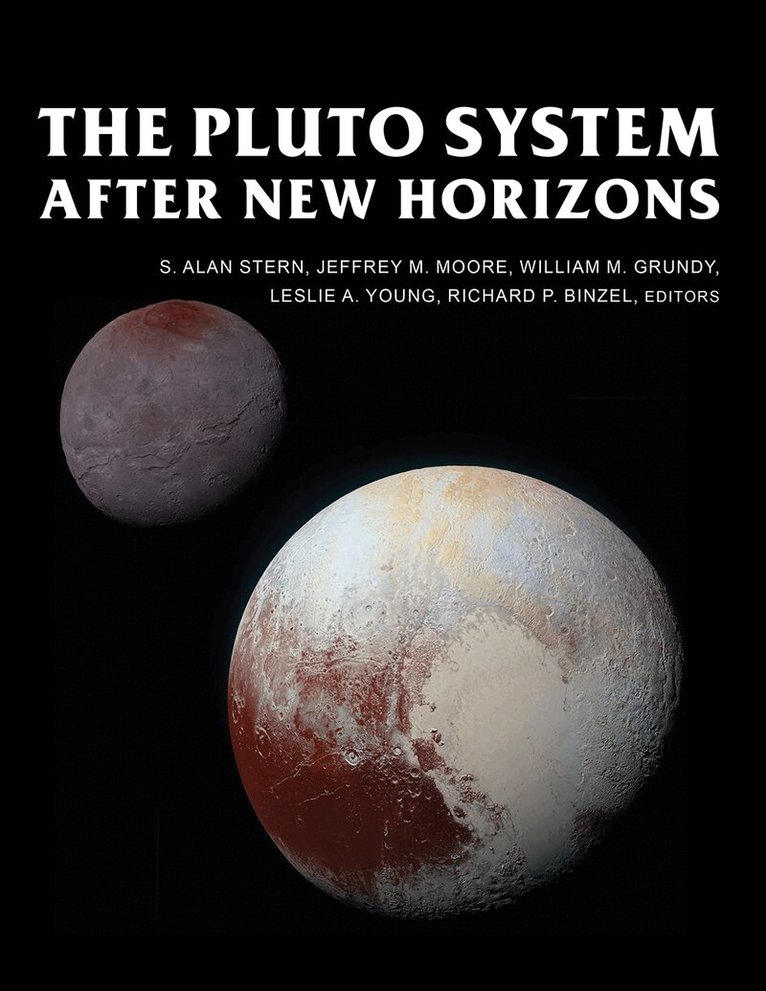
Once perceived as distant, cold, dark, and seemingly unknowable, Pluto had long been marked as the farthest and most unreachable frontier for solar system exploration. After Voyager accomplished its final planetary reconnaissance at Neptune in 1989, Pluto and its cohort in the Kuiper Belt beckoned as the missing puzzle piece for completing the first reconnaissance of our solar system. In the decades following Voyager, a mission to the Pluto system was not only imagined but also achieved, culminating with the historic 2015 flyby by the New Horizons spacecraft. Pluto and its satellite system ('the Pluto system'), including its largest moon, Charon, have been revealed to be worlds of enormous complexity that fantastically exceed preconceptions.The Pluto System After New Horizons seeks to become the benchmark for synthesizing our understanding of the Pluto system. The volume's lead editor is S. Alan Stern, who also serves as NASA's New Horizons Principal Investigator; co-editors Richard P. Binzel, William M. Grundy, Jeffrey M. Moore, and Leslie A. Young are all co-investigators on New Horizons. Leading researchers from around the globe have spent the last five years assimilating Pluto system flyby data returned from New Horizons. The chapters in this volume form an enduring foundation for ongoing study and understanding of the Pluto system. The volume also advances insights into the nature of dwarf planets and Kuiper Belt objects, providing a cornerstone for planning new missions that may return to the Pluto system and explore others of the myriad important worlds beyond Neptune.