Special Issues of Laterality - Böcker
Visar alla böcker i serien Special Issues of Laterality. Handla med fri frakt och snabb leverans.
4 produkter
4 produkter
557 kr
Skickas inom 10-15 vardagar
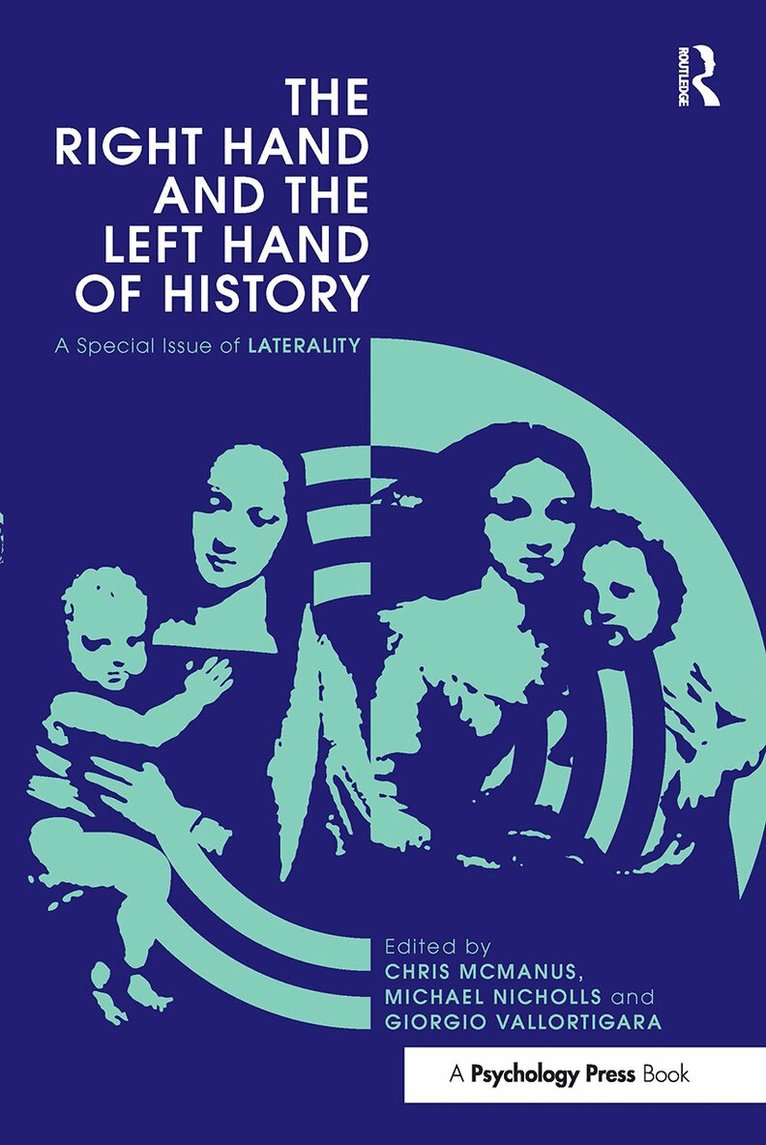
Left-handers have been described as "a people without a history". This special issue provides scholarly analyses of aspects of asymmetry in history, from the Renaissance to the 20th Century. Lauren Harris presents three studies describing: An 1811 American child-care manual for parents fearing, "lest their children should be left-handed"; Manuals on swordsmanship from the Renaissance onwards describing the "accepted minority" of left-handed swordsmen, a minority that still dominates the Olympics; The enigmatic bias whereby parents use their left arm to carry babies; Janet Snowman and Stephen Christman present two papers on left-handed musical geniuses: William Crotch, the self-taught, 18th Century, musical prodigy, whose unconventional left-handed playing styles stimulate many questions about the asymmetries of stringed instruments;Jimi Hendrix, the 20th Century, left-handed, guitarist of whom Robert Krieger said, "… he was just so different. He just came from such a left-field place." Chris McManus, Richard Rawles, James Moore and Matthew Freegard describe an early BBC TV programme presented in 1953 by Jacob Bronowski on right and left-handedness. In an early example of viewer participation, 6000 people sent postcards describing their handedness and also their perceptions of a "mystery picture", that was the duck-rabbit figure from Wittgenstein’s recently published Philosophical Investigations. Chris McManus and Janet Snowman describe A left-handed compliment, a newly discovered lithograph by John Lewis Marks (ca. 1795-6 - ca. 1857-61). Given Marks’,"seeming love of vulgarity for its own sake", there is probably an obscene sub-text reminiscent of a Donald McGill postcard.
557 kr
Skickas inom 10-15 vardagar
A wide range of research explores patterns of lateralisation for processing emotion. Yet, relatively little explores how emotion lateralisation changes across the lifespan. This special issue addresses this gap in our understanding, focusing on what might influence the development of laterality for emotion processing, how links between lateralisation for emotion processing may be related to an individual’s emotion recognition performance, how lateralisation for emotion processing may explain social deficits in clinical populations, and if patterns of lateralisation might be dependent on one’s life experiences. Importantly, the papers in this special issue explore variability in lateralisation at differing time points from infancy to old age. They employ a wide range of methods to explore these changes in emotion lateralisation, such as behavioural measures and electrophysiological methods. The varying approaches allow for a broad exploration of the development of lateralisation for emotion processing from infancy through childhood, changes through adulthood and into older age, and considers the relationship between the neuropsychological processing of emotional stimuli, behavioural emotional processing, and social interactions. The empirical work presented in this issue provides a number of unique contributions to the understanding of the relationship between emotion lateralisation and behaviour, with the review paper bringing together our current understanding with these new insights for the development of emotion lateralisation.
1 251 kr
Skickas inom 10-15 vardagar
Left-handers have been described as "a people without a history". This special issue provides scholarly analyses of aspects of asymmetry in history, from the Renaissance to the 20th Century. Lauren Harris presents three studies describing: An 1811 American child-care manual for parents fearing, "lest their children should be left-handed"; Manuals on swordsmanship from the Renaissance onwards describing the "accepted minority" of left-handed swordsmen, a minority that still dominates the Olympics; The enigmatic bias whereby parents use their left arm to carry babies; Janet Snowman and Stephen Christman present two papers on left-handed musical geniuses: William Crotch, the self-taught, 18th Century, musical prodigy, whose unconventional left-handed playing styles stimulate many questions about the asymmetries of stringed instruments; Jimi Hendrix, the 20th Century, left-handed, guitarist of whom Robert Krieger said, "… he was just so different. He just came from such a left-field place." Chris McManus, Richard Rawles, James Moore and Matthew Freegard describe an early BBC TV programme presented in 1953 by Jacob Bronowski on right and left-handedness. In an early example of viewer participation, 6000 people sent postcards describing their handedness and also their perceptions of a "mystery picture", that was the duck-rabbit figure from Wittgenstein’s recently published Philosophical Investigations. Chris McManus and Janet Snowman describe A left-handed compliment, a newly discovered lithograph by John Lewis Marks (ca. 1795-6 - ca. 1857-61). Given Marks’,"seeming love of vulgarity for its own sake", there is probably an obscene sub-text reminiscent of a Donald McGill postcard.
1 251 kr
Skickas inom 10-15 vardagar
A wide range of research explores patterns of lateralisation for processing emotion. Yet, relatively little explores how emotion lateralisation changes across the lifespan. This special issue addresses this gap in our understanding, focusing on what might influence the development of laterality for emotion processing, how links between lateralisation for emotion processing may be related to an individual’s emotion recognition performance, how lateralisation for emotion processing may explain social deficits in clinical populations, and if patterns of lateralisation might be dependent on one’s life experiences. Importantly, the papers in this special issue explore variability in lateralisation at differing time points from infancy to old age. They employ a wide range of methods to explore these changes in emotion lateralisation, such as behavioural measures and electrophysiological methods. The varying approaches allow for a broad exploration of the development of lateralisation for emotion processing from infancy through childhood, changes through adulthood and into older age, and considers the relationship between the neuropsychological processing of emotional stimuli, behavioural emotional processing, and social interactions. The empirical work presented in this issue provides a number of unique contributions to the understanding of the relationship between emotion lateralisation and behaviour, with the review paper bringing together our current understanding with these new insights for the development of emotion lateralisation.