Victoria Bourne - Böcker
Visar alla böcker från författaren Victoria Bourne. Handla med fri frakt och snabb leverans.
6 produkter
6 produkter
Starting Out in Methods and Statistics for Psychology
a Hands-on Guide to Doing Research
Häftad, Engelska, 2017
553 kr
Skickas inom 5-8 vardagar
Starting Out in Methods and Statistics for Psychology: a Hands-on Guide to Doing Research takes first year psychology students through the entire process of doing research in psychology, from exploring designs and methods, to conducting step-by-step, by-hand data analysis, and writing up their findings, all in a friendly and accessible way.The text begins by presenting a thorough overview of research, explaining its central role in psychology as a science and exploring how to read and present research findings before introducing students to both qualitative and quantitative approaches to research. The author then explores experimental and correlational designs in detail, introducing the general principles before addressing the logic of the specific data analyses used in these forms of design. Dedicated chapters show students how to calculate independent and repeated t tests, and independent measures ANOVA in the experimental design section, and correlation and regression analyses in the correlation section. After guiding students through these essentials, the author moves on to a detailed explanation of when to use non-parametric tests, and again takes students through these data analyses in a carefully-paced series of hand calculations. The text concludes with a clear guide to when to use which test, and takes a look forward to the sorts of statistical analyses students will encounter in both published research and the next phase of their studies.Online Resource Centre For students:- A diagnostic maths test to help students identify their - strengths and weaknesses- Example lab reports (good and bad)- Example ethics applications forms- Full answers to the in-text study questions- SPSS screencasts- Links to papers and websitesFor lecturers:- Worksheets with additional datasets- Fully worked answers to worksheets- Testbank- Figures and tables from the book, ready to download- Animated solutions to the hand calculations
Understanding Quantitative and Qualitative Research in Psychology
A Practical Guide to Methods, Statistics, and Analysis
Häftad, Engelska, 2021
591 kr
Skickas inom 5-8 vardagar
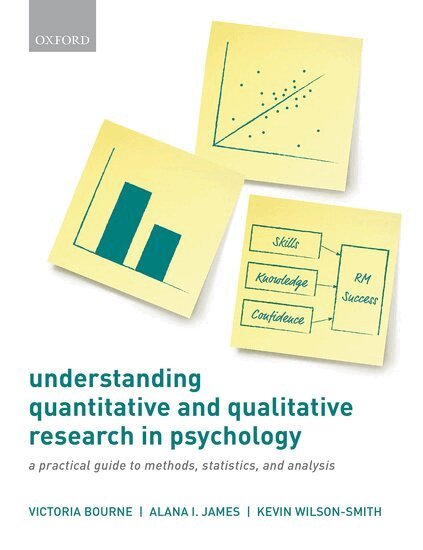
Understanding Quantitative and Qualitative Research in Psychology is the most hands-on, accessible and approachable guide to the entire research process, which fully explores both quantitative and qualitative methods to give students the knowledge and confidence they need. Students are presented with a practically-focused guide to carrying out psychological research and are taken from formulating a research question through to collecting data, analysing datasets statistically with SPSS or qualitatively with a range of approaches, and finally presenting and thinking critically about research findings. They are shown the importance of research ethics, and coverage of the replication crisis and the open science movement is considered throughout. The online resources present a wealth of opportunities for students to practice what they have learned, and the title is supported by an excellent range of video support materials for both the qualitative and quantitative sections, including SPSS screencasts for all relevant chapters, and a range of videos on interview skills.Digital formats and resourcesUnderstanding Quantitative and Qualitative Research in Psychology is available for students and institutions to purchase in a variety of formats, and is supported by online resources. The e-book offers a mobile experience and convenient access, along with self-assessment activities and multi-media content to provide additional learning support: www.oxfordtextbooks.co.uk/ebooks/. The online resources include:For students:- Videos demonstrating interview technique- SPSS screencasts showing students how to carry out the statistical analyses covered in the book- Flashcards- SPSS datasets- Audio files of sample interviews- Transcriptions of sample interviews- Initial codes for a sample thematic analysis- Memo template and transcription template to accompany the grounded theory chapter- SPSS output files- Answers to study questions- Web references- An example qualitative studyFor lecturers:- Customizable PowerPoint presentations- Image bank- Test bank- Additional worksheets - Answer sheets- Additional datasets- Additional SPSS output files
Conducting Psychological Research
Developing Skills for Career Success and Social Impact
Häftad, Engelska, 2025
324 kr
Skickas inom 5-8 vardagar
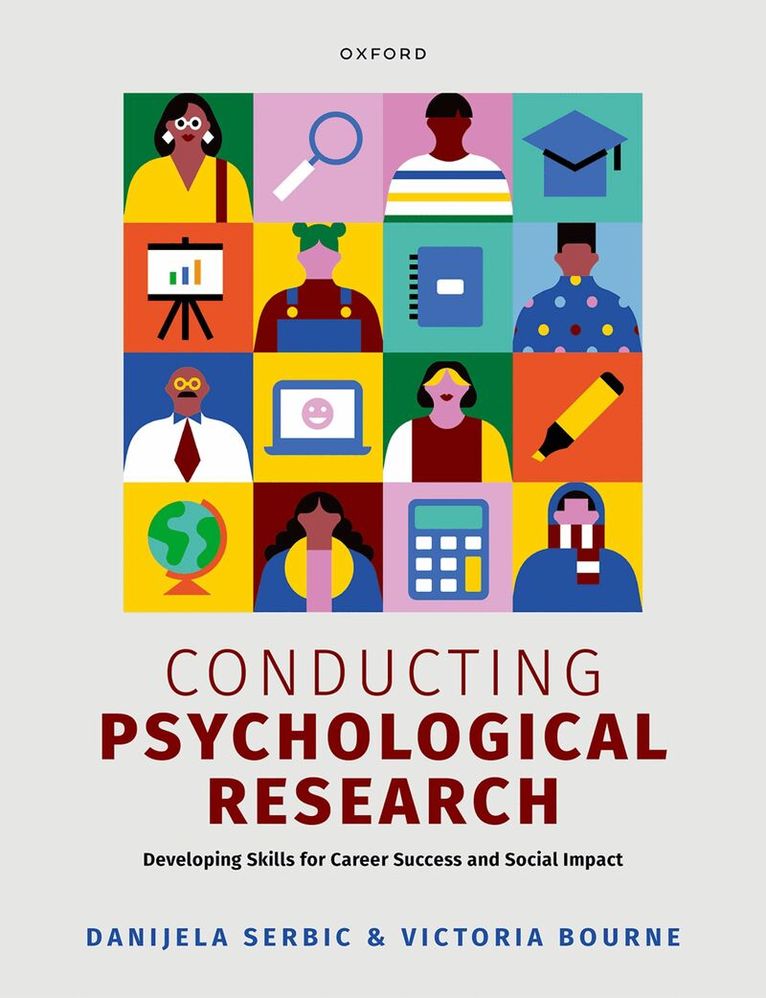
Empowers and supports students to effectively manage their research projects, develop transferable skills, and understand how they can apply these skills to their future career. Conducting Psychological Research is a practical guide for students, featuring case studies and valuable insights from graduates and employers in the field of psychology. This book will hone students' skills and build confidence in their ability to become an independent researcher and worker, so that they can make an impact in their chosen career path.Key Features - A practical approach to conducting psychological research, focusing on how students can use transferable skills from their research projects for employability and career success - Encourages students to think more broadly about social responsibility - Learning outcomes at the start of each chapter to outline what students will learn- Each chapter ends with case studies, hints, and tips from graduates and employers - Psychology and Employability workbook to emphasise students' skills and their application- Further reading suggestions to deepen learning and provide additional class materials for lecturers - Lecturers can also access PowerPoint presentation slides to support with lesson preparation- Also available as an e-book with weblinks, functionality, navigation features, and links that offer extra learning support.Digital formats and resources Conducting Psychological Research is available for students and institutions to purchase in a variety of formats: the e-book and Psychology Trove offer a mobile experience and convenient access along with a complimentary workbook, weblinks, lecturer slides, functionality tools, navigation features and links that offer extra learning support. For more information about e-books, please visit www.oxfordtextbooks.co.uk/ebooks
832 kr
Skickas inom 5-8 vardagar
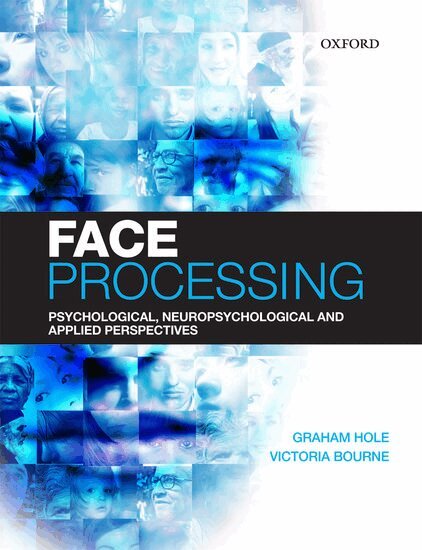
How do we recognise familiar faces?What factors determine facial attractiveness?How does face processing develop in infants and children?Why do face reconstruction systems, such as Photofit and E-Fit, produce such poor likenesses of the original face?Face Processing: psychological, neuropsychological and applied perspectives is the first major textbook for 20 years that seeks to answer questions like these. Drawing on the most recent research in the field, and organised around the three main research perspectives - psychological, neuropsychological, and applied - it provides insights on issues of relevance to students from a wide range of disciplines.Face recognition and expression perception have generated a large amount of research over the last decade, and with high profile media coverage of related issues, such as the misidentification of Brazilian student, Jean Charles de Menezes, face processing is a hot topic within the study of psychology. Face Processing captures the excitement in the field, and with reference to a wealth of studies and real-world phenomena, it reveals how our understanding of face processing has developed over the years. The first section of the book, on the psychological perspectives of face processing, considers how we are able to recognise familiar faces; how we can extract information such as emotion, sex and age from a face; and how face processing abilities develop.The second section covers the neuropsychological perspectives, and examines the disorders of face recognition that arise following brain injury, and asks whether faces are a 'special' class of visual stimuli.Finally, a section on the applied perspectives of face processing describes face reconstruction systems, such as Identikit and Photofit, and their limitations; it discusses methods of constructing facial composites, and the phenomenon of 'verbal overshadowing', whereby verbal descriptions of visual stimuli subsequently leads to a temporary impairment in people's ability to recognise those stimuli. Assuming no prior knowledge of the subject, this book is the perfect resource for students studying face processing as part of a psychology degree, and the breadth of its coverage makes it of relevance to computer science students, medical students with an interest in neurology, and students of forensic science, too.Online Resource CentreThe Online Resource Centre to accompany Face Processing: psychological, neuropsychological, and applied perspectives features the following resources for lecturers and students.For registered adoptersFigures from the book available to downloadFor studentsHyperlinks to primary literature articlesWeb link library
560 kr
Skickas inom 10-15 vardagar
A wide range of research explores patterns of lateralisation for processing emotion. Yet, relatively little explores how emotion lateralisation changes across the lifespan. This special issue addresses this gap in our understanding, focusing on what might influence the development of laterality for emotion processing, how links between lateralisation for emotion processing may be related to an individual’s emotion recognition performance, how lateralisation for emotion processing may explain social deficits in clinical populations, and if patterns of lateralisation might be dependent on one’s life experiences. Importantly, the papers in this special issue explore variability in lateralisation at differing time points from infancy to old age. They employ a wide range of methods to explore these changes in emotion lateralisation, such as behavioural measures and electrophysiological methods. The varying approaches allow for a broad exploration of the development of lateralisation for emotion processing from infancy through childhood, changes through adulthood and into older age, and considers the relationship between the neuropsychological processing of emotional stimuli, behavioural emotional processing, and social interactions. The empirical work presented in this issue provides a number of unique contributions to the understanding of the relationship between emotion lateralisation and behaviour, with the review paper bringing together our current understanding with these new insights for the development of emotion lateralisation.
1 258 kr
Skickas inom 10-15 vardagar
A wide range of research explores patterns of lateralisation for processing emotion. Yet, relatively little explores how emotion lateralisation changes across the lifespan. This special issue addresses this gap in our understanding, focusing on what might influence the development of laterality for emotion processing, how links between lateralisation for emotion processing may be related to an individual’s emotion recognition performance, how lateralisation for emotion processing may explain social deficits in clinical populations, and if patterns of lateralisation might be dependent on one’s life experiences. Importantly, the papers in this special issue explore variability in lateralisation at differing time points from infancy to old age. They employ a wide range of methods to explore these changes in emotion lateralisation, such as behavioural measures and electrophysiological methods. The varying approaches allow for a broad exploration of the development of lateralisation for emotion processing from infancy through childhood, changes through adulthood and into older age, and considers the relationship between the neuropsychological processing of emotional stimuli, behavioural emotional processing, and social interactions. The empirical work presented in this issue provides a number of unique contributions to the understanding of the relationship between emotion lateralisation and behaviour, with the review paper bringing together our current understanding with these new insights for the development of emotion lateralisation.