Spiritual Lives - Böcker
Visar alla böcker i serien Spiritual Lives. Handla med fri frakt och snabb leverans.
17 produkter
17 produkter
438 kr
Skickas inom 5-8 vardagar
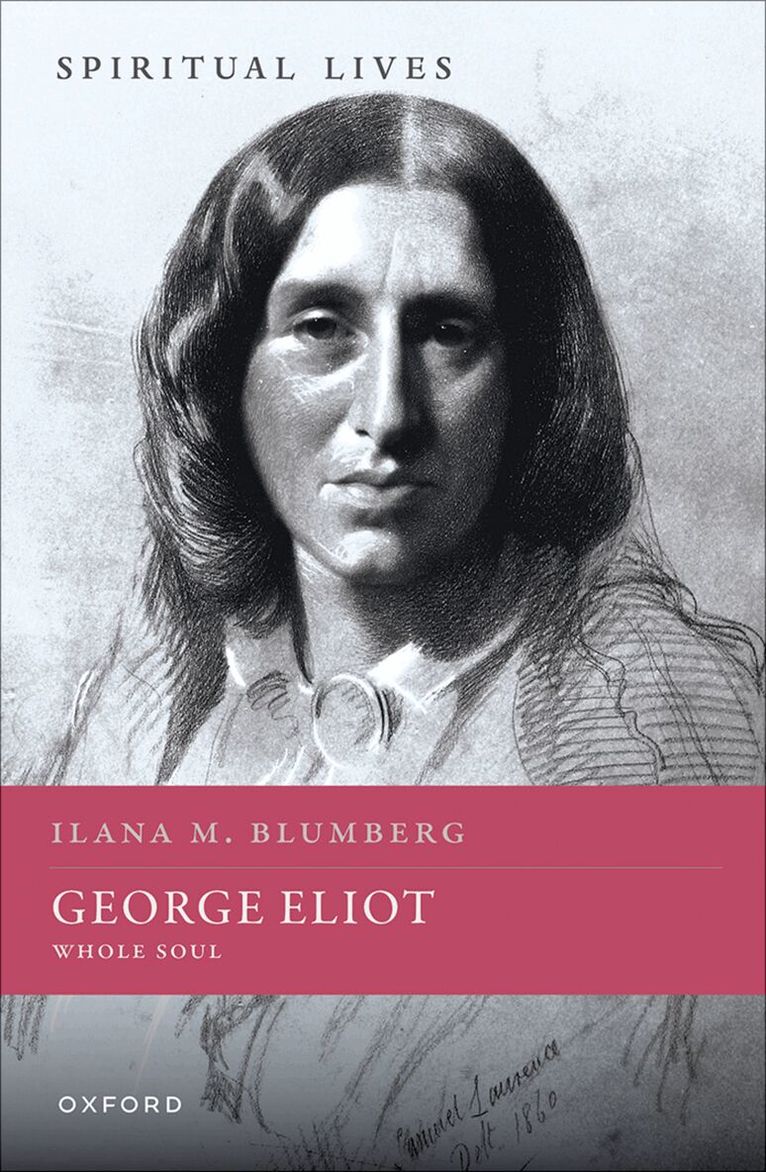
The girl who would become George Eliot began her professional writing life with a poem bidding farewell to all books but the Bible. How did a young Christian poet become the great realist novelist whose commitment to religious freethinking made her so iconoclastic that she could not be buried in in Westminster Abbey? Memorialized there today by a stone lain in the Poets' Corner in 1980, George Eliot wrote herself and her fellow Victorians through turbulent decades of moral and historical doubt in religious orthodoxy, alongside the unrelenting need to articulate a compelling modern faith in its place. Unafraid to confront the most difficult existential questions of her time, George Eliot wrote immensely popular novels that wrestled with problems whose hold has barely lessened in the last 150 years: the pervasiveness of human suffering and the injustice of its measures; the tension between fulfilling our ethical obligations to others and pursuing our own well-being; the impetus to act virtuously in this world without any guarantee of reward, and the need to make some "religion" in life, something beyond our own immediate, fluctuating desires. In this new account of George Eliot's spiritual life, George Eliot: Whole Soul, Ilana Blumberg reveals to us a writer who did not simply lose her faith once and for all on her way to becoming an adult, but devoted the full span of her career to imagining a wide religious sensibility that could inform personal and social life. As we range among Eliot's letters, essays, translations, poetry, and novels, we encounter here a writer whose extraordinary art and intellect offer us company, still today, in the search for modern meaning.
507 kr
Skickas inom 5-8 vardagar
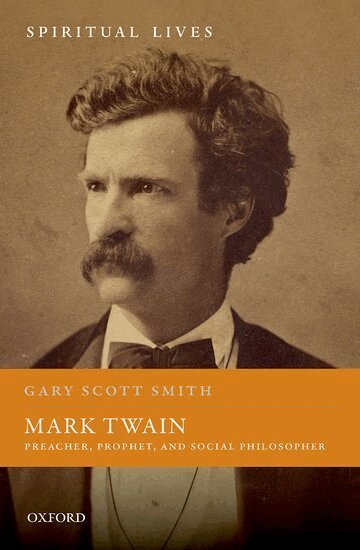
Mark Twain's literary works have intrigued and inspired readers from the late 1860s to the present. His varied experiences as a journeyman printer, river boat pilot, prospector, journalist, novelist, humorist, businessman, and world traveller, combined with his incredible imagination and astonishing creativity, enabled him to devise some of American literature's most memorable characters and engaging stories. Twain had a complicated relationship with Christianity. He strove to understand, critique, and sometimes promote various theological ideas and insights. His religious perspective was often inconsistent and even contradictory. While many scholars have overlooked Twain's strong interest in religious matters, others disagree sharply about his religious views--with many labelling him a secularist, an agnostic, or an atheist. In this compelling biography, Gary Scott Smith shows that throughout his life Twain was an entertainer, satirist, novelist, and reformer, but also functioned as a preacher, prophet, and social philosopher. Twain tackled universal themes with penetrating insight and wit including the character of God, human nature, sin, providence, corruption, greed, hypocrisy, poverty, racism, and imperialism. Moreover, his life provides a window into the principal trends and developments in American religion from 1865 to 1910.
549 kr
Skickas inom 5-8 vardagar
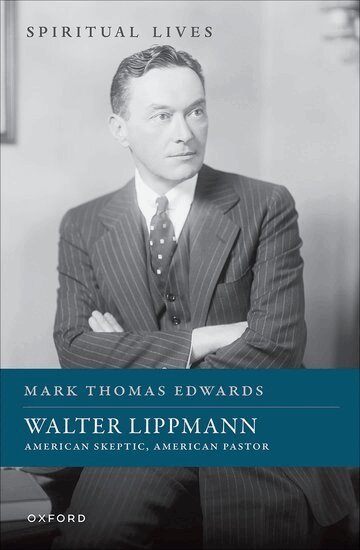
Walter Lippmann was arguably the most recognized and respected political journalist of the twentieth century. His "Today and Tomorrow" columns attracted a global readership of well over ten million. Lippmann was the author of numerous books, including the best-selling A Preface to Morals (1929) and U.S. Foreign Policy (1943). His Public Opinion (1922) remains a classic text within American political philosophy and media studies. Lippmann coined or popularized several keywords of the twentieth century, including "stereotype," the "Cold War," and the "Great Society." Sought out by U.S. Presidents and by America's allies and rivals around the world, Lippmann remained one of liberalism's most faithful proponents and harshest critics.Yet few people then or since encountered the "real" Walter Lippmann. That was because he kept crucial parts of himself hiding in plain sight. His extensive commentary on politics and diplomacy was bounded by his sense that America had to adjust to the loss of a common faith and morality in a "post-Christian" era. Over the course of his life, Lippmann traded in his fame as a happy secularist for the stardom of a grumpy Western Christian intellectual. Yet he never committed himself to any religious system, especially his own Jewish heritage.Walter Lippmann: American Skeptic, American Pastor considers the role of religions in Lippmann's life and thought, prioritizing his affirmation and rejection of Christian nationalisms of the left and right. It also yields fresh insights into the philosophical origins of modern American liberalism, including liberalism's blind spots in the areas of sex, race, and class. But most importantly, this biography highlights the constructive power of doubt. For Lippmann, the good life in the good society was lived in irreconcilable tension: the struggle to be free from yet loyal to a way of life; to recognize the dangers yet also necessity of a civil religion; and to strive for a just and enduring world order that can never be. In the end, Lippmann manufactured himself as the prophet of limitation for an extravagant American Century.
715 kr
Skickas inom 7-10 vardagar
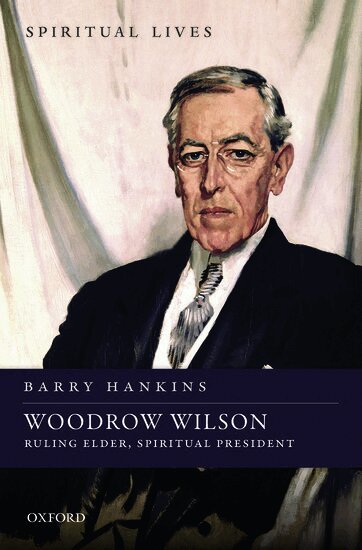
When Woodrow Wilson was elected as a ruling elder in the Presbyterian Church in 1897, his preacher father allegedly remarked, "I would rather that he held that position than be president of the United States." Fifteen years later he was both. Easily one of the most religious presidents in American history, almost all of Wilson's policies and important speeches were infused with religious concepts. The son, grandson, and nephew of southern Presbyterian divines, with six consecutive generations of preachers on his mother's side, Wilson viewed his political career as a sacred calling. As he remarked to a Democratic Party leader just before his inauguration in 1913, "God ordained that I should be the next president of the United States."As a scholar, Princeton University president, governor of New Jersey, then president, Wilson spent his entire career trying to further the cause of public righteousness. In 1905, he uttered his life's credo: "There is a mighty task before us and it welds us together. It is to make the United States a mighty Christian nation and to Christianize the World." Nonetheless, the 28th president was not principally a religious figure, and he didn't fit comfortably in any religious camp, either in his own time or today. In Woodrow Wilson: Ruling Elder, Spiritual President, Barry Hankins tells the story of Wilson's religion as he moved from the Calvinist orthodoxy of his youth to a progressive, spiritualized religion short on doctrine and long on morality.
765 kr
Skickas inom 5-8 vardagar
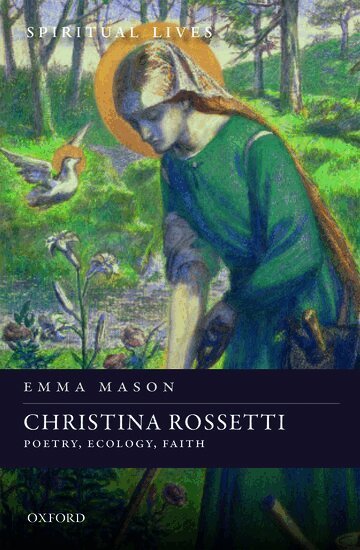
Christina Rossetti (1830-94) is regarded as one of the greatest Christian poets to write in English. While Rossetti has firmly secured her place in the canon, her religious poetry was for a long time either overlooked or considered evidence of a melancholic disposition burdened by faith. Recent scholarship has redressed reductive readings of Christian theology as repressive by rethinking it as a form of compassionate politics. This shift has enabled new readings of Rossetti's work, not simply as a body of significant nineteenth-century devotional literature, but also as a marker of religion's relevance to modern concerns through its reflections on science and materialism, as well as spirituality and mysticism.Emma Mason offers a compelling study of Christina Rossetti, arguing that her poetry, diaries, letters, and devotional commentaries are engaged with both contemporary theological debate and an emergent ecological agenda. In chapters on the Catholic Revival, Pre-Raphaelite Brotherhood, contemporary debates on plant and animal being, and the relationship between grace and apocalypse, Mason reads Rossetti's theology as an argument for spiritual materialism and ecological transformation. She ultimately suggests that Rossetti's life and work captures the experience of faith as one of loving intimacy with the minutiae of creation, a divine body in which all things, material and immaterial, human and nonhuman, divine and embodied, are interconnected.
542 kr
Skickas inom 5-8 vardagar
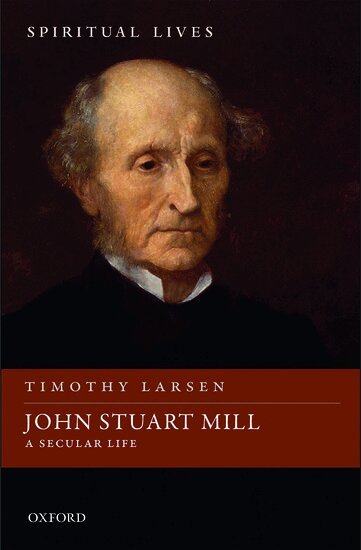
John Stuart Mill observed in his Autobiography that he was a rare case in nineteenth-century Britain because he had not lost his religion but never had any. He was a freethinker from beginning to end. What is not often realized, however, is that Mill's life was nevertheless impinged upon by religion at every turn. This is true both of the close relationships that shaped him and of his own, internal thoughts. Mill was a religious sceptic, but not the kind of person which that term usually conjures up. The unexpected presence and prominence of spirituality is not only there in Mill's late, startling essay, 'Theism', in which he makes the case for hope in God and in Christ. It is everywhere--in his immediate family, his best friends, and his vision for the future. It is even there in such a seemingly unlikely place as his Logic, which repeatedly addresses religious themes. John Stuart Mill: A Secular Life is a biography which follows one of Britain's most well-respected intellectuals through all of the key moments in his life from falling in love to sitting in Parliament and beyond. It also explores his classic works including, On Liberty, Principles of Political Economy, Utilitarianism, and The Subjection of Women. In this well-researched study which offers original findings and insights, Timothy Larsen presents the Mill you never knew. The Mill that even some of his closest disciples never knew. This is John Stuart Mill, the Saint of Rationalism--a secular life and a spiritual life.
507 kr
Skickas inom 5-8 vardagar
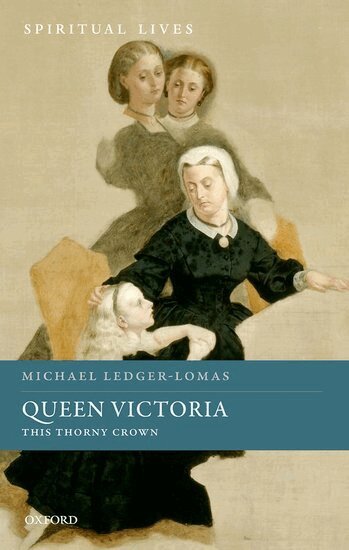
This biography evokes the pervasive importance of religion to Queen Victoria's life but also that life's centrality to the religion of Victorians around the globe. The first comprehensive exploration of Victoria's religiosity, it shows how moments in her life--from her accession to her marriage and her successive bereavements--enlarged how she defined and lived her faith. It portrays a woman who had simple convictions but a complex identity that suited her multinational Kingdom: a determined Anglican who preferred Presbyterian Scotland; an ardent Protestant who revered her husband's Lutheran homeland but became sympathetic towards Roman Catholicism and Islam; a moralizing believer in the religion of the home who scorned Sabbatarianism. Drawing on a systematic reading of her journals and a rich selection of manuscripts from British and German archives, Michael Ledger-Lomas sheds new light not just on Victoria's private beliefs but also on her activity as a monarch, who wielded her powers energetically in questions of church and state. Unlike a conventional biography, this book interweaves its account of Victoria's life with a panoramic survey of what religious communities made of it. It shows how different churches and world religions expressed an emotional identification with their Queen and Empress, turning her into an embodiment of their different and often rival conceptions of what her Empire ought to be. The result is a fresh vision of a familiar life, which also explains why monarchy and religion remained close allies in the nineteenth-century British world.
507 kr
Skickas inom 7-10 vardagar
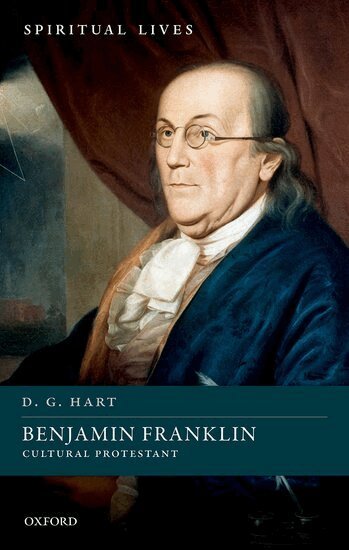
Benjamin Franklin grew up in a devout Protestant family with limited prospects for wealth and fame. By hard work, limitless curiosity, native intelligence, and luck (what he called "providence"), Franklin became one of Philadelphia's most prominent leaders, a world recognized scientist, and the United States' leading diplomat during the War for Independence. Along the way, Franklin embodied the Protestant ethics and cultural habits he learned and observed as a youth in Puritan Boston. Benjamin Franklin: Cultural Protestant follows Franklin's remarkable career through the lens of the trends and innovations that the Protestant Reformation started (both directly and indirectly) almost two centuries earlier. His work as a printer, civic reformer, institution builder, scientist, inventer, writer, self-help dispenser, politician, and statesmen was deeply rooted in the culture and outlook that Protestantism nurtured. Through its alternatives to medieval church and society, Protestants built societies and instilled habits of character and mind that allowed figures such as Franklin to build the life that he did. Through it all, Franklin could not assent to all of Protestantism's doctrines or observe its worship, but for most of his life he acknowledged his debt to his creator, revelled in the natural world guided by providence, and conducted himself in a way (imperfectly) to merit divine approval. In this biography, D. G. Hart recognizes Franklin as a cultural or non-observant Protestant, someone who thought of himself as a Presbyterian, ordered his life as other Protestants did, sometimes went to worship services, read his Bible, and prayed, but could not go all the way and join a church.
583 kr
Skickas inom 5-8 vardagar
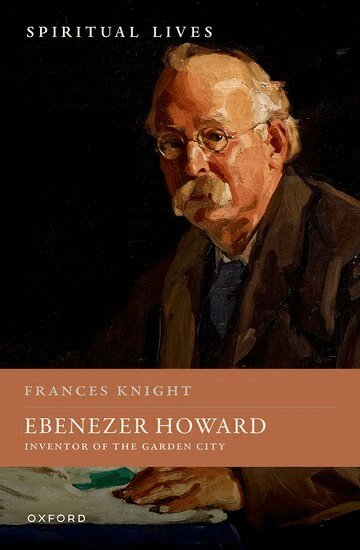
Ebenezer Howard (1850-1928) is famous worldwide for founding the Garden City movement, and he continues to be frequently cited by planners and theorists. When he was dying, he urged his prospective biographer to remember that 'the spiritual dimension' had always been central to his life and work. He wanted this to be prominently brought out in any biography. Almost a century after his death, Ebenezer Howard: Inventor of the Garden City is the first book that does justice to that wish. Frances Knight has written a very readable biography, the first since the 1980s, with a properly contextualized analysis of Howard's religious views. Shaped in the world of London Congregationalism, he became a keen seeker after unity and peace. He grafted new religious ideas, particularly from spiritualism, and later from Theosophy, into his biblically-informed, Protestant faith. Prone to spiritual epiphanies, he believed that he had been raised up to preach the 'gospel of the garden city' and to tackle the housing crisis by beginning to build the New Jerusalem in the Hertfordshire countryside. Although he sometimes appeared naïve, he was astute, and highly skilled at combining different, and sometimes conflicting, ideas in a way that built consensus and gained support from people across the social and political spectrum. As well as explaining the remarkable sequence of events that led from the publication of his ideas to the foundation of Letchworth as the world's first garden city, just five years later, this book investigates other neglected aspects of Howard's life including: the years he spent in America, his career as a shorthand writer, and his relationship with his first wife Lizzie - herself an important garden city pioneer. Howard wanted his garden cities to be places of spiritual exploration, and as this book shows, early Letchworth certainly lived up to those expectations.
607 kr
Skickas inom 5-8 vardagar
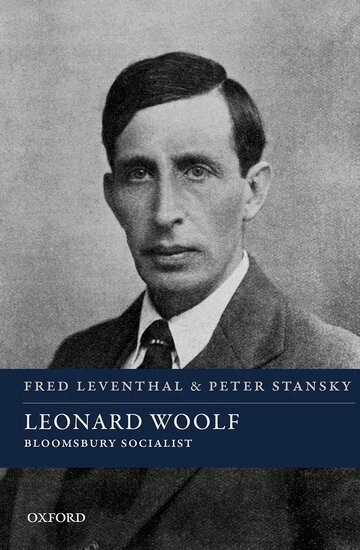
Leonard Woolf: Bloomsbury Socialist is an invaluable biography of an important if somewhat neglected figure in British cultural and political life,whose significance has been overshadowed by that of his wife, Virginia Woolf. His vital role in her life and career is a central aspect of this incisive study. Born to a prosperous middle-class Jewish family, he was profoundly affected by the early death of his father, a prominent barrister and QC, which left his family in reduced economic circumstances. Fred Leventhal and Peter Stansky expertly reveal that, despite his youthful loss of religious faith, being Jewish was as crucial in shaping Woolf's ideas as the Hellenism he imbibed at St Paul's and Trinity College, Cambridge. As an undergraduate member of the celebrated elite Apostles-along with his close friends, Lytton Strachey and John Maynard Keynes-he played a formative role in what later became the Bloomsbury Group. He subsequently spent seven years as a colonial servant in Ceylon, the background to his powerful novel, The Village in the Jungle. Within a year of his return to England in 1911 he married Virginia Stephen, and in 1917 they founded the Hogarth Press, an innovative and commercially successful publishing house. In the course of his long life he wrote prolifically on international relations, notably on the creation of the League of Nations, on socialism, and on imperial policy, particularly in Africa. Throughout this authoritative study,Leventhal and Stansky illuminate the life, scope, and thought of this seminal figure in twentieth-century British society.
262 kr
Skickas inom 5-8 vardagar
When Woodrow Wilson was elected as a ruling elder in the Presbyterian Church in 1897, his preacher father allegedly remarked, "I would rather that he held that position than be president of the United States." Fifteen years later he was both. Easily one of the most religious presidents in American history, almost all of Wilson's policies and important speeches were infused with religious concepts. The son, grandson, and nephew of southern Presbyterian divines, with six consecutive generations of preachers on his mother's side, Wilson viewed his political career as a sacred calling. As he remarked to a Democratic Party leader just before his inauguration in 1913, "God ordained that I should be the next president of the United States." As a scholar, Princeton University president, governor of New Jersey, then president, Wilson spent his entire career trying to further the cause of public righteousness. In 1905, he uttered his life's credo: "There is a mighty task before us and it welds us together. It is to make the United States a mighty Christian nation and to Christianize the World." Nonetheless, the 28th president was not principally a religious figure, and he didn't fit comfortably in any religious camp, either in his own time or today. In Woodrow Wilson: Ruling Elder, Spiritual President, Barry Hankins tells the story of Wilson's religion as he moved from the Calvinist orthodoxy of his youth to a progressive, spiritualized religion short on doctrine and long on morality.
571 kr
Skickas inom 5-8 vardagar
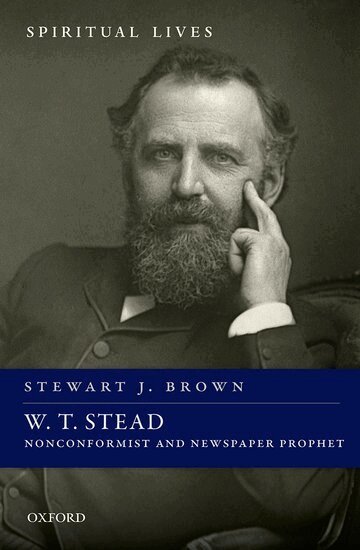
W. T. Stead (1849-1912) was a newspaper editor, author, social reformer, advocate for women rights, peace campaigner, spiritualist, and one of the best-known public figures in the late Victorian and Edwardian Britain. W. T. Stead: Nonconformist and Newspaper Prophet provides a compelling religious biography of Stead, offering particular attention to his conception of journalism--in an age of growing mass literacy--as a means to communicate religious truth and morality, and his view of the editor's desk as a modern pulpit. Leading scholar, Stewart J. Brown explores how his Nonconformist Conscience and sense of divine calling infused Stead's newspaper crusades-most famously his 'Maiden Tribute' campaign against child prostitution.The biography also examines Stead's growing interest in spiritualism and the occult, as he searched for the evidence of an afterlife that might draw people in a more secular age back to faith. It discusses his imperialism and his belief in the English-speaking peoples of the British Empire and American Republic as God's new chosen people for the spread of civilisation; and it highlights how his growing understanding of other faiths and cultures--but more especially his moral revulsion over the South African War of 1899-1902--brought him to question those beliefs. Finally, it assesses the influence of religious faith on his campaigns for world peace and the arbitration of international disputes.
653 kr
Skickas inom 5-8 vardagar
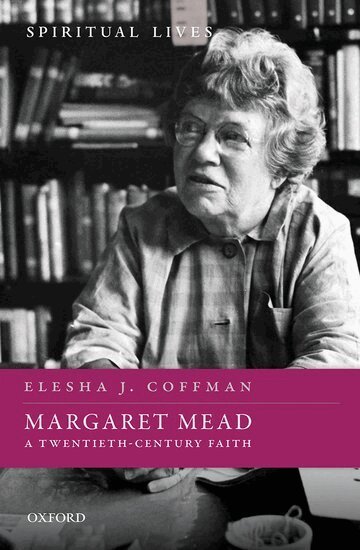
For 50 years, Margaret Mead told Americans how cultures worked, and Americans listened. While serving as a curator at the American Museum of Natural History and as a professor of anthropology at Columbia University, she published dozens of books and hundreds of articles, scholarly and popular, on topics ranging from adolescence to atomic energy, Polynesian kinship networks to kindergarten, national morale to marijuana. At her death in 1978, she was the most famous anthropologist in the world and one of the best-known women in America. She had amply achieved her goal, as she described it to an interviewer in 1975, "To have lived long enough to be of some use."As befits her prominence, Mead has had many biographers, but there is a curious hole at the center of these accounts: Mead's faith. Margaret Mead: A Twentieth-Century Faith introduces a side of its subject that few people know. It re-narrates her life and reinterprets her work, highlighting religious concerns. Following Mead's lead, it ranges across areas that are typically kept academically distinct: anthropology, gender studies, intellectual history, church history, and theology. It is a portrait of a mind at work, pursuing a unique vision of the good of the world.
424 kr
Skickas inom 5-8 vardagar
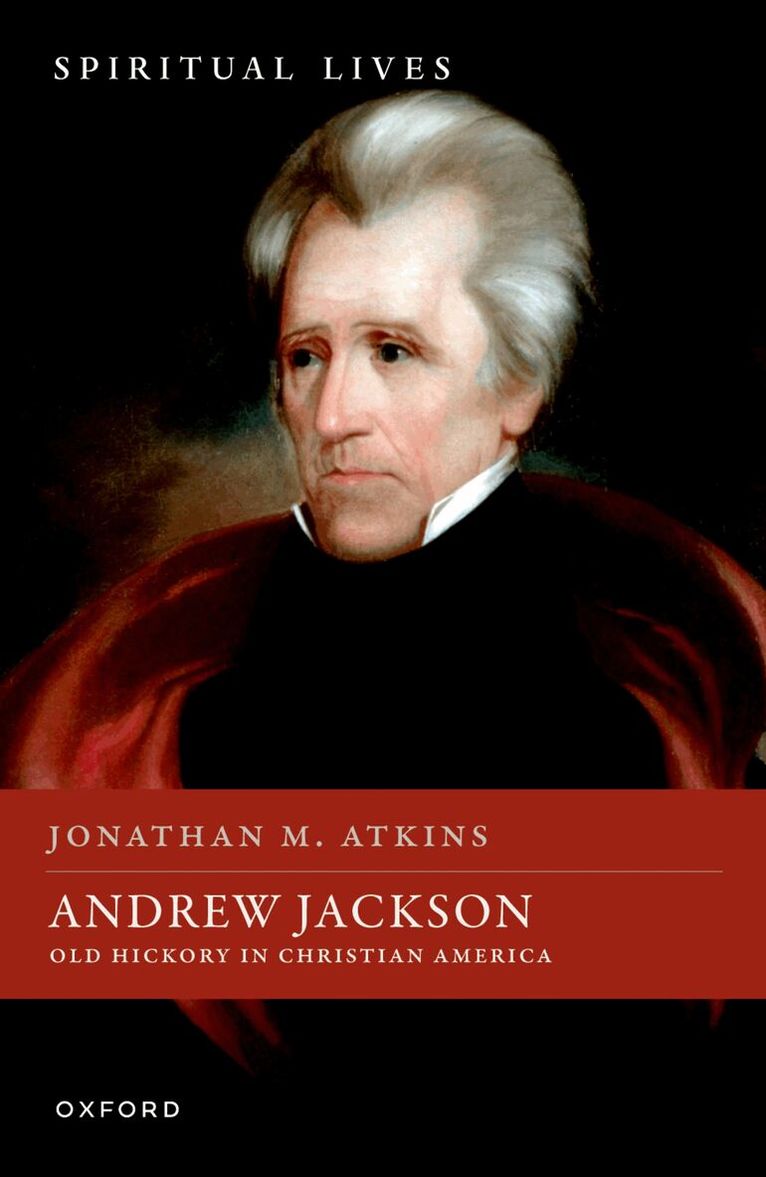
Few today think of Andrew Jackson, the American military hero and president, as a religious man. Nevertheless, Jackson considered himself a Christian throughout his life. Raised a "rigid presbeterian," Jackson's mother wanted her son to grow up to become a clergyman, and despite suffering tragedies and losing his family in the American Revolution, Jackson never rejected the fundamental Christian teachings of his youth. Although he gained notoriety as a rakish young man, religion's influence on him ebbed and flowed as he established himself as part of the South's planter elite. With his devout wife, Rachel, he attended church and knew his Bible and religious subjects well, and while his determination to preserve his reputation involved him in numerous personal conflicts--including a duel that led to his killing a rival--he blended the principles of the antebellum South's honor-based culture with his belief in a traditional, orthodox version of Christianity. Likewise, he easily reconciled his religion with his ownership of slaves and his advocacy of Native American removal, and while he equated his enemies with the forces of evil, he always attributed his military and political accomplishments to the blessings of Providence. As he aged, Jackson became more devout, but he never experienced a dramatic conversion--contradicting the expectations of the leading revivalists of his era's Second Great Awakening--and he consistently promoted religious liberty and separation of church and state as core republican principles. Ultimately, Jackson's faith reflected a version of Christianity widespread in his era, and his frequent appeals for divine guidance and for God's blessing on his nation further encouraged the development of an American civil religion.
507 kr
Skickas inom 7-10 vardagar
This book charts the life of Arthur Sullivan--the best loved and most widely performed British composer in history. While he is best known for his comic opera collaborations with W. S. Gilbert, it was his substantial corpus of sacred music which meant most to him and for which he wanted to be remembered. His upbringing and training in church music, and his own religious beliefs, substantially affected both his compositions for the theatre and his more serious work, which included oratorios, cantatas, sacred ballads, liturgical pieces, and hymns.Focusing on the spiritual aspects of Sullivan's life--which included several years as a church organist, involvement in Freemasonry, and an undying attachment to Anglican church music--Ian Bradley uses hitherto undiscovered letters, diary entries, and other sources to reveal the important influences on his faith and his work. No saint and certainly no ascetic, he was a lover of life and enjoyed its pleasures to the full. At the same time, he had a rare spiritual sensitivity, a sincere Christian faith, and a unique ability to uplift through both his character and his music that can best be described as a quality of divine emollient.
507 kr
Skickas inom 5-8 vardagar
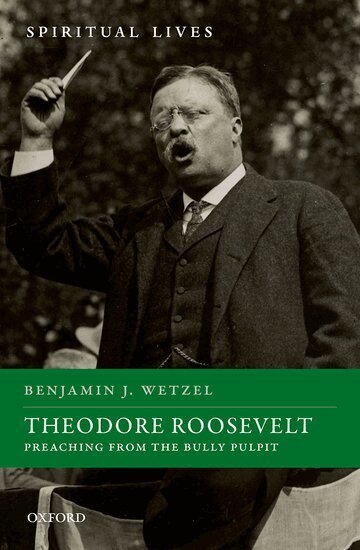
Theodore Roosevelt is well-known as a rancher, hunter, naturalist, soldier, historian, explorer, and statesman. His visage is etched on Mount Rushmore--alongside George Washington, Thomas Jefferson, and Abraham Lincoln--as a symbol of his vast and consequential legacy. While Roosevelt's life has been written about from many angles, no modern book probes deeply into his engagement with religious beliefs, practices, and controversies despite his lifelong church attendance and commentary on religious issues. Theodore Roosevelt: Preaching from the Bully Pulpit traces Roosevelt's personal religious odyssey from youthful faith and pious devotion to a sincere but more detached adult faith. Benjamin J. Wetzel presents the president as a champion of the separation of church and state, a defender of religious ecumenism, and a "preacher" who used his "bully pulpit" to preach morality using the language of the King James Bible. Contextualizing Roosevelt in the American religious world of the late nineteenth and early twentieth centuries, Wetzel shows how religious groups interpreted the famous Rough Rider and how he catered to, rebuked, and interacted with various religious constituencies. Based in large part on personal correspondence and unpublished archival materials, this book offers a new interpretation of an extremely significant historical figure.
399 kr
Skickas inom 5-8 vardagar
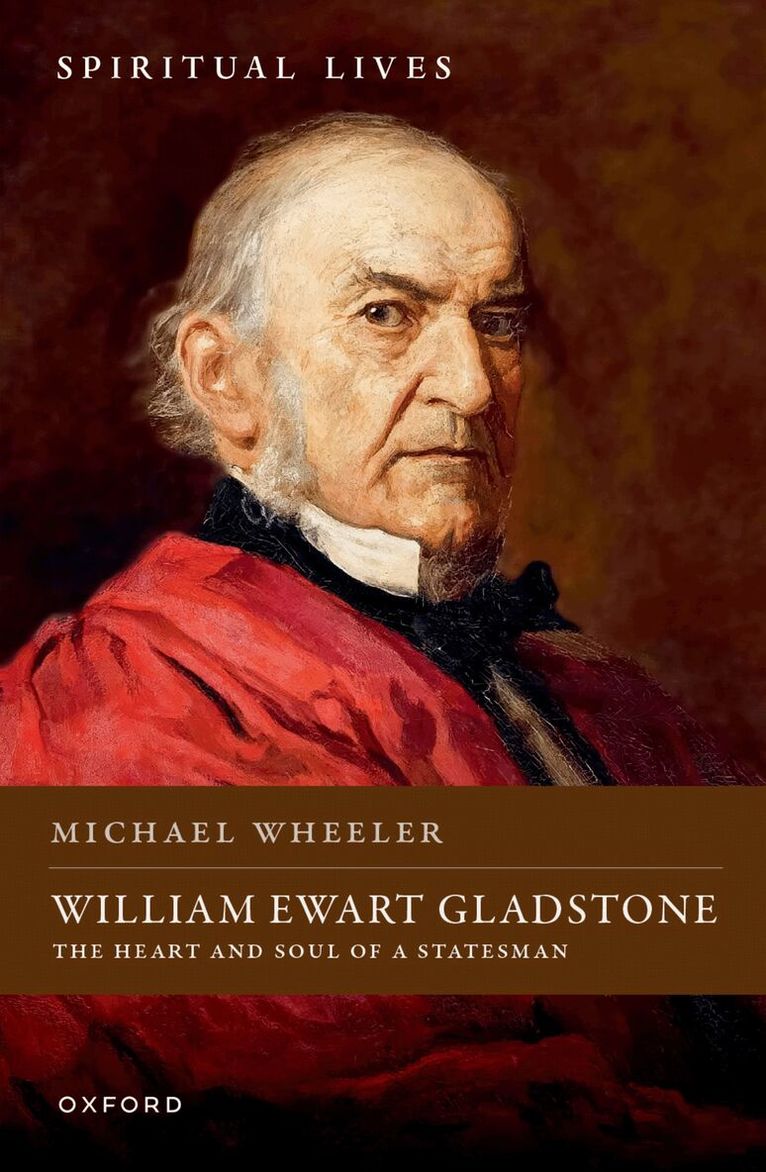
The leading statesman of nineteenth-century Britain, a figure who bestrode the political world like a Colossus, is 'Gladstone' to modern biographers. In order to signal the difference between Wheeler's approach and those of earlier biographers, the subject of this book is known as William, his baptismal name. His autobiographical fragments of 1892 included a disclaimer: 'I do not indeed intend in these notes to give a history of the inner life, which I think has with me been extraordinarily dubious, vacillating, and (above all) complex'. William Gladstone: The Heart and Soul of a Statesman is about the spiritual dimension of his complex inner life. In tracing the movements of his heart and soul, the book works from the inner to the outer aspects of a rich and varied life, from William's daily disciplines of prayer and reflection to his earnest attempts to follow the precepts of Christianity through action in the public realm and in private philanthropy, and in the writing of numerous reviews, articles, and books. He remained an independent intellectual, eschewing party labels within the Church of England and working out his own stance in relation to specific Liberal party policies in politics. He was as much a man of letters as he was a politician. Later in his political career, 'the people's William' appealed to public opinion through a series of national moral campaigns. His fiercest battles, however, were spiritual, as he castigated himself for falling short of the ideals set out in Jesus' sermon on the mount, particularly with regard to sexual desire as he sought to rescue women from a life of prostitution and became infatuated with a former courtesan. His longest crusade was against the enemy within.