SpringerBriefs in Biology - Böcker
Visar alla böcker i serien SpringerBriefs in Biology. Handla med fri frakt och snabb leverans.
10 produkter
10 produkter
534 kr
Skickas inom 10-15 vardagar
The book introduces a radically new way of thinking about information and the important role it plays in living systems. It opens up new avenues for exploring how cells and organisms change and adapt, since the ability to detect and respond to meaningful information is the key that enables them to receive their genetic heritage, regulate their internal milieu, and respond to changes in their environment. It also provides a way of resolving Descartes’ dilemma by explaining the workings of the brain in non-mechanical terms that are not tainted by spiritual or metaphysical beliefs. The types of meaningful information that different species and different cell types are able to detect are finely matched to the ecosystem in which they live, for natural selection has shaped what they need to know to function effectively in those circumstances. Biological detection and response systems range from the chemical configurations that govern genes and cell life to the relatively simple tropisms that guide single-cell organisms, the rudimentary nervous systems of invertebrates, and the complex neuronal structures of mammals and primates. The scope of meaningful information that can be detected and responded to reaches its peak in our own species, as exemplified by our special abilities in language, cognition, emotion, and consciousness, all of which are explored within this new framework.
Bluefin Tuna Fishery in the Bay of Biscay
Its Relationship with the Crisis of Catches of Large Specimens in the East Atlantic Fisheries from the 1960s
Häftad, Engelska, 2019
218 kr
Skickas inom 10-15 vardagar
This open access book is an original contribution to the knowledge on fishing and research associated with one of the most enigmatic fish of our seas: bluefin tuna, Thunnus thynnus (L.).
399 kr
Skickas
Although of high abundance, diversity and ecological importance, meiofauna is little covered by relevant scientific media.
534 kr
Skickas inom 10-15 vardagar
This book explores the exciting world of theoretical biology and is divided into three sections. The first section examines the roles played by renowned scientists such as Jacob, Monod, Rosen, Turing, von Bertalanffy, Waddington and Woodger in developing the field of theoretical biology. The second section, aided with numerous examples, supports the idea that logic and computing are suitable formal languages to describe and understand biological phenomena. The third and final section is, without doubt, the most intellectually challenging and endeavors to show the possible paths we could take to compute a cell - the basic unit of life - or the conditions required for a predictive theory of biological evolution; ultimately, a theory of life in the light of modern Systems Biology. The work aims to show that modern biology is closer than ever to making Goethe's dream come true and that we have reached a point where synthetic and analytical traditions converge to shed light on the living being as a whole.
534 kr
Skickas inom 10-15 vardagar
How organisms come to possess adaptive traits is a fundamental question for evolutionary biology. Although it is almost impossible to demonstrate evolution in the laboratory, this issue can be approached by using an unusual organism, “Dark-fly”: Drosophila melanogaster kept in complete darkness for 57 years through 1,400 generations, which corresponds to 28,000 years in terms of human generations. Has Dark-fly adapted to an environment of total darkness? If so, what is the molecular nature of the adaptation? In Evolution in the Dark, the remarkable findings from the Dark-fly project performed at Kyoto University are presented. It was found that Dark-fly did not have poor eyesight, but rather exhibited higher phototaxis ability and displayed lengthened bristles on the head that function as tactile receptors. Circadian rhythms were weakened but still retained in Dark-fly. With recent progress in genome science enabling researchers to perform whole genome sequencing for Dark-fly, a large number of mutations were identified including genes encoding a light receptor, olfactory receptors, and enzymes involved in neural development. The Dark-fly project is a simple but very long-term experiment. Combined with advanced techniques in genetics and genomics, it is a valuable tool for understanding the molecular nature of adaptive evolution.
534 kr
Skickas inom 10-15 vardagar
This book presents the latest topics in ecological and evolutionary research on aquatic biodiversity from bacteria to fishes, with special reference to Lake Biwa, an ancient lake in western Japan. With a geological history of 4 million years, Lake Biwa is the third oldest lake in the world. It is considered a biodiversity hotspot, where 1,769 aquatic species including 61 endemics are recorded, providing a rare opportunity to study the evolutionary diversification of aquatic biota and its ecological consequences. The first chapter introduces the evolutionary history of biodiversity, especially of fish in this lake. In the second chapter, some examples of trophic polymorphism in fish are described. Fish are keystone predators in lake ecosystems, and they can be a major driver for altering biological communities through their top-down trophic cascading effects. An excellent laboratory experiment is presented, demonstrating that functional diversity of fish feeding morphology alters food web properties of plankton prey communities. The third chapter focuses on aquatic microbes, whose abundance and diversity may also be influenced by the diversity of fish through top-down trophic cascades. Aquatic microbes can have a strong impact on ecosystem functioning in lakes, and in this chapter, the latest molecular techniques used to examine genetic and functional diversity of microbial communities are introduced. The final chapter presents theoretical frameworks for predicting how biodiversity has the potential to control the incidence and intensity of human-induced regime shifts. While respecting the precious nature of biodiversity in lakes, it is essential to be aware that modern human activities have brought a crisis of biodiversity loss in lakes worldwide. Throughout this book, readers will learn why biodiversity must be conserved at all levels, from genes to ecosystems.
534 kr
Skickas inom 10-15 vardagar
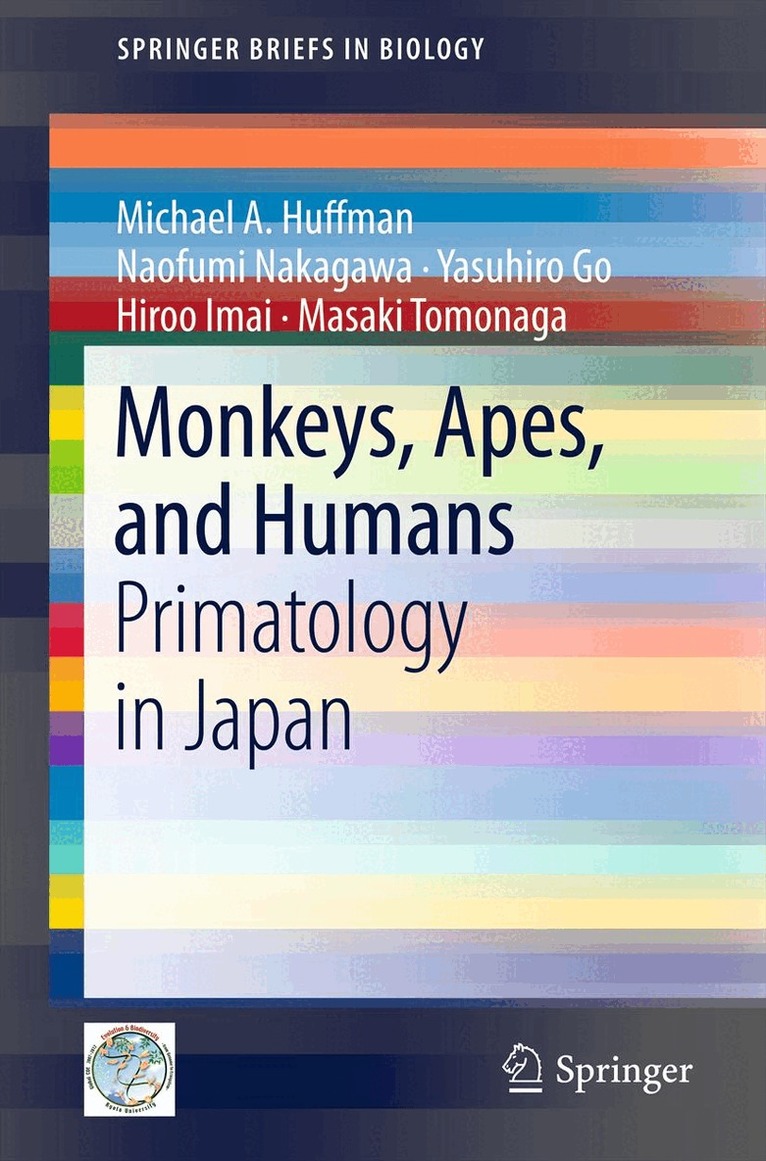
This book introduces to the reader unfamiliar with primatology in Japan three research projects representative of the unique multidisciplinary approach carried out by scientists at Kyoto University, the country’s premier institution for primate studies. The projects are all aimed at understanding the age-old questions, where did we come from, and what makes us unique or similar to our primate ancestors? The first chapter, by Naofumi Nakagawa, focuses on the cultural diversity of social behavior in the Japanese macaque. This chapter reviews research on primate culture, in particular the work on Japanese macaques, then presents what is arguably the first example of a culturally transmitted social convention in the species, called “hug-hug”. The second chapter, by Michael A. Huffman, introduces our current knowledge of self-medication in primates, based largely on a long-term study of wild chimpanzees at Kyoto University’s longest ongoing chimpanzee field in Africa, Mahale, in Tanzania. The suite of behavioral adaptations to parasite infections in chimpanzees is compared with our current knowledge of self-medication in other primates and other animal species. The third chapter, by Yasuhiro Go, Hiroo Imai, and Masaki Tomonaga, describes the ambitious efforts to combine cognitive science and genomics into a new discipline called “comparative cognitive genomics”. This chapter provides an overview of recent advancements in chimpanzee comparative cognition, the construction of a chimpanzee genomic database, and comparative genomic studies at the individual level, looking into factors affecting personality and individuality.
534 kr
Skickas inom 10-15 vardagar
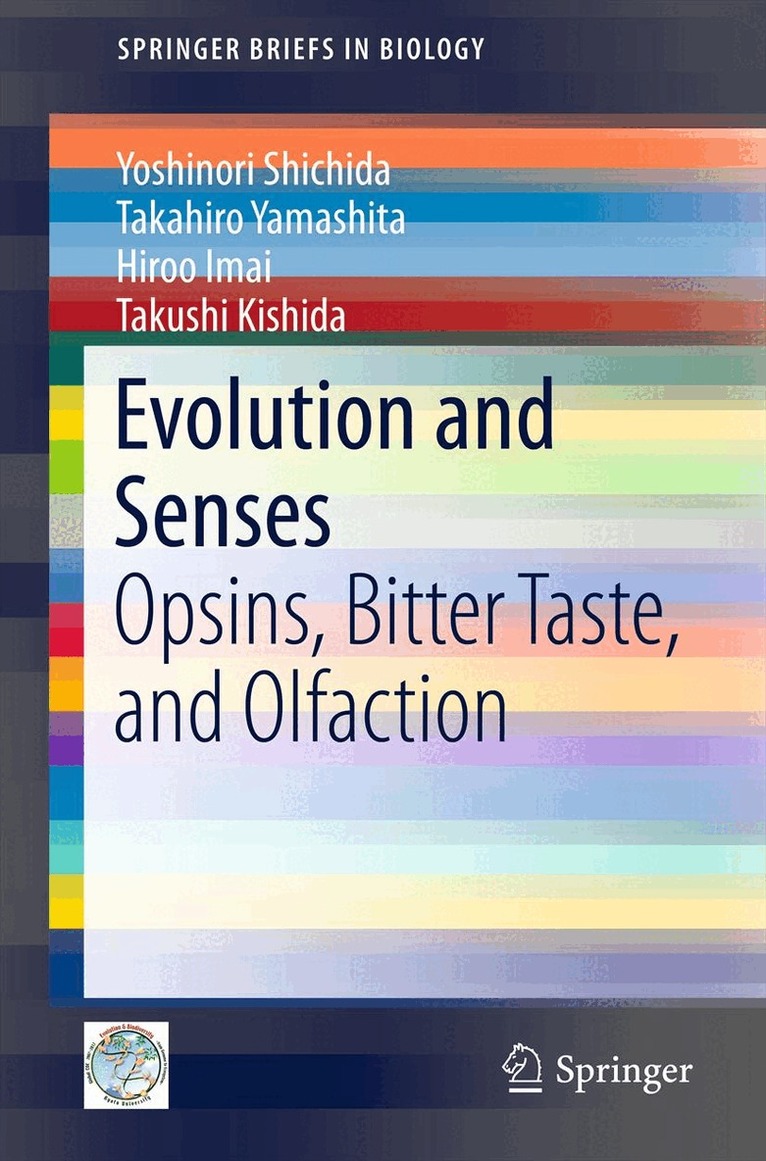
This book focuses on sensing and the evolution of animals. Using the five senses (visual, auditory, and olfactory perception, and taste and touch), animals can receive environmental stimuli and respond to them. Changes in these sensitivities might cause changes in aspects of animals’ lives such as habitat, activity timing, and diet—and vice versa. Recent advances in genome and molecular analysis enable us to investigate certain changes in the receptors or mechanisms involved in sensing and provide clues for understanding the evolution of animals related to those changes. The first chapter deals with the molecular evolution of opsins. In addition to the well-known function of opsins as visual receptors, opsins can be related to non-visual photoreception such as photoentrainment of circadian rhythm, photoperiodism, and background adaptation. Molecular phylogenic studies reveal that all opsin genes have evolved from one ancient opsin gene. The evaluation of the functions of each extant opsin protein based on the molecular features enables us to predict the molecular evolution and diversification of opsins during the evolution of animals. These studies shed light on which amino-acid substitutions cause the functional diversification of opsins and how they have influenced the evolution of animals. The second chapter has to do with bitter taste perception, a key detection mechanism against the ingestion of bioactive substances. Genetic and behavioral evidence reveal the existence of "non-taster" Japanese macaques for specific bitter compounds, which originated in a restricted region of Japan. This finding might provide a clue for elucidating the ecological, evolutionary, and neurobiological aspects of bitter taste perception of primates. The third chapter presents an extreme example of the evolution of olfaction, namely, that fully aquatic amniotes have generally reduced their olfactory capacity considerably compared to their terrestrial relatives.Interestingly, the remaining olfactory abilities are quite different among three fully aquatic amniotes investigated: toothed whales have no nervous system structures that mediate olfaction, but baleen whales can smell in air, and it has been suggested that sea snakes smell underwater.
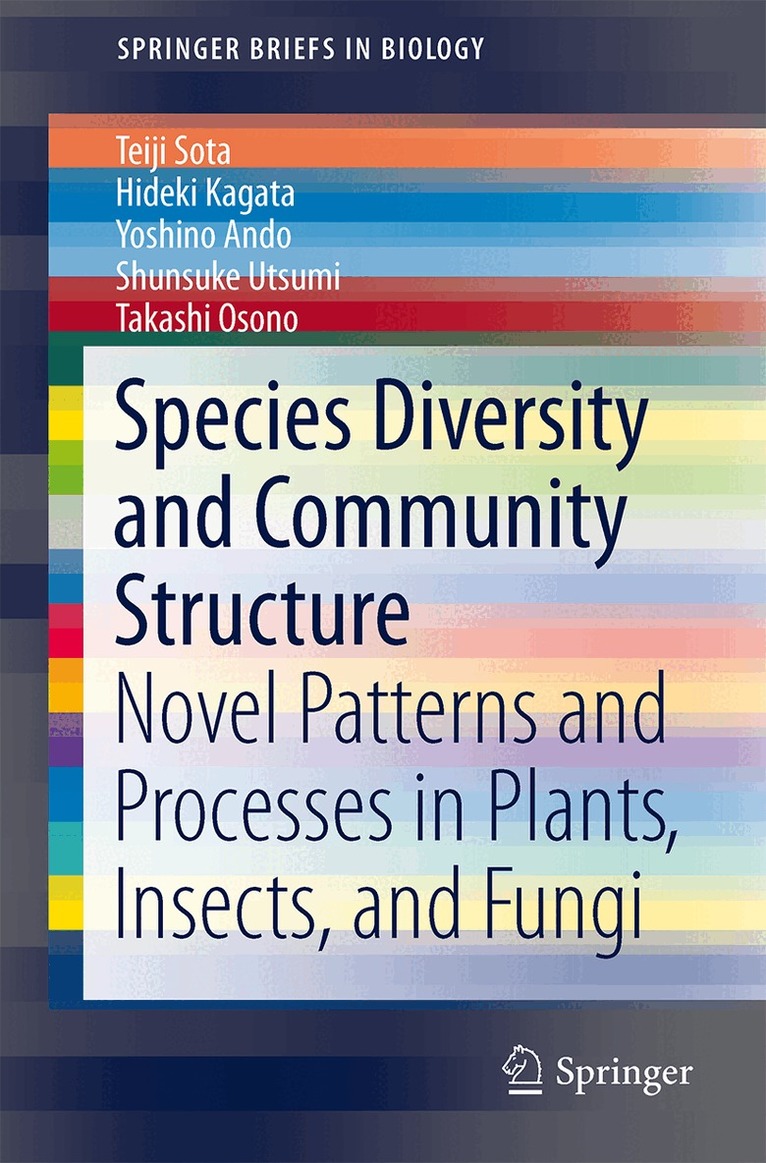
Species Diversity and Community Structure
Novel Patterns and Processes in Plants, Insects, and Fungi
Häftad, Engelska, 2013
534 kr
Skickas inom 10-15 vardagar
This book introduces recent progress in the study of species diversity and community structures in terrestrial organisms conducted by three groups at Kyoto University. First, it explains species diversity and the functioning of fungi in Asian regions as outlined by metagenomic approaches using next-generation sequencing technology. The advances in high-throughput sequencing technologies accelerate the speed of species inventorying, especially for microorganisms. Second, the study of complex interactions between herbivorous insects and plants in the community and ecosystem contexts is presented. Recent studies in community and ecosystem genetics shed light on these complex interactions with novel approaches incorporating genetic perspectives including genetic variation and phenotypic plasticity in plant defenses against herbivores. Finally, recent studies on speciation processes in insects are described, processes that are related to the evolution of particular life history strategies.Included is an examination of two hypotheses that may be important in understanding diversification of insect species in heterogeneous environments in space and time. This book is a valuable resource especially for ecologists who are interested in species diversity and community structure.
550 kr
Skickas inom 10-15 vardagar
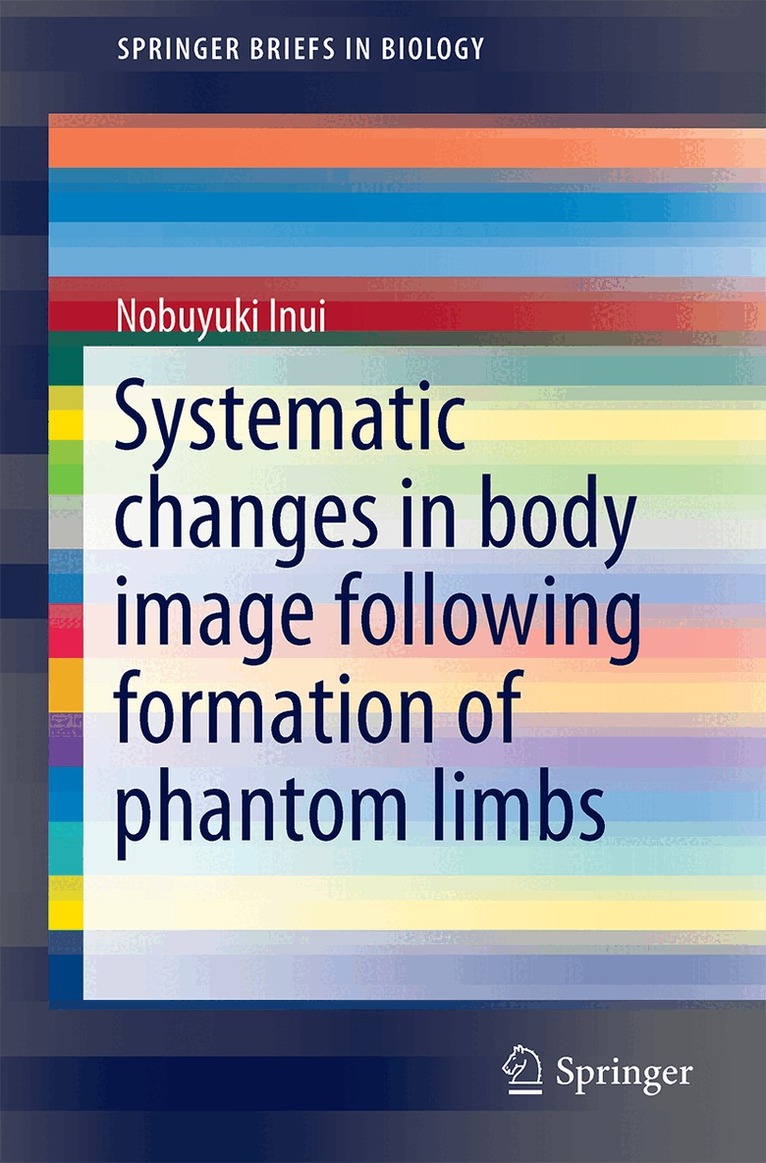
This book presents new findings on body image and also introduces new neuroscience-based methods for the fields of neurology and neurorehabilitation. Even when the hand is stationary we know its position – information that is needed by the brain to plan movements. If the sensory input from a limb is removed as the result of an accident, or as part of an experiment with local anesthesia, then a ‘phantom’ limb commonly develops. We used ischemic anesthesia of one limb to study the mechanisms that define this phenomenon. Surprisingly, if the fingers, wrist, elbow, ankle, and knee are extended before and during an ischemic block, then the perceived limb is flexed at the joint and vice versa. Furthermore, the limb is perceived to move continuously with no default position. The key parameter for these illusory changes in limb position is the difference in discharge rates between afferents in the flexor and extensor muscles at a joint. The final position of the phantom limbdepends on its initial position, suggesting that a body image uses incoming proprioceptive information for determination of starting points and endpoints when generating movements. In addition, the change in position does not involve limb postures that are anatomically impossible, suggesting that illusory posture is constrained by body maps. These results provide new information about how the brain generates phantom limbs.