Studies in Comparative Political Theory - Böcker
Visar alla böcker i serien Studies in Comparative Political Theory. Handla med fri frakt och snabb leverans.
10 produkter
10 produkter
1 043 kr
Skickas inom 5-8 vardagar
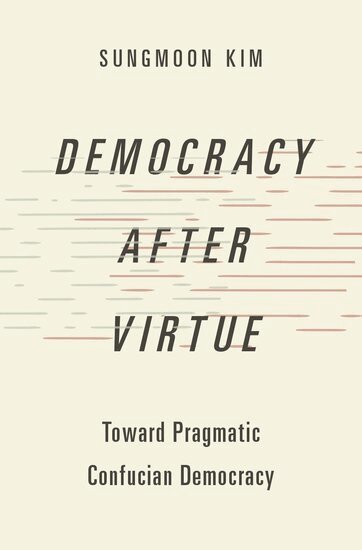
Is Confucianism compatible with democracy? Ongoing debates among political theorists revolve around the question of whether the overarching goal of Confucianism -- serving the people's moral and material well-being -- is attainable in modern day politics without broad democratic participation and without relying on a "one person, one vote" system. One side of the debate -- voiced by "traditional" Confucian meritocrats -- argues that only certain people are equipped with the moral character needed to lead and ensure broad public well-being. They emphasize moral virtue over civic virtue and the family over the state as the quintessential public institution. Moreover, they believe that a system of rule headed by meritorious elites can better handle complex modern public affairs than representative democracy. The other side -- voiced by Confucian democrats -- argues that unless all citizens participate equally in the public sphere, the kind of moral growth Confucianism emphasizes cannot be fully attained. Despite notable differences in political orientation, scholars of both positions acknowledge that democracy is largely of instrumental value for realizing Confucian moral ends in modern society. It would seem that Confucians of both types have largely dismissed democracy as a political system that can mediate clashing values and political views -- or even that Confucian democracy is a system marked by pluralism. In this book, Sungmoon Kim lays out a normative theory of Confucian democracy -- pragmatic Confucian democracy -- to address questions of the right to political participation, instrumental and intrinsic values of democracy, democratic procedure and substance, punishment and criminal justice, social and economic justice, and humanitarian intervention. As such, this project is not only relevant to the much debated topic of Confucian democracy as a cultural alternative to Western-style liberal democracy in East Asia, but it further investigates the philosophical implications of the idea and institution of Confucian democracy in normative democratic theory, criminal justice, distributive justice, and just war. Ultimately, Kim shows us that the question is not so much about the compatibility of Confucianism and democracy, but of how the two systems can benefit from each other.
1 678 kr
Skickas inom 3-6 vardagar
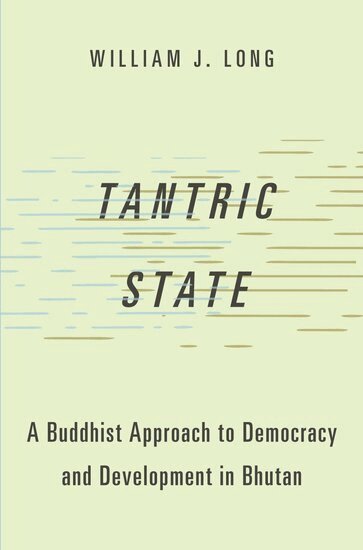
Today, the majority of sovereign states can be described as "democracies" because they possess elected political leadership and some measure of commitment to the protection and promotion of individual rights and equality under law. In the economic realm, most democracies are market-based and are integrated into wider regional and global markets. Virtually all are organized around Western liberal principles and values. For some, these philosophical commitments are indigenous and longstanding, and for others they were imported later, often through colonization. This book asks how democratic governance and economic development differ when founded on Eastern, Buddhist principles, rather than Western, liberal, and Enlightenment values and beliefs. The small, remote country of Bhutan is the only democratic, market-based state that is rooted constitutionally and culturally in Mahayana Buddhist principles and ethics. In this book, William J. Long provides an authentic basis for theoretical and empirical comparison between two distinct models of democracy and development that differ on important, first-order principles. Bhutanese Buddhist and Western liberal concepts of the individual "self," "human nature" and "the pursuit of happiness"-the building blocks of democratic and market-based economic theory-differ profoundly. Because the two approaches-liberal and Buddhist-are based on distinctive philosophical traditions, this comparison elucidates new questions, frames of inquiry, and alternative understandings of democracy and development.The book describes how democratic political institutions and markets emerged and how they function in Bhutan, demonstrating how, in real-world terms, Bhutan organizes and operates a political and economic system consistent with its Buddhist worldview. It considers the nature of Bhutan's unique political institutions and its economic touchstone, the pursuit of "Gross National Happiness (GNH)," rather than Gross National Product, as its ordering principle for policy. Ultimately, Tantric State reflects on whether Bhutan's unique model can withstand the forces of globalization and what insights Bhutan might have to share with the rest of us about dilemmas facing Western democracies and the need to pursue development in a more holistic and sustainable way.
719 kr
Skickas inom 3-6 vardagar
Is Confucianism compatible with democracy? Ongoing debates among political theorists revolve around the question of whether the overarching goal of Confucianism--serving the people's moral and material well-being--is attainable in modern day politics without broad democratic participation and without relying on a "one person, one vote" system. One side of the debate--voiced by "traditional" Confucian meritocrats--argues that only certain people are equipped with the moral character needed to lead and ensure broad public well-being. They emphasize moral virtue over civic virtue and the family over the state as the quintessential public institution. Moreover, they believe that a system of rule headed by meritorious elites can better handle complex modern public affairs than representative democracy. The other side--voiced by Confucian democrats--argues that unless all citizens participate equally in the public sphere, the kind of moral growth Confucianism emphasizes cannot be fully attained. Despite notable differences in political orientation, scholars of both positions acknowledge that democracy is largely of instrumental value for realizing Confucian moral ends in modern society. It would seem that Confucians of both types have largely dismissed democracy as a political system that can mediate clashing values and political views--or even that Confucian democracy is a system marked by pluralism. In this book, Sungmoon Kim lays out a normative theory of Confucian democracy--pragmatic Confucian democracy--to address questions of the right to political participation, instrumental and intrinsic values of democracy, democratic procedure and substance, punishment and criminal justice, social and economic justice, and humanitarian intervention. As such, this project is not only relevant to the much debated topic of Confucian democracy as a cultural alternative to Western-style liberal democracy in East Asia, but it further investigates the philosophical implications of the idea and institution of Confucian democracy in normative democratic theory, criminal justice, distributive justice, and just war. Ultimately, Kim shows us that the question is not so much about the compatibility of Confucianism and democracy, but of how the two systems can benefit from each other.
1 118 kr
Skickas inom 7-10 vardagar
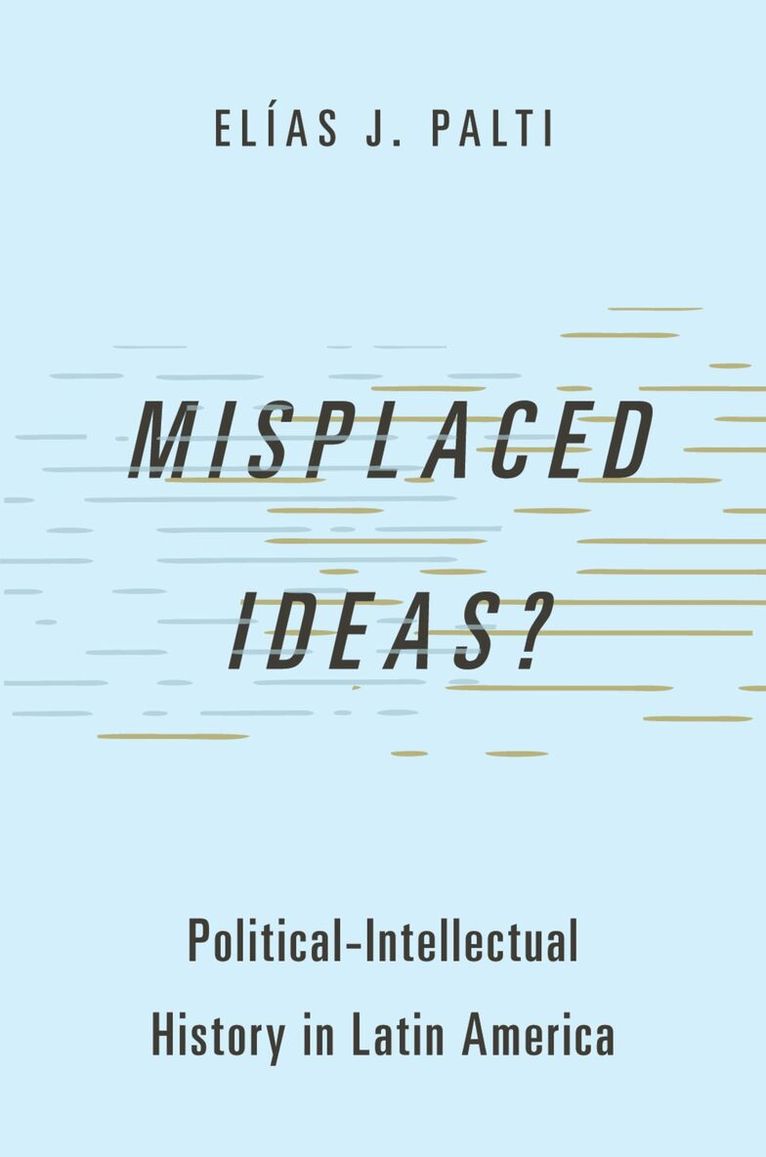
Is there a Latin American thought? What distinguishes it from the thought of other regions, particularly from European thought? What are its main expressions in political, cultural, and social life? How has it evolved historically? As the Mexican philosopher Leopoldo Zea Aguilar stated: "hardly any other society has so zealously sought for the features of its own identity."In Misplaced Ideas?, Elías J. Palti examines how Latin American identity has been conceived across different epochs and diverse conceptual contexts. Palti approaches these ideas from a historical-intellectual perspective, unraveling the theoretical foundations on which the very interrogation on Latin American identity has been forumulated and re-formulated. While he does not endorse or refute any particular perspective, Palti discloses the historical and contingent nature of their foundations. Ultimately, Misplaced Ideas? highlights the problematic dynamics of the circulation of ideas in peripheral regions of Western culture, which raises, in turn, broader theoretical questions regarding the ways of approaching complex historical-intellectual processes.
The Practice of Skepticism
Montaigne and Zhuangzi on Freedom, Coexistence, and the Limits of Government
Inbunden, Engelska, 2026
875 kr
Kommande
Although the ideas of freedom, peaceful coexistence, and a modest role for government are central to the liberal political tradition and the political practices of contemporary liberal democracies, their justification is disputed. This book argues that a comparative investigation of the thought of the sixteenth century French philosopher Michel de Montaigne and the ancient Chinese Daoist thinker Zhuangzi can help clarify one class of argument for these concerns, namely those connected to forms of skepticism. Both early modern France and China during the Warring States period gave rise to great intellectual and political conflicts; these thinkers responded by examining the limits of human knowledge and questioning claims to comprehensive knowledge of the best way of living. They argue that once we understand these limits, we will uphold the freedom to think and act in a variety of ways. Adopting this skeptical stance also undermines many of the grand pretensions to knowledge that motivate violent political projects. It leads, in this way, to a more modest or constrained view of the proper scope of good government. These claims are not of mere historical significance; the conditions of deep disagreement out of which their works emerged continue to persist today, as do the attempts to violently impose particular ways of living backed by dubious claims to knowledge. For this reason, the work of Montaigne and Zhuangzi helps us to better understand our contemporary political challenges and the ways in which we might move forward.
1 173 kr
Skickas inom 5-8 vardagar
Over the last century, Confucianism has been searching for a place in the modern political world. This ancient tradition was once the philosophical cornerstone upon which powerful political orders were built, but the collapse of monarchies in the twentieth century has removed Confucianism from its institutional manifestations. And despite the liberal turn of Confucianism in the 1950s that sought to adopt liberal democracy as the tradition's political future, there appears to be an increasing revival of the authoritarian strands of thought among Confucian scholarship. In Towards Confucian Republicanism, Elton Chan develops a theoretical framework of Confucianism for the twenty-first century. Chan argues that liberal Confucians must take seriously the internal authoritarian leanings of Confucianism--and then argue against such strands of the Confucian tradition. He shows that Confucians are keen on concentrating power in the hands of the virtuous not merely for promoting order and material livelihood, but also for general moral cultivation. Yet this use of political and moral hierarchy as institutional platforms for perfectionist development is self-defeating. To counter the authoritarian turn in Confucian scholarship, Chan articulates a vision of a hybrid political order that brings together Confucianism and republican democracy. He makes the case that Confucianism stands a much higher chance of achieving its political and moral ideals--good governance and collective virtuous cultivation--when merged with republicanism. Covering a uniquely wide range of Confucian classics and outlining his novel vision for Confucianism, Chan addresses pressing issues in contemporary political philosophy, including virtue politics, balance of power, civic education, public reason constraint, and the role of civil society. In so doing, Chan convincingly argues that to materialize Confucianism's ideals is to collectively practice democracy as a virtuous way of life.
1 173 kr
Skickas inom 5-8 vardagar
Are concepts of human rights universal? If so, how does one reconcile them with schools of thought that Western regimes often view as hostile to universal human rights, such as Islamic fundamentalism? This question often ends in the assumption that Sharia law cannot be reconciled with human rights or that there needs to be a one-way adaption of Sharia to human rights concepts. Others view the application of human rights ideas to Sharia as an imperial intrusion. In Human Rights Between Universality and Islamic Legitimacy, Mahmoud Bassiouni addresses the debate surrounding the compatibility of Islam and human rights. He argues that to understand their compatibility, we need to better understand the dynamic way in which Islamic tradition has evolved relative to international human rights. He asserts that existing Islamic human rights schemes have not been able to formulate an approach that adequately balances the double requirement of universality and Islamic legitimacy, and have done little to contribute to a more profound and methodologically coherent understanding of human rights. Including analyses of different Muslim positions, Bassiouni identifies their merits and shortcomings and asks how we can rethink and answer open questions in human rights philosophy by bringing the resources of the Islamic tradition to bear upon them. Overall, Human Rights Between Universality and Islamic Legitimacy engages current debates on human rights in the field of political theory and offers an Islamically informed perspective, which at times substantiates, at other times challenges, orthodox understandings of human rights. As a result, Bassiouni shows how an engagement with the Islamic legal tradition can contribute to the construction of a more sound and coherent theory of human rights.
807 kr
Skickas inom 7-10 vardagar
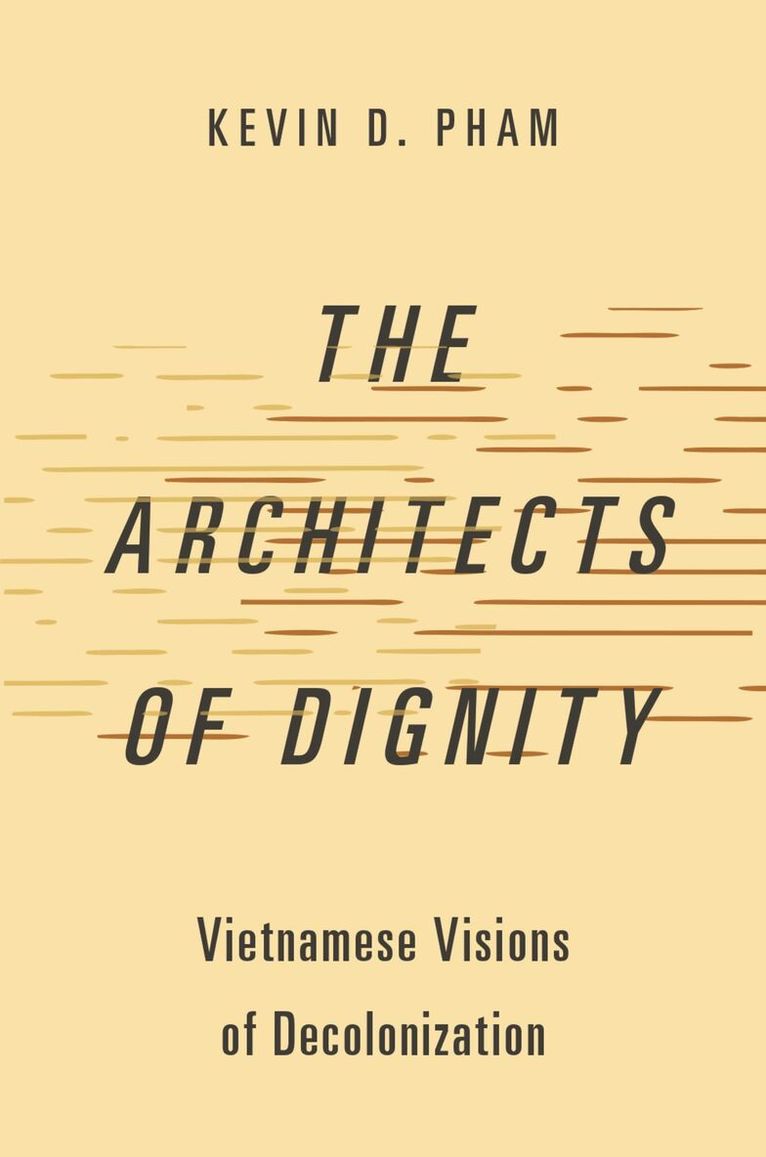
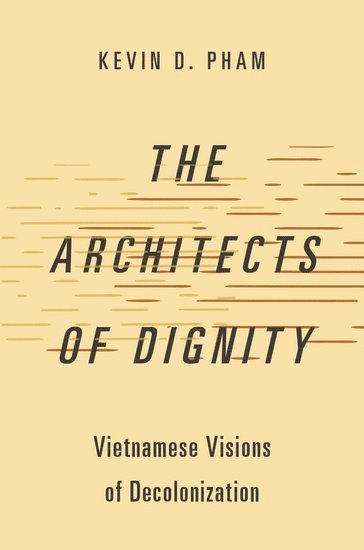
Vietnam has long been a crossroads of empires and thus a site of rich cross-cultural intellectual exchange. In The Architects of Dignity, Kevin Pham is the first political theorist to introduce Vietnamese political thought to debates in political theory, showing how Vietnamese thinkers challenge Western conventional wisdom. Drawing on Vietnamese and French language material, Pham traces an intergenerational debate among six influential Vietnamese intellectuals and political leaders who had competing visions for how the Vietnamese should strengthen themselves to stand up to French colonial domination. As theorists from a peripheral nation, they struggled to identify a national cultural heritage to be proud of or take guidance from. Rather than despair, they harnessed feelings of shame for their anti-colonial and nation-building projects.In doing so, they offer conceptions of shame and dignity that depart from mainstream conceptions in existing scholarship. While postcolonial theory typically views shame as destructive false consciousness, these thinkers show how a nation can harness shame in anticolonial, productive, and self-affirming ways, namely by synthesizing Eastern and Western ideas to be architects of their own dignity. And while dignity is typically understood as something inherent in individuals, as a justification for rights, and as requiring recognition, these thinkers saw dignity as a property of nations, as rooted in the duties a nation's people embrace instead of in the qualities of persons, and as something to be asserted by the nation instead of being dependent on recognition by colonizers.
278 kr
Skickas inom 5-8 vardagar
Vietnam has long been a crossroads of empires and thus a site of rich cross-cultural intellectual exchange. In The Architects of Dignity, Kevin Pham is the first political theorist to introduce Vietnamese political thought to debates in political theory, showing how Vietnamese thinkers challenge Western conventional wisdom. Drawing on Vietnamese and French language material, Pham traces an intergenerational debate among six influential Vietnamese intellectuals and political leaders who had competing visions for how the Vietnamese should strengthen themselves to stand up to French colonial domination. As theorists from a peripheral nation, they struggled to identify a national cultural heritage to be proud of or take guidance from. Rather than despair, they harnessed feelings of shame for their anti-colonial and nation-building projects.In doing so, they offer conceptions of shame and dignity that depart from mainstream conceptions in existing scholarship. While postcolonial theory typically views shame as destructive false consciousness, these thinkers show how a nation can harness shame in anticolonial, productive, and self-affirming ways, namely by synthesizing Eastern and Western ideas to be architects of their own dignity. And while dignity is typically understood as something inherent in individuals, as a justification for rights, and as requiring recognition, these thinkers saw dignity as a property of nations, as rooted in the duties a nation's people embrace instead of in the qualities of persons, and as something to be asserted by the nation instead of being dependent on recognition by colonizers.
292 kr
Skickas inom 5-8 vardagar
Is there a Latin American thought? What distinguishes it from the thought of other regions, particularly from European thought? What are its main expressions in political, cultural, and social life? How has it evolved historically? As the Mexican philosopher Leopoldo Zea Aguilar stated: "hardly any other society has so zealously sought for the features of its own identity."In Misplaced Ideas?, Elías J. Palti examines how Latin American identity has been conceived across different epochs and diverse conceptual contexts. Palti approaches these ideas from a historical-intellectual perspective, unraveling the theoretical foundations on which the very interrogation on Latin American identity has been forumulated and re-formulated. While he does not endorse or refute any particular perspective, Palti discloses the historical and contingent nature of their foundations. Ultimately, Misplaced Ideas? highlights the problematic dynamics of the circulation of ideas in peripheral regions of Western culture, which raises, in turn, broader theoretical questions regarding the ways of approaching complex historical-intellectual processes.