Studies in Constitutional Democracy - Böcker
Visar alla böcker i serien Studies in Constitutional Democracy. Handla med fri frakt och snabb leverans.
11 produkter
11 produkter
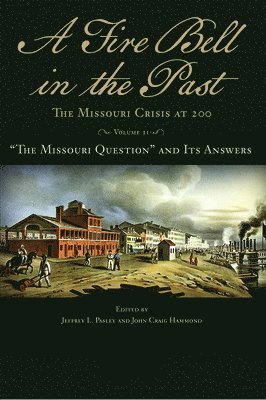
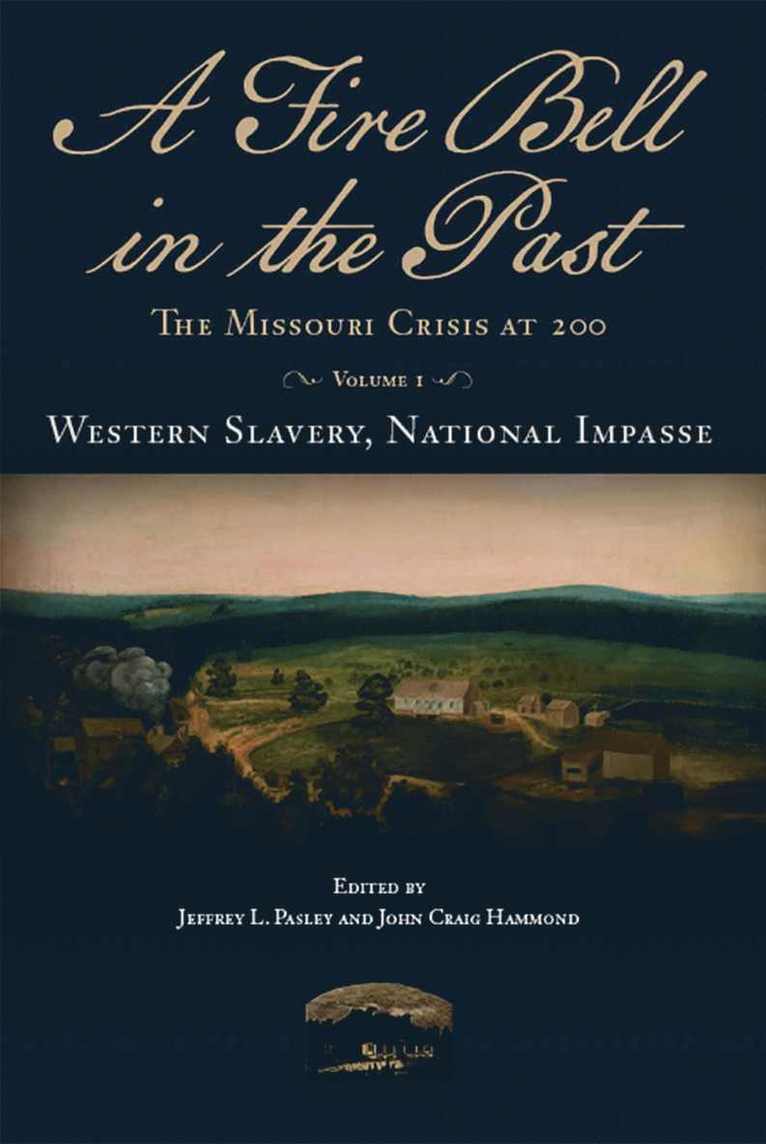
Fire Bell in the Past
The Missouri Crisis at 200, Volume I, Western Slavery, National Impasse
Inbunden, Engelska, 2021
371 kr
Skickas inom 7-10 vardagar
Many of the original essays in this volume began as papers presented at an international conference sponsored by the Missouri Humanities Council and the Kinder Institute on Constitutional Democracy, A Fire-Bell in the Past: Re-assessing the Missouri Crisis at 200, held at the University of Missouri at Columbia on February 15-16, 2019. In an attempt not only to reassess but add to historians' understanding of the full scope of the causes and consequences of what came to be known as the Missouri Crisis, on a regional and national basis, the editors extended their invitation for scholarly works beyond the conference, ending up with too many first-rate and important new additions to the historiography than could be presented in this first volume. With the second volume slated for Fall 2021 publication, this unique work is perfectly timed to mark Missouri's Bicentennial.
217 kr
Skickas inom 7-10 vardagar
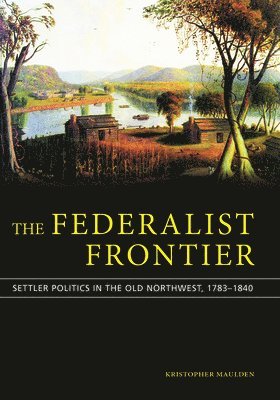
The Federalist Frontier traces the development of Federalist policies and the Federalist Party in the first three states of the Northwest Territory—Ohio, Indiana, and Illinois—from the nation’s first years until the rise of the Second Party System in the 1820s and 1830s. Relying on government records, private correspondence, and newspapers, Kristopher Maulden argues that Federalists originated many of the policies and institutions that helped the young United States government take a leading role in the American people’s expansion and settlement westward across the Appalachians. It was primarily they who placed the U.S. Army at the fore of the white westward movement, created and executed the institutions to survey and sell public lands, and advocated for transportation projects to aid commerce and further migration into the region. Ultimately, the relationship between government and settlers evolved as citizens raised their expectations of what the federal government should provide, and the region embraced transportation infrastructure and innovation in public education. Historians of early American politics will have a chance to read about Federalists in the Northwest, and they will see the early American state in action in fighting Indians, shaping settler understandings of space and social advancement, and influencing political ideals among the citizens. For historians of the early American West, Maulden’s work demonstrates that the origins of state-led expansion reach much further back in time than generally understood.
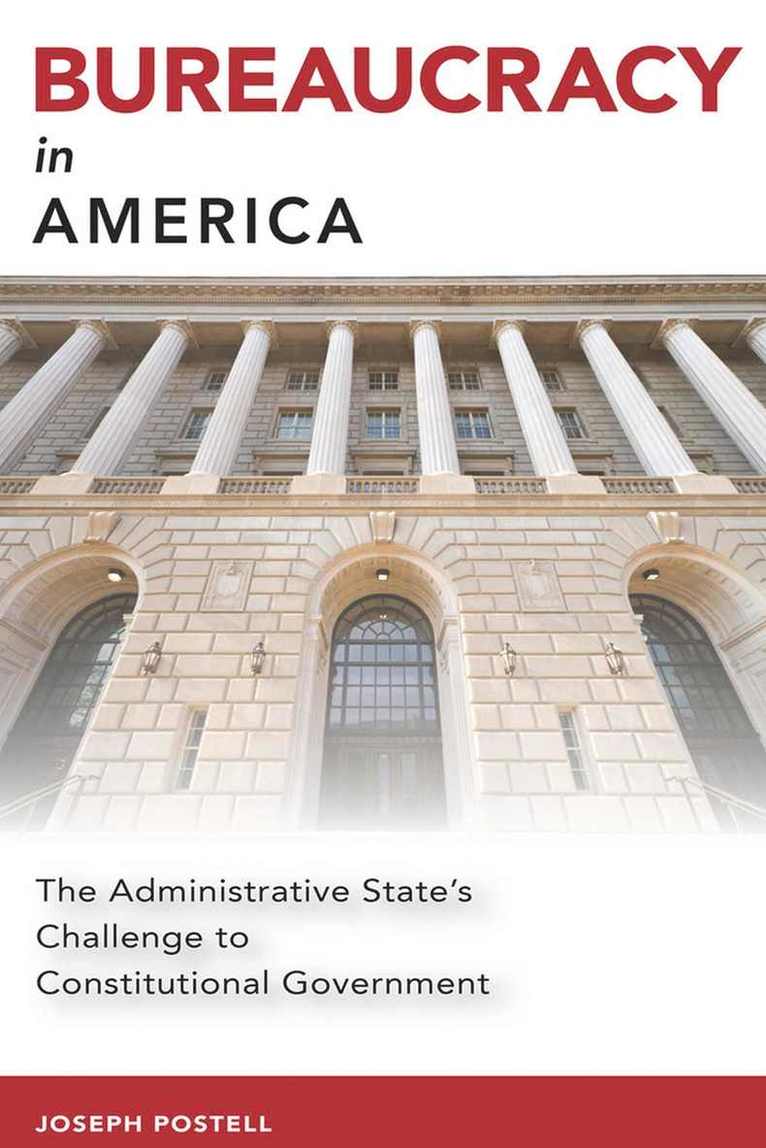
Bureaucracy in America
The Administrative State's Challenge to Constitutional Government
Häftad, Engelska, 2023
242 kr
Skickas inom 7-10 vardagar
The rise of the administrative state is the most significant political development in American politics over the past century. While our Constitution separates powers into three branches, and requires that the laws are made by elected representatives in the Congress, today most policies are made by unelected officials in agencies where legislative, executive, and judicial powers are combined. This threatens constitutionalism and the rule of law. This book examines the history of administrative power in America and argues that modern administrative law has failed to protect the principles of American constitutionalism as effectively as earlier approaches to regulation and administration.
360 kr
Skickas inom 7-10 vardagar
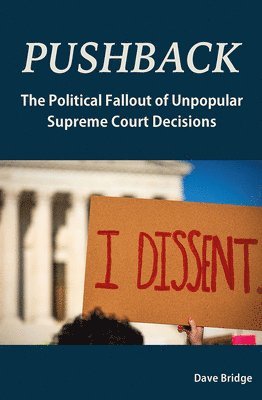
The Supreme Court has usually operated in majoritarian fashion but not always, and when it hasn’t done so, the consequences of its decisions have had an extremely important impact on the Court, political parties, party formation, and politics in general.In writing Pushback, an interdisciplinary book in an interdisciplinary series, Dave Bridge crosses methodological boundaries. Sometimes, the inquiry allows for procedural data collection with measurable observations (e.g., polls, number of congressional proposals, roll call tallies, breakdown of factional affiliations). At other times, he relies on historical narrative to describe complex stories that can only be told by attending to sequence, actors, institutions, and norms. The end result offers readers an innovative and highly accessible ways to think about the ways in which our constitutional democracy can push back against rare counter-majoritarian Supreme Court decisions.
495 kr
Skickas inom 11-20 vardagar
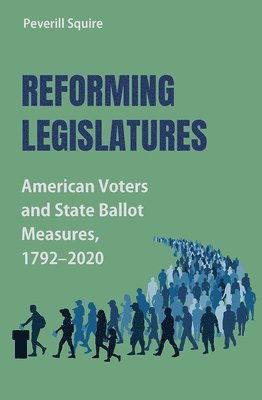
Legislatures are ubiquitous in the American political experience. First created in Virginia in 1619, they have existed continuously ever since. Indeed, they were established in even the most unlikely of places, notably in sparsely populated frontier settlements, and functioned as the focal point of every governing system devised. Despite the ubiquity of state legislatures, we know remarkably little about how Americans have viewed them as organizations, in terms of their structures, rules, and procedures. But with the rise of modern public opinion surveys in the twentieth century, we now have extensive data on how Americans have gauged legislative performance throughout the many years. That said, the responses to the questions pollsters typically pose reflect partisanship, policy, and personality. Generally, respondents respond favorably to legislatures controlled by their own political party and those in power during good economic times. Incumbent lawmakers get ratings boosts from having personalities, “home styles” that mesh with those of their constituents. These relationships are important indicators of people’s thoughts regarding the current performance of their legislatures and legislators, but they tell us nothing about attitudes toward the institution and its organizational characteristics. This study offers a unique perspective on what American voters have historically thought about legislatures as organizations and legislators as representatives. Rather than focusing on responses to surveys that ask respondents how they rate the current performance of lawmakers and legislatures, this study leverages the most significant difference between national and state politics: the existence of ballot propositions in the latter. At the national level Americans have never had any say over Congress’s structure, rules, or procedures. In contrast, at the state level they have had ample opportunities over the course of more than two centuries to shape their state legislatures. The data examined here look at how people have voted on more than 1,500 state ballot propositions targeting a wide array of legislative organizational and parliamentary features. By linking the votes on these measures with the public debates preceding them, this study documents not only how American viewed various aspects of their legislatures, but also whether their opinions held constant or shifted over time. The findings reported paint a more nuanced picture of Americans’ attitudes toward legislatures than the prevailing one derived from survey research. When presented with legislative reform measures on which concrete choices were offered and decisions on them had to be made, the analyses presented here reveal that, counter to the conventional wisdom that people loved their representatives but hated the legislature, voters usually took charitable positions toward the institution while harboring skeptical attitudes about lawmakers’ motives and behaviors.
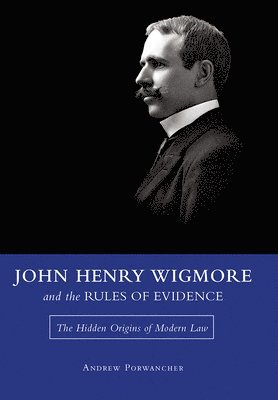
John Henry Wigmore and the Rules of Evidence Volume 1
The Hidden Origins of Modern Law
Häftad, Engelska, 2024
201 kr
Skickas inom 7-10 vardagar
Honorable Mention, 2017 Scribes Book Award, The American Society of Legal WritersAt the dawn of the twentieth century, the United States was reeling from the effects of rapid urbanization and industrialization. Time-honored verities proved obsolete, and intellectuals in all fields sought ways to make sense of an increasingly unfamiliar reality. The legal system in particular began to buckle under the weight of its anachronism. In the midst of this crisis, John Henry Wigmore, dean of the Northwestern University School of Law, single-handedly modernized the jury trial with his 1904-5 Treatise onevidence, an encyclopedic work that dominated the conduct of trials. In so doing, he inspired generations of progressive jurists—among them Oliver Wendell Holmes, Jr., Benjamin Cardozo, and Felix Frankfurter—to reshape American law to meet the demands of a new era. Yet Wigmore’s role as a prophet of modernity has slipped into obscurity. This book provides a radical reappraisal of his place in the birth of modern legal thought.
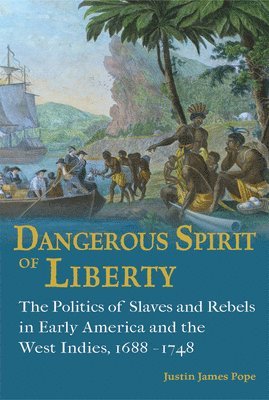
Dangerous Spirit of Liberty
The Politics of Slaves and Rebels in Early America and the West Indies, 1688-1748
Inbunden, Engelska, 2025
760 kr
Skickas inom 3-6 vardagar
Justin Pope’s ground-breaking work tells the story of an era of slave unrest that swept through the Atlantic World in the first half of the eighteenth century. Provinces along the eastern coast of North America and around the Caribbean Sea experienced more insurrections and conspiracy trials in the 1730s and 1740s than in any period before the Age of Revolution. The governor of Jamaica warned his king that slaves were spreading a “dangerous Spirit of Liberty” throughout the West Indies, concerns echoed by European colonists on the northern mainland. African-born slaves rose in rebellion and captured the Danish island of Saint John, and Maroons waged a successful war in Jamaica, events that became news in the wider Atlantic World. By the early 1740s, word of emancipation and widespread rebellion had taken hold in slave communities from the coast of South America to the harbors of New York City. Colonial authorities responded to rumors of slave plotting with brutal conspiracy trials, exhorting false confessions and executing hundreds of men and women in travesties of justice in need of retelling. Scholars have long noted this period of intensified slave unrest, not unlike the era of the Haitian Revolution, but no one has conducted a full-length study of this early tumult across empires. This book explains the causes behind this rash of insurrections, both real and imagined, and explores the consequences for the peoples of the eighteenth-century Atlantic World.Dangerous Spirit of Liberty's distinguishing feature is its focus on the role of communication in the development of a rebellious early eighteenth-century Atlantic. Most historians of slavery have presupposed that slave unrest was confined to small locales in the first half of the eighteenth century. In fact, slaves found ways to share news across provinces to great effect. Benefiting from research in the archives of Great Britain, Spain, Barbados, Bermuda, Jamaica, Antigua, the U.S. Virgin Islands, and the mainland United States, the book reveals new evidence of slave communication networks and shows how people of African ancestry shared rumors of emancipation and rebellion in this period. Slaves laboring in colonial commerce and working aboard ships helped foster an increasingly restive Black community. Banished slaves, convicted conspirators accused of plotting insurrection, carried their experiences with them in exile to neighboring colonies. By reconstructing the path of news, the book reveals rumors and reports that particularly resonated among slaves in the early eighteenth century.
588 kr
Kommande
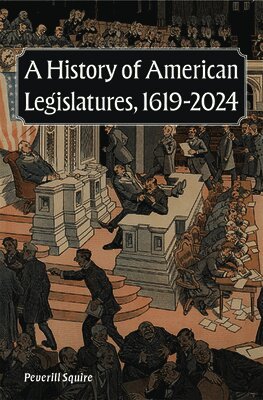
What might the members of the first Virginia assembly think if they could visit today’s Virginia House of Delegates? The air-conditioning and diversity of the current membership surely would surprise them, but would the legislative process itself strike them as odd? In his latest work, Peverill Squire demonstrates that the way the modern legislature goes about its work would seem familiar to visitors from the past. Squire traces a nearly uninterrupted path from that first assembly in Virginia in 1619 to the contemporary Virginia General Assembly, and to the U.S. Congress and the other forty-nine state legislatures. Each chapter examines discrete topics rather than historical eras, distinguishing the book from other studies of American legislatures. Topics covered include the fundamentals of legislative structure and operation, how qualification standards for legislative service became more inclusive, and how legislative professionalization unfolded at both congressional and state levels. Though covering more than 400 years, Squire manages to present a comprehensive and accessible history of American legislatures that both scholars and students will find valuable.
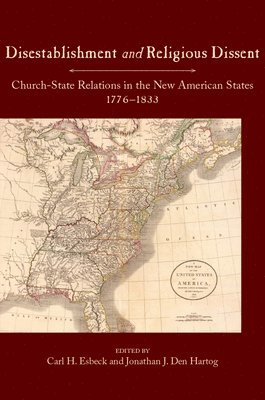
Disestablishment and Religious Dissent
Church-State Relations in the New American States, 1776-1833
Häftad, Engelska, 2026
266 kr
Skickas inom 7-10 vardagar
On May 10, 1776, the Second Continental Congress sitting in Philadelphia adopted a Resolution which set in motion a round of constitution making in the colonies, several of which soon declared themselves sovereign states and severed all remaining ties to the British Crown. In forming these written constitutions, the delegates to the state conventions were forced to address the issue of church-state relations. Each colony had unique and differingtraditions of church-state relations rooted in the colony’s peoples, their country of origin, and religion.This definitive volume, comprising twenty-one original essays by eminent historians and political scientists, is a comprehensive state-by-state account of disestablishment in the original thirteen states, as well as a look at similar events in the soon-to-be-admitted states of Vermont, Tennessee, and Kentucky. Also considered are disestablishment in Ohio (the first state admitted from the Northwest Territory), Louisiana and Missouri (the first states admitted from the Louisiana Purchase), and Florida (wrestled from Spain under U.S. pressure). The volume makes a unique scholarly contribution by recounting in detail the process of disestablishment in each of the colonies, as well as religion’s constitutional and legal place in the new states of the federal republic.
565 kr
Skickas
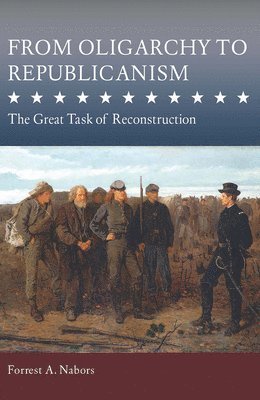
On December 4, 1865, members of the 39th United States Congress walked into the Capitol Building to begin their first session after the end of the Civil War. They understood their responsibility to put the nation back on the path established by the American Founding Fathers. The moment when the Republicans in the Reconstruction Congress remade the nation and renewed the law is in a class of rare events. The Civil War should be seen in this light.In From Oligarchy to Republicanism: The Great Task of Reconstruction, Forrest A. Nabors shows that the ultimate goal of the Republican Party, the war, and Reconstruction was the same. This goal was to preserve and advance republicanism as the American founders understood it, against its natural, existential enemy: oligarchy. The principle of natural equality justified American republicanism and required abolition and equal citizenship. Likewise, slavery and discrimination on the basis of color stand on the competing moral foundation of oligarchy, the principle of natural inequality, which requires ranks.The effect of slavery and the division of the nation into two “opposite systems of civilization” are causally linked. Charles Devens, a lawyer who served as a general in the Union Army, and his contemporaries understood that slavery’s existence transformed the character of political society.One of those dramatic effects was the increased power of slaveowners over those who did not have slaves. When the slave state constitutions enumerated slaves in apportioning representation using the federal three-fifths ratio or by other formulae, intra-state sections where slaves were concentrated would receive a substantial grant of political power for slave ownership. In contrast, low slave-owning sections of the state would lose political representation and political influence over the state. This contributed to the non-slaveholders’ loss of political liberty in the slave states and provided a direct means by which the slaveholders acquired and maintained their rule over non-slaveholders.This book presents a shared analysis of the slave South, synthesized from the writings and speeches of the Republicans who served in the Thirty-Eighth, Thirty-Ninth or Fortieth Congress from 1863-1869. The account draws from their writings and speeches dated before, during, and after their service in Congress. Nabors shows how the Republican majority, charged with the responsibility of reconstructing the South, understood the South.Republicans in Congress were generally united around the fundamental problem and goal of Reconstruction. They regarded their work in the same way as they regarded the work of the American founders. Both they and the founders were engaged in regime change, from monarchy in the one case, and from oligarchy in the other, to republicanism. The insurrectionary states’ governments had to be reconstructed at their foundations, from oligarchic to republican. The sharp differences within Congress pertained to how to achieve that higher goal.
219 kr
Skickas inom 7-10 vardagar
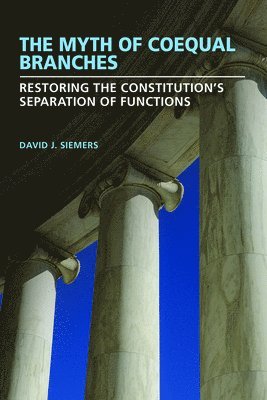
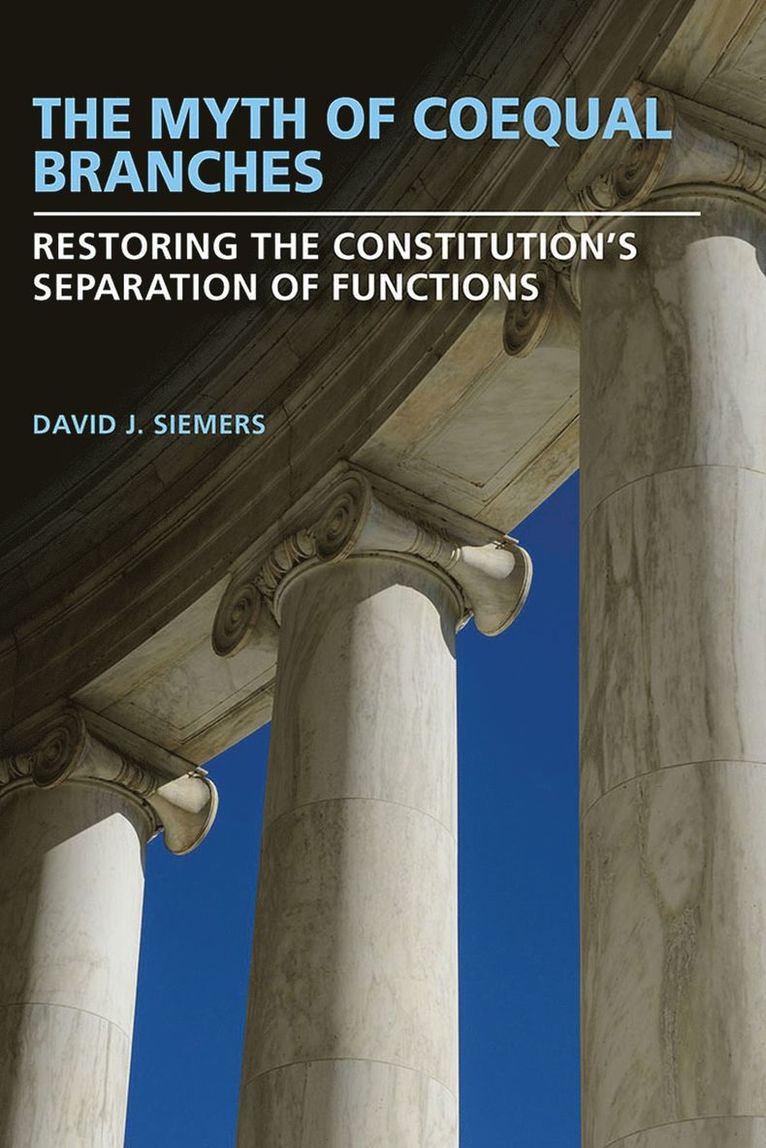
The idea that the three branches of U.S. government are equal in power is taught in classrooms, proclaimed by politicians, and referenced in the media. But, as David Siemers shows, that idea is a myth, neither intended by the Founders nor true in practice. Siemers explains how adherence to this myth normalizes a politics of gridlock, in which the action of any branch can be checked by the reaction of any other. The Founders, however, envisioned a separation of functions rather than a separation of powers. Siemers argues that this view needs to replace our current view, so that the goals set out in the Constitution’s Preamble may be better achieved.