Studies in Historical Geography - Böcker
Visar alla böcker i serien Studies in Historical Geography. Handla med fri frakt och snabb leverans.
14 produkter
14 produkter
656 kr
Skickas inom 10-15 vardagar
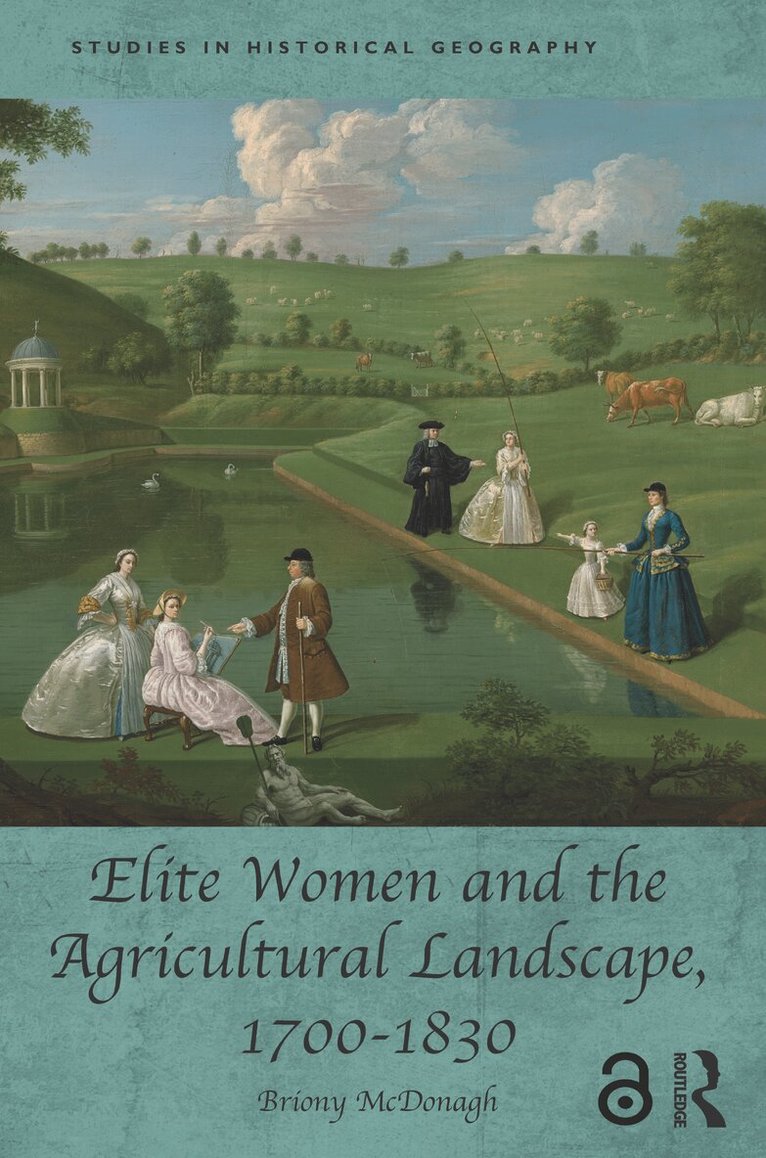
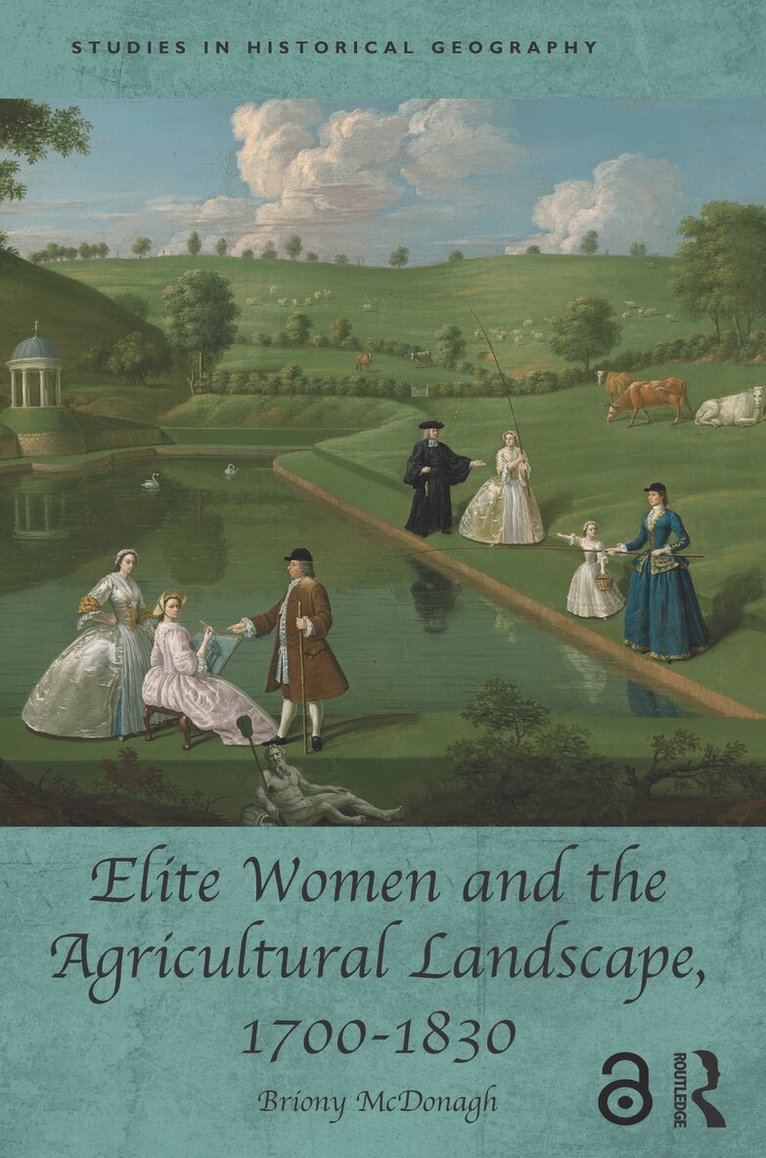
Social and economic histories of the long eighteenth century have largely ignored women as a class of landowners and improvers. 1700 to 1830 was a period in which the landscape of large swathes of the English Midlands was reshaped – both materially and imaginatively – by parliamentary enclosure and a bundle of other new practices. Outside the Midlands too, local landscapes were remodelled in line with the improving ideals of the era. Yet while we know a great deal about the men who pushed forward schemes for enclosure and sponsored agricultural improvement, far less is known about the role played by female landowners and farmers and their contributions to landscape change.Drawing on examples from across Georgian England, Elite Women and the Agricultural Landscape, 1700–1830 offers a detailed study of elite women’s relationships with landed property, specifically as they were mediated through the lens of their estate management and improvement. This highly original book provides an explicitly feminist historical geography of the eighteenth-century English rural landscape. It addresses important questions about propertied women’s role in English rural communities and in Georgian society more generally, whilst contributing to wider cultural debates about women’s place in the environmental, social and economic history of Britain. It will be of interest to those working in Historical and Cultural Geography, Social, Economic and Cultural History, Women’s Studies, Gender Studies and Landscape Studies.
708 kr
Skickas inom 10-15 vardagar
The act of writing is intimately bound up with the flow and eddy of a writer’s being-within-the-world; the everyday practices, encounters and networks of social life. Exploring the geographies of literary practice in the period 1840-1910, this book takes as its focus the work, or craft, of authorship, exploring novels not as objects awaiting interpretation, but as spatial processes of making meaning. As such, it is interested in literary creation not only as something that takes place - the situated nature of putting pen to paper - but simultaneously as a process that escapes such placing.Arguing that writing is a process of longue durée, the book explores the influence of family and friends in the creative process, it draws attention to the role that travel and movement play in writing and it explores the wider commitments of authorial life, not as indicators of intertextuality, but as part of the creative process. In taking this seventy year period as its focus, this book moves beyond the traditional periodisations that have characterised literary studies, such as the Victorian or Edwardian novel, the nineteenth-century or early twentieth-century novel or Romanticism, social realism and modernism. It argues that the literary environment was not one of watershed moments; there were continuities between writers separated by several decades or writing in different centuries. At the same time, it draws attention to a seventy year period in which the value of literary work and culture were being contested and transformed.Place and the Scene of Literary Practice will be key reading for those working in Human Geography, particularly Cultural and Historical Geography, Literary Studies and Literary History.
634 kr
Skickas inom 10-15 vardagar
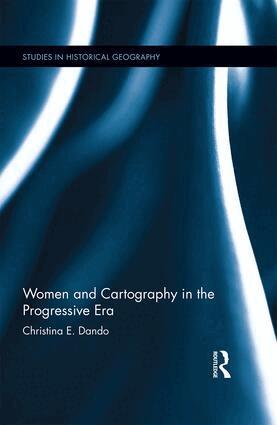
In the twenty-first century we speak of a geospatial revolution, but over one hundred years ago another mapping revolution was in motion. Women’s lives were in motion: they were playing a greater role in public on a variety of fronts. As women became more mobile (physically, socially, politically), they used and created geographic knowledge and maps. The maps created by American women were in motion too: created, shared, distributed as they worked to transform their landscapes.Long overlooked, this women’s work represents maps and mapping that today we would term community or participatory mapping, critical cartography and public geography. These historic examples of women-generated mapping represent the adoption of cartography and geography as part of women’s work. While cartography and map use are not new, the adoption and application of this technology and form of communication in women’s work and in multiple examples in the context of their social work, is unprecedented. This study explores the implications of women’s use of this technology in creating and presenting information and knowledge and wielding it to their own ends. This pioneering and original book will be essential reading for those working in Geography, Gender Studies, Women’s Studies, Politics and History.
634 kr
Skickas inom 10-15 vardagar
Tropicality is a centuries-old Western discourse that treats otherness and the exotic in binary – ‘us’ and ‘them’ – terms. It has long been implicated in empire and its anxieties over difference. However, little attention has been paid to its twentieth-century genealogy.This book explores this neglected history through the work of Pierre Gourou, one of the century’s foremost purveyors of what anti-colonial writer Aimé Césaire dubbed tropicalité. It explores how Gourou’s interpretations of ‘the nature’ of the tropical world, and its innate difference from the temperate world, were built on the shifting sands of twentieth-century history – empire and freedom, modernity and disenchantment, war and revolution, culture and civilisation, and race and development. The book addresses key questions about the location and power of knowledge by focusing on Gourou’s cultivation of the tropics as a romanticised, networked and affective domain. The book probes what Césaire described as Gourou’s ‘impure and worldly geography’ as a way of opening up interdisciplinary questions of geography, ontology, epistemology, experience and materiality.This book will be of great interest to scholars and students within historical geography, history, postcolonial studies, cultural studies and international relations.
718 kr
Skickas inom 10-15 vardagar
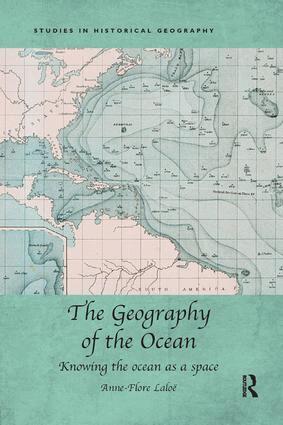
Despite the fact that the vast majority of the earth’s surface is made up of oceans, there has been surprisingly little work by geographers which critically examines the ocean-space and our knowledge and perceptions of it. This book employs a broad conceptual and methodological framework to analyse specific events that have contributed to the production of geographical knowledge about the ocean. These include, but are not limited to, Christopher Columbus’ first transatlantic journey, the mapping of nonexistent islands, the establishment of transoceanic trade routes, the discovery of largescale water movements, the HMS Challenger expedition, the search for the elusive Terra Australis Incognita, the formulation of the theory of continental drift and the mapping of the seabed.Using a combination of original, empirical (archival, material and cartographic), and theoretical sources, this book uniquely brings together fascinating narratives throughout history to produce a representation and mapping of geographical oceanic knowledge. It questions how we know what we know about the oceans and how this knowledge is represented and mapped. The book then uses this representation and mapping as a way to coherently trace the evolution of oceanic spatial awareness.In recent years, particularly in historical geography, discovering and knowing the ocean-space has been a completely separate enterprise from discovering and colonising the lands beyond it. There has been such focus on studying colonised lands, yet the oceans between them have been neglected. This book gives the geographical ocean a voice to be acknowledged as a space where history, geography and indeed historical geography took place.
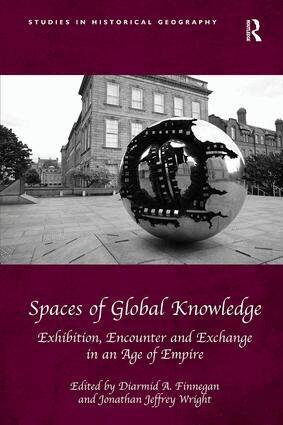
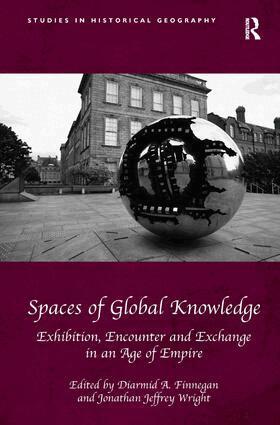
Spaces of Global Knowledge
Exhibition, Encounter and Exchange in an Age of Empire
Häftad, Engelska, 2018
746 kr
Skickas inom 10-15 vardagar
’Global’ knowledge was constructed, communicated and contested during the long nineteenth century in numerous ways and places. This book focuses on the life-geographies, material practices and varied contributions to knowledge, be they medical or botanical, cartographic or cultural, of actors whose lives crisscrossed an increasingly connected world. Integrating detailed archival research with broader thematic and conceptual reflection, the individual case studies use local specificity to shed light on global structures and processes, revealing the latter to be lived and experienced phenomena rather than abstract historiographical categories. This volume makes an original and compelling contribution to a growing body of scholarship on the global history of knowledge. Given its wide geographic, disciplinary and thematic range this book will appeal to a broad readership including historical geographers and specialists in history of science and medicine, imperial history, museum studies, and book history.
690 kr
Skickas inom 10-15 vardagar
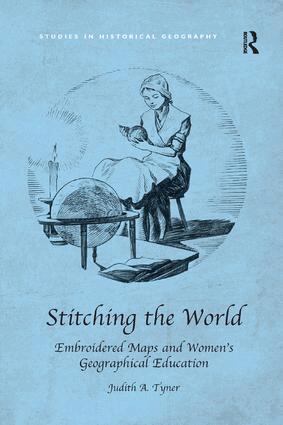
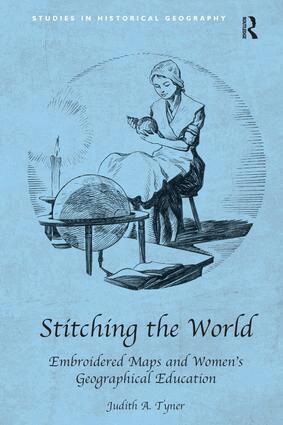
From the late eighteenth century until about 1840, schoolgirls in the British Isles and the United States created embroidered map samplers and even silk globes. Hundreds of British maps were made and although American examples are more rare, they form a significant collection of artefacts. Descriptions of these samplers stated that they were designed to teach needlework and geography. The focus of this book is not on stitches and techniques used in 'drafting' the maps, but rather why they were developed, how they diffused from the British Isles to the United States, and why they were made for such a brief time. The events of the late eighteenth and early nineteenth centuries stimulated an explosion of interest in geography. The American and French Revolutions, the wars between France and England, the War of 1812, Captain Cook's voyages, and the explorations of Lewis and Clark made the study of places exciting and important. Geography was the first science taught to girls in school. This period also coincided with major changes in educational theories and practices, especially for girls, and this book uses needlework maps and globes to chart a broader discussion of women's geographic education. In this light, map samplers and embroidered globes represent a transition in women's education from 'accomplishments' in the eighteenth century to challenging geographic education and conventional map drawing in schools and academies of the second half of the nineteenth century. There has been little serious study of these maps by cartographers and, moreover, historians of cartography have largely neglected the role of women in mapping. Children's maps have not been studied, although they might have much to offer about geographical teaching and perceptions of a period, and map samplers have been dismissed because they are the work of schoolgirls. Needlework historians, likewise, have not done in depth studies of map samplers until recently. Stitching the World is an interdisciplinary work drawing on cartography, needlework, and material culture. This book for the first time provides a critical analysis of these artefacts, showing that they offer significant insights into both eighteenth- and nineteenth-century geographic thought and cartography in the USA and the UK and into the development of female education.
2 376 kr
Skickas inom 10-15 vardagar
Despite the fact that the vast majority of the earth’s surface is made up of oceans, there has been surprisingly little work by geographers which critically examines the ocean-space and our knowledge and perceptions of it. This book employs a broad conceptual and methodological framework to analyse specific events that have contributed to the production of geographical knowledge about the ocean. These include, but are not limited to, Christopher Columbus’ first transatlantic journey, the mapping of nonexistent islands, the establishment of transoceanic trade routes, the discovery of largescale water movements, the HMS Challenger expedition, the search for the elusive Terra Australis Incognita, the formulation of the theory of continental drift and the mapping of the seabed.Using a combination of original, empirical (archival, material and cartographic), and theoretical sources, this book uniquely brings together fascinating narratives throughout history to produce a representation and mapping of geographical oceanic knowledge. It questions how we know what we know about the oceans and how this knowledge is represented and mapped. The book then uses this representation and mapping as a way to coherently trace the evolution of oceanic spatial awareness.In recent years, particularly in historical geography, discovering and knowing the ocean-space has been a completely separate enterprise from discovering and colonising the lands beyond it. There has been such focus on studying colonised lands, yet the oceans between them have been neglected. This book gives the geographical ocean a voice to be acknowledged as a space where history, geography and indeed historical geography took place.
2 167 kr
Skickas inom 10-15 vardagar
From the late eighteenth century until about 1840, schoolgirls in the British Isles and the United States created embroidered map samplers and even silk globes. Hundreds of British maps were made and although American examples are more rare, they form a significant collection of artefacts. Descriptions of these samplers stated that they were designed to teach needlework and geography. The focus of this book is not on stitches and techniques used in 'drafting' the maps, but rather why they were developed, how they diffused from the British Isles to the United States, and why they were made for such a brief time. The events of the late eighteenth and early nineteenth centuries stimulated an explosion of interest in geography. The American and French Revolutions, the wars between France and England, the War of 1812, Captain Cook's voyages, and the explorations of Lewis and Clark made the study of places exciting and important. Geography was the first science taught to girls in school. This period also coincided with major changes in educational theories and practices, especially for girls, and this book uses needlework maps and globes to chart a broader discussion of women's geographic education. In this light, map samplers and embroidered globes represent a transition in women's education from 'accomplishments' in the eighteenth century to challenging geographic education and conventional map drawing in schools and academies of the second half of the nineteenth century. There has been little serious study of these maps by cartographers and, moreover, historians of cartography have largely neglected the role of women in mapping. Children's maps have not been studied, although they might have much to offer about geographical teaching and perceptions of a period, and map samplers have been dismissed because they are the work of schoolgirls. Needlework historians, likewise, have not done in depth studies of map samplers until recently. Stitching the World is an interdisciplinary work drawing on cartography, needlework, and material culture. This book for the first time provides a critical analysis of these artefacts, showing that they offer significant insights into both eighteenth- and nineteenth-century geographic thought and cartography in the USA and the UK and into the development of female education.
2 167 kr
Skickas inom 10-15 vardagar
Tropicality is a centuries-old Western discourse that treats otherness and the exotic in binary – ‘us’ and ‘them’ – terms. It has long been implicated in empire and its anxieties over difference. However, little attention has been paid to its twentieth-century genealogy.This book explores this neglected history through the work of Pierre Gourou, one of the century’s foremost purveyors of what anti-colonial writer Aimé Césaire dubbed tropicalité. It explores how Gourou’s interpretations of ‘the nature’ of the tropical world, and its innate difference from the temperate world, were built on the shifting sands of twentieth-century history – empire and freedom, modernity and disenchantment, war and revolution, culture and civilisation, and race and development. The book addresses key questions about the location and power of knowledge by focusing on Gourou’s cultivation of the tropics as a romanticised, networked and affective domain. The book probes what Césaire described as Gourou’s ‘impure and worldly geography’ as a way of opening up interdisciplinary questions of geography, ontology, epistemology, experience and materiality.This book will be of great interest to scholars and students within historical geography, history, postcolonial studies, cultural studies and international relations.
2 028 kr
Skickas inom 10-15 vardagar
Elite Women and the Agricultural Landscape, 1700–1830 offers a detailed study of elite women’s relationships with landed property, specifically as they were mediated through the lens of their estate management and improvement. This highly original book provides an explicitly feminist historical geography of the eighteenth-century English rural landscape. It addresses important questions about propertied women’s role in English rural communities and in Georgian society more generally, whilst contributing to wider cultural debates about women’s place in the environmental, social and economic history of Britain. It will be of interest to those working in Historical and Cultural Geography, Social, Economic and Cultural History, Women’s Studies, Gender Studies and Landscape Studies.Chapters 2, 3, and 4 of this book are freely available as downloadable Open Access PDFs at http://www.taylorfrancis.com under a Creative Commons Attribution-Non Commercial-No Derivatives (CC-BY-NC-ND) 4.0 license.
2 420 kr
Skickas inom 10-15 vardagar
The act of writing is intimately bound up with the flow and eddy of a writer’s being-within-the-world; the everyday practices, encounters and networks of social life. Exploring the geographies of literary practice in the period 1840-1910, this book takes as its focus the work, or craft, of authorship, exploring novels not as objects awaiting interpretation, but as spatial processes of making meaning. As such, it is interested in literary creation not only as something that takes place - the situated nature of putting pen to paper - but simultaneously as a process that escapes such placing.Arguing that writing is a process of longue durée, the book explores the influence of family and friends in the creative process, it draws attention to the role that travel and movement play in writing and it explores the wider commitments of authorial life, not as indicators of intertextuality, but as part of the creative process. In taking this seventy year period as its focus, this book moves beyond the traditional periodisations that have characterised literary studies, such as the Victorian or Edwardian novel, the nineteenth-century or early twentieth-century novel or Romanticism, social realism and modernism. It argues that the literary environment was not one of watershed moments; there were continuities between writers separated by several decades or writing in different centuries. At the same time, it draws attention to a seventy year period in which the value of literary work and culture were being contested and transformed.Place and the Scene of Literary Practice will be key reading for those working in Human Geography, particularly Cultural and Historical Geography, Literary Studies and Literary History.
Spaces of Global Knowledge
Exhibition, Encounter and Exchange in an Age of Empire
Inbunden, Engelska, 2015
2 167 kr
Skickas inom 10-15 vardagar
’Global’ knowledge was constructed, communicated and contested during the long nineteenth century in numerous ways and places. This book focuses on the life-geographies, material practices and varied contributions to knowledge, be they medical or botanical, cartographic or cultural, of actors whose lives crisscrossed an increasingly connected world. Integrating detailed archival research with broader thematic and conceptual reflection, the individual case studies use local specificity to shed light on global structures and processes, revealing the latter to be lived and experienced phenomena rather than abstract historiographical categories. This volume makes an original and compelling contribution to a growing body of scholarship on the global history of knowledge. Given its wide geographic, disciplinary and thematic range this book will appeal to a broad readership including historical geographers and specialists in history of science and medicine, imperial history, museum studies, and book history.
2 104 kr
Skickas inom 10-15 vardagar
In the twenty-first century we speak of a geospatial revolution, but over one hundred years ago another mapping revolution was in motion. Women’s lives were in motion: they were playing a greater role in public on a variety of fronts. As women became more mobile (physically, socially, politically), they used and created geographic knowledge and maps. The maps created by American women were in motion too: created, shared, distributed as they worked to transform their landscapes.Long overlooked, this women’s work represents maps and mapping that today we would term community or participatory mapping, critical cartography and public geography. These historic examples of women-generated mapping represent the adoption of cartography and geography as part of women’s work. While cartography and map use are not new, the adoption and application of this technology and form of communication in women’s work and in multiple examples in the context of their social work, is unprecedented. This study explores the implications of women’s use of this technology in creating and presenting information and knowledge and wielding it to their own ends. This pioneering and original book will be essential reading for those working in Geography, Gender Studies, Women’s Studies, Politics and History.