Studies in Rhetoric Communication - Böcker
Visar alla böcker i serien Studies in Rhetoric Communication. Handla med fri frakt och snabb leverans.
4 produkter
4 produkter
530 kr
Skickas inom 10-15 vardagar
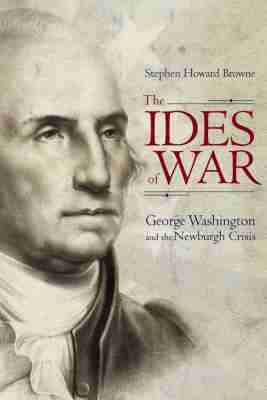
History tells us that on a day when the forces of civil government confront the forces of military might, no one knows what may follow. Americans believe that they have avoided this moment, that whatever other challengesthe country has faced, at least it never has had to deal with the prospects of a coup d'état. Stephen Howard Brownemaintains that this view is mistaken, that in fact the United States faced such a crisis, at the very moment when thecountry announced its arrival on the world scene in the spring of 1783 in a rustic meeting hall along the Hudson River near Newburgh, New York. The crisis was resolved by George Washington, commander in chief of the U.S. Army, in an address he delivered to a roomful of restive and deeply disaffected officers.In The Ides of War, Browne examines the resolution of the first confrontation between the forces of American civil government and the American military--the Newburgh Crisis. He tells the story of what transpired on that day, examines what was said, and suggests what we might learn from the affair. Browne shows that George Washington's Newburgh Address is a stunning example of the power of human agency to broker one of our most persistent, mosttroublesome dilemmas: the rival claims to power of civil and military authorities. At stake in this story are biding questions about the meaning and legacy of revolution, the nature of republican government, and ultimately what kind of people we are and profess to be.Browne holds that although these are monolithic and vexed themes, they are vital and need to be confronted to obtain a coherent and convincing account of history. The Newburgh Crisis offers an unmatched opportunity to examine these themes, as well as the role of rhetoric in the founding of the world's first modern republic.
845 kr
Skickas inom 11-20 vardagar
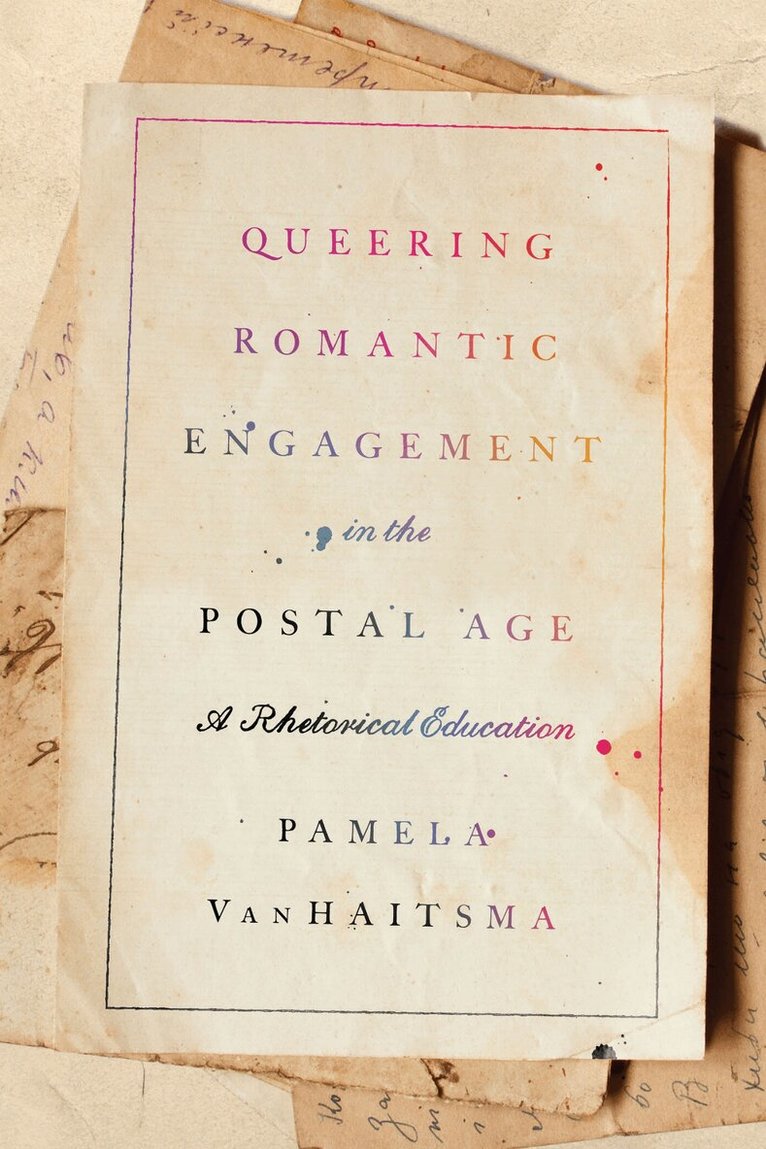
Romantic letters are central to understanding same-sex romantic relationships from the past, with debates about so-called romantic friendship turning on conflicting interpretations of letters. Too often, however, these letters are treated simply as unstudied expressions of heartfelt feeling. In Queering Romantic Engagement in the Postal Age: A Rhetorical Education, Pamela VanHaitsma nuances such approaches to reading letters, showing how the genre should be understood instead as a learned form of epistolary rhetoric.Through archival study of instruction in the romantic letter genre, VanHaitsma challenges the normative scholarly focus on rhetorical education as preparing citizen Subjects for civic engagement. She theorizes a new concept of rhetorical education for romantic engagement--defined as instruction in Language practices for composing romantic relations--to prompt histories that account for the significant yet unrealized role that rhetorical training plays in inventing both civic and romantic life. VanHaitsma's history of epistolary instruction in the nineteenth-century United States is grounded in examining popular manuals that taught the romantic letter genre; romantic correspondence of Addie Brown and Rebecca Primus, both freeborn African American women; and multigenre epistolary rhetoric by Yale student Albert Dodd. These case studies span rhetors who are diverse by gender, race, class, and educational background but who all developed creative ways of queering cultural norms and generic conventions in developing their same-sex romantic relationships. Ultimately, Queering Romantic Engagement in the Postal Age argues that such rhetorical training shaped citizens as romantic Subjects in predictably heteronormative ways and simultaneously opened up possibilities for their queer rhetorical practices.
550 kr
Skickas inom 7-10 vardagar
What explains the "triumph of capitalism"? Why do people so often respond positively to discussions favoring it while shutting down arguments against it? Overwhelmingly theories regarding capitalism's resilience have focused on individual choice bolstered by careful rhetorical argumentation. In this penetrating study, however, Catherine Chaput shows that something more than choice is at work in capitalism's ability to thrive in public practice and imagination--more even than material resources (power) and cultural imperialism (ideology). That "something," she contends, is market affect. Affect, says Chaput, signifies a semi-autonomous entity circulating through individuals and groups. Physiological in nature but moving across cultural, material, and environmental boundaries, affect has three functions: it opens or closes individual receptivity; it pulls or pushes individual identification; and it raises or lowers individual energies. This novel approach begins by connecting affect to rhetorical theory and offers a method for tracking its three modalities in relation to economic markets. Each of the following chapters compares a major theorist of capitalism with one of his important critics, beginning with the juxtaposition of Adam Smith and Karl Marx, who Set the agenda not only for arguments endorsing and critiquing capitalism but also for the affective energies associated with these positions. Subsequent chapters restage this initial debate through pairs of economic theorists--John Maynard Keynes and Thorstein Veblen, Friedrich Hayek and Theodor Adorno, and Milton Friedman and John Kenneth Galbraith--who represent key historical moments. In each case, Chaput demonstrates, capitalism's critics have fallen short in their rhetorical effectiveness. Chaput concludes by exploring possibilities for escaping the straitjacket imposed by these debates. In particular she points to the biopolitical lectures of Michel Foucault as offering a framework for more persuasive anticapitalist critiques by reconstituting people's conscious understandings as well as their natural instincts.
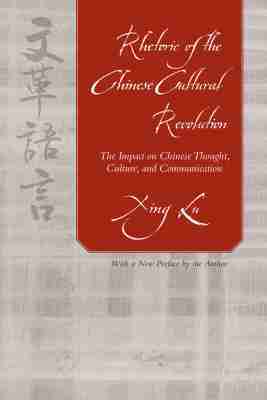
Rhetoric of the Chinese Cultural Revolution
The Impact on Chinese Thought, Culture, and Communication
Häftad, Engelska, 2020
379 kr
Skickas inom 10-15 vardagar
Now known to the Chinese as the ""ten years of chaos,"" the Chinese Cultural Revolution (1966-76) brought death to thousands of Chinese and persecution to millions. In Rhetoric of the Chinese Cultural Revolution Xing Lu identifies the rhetorical practices and persuasive effects of the polarizing political language and symbolic practices used by Communist Party leaders to legitimize their use of power and violence to dehumanize people identified as class enemies. Lu provides close readings of the movement's primary texts--political slogans, official propaganda, wall posters, and the lyrics of mass songs and model operas. She also scrutinizes such ritualistic practices as the loyalty dance, denunciation rallies, political study sessions, and criticism and self-criticism meetings. Lu enriches her rhetorical analyses of these texts with her own story and that of her family, as well as with interviews conducted in China and the United States with individuals who experienced the Cultural Revolution during their teenage years.In her new preface, Lu expresses deep concern about recent nationalism, xenophobia, divisiveness, and violence instigated by the rhetoric of hatred and fear in the United States and across the globe. She hopes that by illuminating the way language shapes perception, thought, and behavior, this book will serve as a reminder of past mistakes so that we may avoid repeating them in the future.