
Studies in Subaltern Latina/o Politics – serie
Visar alla böcker i serien Studies in Subaltern Latina/o Politics. Handla med fri frakt och snabb leverans.
6 produkter
6 produkter
1 245 kr
Skickas inom 5-8 vardagar
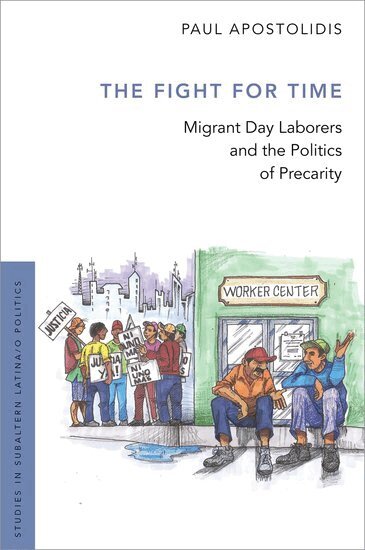
In today's precarious world, working people's experiences are strangely becoming more alike even as their disparities sharpen. The Fight for Time explores the logic behind this paradox by listening to what Latino day laborers say about work and society. The book shows how migrant laborers are both exception and synecdoche in relation to the precarious conditions of contemporary work life. As unauthorized migrants, these workers are subjected to extraordinarily harsh treatment - yet in startling ways, they also epitomize struggles that apply throughout the economy. Juxtaposing day laborers' descriptions of their desperate circumstances and dangerous work with theoretical accounts of the forces fueling insecurity, The Fight for Time illuminates the temporal contradictions that define precarity today. The book taps the core intellectual current among day labor groups - Paulo Freire's popular-education theory - to craft an original "critical-popular" approach for understanding the points of connection between the ways that day laborers view their lives and scholarly analysis of precarious work-life writ large. The result is a temporally attuned and politically bracing perspective on neoliberal crises, the work ethic in the era of affective and digital labor, the intensifying racial governance of public spaces, the burgeoning deportation regime, and the growth of occupational safety and health hazards. The accounts of the day laborers in this book are rich with potential to catalyze social critique among migrant workers - and clarify the terms on which mass-scale opposition to precarity can occur. Such opposition would demand restoration of workers' stolen time, engage in a fight for the city, challenge the conditions under which aversion to financial risk puts workers into physical danger, and foment the refusal of work. We can look to the urban worker centers where this radically democratic politics of precarity is taking root to understand what types of organizations have the potential to wage the fight for time and enable broad mobilization in the face of precarity: worker centers for all working people.
361 kr
Skickas inom 5-8 vardagar
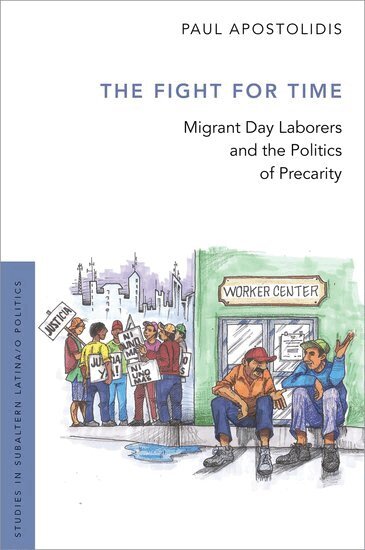
In today's precarious world, working people's experiences are strangely becoming more alike even as their disparities sharpen. The Fight for Time explores the logic behind this paradox by listening to what Latino day laborers say about work and society. The book shows how migrant laborers are both exception and synecdoche in relation to the precarious conditions of contemporary work life. As unauthorized migrants, these workers are subjected to extraordinarily harsh treatment - yet in startling ways, they also epitomize struggles that apply throughout the economy. Juxtaposing day laborers' descriptions of their desperate circumstances and dangerous work with theoretical accounts of the forces fueling insecurity, The Fight for Time illuminates the temporal contradictions that define precarity today. The book taps the core intellectual current among day labor groups - Paulo Freire's popular-education theory - to craft an original "critical-popular" approach for understanding the points of connection between the ways that day laborers view their lives and scholarly analysis of precarious work-life writ large. The result is a temporally attuned and politically bracing perspective on neoliberal crises, the work ethic in the era of affective and digital labor, the intensifying racial governance of public spaces, the burgeoning deportation regime, and the growth of occupational safety and health hazards. The accounts of the day laborers in this book are rich with potential to catalyze social critique among migrant workers - and clarify the terms on which mass-scale opposition to precarity can occur. Such opposition would demand restoration of workers' stolen time, engage in a fight for the city, challenge the conditions under which aversion to financial risk puts workers into physical danger, and foment the refusal of work. We can look to the urban worker centers where this radically democratic politics of precarity is taking root to understand what types of organizations have the potential to wage the fight for time and enable broad mobilization in the face of precarity: worker centers for all working people.
1 245 kr
Skickas inom 5-8 vardagar
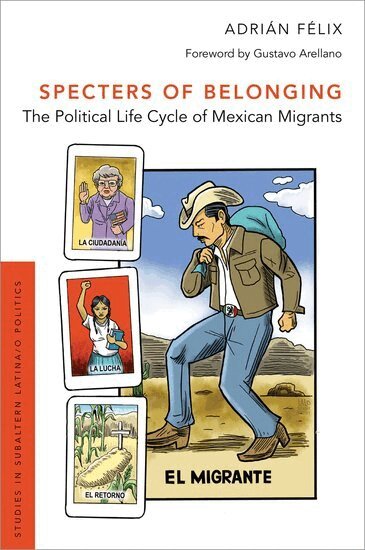
As the United States hardens its border with Mexico, how do migrants make transnational claims of citizenship in both nation-states? By enacting citizenship in both countries, Mexican migrants are challenging the meaning of membership and belonging from the margins of both citizenship regimes. With their incessant border-shattering political practices, Mexican migrants have become the embodiment of transnational citizenship on both sides of the divide.Drawing on his experiences leading citizenship classes for Mexican migrants and working with cross-border activists, Adrián Félix examines the political lives (and deaths) of Mexican migrants in Specters of Belonging. Tracing transnationalism across the different stages of the migrant political life cycle - beginning with the so-called political baptism of naturalization and ending with the practice by which migrant bodies are repatriated to Mexico for burial after death - Félix reveals the varied ways in which Mexican transnational subjects practice citizenship in the United States as well as Mexico. As such, Félix unearths how Mexican migrants' specters of belonging perennially haunt the political projects of nationalism, citizenship, and democracy on both sides of the border.
327 kr
Skickas inom 5-8 vardagar
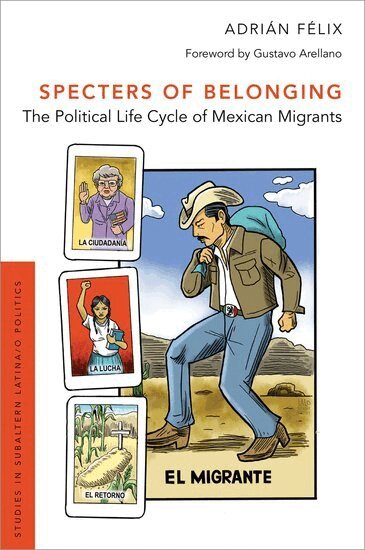
As the United States hardens its border with Mexico, how do migrants make transnational claims of citizenship in both nation-states? By enacting citizenship in both countries, Mexican migrants are challenging the meaning of membership and belonging from the margins of both citizenship regimes. With their incessant border-shattering political practices, Mexican migrants have become the embodiment of transnational citizenship on both sides of the divide.Drawing on his experiences leading citizenship classes for Mexican migrants and working with cross-border activists, Adrián Félix examines the political lives (and deaths) of Mexican migrants in Specters of Belonging. Tracing transnationalism across the different stages of the migrant political life cycle - beginning with the so-called political baptism of naturalization and ending with the practice by which migrant bodies are repatriated to Mexico for burial after death - Félix reveals the varied ways in which Mexican transnational subjects practice citizenship in the United States as well as Mexico. As such, Félix unearths how Mexican migrants' specters of belonging perennially haunt the political projects of nationalism, citizenship, and democracy on both sides of the border.
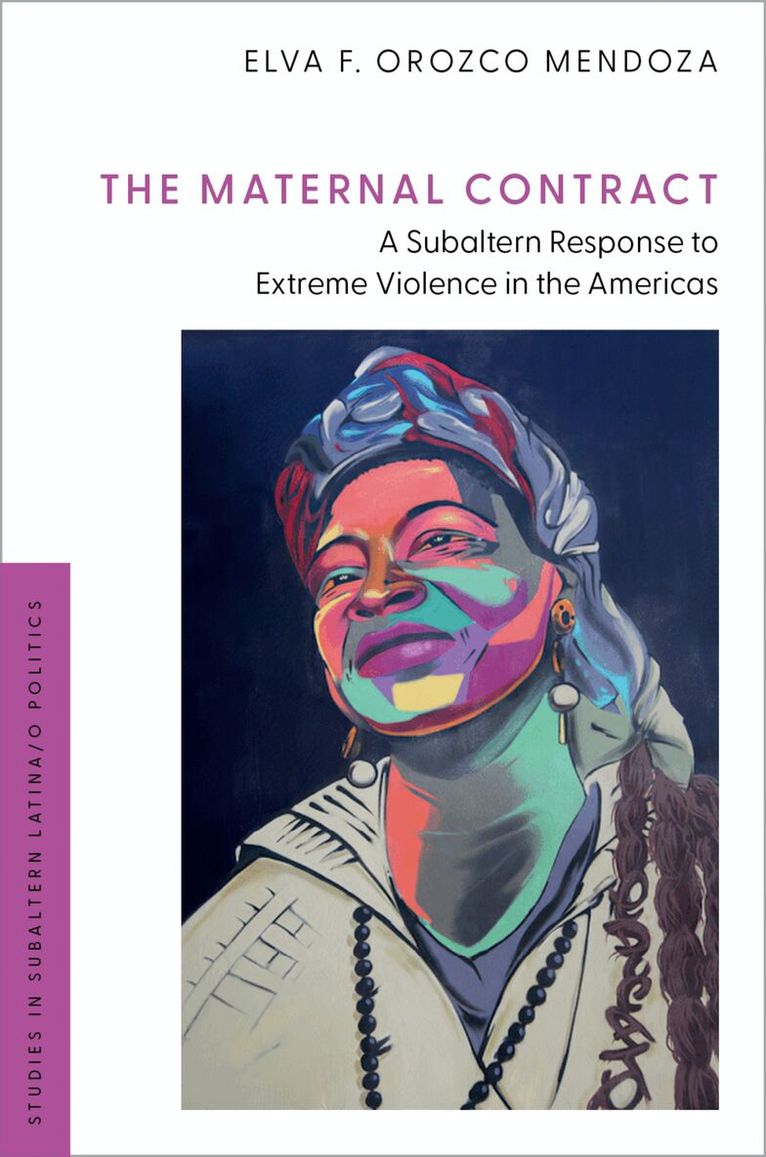
The Maternal Contract
A Subaltern Response to Extreme Violence in the Americas
Inbunden, Engelska, 2025
1 421 kr
Skickas inom 3-6 vardagar
In the Americas, organized state violence takes many forms--from forced disappearance and feminicide to extralegal killings, mass incarceration, and illegal detention. In response, mothers' organizations and collectives emerged in the 1970s to advocate for their disappeared, imprisoned, and murdered relatives. These organizations fight long and challenging battles for state and corporate accountability, demanding the creation of truth commissions, national memory archives, memory sites, and victim-oriented legislation. By implementing alternative caretaking mechanisms on behalf of survivors and victims, mothers' organizations have become powerful actors against organized state violence, structural inequalities, and political abandonment. In The Maternal Contract, Elva F. Orozco Mendoza traces the mobilization of mothers' organizations against organized state violence in the Americas. Drawing on the insights and work of four mothers' organizations--Las Madres de la Plaza de Mayo, Las Madres de Chihuahua, Colectivo Solecito, and Mothers Reclaiming Our Children, Orozco Mendoza introduces a novel theoretical framework, "the maternal contract," to illustrate how these organizations create and advance their own caretaking structures in the absence of substantive political rights and representation. While these organizations emerged in different times and geographies, Orozco Mendoza argues that they are linked by a powerful commitment to protect subaltern social groups and marginalized subjects against a violence-driven apparatus that disregards human life and dignity. In so doing, she draws attention to the caretaking practices, initiatives, and responsibilities that mothers' organizations adopt to counter chronic violence and collective suffering.
263 kr
Skickas inom 5-8 vardagar
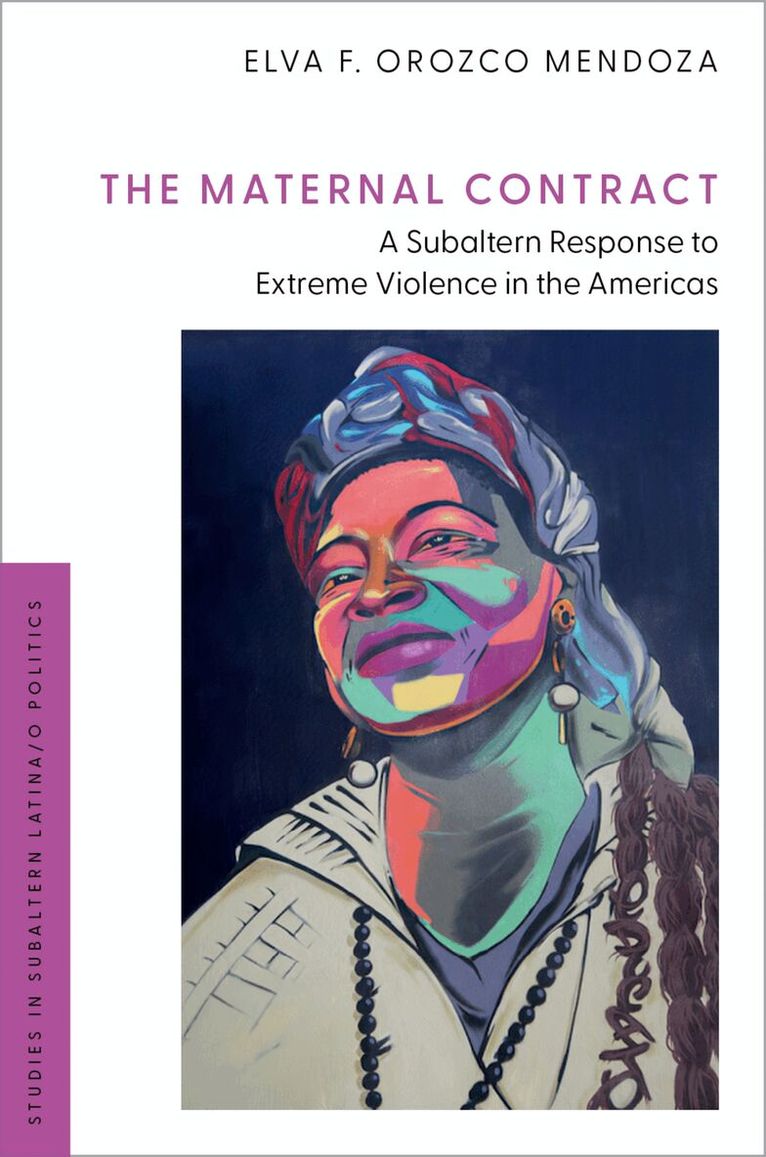
In the Americas, organized state violence takes many forms--from forced disappearance and feminicide to extralegal killings, mass incarceration, and illegal detention. In response, mothers' organizations and collectives emerged in the 1970s to advocate for their disappeared, imprisoned, and murdered relatives. These organizations fight long and challenging battles for state and corporate accountability, demanding the creation of truth commissions, national memory archives, memory sites, and victim-oriented legislation. By implementing alternative caretaking mechanisms on behalf of survivors and victims, mothers' organizations have become powerful actors against organized state violence, structural inequalities, and political abandonment. In The Maternal Contract, Elva F. Orozco Mendoza traces the mobilization of mothers' organizations against organized state violence in the Americas. Drawing on the insights and work of four mothers' organizations--Las Madres de la Plaza de Mayo, Las Madres de Chihuahua, Colectivo Solecito, and Mothers Reclaiming Our Children, Orozco Mendoza introduces a novel theoretical framework, "the maternal contract," to illustrate how these organizations create and advance their own caretaking structures in the absence of substantive political rights and representation. While these organizations emerged in different times and geographies, Orozco Mendoza argues that they are linked by a powerful commitment to protect subaltern social groups and marginalized subjects against a violence-driven apparatus that disregards human life and dignity. In so doing, she draws attention to the caretaking practices, initiatives, and responsibilities that mothers' organizations adopt to counter chronic violence and collective suffering.