Studies in the Carmelite Tradition - Böcker
Visar alla böcker i serien . Handla med fri frakt och snabb leverans.
4 produkter
4 produkter
207 kr
Skickas inom 10-15 vardagar
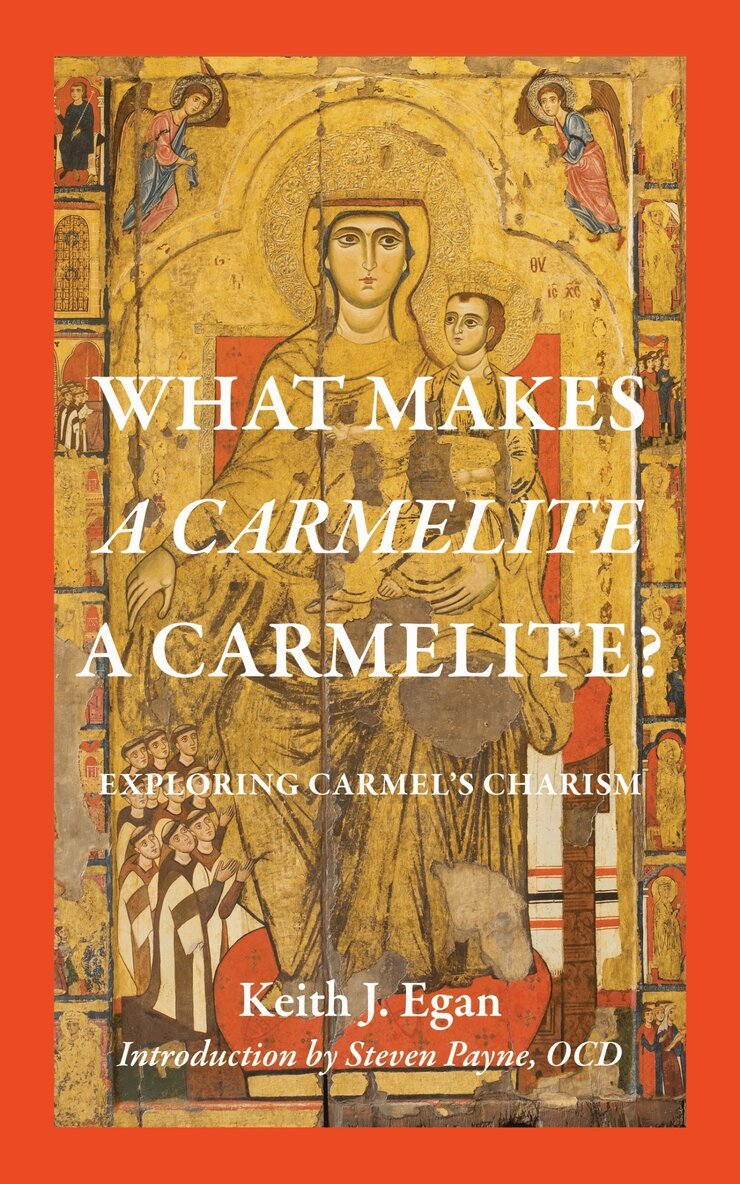
Vatican II initiated lively conversations about the identity of religious orders and congregations when the council pointed out that these religious communities are divine gifts in and to the church. Keith Egan examines the nature of these charisms including, not only the original or founders' charism, but how charisms evolve over the centuries. Special theological attention to these charisms show that they are not something but, in fact, are the dynamic presence of the Holy Spirit.This volume offers a case study the original charism of the Carmelites. The first Carmelites originated when various hermits were displaced by the armies of Saladin. These dislodged hermits sought refuge on Mount Carmel in a ravine facing the Mediterranean Sea. There, these hermits, now Carmelites, sought from Saint Albert, Patriarch of Jerusalem, a description of their life of solitude. Albert's Formula of Life describes the original Carmelite charism as a life of prayer and contemplation. This Formula eventually became a Rule that made possible a transformation of hermits into friars. Egan is at work on a sequel that examines this radical transformation.
Saint Joseph and the Carmelite Reform of Saint Teresa of Avila
Father, Teacher of Prayer, Intercessor in Every Need
Häftad, Engelska, 2025
261 kr
Skickas inom 10-15 vardagar
It is a commonplace in devotional literature, historical scholarship, and papal writings that Saint Teresa of Ávila played a key role in the development of veneration of Saint Joseph. Saint Joseph and the Carmelite Reform of Saint Teresa of Ávila unpacks this commonplace by recovering the often-overlooked back story to Teresa's story, namely, the extraordinarily rich liturgical cult of Saint Joseph in the Ancient Order of Carmel which fully flowered in the Teresian Carmel and beyond, to the universal Church.This volume charts a narrative arc from the liturgical cult of Saint Joseph in the Carmelite Order of Ancient Observance; to Saint Joseph's vital formative presence in Saint Teresa's life and reformed Carmel as father, teacher of prayer, and intercessor in every need; to the Carmelite family as a whole giving liturgical expression to its privileged relationship with Saint Joseph by the establishment of the Feast of the Patronage of Saint Joseph; to this feast becoming widespread outside Carmel and ultimately extended to the Universal Church (1847); and, finally, to Saint Joseph's proclamation as Patron of the Universal Church (1870).An epilogue considers the absence of Joseph's title "Patron of the Universal Church" in the post-Vatican II liturgical calendar and books, while the papal magisterium has consistently insisted that this patronage is ever necessary for the Church as not only a protection against all dangers, but also an impetus for its mission of evangelization and re-evangelization. An appendix reprints the letter, "Saint Joseph, Patron of Carmel," jointly issued by the Prior General of the Order of Carmelites of the Ancient Observance and the Superior General of the Order of Discalced Carmelites, to mark the 150th anniversary of the proclamation of Saint Joseph as Patron of the Universal Church.
246 kr
Kommande
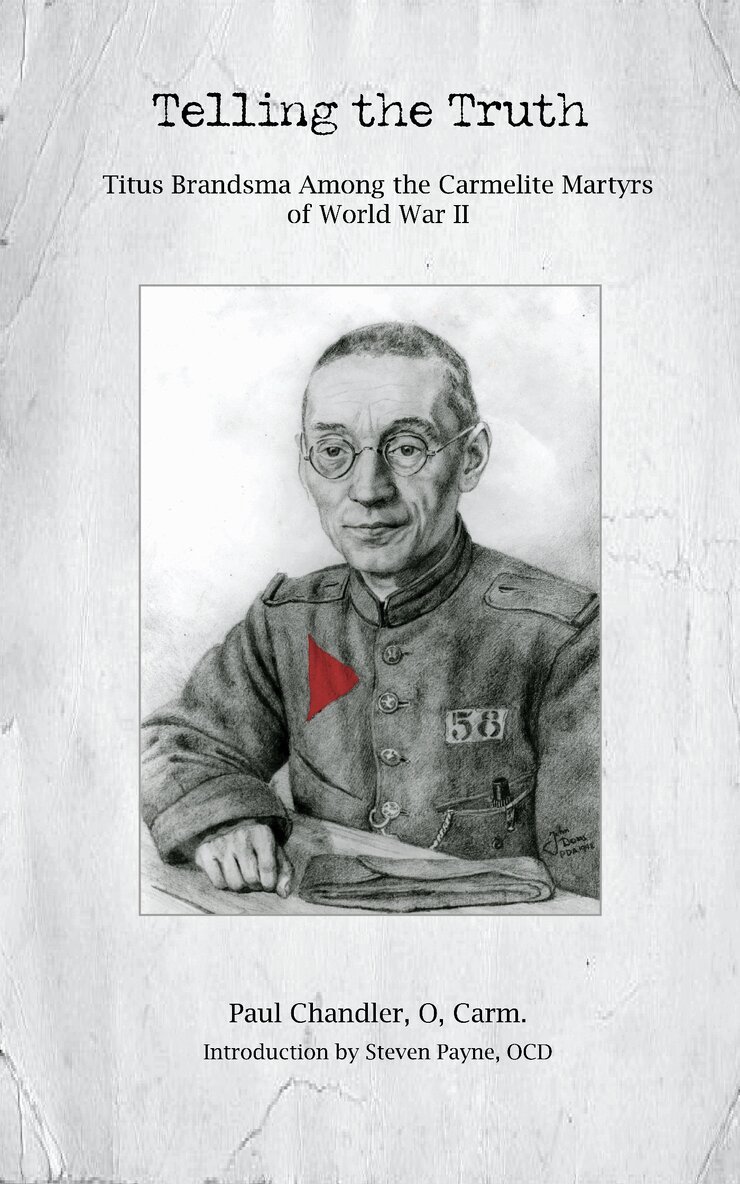
Titus Brandsma is best known for courageously speaking out against the ideology of National Socialism and for defending the freedom of the Catholic press to refuse their propaganda. Indeed, it was his activities as a Catholic journalist and on behalf of Catholic journalism that placed him in the crosshairs of the Nazi authorities. But his imprisonment and eventual death in the concentration camp of Dachau was preceded by a notable academic career and a life of tireless service.As Paul Chandler reveals in this ground-breaking volume, the torture and "experiments" that he suffered in the infirmary at Dachau included shocking examples of sexual abuse, according to the infirmary nurse who administered the fatal injection, whose eye-witness account previous biographers have glossed over. For the first time, Chandler provides an English translation of her complete testimony.Additional material reminds us of other major Carmelite "witnesses to truth" during World War II, including St. Edith Stein (Teresa Benedicta of the Cross) and Père Jacques Bunel. All of them show that authentic Carmelite and Christian spirituality is not something abstract and ethereal, but has social consequences, and that mystical prayer must express itself in prophetic words and actions.
363 kr
Skickas inom 7-10 vardagar
Edith Stein’s life and thought intersect with many important movements of life and thought in the twentieth century. Through her life and eventual martyrdom, she gave witness to the primacy of truth and faith in the face of political totalitarianism, and in her philosophical works, she contributed to a synthesis of phenomenological thought with the thought of Aquinas, while also progressively advancing a compelling form of philosophical personalism. As a result, Stein represents one of the most important Catholic thinkers of the twentieth century and is a figure of growing fascination and devotion among believers and nonbelievers alike.The Personalism of Edith Stein is an investigation of Stein’s mature philosophical anthropology, exploring her engagement with the thought of Aquinas and Thomism while maintaining the phenomenological mode of investigation. Through a careful examination of Stein’s later works under the themes of human nature, the human individual, and the human being’s relation to God, McNamara shows that Stein’s mature personalism is considerably expanded and substantiated by her assimilation of key anthropological and metaphysical teachings of Aquinas and Thomism, and, conversely, that Stein significantly develops and deepens these same teachings through a phenomenological reconsideration of each from a personalist perspective. As a whole, the study reveals the profound accord between Stein’s mature thought and the received teachings of Aquinas, while yet carefully attending to the remaining differences between them. Ultimately, the author proposes that Stein imbues the teachings of Aquinas with a fundamental personalization such that her mature anthropology can be understood as a Thomistically informed personalism that represents a significant, original contribution to the anthropological dimension of the philosophia perennis.