Studies in the Sociology of Law – serie
Visar alla böcker i serien Studies in the Sociology of Law. Handla med fri frakt och snabb leverans.
8 produkter
8 produkter
569 kr
Skickas inom 10-15 vardagar
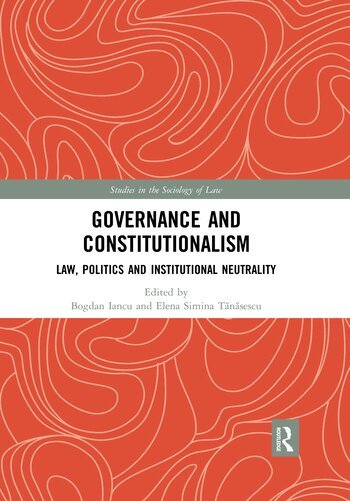
This collection studies the rise of neutral bodies as a challenge to the constitutional paradigm of the nation state. Administrative entities such as commissions, agencies, councils, authorities or ‘independent agencies’ as they are sometimes known, are relatively autonomous from majoritarian democratic control and by their institutional design fall outside the classical triad of powers or branches of government. They may even fall outside the confines of the nation state itself as with the EU Commission.The book is divided into theoretical-historical and empirical parts. Part I approaches the phenomenon through the rigorous normative conceptual lens of constitutionalism and constitutional law, questioning the implications of political neutrality on inherited normative categories, both at national and supranational level. Part II comprises case-studies reflecting the full spectrum of theoretical frameworks and concerns developed and explored by the theory-oriented chapters in the first part. The work explores a wide range of issues including the balance between autonomy, legitimacy and accountability, the taxonomy of agencies, the role and limits of expertise as a paramount justification for independence, ‘agentification’ as a result of internationalisation, and ‘agentification’ as a reflex and consequence of transnational polity-building within the EU.
569 kr
Skickas inom 10-15 vardagar
This volume addresses the pluralistic identity of the legal order. It argues that the mutual reflexivity of the different ways society perceives law and law perceives society eclipses the unique formal identity of written law. It advances a distinctive approach to the plural ways in which legal cultures work in a modern society, through the metaphor of the mirror. As a mirror of society, it distinguishes between the structure and function of legal culture within the legal system, and the external representation of law in society. This duality is further problematized in relation to the increasing transnationalisation of law. Based on a multi-level interpretation of the concept of legal culture, the work is divided into three parts: the first addresses the mutual reflections of social and legal norms that support a pluralist representation of internal legal cultures, the second concentrates on the external legal cultures that constantly enable pragmatic adjustments of the legal order to its social environment, and the third concludes the book with a theoretical discussion of the issues presented.
1 944 kr
Skickas inom 10-15 vardagar
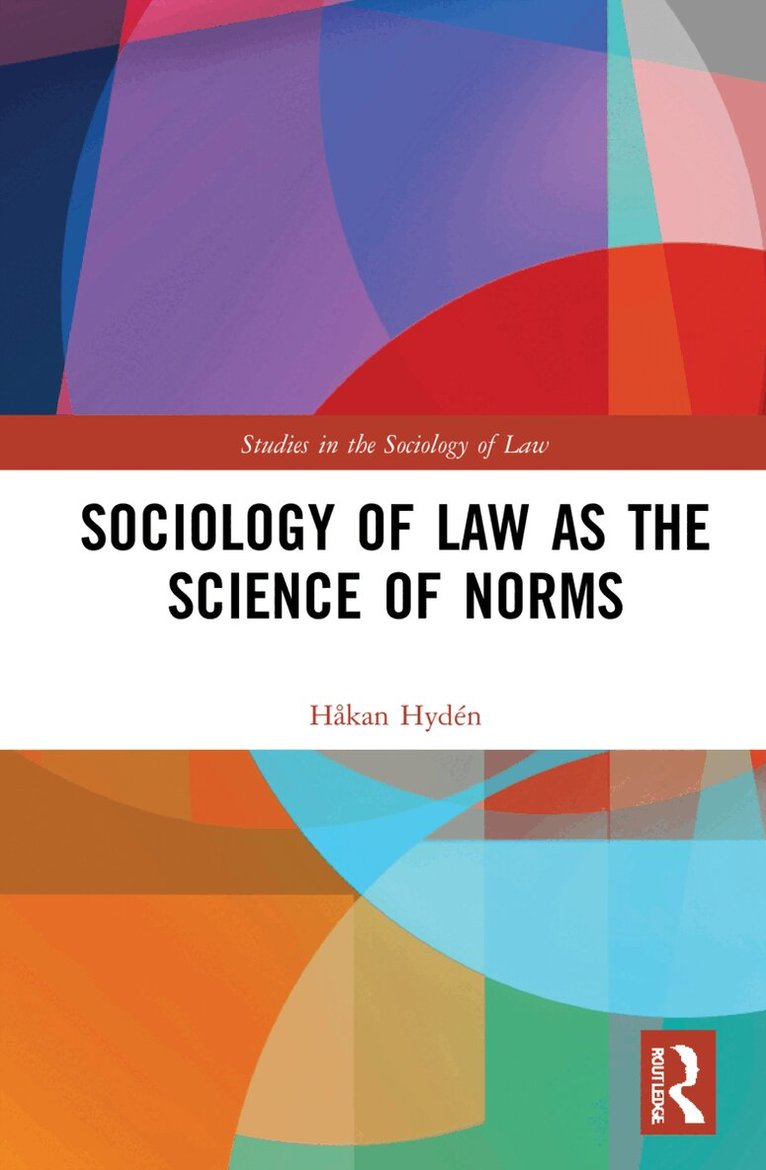
This book proposes the study of norms as a method of explaining human choice and behaviour by introducing a new scientific perspective.The science of norms may here be broadly understood as a social science which includes elements from both the behavioural and legal sciences. It is given that a science of norms is not normative in the sense of prescribing what is right or wrong in various situations. Compared with legal science, sociology of law has an interest in the operational side of legal rules and regulation. This book develops a synthesizing social science approach to better understand societal development in the wake of the increasingly significant digital technology. The underlying idea is that norms as expectations today are not primarily related to social expectations emanating from human interactions but come from systems that mankind has created for fulfilling its needs. Today the economy, via the market, and technology via digitization, generate stronger and more frequent expectations than the social system. By expanding the sociological understanding of norms, the book makes comparisons between different parts of society possible and creates a more holistic understanding of contemporary society. The book will be of interest to academics and researchers in the areas of sociology of law, legal theory, philosophy of law, sociology and social psychology.
569 kr
Skickas inom 10-15 vardagar
This book proposes the study of norms as a method of explaining human choice and behaviour by introducing a new scientific perspective.The science of norms may here be broadly understood as a social science which includes elements from both the behavioural and legal sciences. It is given that a science of norms is not normative in the sense of prescribing what is right or wrong in various situations. Compared with legal science, sociology of law has an interest in the operational side of legal rules and regulation. This book develops a synthesizing social science approach to better understand societal development in the wake of the increasingly significant digital technology. The underlying idea is that norms as expectations today are not primarily related to social expectations emanating from human interactions but come from systems that mankind has created for fulfilling its needs. Today the economy, via the market, and technology via digitization, generate stronger and more frequent expectations than the social system. By expanding the sociological understanding of norms, the book makes comparisons between different parts of society possible and creates a more holistic understanding of contemporary society. The book will be of interest to academics and researchers in the areas of sociology of law, legal theory, philosophy of law, sociology and social psychology.
1 944 kr
Skickas inom 10-15 vardagar
This volume addresses the pluralistic identity of the legal order. It argues that the mutual reflexivity of the different ways society perceives law and law perceives society eclipses the unique formal identity of written law. It advances a distinctive approach to the plural ways in which legal cultures work in a modern society, through the metaphor of the mirror. As a mirror of society, it distinguishes between the structure and function of legal culture within the legal system, and the external representation of law in society. This duality is further problematized in relation to the increasing transnationalisation of law. Based on a multi-level interpretation of the concept of legal culture, the work is divided into three parts: the first addresses the mutual reflections of social and legal norms that support a pluralist representation of internal legal cultures, the second concentrates on the external legal cultures that constantly enable pragmatic adjustments of the legal order to its social environment, and the third concludes the book with a theoretical discussion of the issues presented.
669 kr
Skickas inom 10-15 vardagar
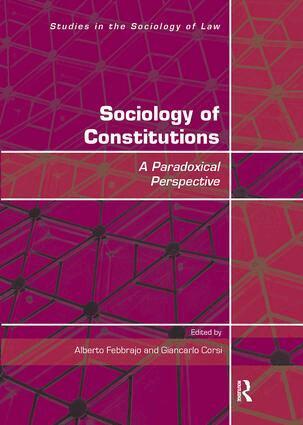
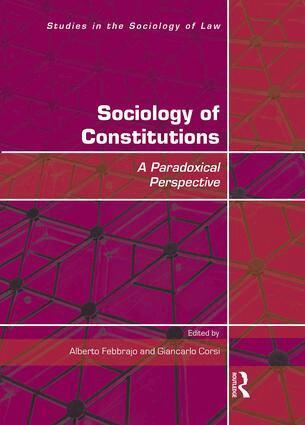
This collection brings together some of the most influential sociologists of law to confront the challenges of current transnational constitutionalism. It shows the constitution appearing in a new light: no longer as an essential factor of unity and stabilisation but as a potential defence of pluralism and innovation. The first part of the book is devoted to the analysis of the concept of constitution, highlighting the elements that can contribute from a socio-legal perspective, to clarifying the principle meanings attributed to the constitution. The study goes on to analyse some concrete aspects of the functioning of constitutions in contemporary society. In applying Luhmann’s General Systems Theory to a comparative analysis of the concept of constitution, the work contributes to a better understanding of this traditional concept in both its institutionalised and functional aspects. Defining the constitution’s contents and functions both at the conceptual level and by taking empirical issues of particular comparative interest into account, this study will be of importance to scholars and students of sociology of law, sociology of politics and comparative public law.
1 944 kr
Skickas inom 10-15 vardagar
This collection studies the rise of neutral bodies as a challenge to the constitutional paradigm of the nation state. Administrative entities such as commissions, agencies, councils, authorities or ‘independent agencies’ as they are sometimes known, are relatively autonomous from majoritarian democratic control and by their institutional design fall outside the classical triad of powers or branches of government. They may even fall outside the confines of the nation state itself as with the EU Commission.The book is divided into theoretical-historical and empirical parts. Part I approaches the phenomenon through the rigorous normative conceptual lens of constitutionalism and constitutional law, questioning the implications of political neutrality on inherited normative categories, both at national and supranational level. Part II comprises case-studies reflecting the full spectrum of theoretical frameworks and concerns developed and explored by the theory-oriented chapters in the first part. The work explores a wide range of issues including the balance between autonomy, legitimacy and accountability, the taxonomy of agencies, the role and limits of expertise as a paramount justification for independence, ‘agentification’ as a result of internationalisation, and ‘agentification’ as a reflex and consequence of transnational polity-building within the EU.
2 131 kr
Skickas inom 10-15 vardagar
This collection brings together some of the most influential sociologists of law to confront the challenges of current transnational constitutionalism. It shows the constitution appearing in a new light: no longer as an essential factor of unity and stabilisation but as a potential defence of pluralism and innovation. The first part of the book is devoted to the analysis of the concept of constitution, highlighting the elements that can contribute from a socio-legal perspective, to clarifying the principle meanings attributed to the constitution. The study goes on to analyse some concrete aspects of the functioning of constitutions in contemporary society. In applying Luhmann’s General Systems Theory to a comparative analysis of the concept of constitution, the work contributes to a better understanding of this traditional concept in both its institutionalised and functional aspects. Defining the constitution’s contents and functions both at the conceptual level and by taking empirical issues of particular comparative interest into account, this study will be of importance to scholars and students of sociology of law, sociology of politics and comparative public law.