Studies on Personalities of the Old Testament - Böcker
Visar alla böcker i serien Studies on Personalities of the Old Testament. Handla med fri frakt och snabb leverans.
8 produkter
8 produkter
526 kr
Skickas inom 11-20 vardagar
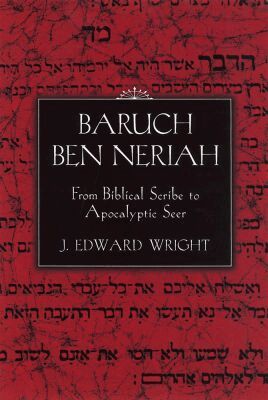
This work traces the evolution of a biblical figure whose legacy grew from that of a scribe who edited or wrote the Book of Jeremiah to a divine sage granted a tour of heaven itself. It charts the significance of a minor figure who gradually became a larger-than-life hero in the Jewish and Christian popular imagination. In addition to exploring biblical and postbiblical depictions, it also shows how the various portrayals reveal the leadership models and religious values of early Jewish and Christian communities. It suggests that these communities reinvented Baruch to meet the pressing issues of their day. The text examines the scribe as depicted in the Bible, noting his distinction as one of the few characters whose existence can be attested by archaeological evidence. A loyal friend of Jeremiah, Baruch is recorded to have received a mysterious oracle from God in the midst of Jerusalem's destruction by the Babylonians. The volume explores how beliefs about this message provided the postbiblical impetus for Baruch's transformation into an apocalyptic seer.
488 kr
Skickas inom 10-15 vardagar
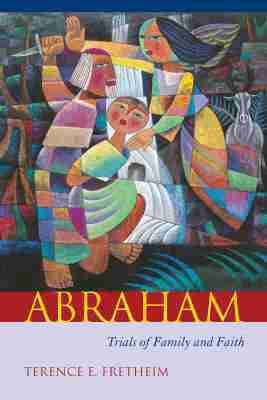
In an inviting style that showcases his literary discernment, theological sophistication, and passion for the biblical text, Terence E. Fretheim turns his attention to one of the most dramatic stories of the Old Testament - that of Abraham, Sarah, Hagar, Isaac, and Ishmael. Through close readings of ""Genesis"" 12 through 25, Fretheim guides readers through the intricacies of the plot, from God's surprising call to Abraham to leave home and family to God's enigmatic commands to evict one son and sacrifice another. Extending the vein of analysis in which he previously has written to wide acclaim, Fretheim examines Abraham's family and assesses the significant roles it plays across three religions - Judaism, Christianity, and Islam. Relating biblical narrative to theological concerns, Fretheim wrestles with such controversial concepts as God's selection of an elect people, the gift of land and other promises, the role of women and outsiders, the character of God, and the suffering of innocents. In addition, Fretheim contributes to the increasingly important interreligious dialogue surrounding Abraham by examining the continuing conversation among Muslims, Christians, and Jews about the place of Hagar and Ishmael in Abraham's family. Throughout the text, Fretheim frames the narrative as rooted in the trials of family and faith that define the story of Abraham as the father of three religions.
314 kr
Skickas inom 10-15 vardagar
This book presents a valuable survey of Jewish and Christian textual references to an understudied Old Testament figure. Credited with predicting the flood and foretelling a second punishment but mentioned only briefly in the Hebrew Bible, Enoch is one of the most intriguing yet little-known characters of ancient Jewish and Christian literature. ""Genesis"" devotes just four verses to Enoch; yet this man became a central figure in many of the oldest surviving Jewish legends of apocalypse, the subject of a larger number of traditions during the intertestamental period, and a significant character in early Christian writing. In this examination of ancient references to Enoch and to Enochian themes, James C. VanderKam illumines the range of ancient testimonies to the man, his teachings, and his work.As he introduces readers to the mostly extrabiblical traditions surrounding Enoch, VanderKam addresses the significant question of how the canon of the Hebrew Bible came to be decided. He also uses the Enochian literature as a point of departure for an analysis of the apocalyptic literary tradition and the historical connection between Jewish and Mesopotamian thought.
328 kr
Skickas inom 10-15 vardagar
This is a thoughtful examination of one the Old Testament's central human figures. Marti J. Steussy provides a critical approach to the man who receives more attention from the Old Testament's writers than any other human character. This volume explores the ""Hebrew Bible""'s three major portraits of David - found in 1 and 2 ""Samuel"", 1 ""Chronicles"", and ""Psalms"" - and what each implies about the relation between divine and worldly power. Steussy's examination of David in 1 and 2 ""Samuel"" opens with the traditional impression of David as a virtuous hero 'after God's own heart', then invites readers to consider details of plot and phrasing that make problematic - without erasing - the impression of innocence. She proposes that questions surrounding David ultimately probe God's role in Israel's history. The scrutiny of David in 1 ""Chronicles"" shows how this book calls attention to his role as the head of a people rather than to his individual strengths and weaknesses. However, tension still lurks; David plays a key role in ""Chronicles""' argument against Ezra and Nehemiah for an inclusive Israel. Steussy's final character analysis begins with psalms about David, then discusses the ruler as the commonly accepted speaker of the David psalms. Steussy suggests that in the Psalter as a whole, David serves both as a model for individual spiritual development and as a symbol for Israel throughout its history. The complexity of David's role in ""Psalms"", Steussy contends, models the complexity of his characterization in the ""Hebrew Bible"" as a whole. A concluding chapter calls attention to David's scattered appearances in other parts of the Hebrew canon and discusses the cumulative effect of his various portraits.
609 kr
Skickas inom 11-20 vardagar
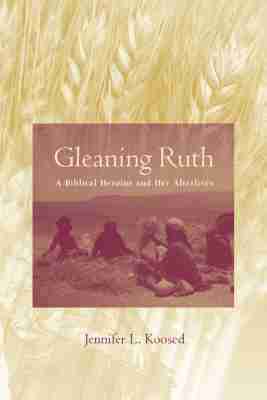
The biblical story of Ruth celebrates the power to begin life anew, to gather what has been scattered, to glean what one needs. In this original approach to understanding an ancient love story, Jennifer L. Koosed crafts a multifaceted portrait of the Old Testament character of Ruth and of the demanding agricultural world in which her story unfolds. Highlighting the most complex aspects of the book - the relationships Ruth has with her mother-in-law, Naomi; sister-in-law, Orpah; future husband, Boaz; and infant son, Obed - Koosed explores the use of pairings to define Ruth's aspirational fortitude. Koosed also touches on the narrative's questions of sexuality, kinship, and law as well as the metaphoric activities of harvest that serve to advance the plot and illuminate the social and geographic context of Ruth's tale.From the private world of women to the public world of men, Koosed guides readers through the book of Ruth's revealing glimpses into the sociology of the ancient Hebrew world. The study concludes with a discussion of the postbiblical fascination with Ruth and her later representations in a variety of literary and visual media.Koosed's approach is eclectic, employing a host of methodologies from philology and theology to literature, folklore, and feminism. Thoughtful of the interests of both scholarly and lay audiences, Koosed presents inviting and compelling new insights into one of the Old Testament's most enigmatic characters.
662 kr
Skickas inom 11-20 vardagar
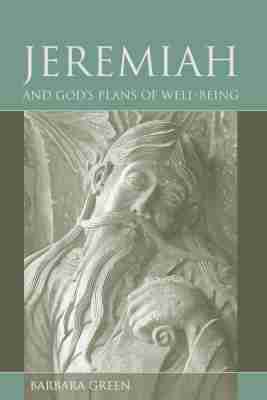
In Jeremiah and God's Plan of Well-being, Barbara Green explores the prophet Jeremiah as a literary persona of the biblical book through seven periods of his prophetic ministry, focusing on the concerns and circumstances that shaped his struggles. Having confronted the vast complexity of scholarly issues found in the Book of Jeremiah, Green has chosen to examine the literary presentation of the prophet rather than focus on the precise historical details or the speculative processes of composition. What Green exposes is a prophet affected by the dire circumstances of his life, struggling consistently, but ultimately failing at his most urgent task of persuasion. In the first chapter Green examines Jeremiah's predicament as he is called to minister and faces royal opposition to his message. She then isolates the central crisis of mission, the choice facing Judah, and the sin repeatedly chosen. Delving into the tropes of Jeremiah's preaching and prophecy, she also analyses the struggle and lament that express Jeremiah's inability to succeed as an intermediary between God and his people. Next Green explores the characterisations of the kings with whom Jeremiah struggled and his persistence in his ministry despite repeated imprisonment, and, finally, Green focuses on Jeremiah's thwarted choice to remain in Judah at the end of the first temple period and his descent into Egypt after the assassination of Gedaliah. In Jeremiah and God's Plan of Well-being, Green shows the prophet as vulnerable, even failing at times, while suggesting the significance of his assignment and unlikelihood of success. She explores the complexities of the phenomenon of prophecy and the challenges of preaching unwelcome news during times of uncertainty and crisis. Ultimately Green provides a fresh treatment of a complex biblical text and prophet. In presenting Jeremiah as a literary figure, Green considers how his character continues to live on in the traditions of Judaism and Christianity.
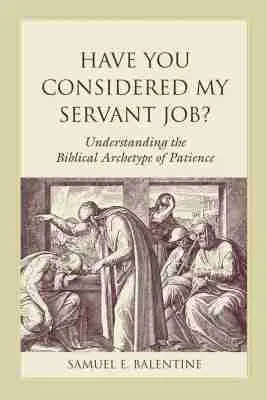
Have You Considered My Servant Job?
Understanding the Biblical Archetype of Patience
Inbunden, Engelska, 2015
685 kr
Skickas inom 11-20 vardagar
The question that launches Job’s story is posed by God at the outset of the story: “Have you considered my servant Job?” (1:8; 2:3). By any estimation the answer to this question must be yes. The forty-two chapters that form the biblical story have in fact opened the story to an ongoing practice of reading and rereading, evaluating and reevaluating. Early Greek and Jewish translators emphasized some aspects of the story and omitted others; the Church Fathers interpreted Job as a forerunner of Christ, while medieval Jewish commentators debated conservative and liberal interpretations of God’s providential love. Artists, beginning at least in the Greco-Roman period, painted and sculpted their own interpretations of Job. Novelists, playwrights, poets, and musicians - religious and irreligious, from virtually all points of the globe - have added their own distinctive readings.In Have You Considered My Servant Job?, Samuel E. Balentine examines this rich and varied history of interpretation by focusing on the principal characters in the story - Job, God, the satan figure, Job’s wife, and Job’s friends. Each chapter begins with a concise analysis of the biblical description of these characters, then explores how subsequent readers have expanded or reduced the story, shifted its major emphases or retained them, read the story as history or as fiction, and applied the morals of the story to the present or dismissed them as irrelevant.Each new generation of readers is shaped by different historical, cultural, and political contexts, which in turn require new interpretations of an old yet continually mesmerizing story. Voltaire read Job one way in the eighteenth century, Herman Melville a different way in the nineteenth century. Goethe’s reading of the satan figure in Faust is not the same as Chaucer’s in The Canterbury Tales, and neither is fully consonant with the Testament of Job or the Qur’an. One need only compare the descriptions of God in the biblical account with the imaginative renderings by Herman Melville, Walt Whitman, and Franz Kafka to see that the effort to understand why God afflicts Job “for no reason” (2:3) continues to be both compelling and endlessly complicated.
632 kr
Skickas inom 10-15 vardagar
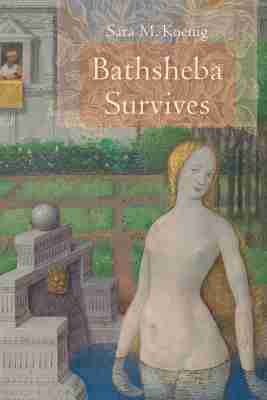
A portrait of a biblical woman seen through the centuries as everything from adviser to temptress to victim.Bathsheba is a mysterious and enigmatic figure who appears in only seventy-six verses of the Bible and whose story is riddled with gaps. But this seemingly minor female character, who plays a critical role in King David’s story, has survived through the ages, and her “afterlife” in the history of interpretation is rich and extensive. In Bathsheba Survives, Sara M. Koenig traces Bathsheba’s reception throughout history and in various genres, demonstrating how she has been characterized on the spectrum from helpless victim to unscrupulous seductress.Early Jewish interpretations, Koenig argues, highlight Bathsheba’s role as Solomon’s mother and adviser, while texts from the patristic era view her as a type: of sinful flesh, of the law, or of the gentile church. Works from the medieval period depict Bathsheba as a seductress who wants to tempt David, with art embellishing her nudity, while reformers such as Luther and Calvin treated Bathsheba in a generally critical light as indiscreet and perhaps even devious. During the Enlightenment period, Koenig claims, Bathsheba was most frequently discussed in commentaries that used historical critical methods to explain her character and her actions.Koenig then demonstrates how Bathsheba is understood in today’s popular media as both seductress and victim, being featured in novels, films, and in music from such artists as Leonard Cohen and Sting. The minor, enigmatic biblical character Bathsheba, Koenig writes, has survived through time by those who have received her and spoken about her in varying ways. Though she disappears from the biblical text, she resurfaces in thought and study and will continue to survive in the centuries to come.