Summerfield G. Roberts Texas History Series - Böcker
Visar alla böcker i serien Summerfield G. Roberts Texas History Series. Handla med fri frakt och snabb leverans.
5 produkter
5 produkter
405 kr
Skickas inom 10-15 vardagar
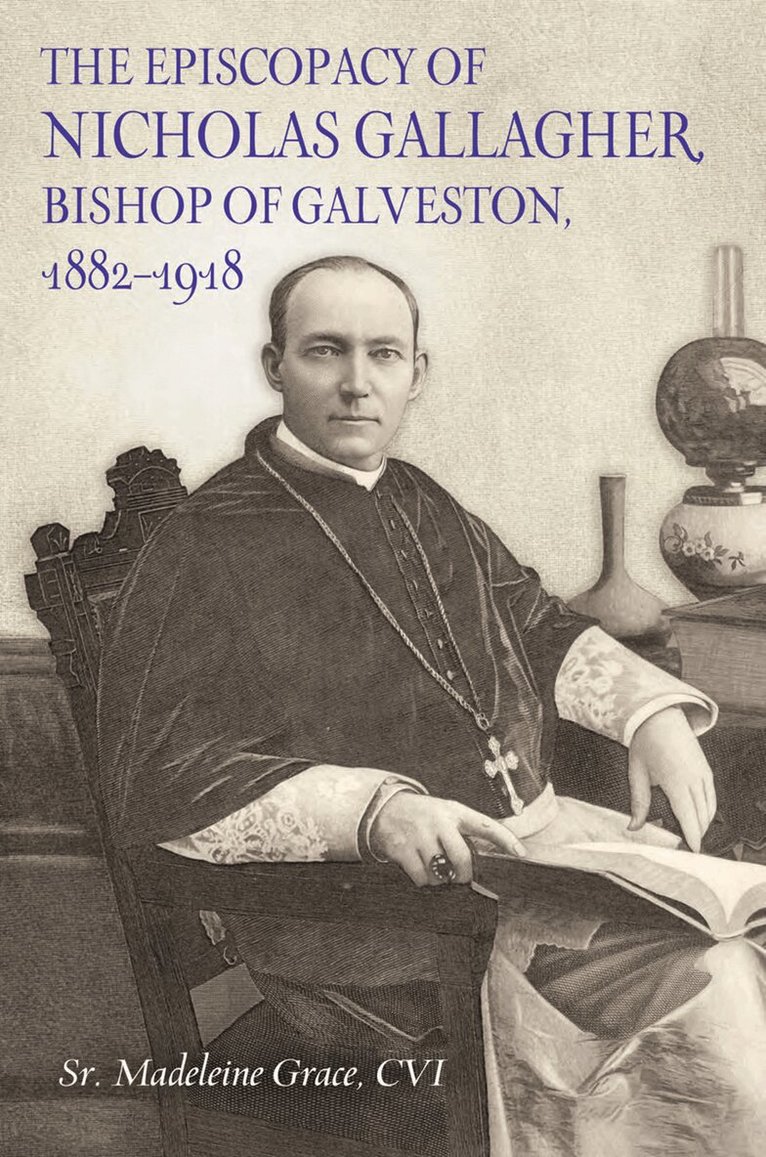
Nicholas Aloysius Gallagher became the third Roman Catholic bishop for the Diocese of Galveston in 1882. During his thirty-six year tenure as bishop, Gallagher made significant contributions to the development of Catholicism in Texas in very challenging and difficult times. Gallagher's episcopacy was marked by the rapid growth of parishes, Catholic schools, and hospitals.Notable for being the first American-born bishop to serve Texas, Gallagher hailed from north of the Mason-Dixon Line, a fact not easily missed in a state still reeling from the Civil War. Remembered for his missionary efforts among African American Catholics, he pushed the church to become more involved in the local community, opening the first school for black children in 1886. He also established the Holy Rosary Parish, one of the first black parishes in Texas. Similar parishes followed in Houston, Beaumont, and Port Arthur.Bishop Gallagher also was instrumental in the rebuilding of churches destroyed by the devastating 1900 hurricane that claimed more than six thousand lives, including ten nuns and more than ninety orphans. In the aftermath of the storm, Gallagher demonstrated a steady hand in the midst of tragedy and was praised for his ability to bring hope and courage to survivors.The Episcopacy of Nicholas Gallagher, Bishop of Galveston, 1882-1918 is a major biography of an important religious figure in Texas during a time of transition. This book will appeal to readers interested in Texas history, Galveston history, and the history of the Roman Catholic Church in America.
342 kr
Skickas inom 11-20 vardagar
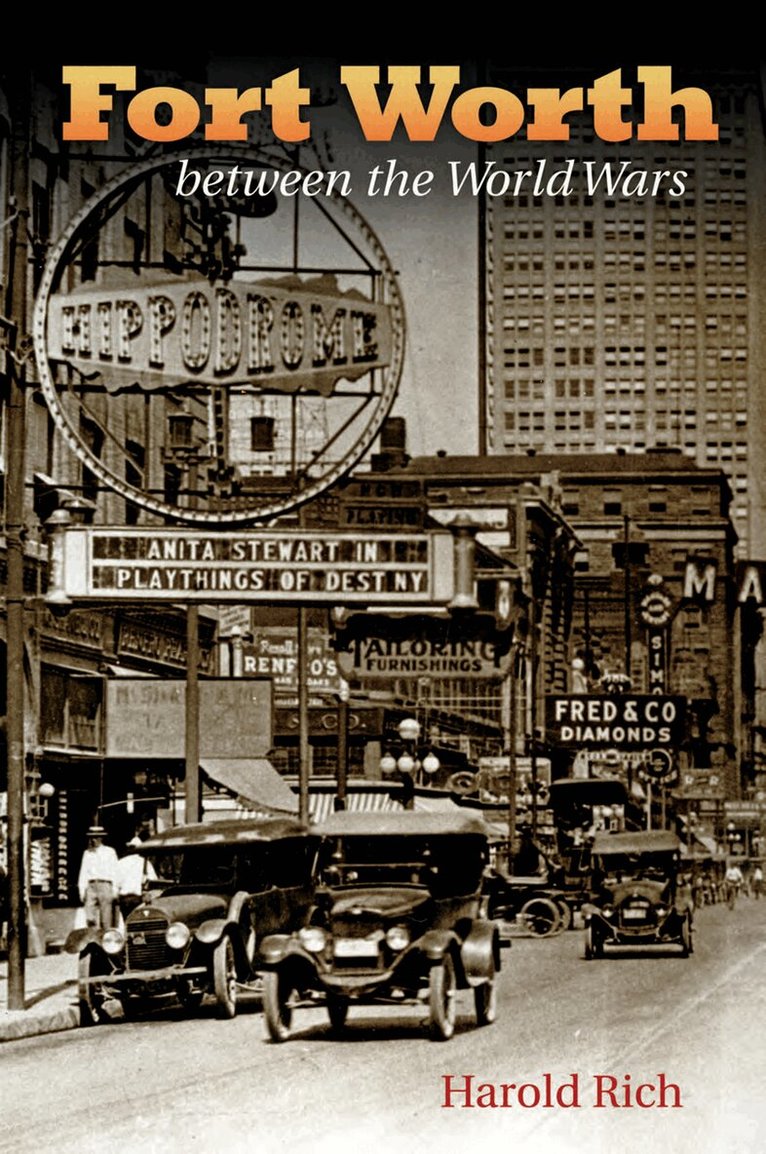
From its early days as a nineteenth-century army outpost through the boom years of cattle drives, culminating with the arrival of Armour and Swift in the twentieth century to secure the community's economic base, Fort Worth established itself as a major city that, to many, was 'where the West began.' Historian Harold Rich focuses on the successes and struggles that Fort Worth enjoyed and endured in the 1920s and 1930s as the city's fortunes began to be eclipsed by Dallas, Houston, and San Antonio.Featuring a solid foundation of economic history, Rich also explores the political and social challenges of a big city facing an uncertain future. Tense race relations, the chilling rise of the Ku Klux Klan, and the dangerous thrills of a notorious vice district 'Hell's Half-Acre' show that this Texas city was a microcosm of the state and the nation when the roar of the 1920s came to an abrupt halt in the Great Depression.Fort Worth between the World Wars is an important contribution not only to local history but also to the larger story of urban change during a tumultuous time.
503 kr
Skickas inom 10-15 vardagar
In 1721, Spain established a fort and mission on the Texas-Louisiana border, or frontera, to stem the tide of people and goods flowing back and forth between northern New Spain and French Louisiana. Named in part after the indigenous Adai people, the complex of the presidio (Nuestra SeÑora del Pilar de los Adaes) and the mission (San Miguel de Cuellar de los Adaes) became collectively known as Los Adaes. It was the capital of Tejas for New Spain.In the first book devoted to Los Adaes, historian Francis X. Galan traces the roots of the current US-Mexico border to the colonial history of this all but forgotten Spanish fort and mission. He demonstrates that, despite efforts to the contrary, Spain could neither fully block the penetration of smuggled goods and settlers into Texas from Louisiana nor could it successfully convert the Native Americans to Christianity and the Spanish economic system. In the aftermath of the transfer of Louisiana from France to Spain in 1762, Spain chose to shutter the fort and mission.The settlers, or AdaeseÑos, were forced to march to San Antonio in 1773. Some returned to East Texas soon after to establish Nacogdoches. Others remained in San Antonio, the new capital of Spanish Texas, and settled on lands distributed from the secularized Mission San Antonio de Valero, a mission now widely known as the Alamo.Los Adaes, the First Capital of Spanish Texas makes a major contribution to Texas history by providing a richer perspective on the shifting borders of colonial powers.
565 kr
Skickas
Texans in World War II offers an informative look at the challenges and changes faced by Texans on the home front during the Second World War. This collection of essays by leading scholars of Texas history covers topics from the African American and Tejano experience to organized labor, from the expanding opportunities for women to the importance of oil and agriculture. Texans in World War II makes local the frequently studied social history of wartime, bringing it home to Texas.An eye-opening read for Texans eager to learn more about this defining era in their state's history, this book will also prove deeply informative for scholars, students, and general readers seeking detailed, definitive information about World War II and its implications for daily life, economic growth, and social and political change in the Lone Star State.
435 kr
Skickas inom 3-6 vardagar
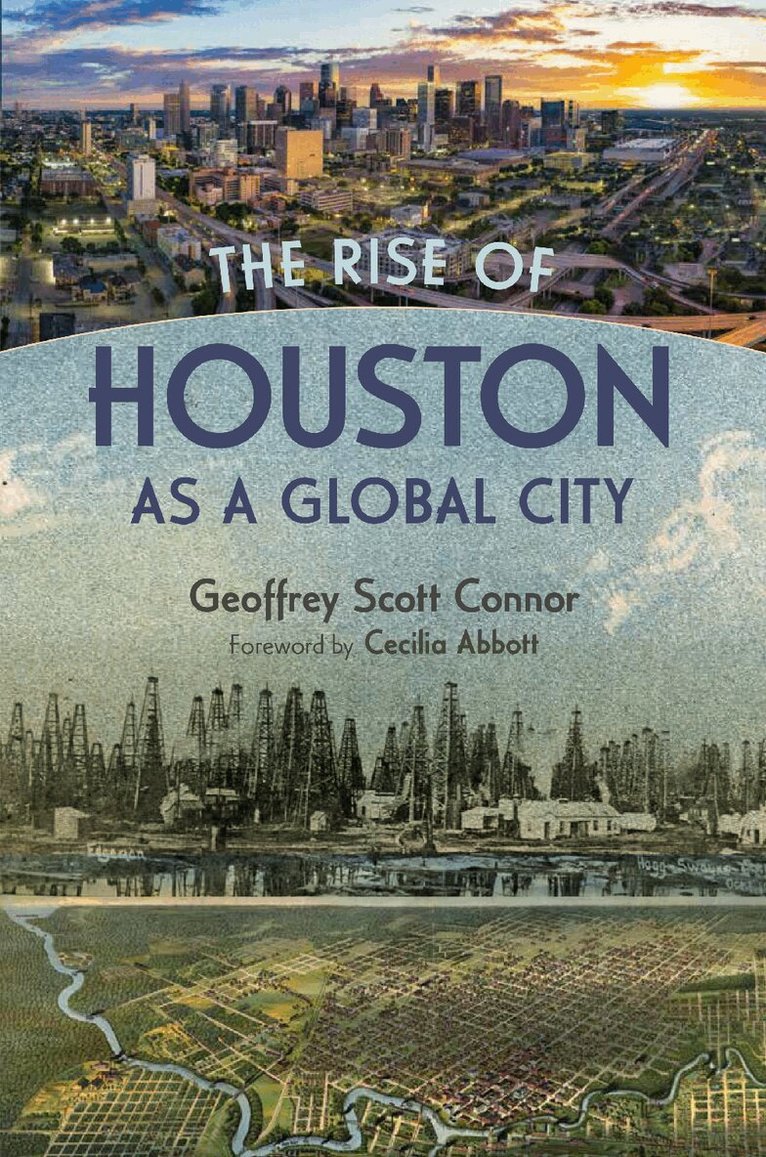
Houston is the largest city in Texas and the fourth largest in the nation. It has long been regarded as the “Energy Capital of the World.” Trademarked boasts frequently refer to the “world’s busiest commercial seaport,” “world’s biggest medical complex,” and “world’s control center for space exploration.” Houston has been home to some of the most politically powerful people in the world, some of the most influential businesspeople, and some of the most dazzling social figures.In The Rise of Houston as Global City, Geoffrey Scott Connor follows the ascent of Houston from its founding by the Allen Brothers in 1836 as a fledging port to its growth into a global center of international trade. Such rapid expansion began in earnest when, in 1901, a hurricane devastated Galveston and the Spindletop oil gusher changed Houston’s fortune forever. The city absorbed much of Galveston’s international trade even as it developed into the world’s largest site for refineries and chemical plants.Connor also shows how local wealth and political power facilitated the establishment of the M. D. Anderson Cancer Hospital during World War II and its transformation into the world’s largest medical complex and a leading center of advanced medicine. The continually expanding Texas Medical Center treated the world’s elite while also developing new medical technologies for the general public. Having thus established itself as a center of technology, Houston again used its wealth and power to draw the Manned Spaceflight Center to the city in 1961. Space science depended on and attracted massive private sector investment, setting the stage for yet another technological expansion in the age of computing. The Rise of Houston as a Global City will contribute to the growing corpus of studies focused on the history of a major city that, especially in the twentieth and twenty-first centuries, blends “boots and oil” with technology, innovation, and ambition.