Survey of London – Serie
Visar alla böcker i serien Survey of London. Handla med fri frakt och snabb leverans.
6 produkter
6 produkter
771 kr
Skickas inom 7-10 vardagar
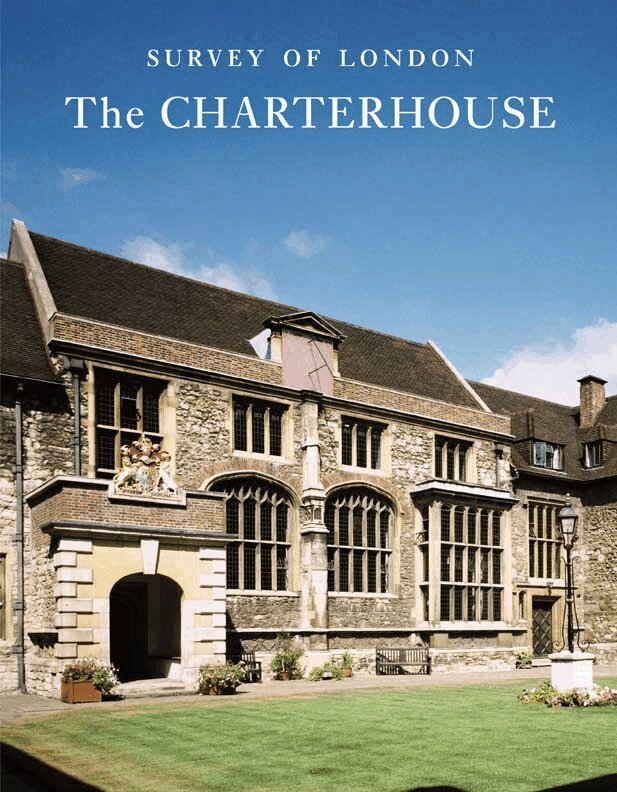
A fully illustrated, comprehensive record of London’s medieval Charterhouse, from its foundation in the 14th century to the present day, presented by the Survey of London team. It includes original research, new photography, and previously unpublished inventories.Published for the Paul Mellon Centre for Studies in British Art
814 kr
Skickas inom 7-10 vardagar
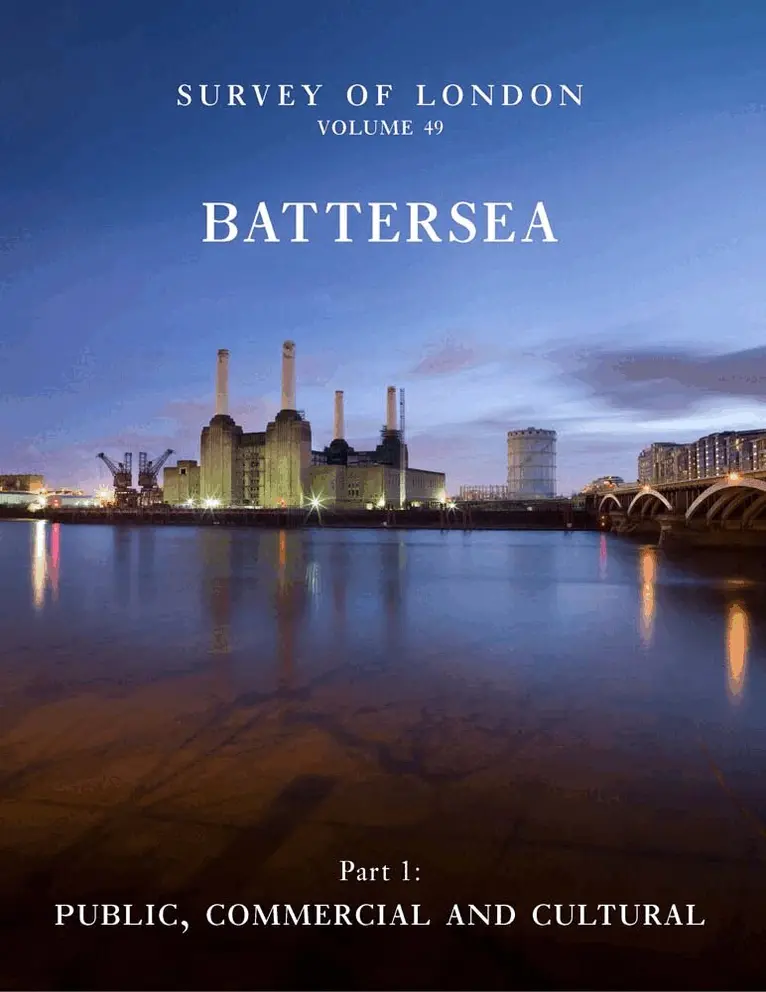
The south London parish of Battersea has roots as a working village, growing produce for London markets, and as a high-class suburb, with merchants’ villas on the elevated ground around Clapham and Wadsworth Commons. Battersea enjoyed spectacular growth during Queen Victoria’s reign, and railroads brought industry and a robust building boom, transforming the parish into another of London’s dense, smoky neighborhoods, though not without its unique and distinguishing features. Among these are Battersea Park, which was created by the Crown in the 1850s; the monumental Battersea Power Station, completed in 1939; and Clapham Junction railway station, which is, by measure of passenger interchanges, the busiest station in the United Kingdom. The two latest volumes of the Survey of London, 49 and 50, trace Battersea’s development from medieval times to the present day. Offering detailed analysis of its streets and buildings both thematically and topographically, and including copious original in-depth research and investigation, the books are a trove of architectural history and British history. Profusely illustrated with new and archival images, architectural drawings and maps, these volumes are welcome additions to the acclaimed Survey of London series.Published for English Heritage by Yale University Press on behalf of the Paul Mellon Centre for Studies in British Art
814 kr
Skickas inom 7-10 vardagar
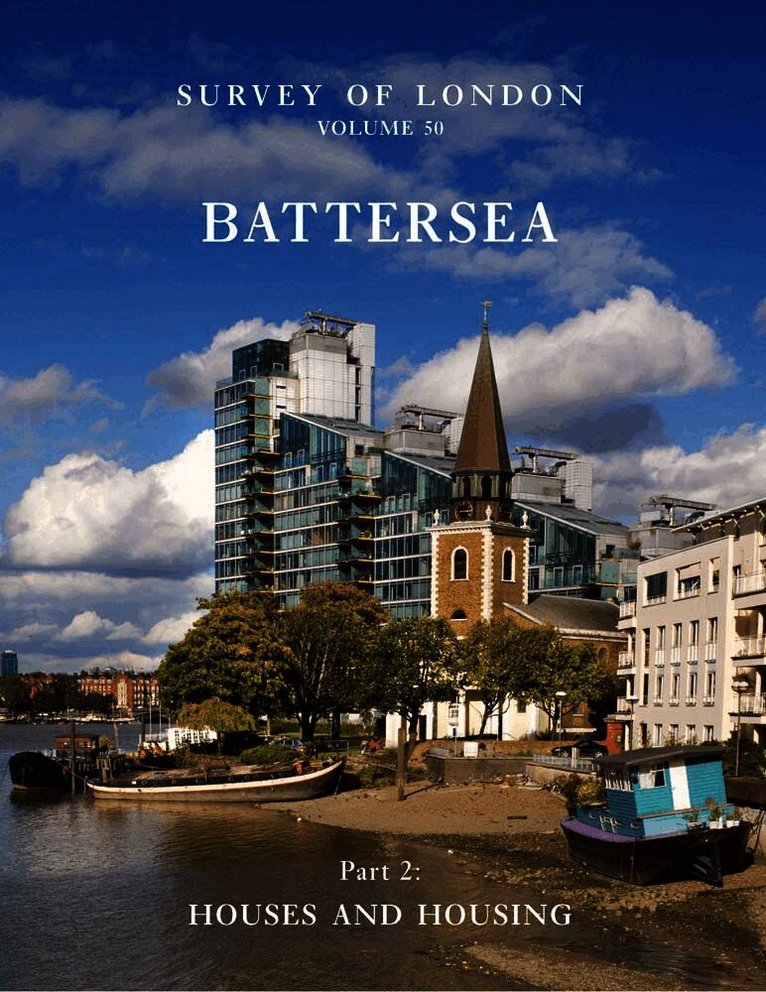
The south London parish of Battersea has roots as a working village, growing produce for London markets, and as a high-class suburb, with merchants’ villas on the elevated ground around Clapham and Wadsworth Commons. Battersea enjoyed spectacular growth during Queen Victoria’s reign, and railroads brought industry and a robust building boom, transforming the parish into another of London’s dense, smoky neighborhoods, though not without its unique and distinguishing features. Among these are Battersea Park, which was created by the Crown in the 1850s; the monumental Battersea Power Station, completed in 1939; and Clapham Junction railway station, which is, by measure of passenger interchanges, the busiest station in the United Kingdom. The two latest volumes of the Survey of London, 49 and 50, trace Battersea’s development from medieval times to the present day. Offering detailed analysis of its streets and buildings both thematically and topographically, and including copious original in-depth research and investigation, the books are a trove of architectural history and British history. Profusely illustrated with new and archival images, architectural drawings and maps, these volumes are welcome additions to the acclaimed Survey of London series.Published for English Heritage by Yale University Press on behalf of the Paul Mellon Centre for Studies in British Art
1 767 kr
Skickas inom 7-10 vardagar
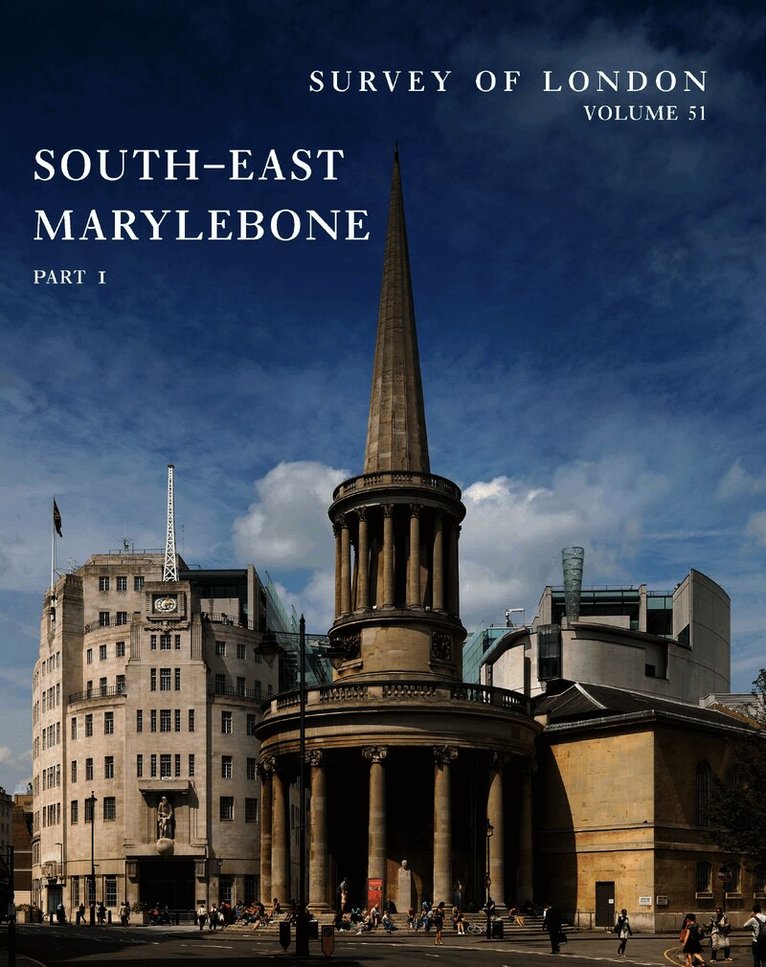
Providing essential knowledge about the British capital’s built environment, these two volumes cover a large portion of the parish of St. Marylebone, bounded to the south by Oxford Street and to the north by the Marylebone Road, and stretching from just west of Marylebone High Street to the parish boundary along Cleveland Street near Tottenham Court Road to the east. This area is rich in historic buildings and includes some of London’s most celebrated addresses, including Portland Place, Cavendish Square, and Harley Street. Among the most important buildings covered in this superbly illustrated book are Robert and James Adam’s development of Portland Place, where the Royal Institute of British Architects’ headquarters is a notable 20th-century insertion. Other landmarks include Marylebone Parish Church, All Saints Margaret Street and All Souls Langham Place, and the vast, recently demolished Middlesex Hospital. In addition to new photography, this volume includes meticulous architectural drawings and detailed coverage of the topography. Published in association with the Paul Mellon Centre and University College London
905 kr
Skickas
1 706 kr
Skickas inom 7-10 vardagar
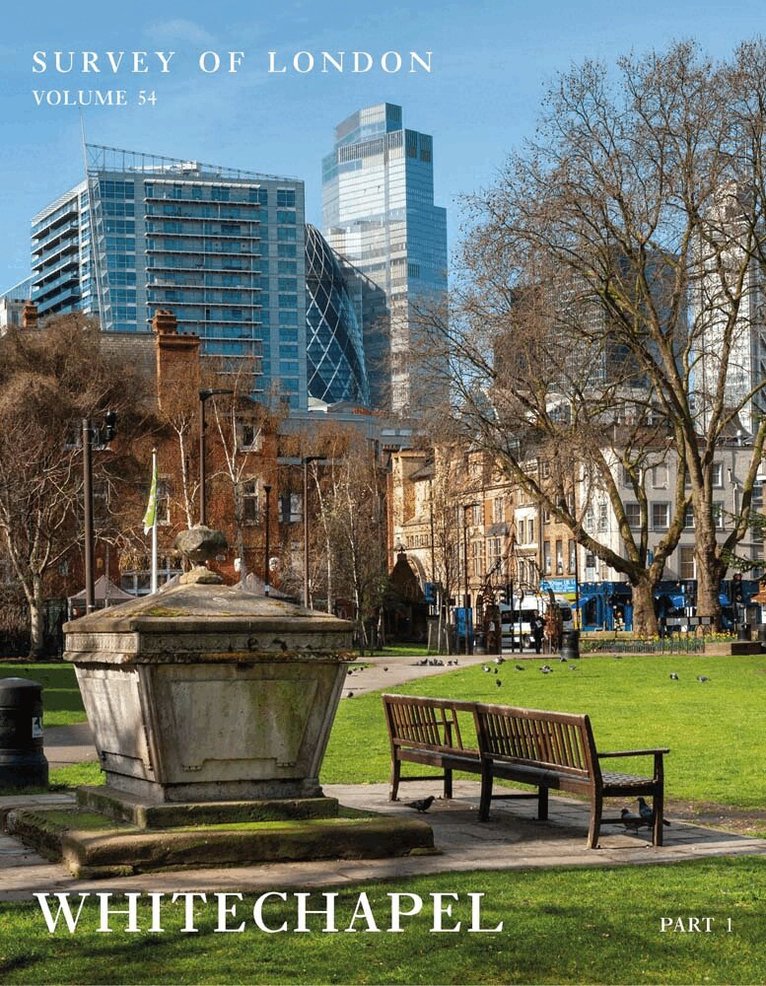
The Survey of London returns to the East End to chronicle Whitechapel, shedding new light on this widely misunderstood districtIn these volumes, the Survey of London returns to the East End to chronicle Whitechapel, covering Aldgate to Mile End Green, and Brick Lane to Wellclose Square. The name Whitechapel—one of London’s best known—is highly evocative, carrying dark, even mythic associations. These are set aside to present new histories of all the area’s sites and buildings, those standing and many that have gone, in districts that have been repeatedly rebuilt. Abutting the City of London, Whitechapel has, since medieval times, housed commerce and many varied industries. Enriched by centuries of immigration, this area has been “global” for as long as that word has denoted the world and, amidst widespread poverty, some of London’s great institutions have been founded here. In the midst of these landmarks, Whitechapel has seen recent transformation. These volumes bear historical witness with hundreds of superb new photographs and meticulous architectural drawings illustrating detailed accounts of topographical development in accessible prose. They will be an invaluable resource for historians, planners, residents, and the wider public.Distributed for the Paul Mellon Centre for Studies in British Art