Teaching & Learning the Humanities in HE series - Böcker
2 792 kr
Skickas inom 11-20 vardagar
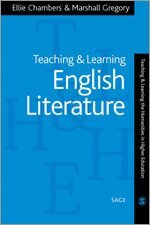
The authors consider practical matters such as course design and student assessment but do not shirk larger historical and theoretical issues. In a lucid and non-polemical fashion - and occasionally with welcome humor - Chambers and Gregory describe the what, why, and how of "doing" literature, often demonstrating the techniques they advocate. Veteran teachers will find the book rejuvenating, a stimulus to examining purposes and methods; beginning teachers may well find it indispensable' - Professor William Monroe, University of Houston
'The transatlantic cooperation of Ellie Chambers and Marshall Gregory has produced an outstanding book that ought to be on the shelves of anyone involved in the teaching of English Literature, as well as anyone engaged in the scholarship of teaching and learning in general or in any discipline. As they say, "the teaching of English Literature plays a central role in human beings' search for meaning" although others in other disciplines may make this claim for theirs too. If so, they will still learn a great deal from this book; anyone looking for no more than a means of satisfying the demands of governments that look for simplistic quality measures and economic relevance, let them look elsewhere. This is a book for now and for all times' - Professor Lewis Elton, Visiting Professor, University of Manchester, Honorary Professor, University College London
This is the third in the series Teaching and Learning the Humanities in Higher Education. The book is for beginning and experienced teachers of literature in higher education. The authors present a comprehensive overview of teaching English literature, from setting teaching goals and syllabus-planning through to a range of student assessment strategies and methods of course or teacher evaluation and improvement. Particular attention is paid to different teaching methods, from the traditional classroom to newer collaborative work, distance education and uses of electronic technologies. All this is set in the context of present-day circumstances and agendas to help academics and those in training become more informed and better teachers of their subject.
The book includes:
- how literature as a discipline is currently understood and constituted
- what it means to study and learn the subject
-what 'good teaching' is, with fewer resources for teaching, larger student numbers, an emphasis on 'user-pay' principles and vocationalism.
This is an essential text for teachers of English Literature in universities and colleges worldwide.
The Teaching & Learning in the Humanities series, edited by Ellie Chambers and Jan Parker, is for beginning and experienced lecturers. It deals with all aspects of teaching individual arts and humanities subjects in higher education. Experienced teachers offer authoritative suggestions on how to become critically reflective about discipline-specific practices.
999 kr
Skickas inom 3-6 vardagar
'Comprehensive, persuasive, and at all times accessible in style and argument, this text both encourages and empowers university historians to review and enhance their teaching practices. All key facets of programme development are explored with reference to an extensive and well-chosen range of international examples. The chapter on the historian's skills and qualities of mind is one of several that I will be referring to frequently' - Jeanine Graham, Senior Lecturer, History, University of Waikato
'... the varied findings make fascinating reading ... this book should be required reading for everyone involved in teaching history: there is plenty here for us all to learn from' - ESCalate
'In providing such a clear, informative and thoughtful exploration of the current state of history in higher education, and in helping to raise the quality of critical debate about its future, this book contributes greatly to the growing scholarship of teaching and learning in the discipline. It should also become a vital resource for all historians who wish to honour the old dictum that, in teaching as in research, the one duty we owe history is to rewrite it' - Professor Paul Hyland, Director of History in the Subject Centre for History, Classics and Archaeology
'[E]xtremely useful... provides a thought-provoking and useful discussion concerning the task of actually teaching history at university level... This timely book needs to be read widely, and the many issues it raises should command our closest attention' - Higher Education Review
Over the last 10 years or so, history as an academic discipline has become steeped in controversy and introspection. Additional areas of interest have opened up, fresh perspectives and approaches have been offered, and new teaching and learning strategies have been advocated. There has been an increasing emphasis on producing well-qualified graduates equipped with the skills, knowledge and attitudes to cope with the changing demands of the world of work.
This book suggests how these issues may be managed. The authors identify and discuss the underlying principles, and consider ways in which they can be applied at module and programme levels.
The Teaching & Learning in the Humanities series, edited by Ellie Chambers and Jan Parker, is for beginning and experienced lecturers. It deals with all aspects of teaching individual arts and humanities subjects in higher education. Experienced teachers offer authoritative suggestions on how to become critically reflective about discipline-specific practices.
2 792 kr
Skickas inom 11-20 vardagar
'Every so often a book comes along filled with so much wisdom, critical insight, and sheer humanity that it takes one's breath away. Modern Languages is such a book. Reclaiming language as both a site of struggle and a crucial sphere of politics, Alison Phipps and Mike Gonzalez make it clear that matters of language lie at the heart of any viable pedagogy in which democracy matters. But not a language(s) drained of critical possibilities, passion, power, or imagination, but language as the context and medium in which meaning is produced, affective investments made, and experiences are given legitimacy. Any educator, parent, student, or citizen of the world who cares about democracy, pedagogy, and the crucial role of modern languages creating the conditions for agency, politics, and, yes, hope should read this book' - Professor Henry Giroux, Waterbury Chair, Penn State University, USA
'I expect it will become a much-thumbed handbook for teachers in search of inspiration, and I am sure it will be a catalyst to further debate and exploration. But I suspect it may also become a turning point for thinking about modern languages. This book exudes life and hope. It shows a future where languages can thrive because they are an integral and indispensable part of what it means to be human. It is an exhilarating prospect to help to bring that future closer' - Professor Michael Kelly, Director, Subject Centre for Languages, Linguistics and Area Studies, University of Southampton
'Modern Languages is argumentative in the best sense: it is intellectually ambitious and is making a bold and brave argument of its own. The story is exciting, and offers a radical way of reconceiving teaching and learning in languages. It is written with evident passion and conviction and it seeks to reach out to an audience. The authors come across as committed and even as brilliant teachers. This is a book for its age but yet may have a long shelf-life. It has made me think about modern languages and language teaching and learning in quite new ways' - Professor Ronald Barnett, Institute of Education, University of London
'This book pushes the traditional field of Modern Languages into new challenges and it crosses intradisciplinary borders between different languages and cultures. It is intrinsically about languaging and about being intercultural. The authors argue that languages are "a social justice issue", give voice to language users in general and to language students in particular and engage into powerful, erudite, reflexive and critical insights. This book portrays language and culture education as a passionate, intelligent and committed undertaking. In sum, it is essential and stimulating reading for those Language and Culture educators, teaching in Modern Language Departments from universities all over the world, who dare' - Dr Manuela Guilherme, Researcher, Center for Social Studies, Universidade de Coimbra
This accessible book aims to challenge and stimulate all those engaged with teaching modern languages in higher education. It is not a `how to' book; rather it engages with the complex, often paradoxical position of modern languages today, and offers arguments for, and illustrations of the ways in which teachers of modern languages can position themselves critically in that rapidly changing context. It works with the concepts of languaging and being intercultural, which arise from a rigorous examination of research findings, a challenging critique of current models of work within the discipline and a reflection on existing teaching practices.
Beginning with an examination of the 'crisis' in modern languages in the U.K. and North America, the authors draw on data and descriptions of learning experiences in the field and position themselves critically within the debates. Key problems for teachers and learners are identified and elaborated through examples of critical incidents which point to generic as well as specific issues and solutions in teaching languages in higher education.
The Teaching & Learning in the Humanities series, edited by Ellie Chambers and Jan Parker, is for beginning and experienced lecturers. It deals with all aspects of teaching individual arts and humanities subjects in higher education. Experienced teachers offer authoritative suggestions on how to become critically reflective about discipline-specific practices.
1 037 kr
Skickas inom 3-6 vardagar
'Every so often a book comes along filled with so much wisdom, critical insight, and sheer humanity that it takes one's breath away. Modern Languages is such a book. Reclaiming language as both a site of struggle and a crucial sphere of politics, Alison Phipps and Mike Gonzalez make it clear that matters of language lie at the heart of any viable pedagogy in which democracy matters. But not a language(s) drained of critical possibilities, passion, power, or imagination, but language as the context and medium in which meaning is produced, affective investments made, and experiences are given legitimacy. Any educator, parent, student, or citizen of the world who cares about democracy, pedagogy, and the crucial role of modern languages creating the conditions for agency, politics, and, yes, hope should read this book' - Professor Henry Giroux, Waterbury Chair, Penn State University, USA
'I expect it will become a much-thumbed handbook for teachers in search of inspiration, and I am sure it will be a catalyst to further debate and exploration. But I suspect it may also become a turning point for thinking about modern languages. This book exudes life and hope. It shows a future where languages can thrive because they are an integral and indispensable part of what it means to be human. It is an exhilarating prospect to help to bring that future closer' - Professor Michael Kelly, Director, Subject Centre for Languages, Linguistics and Area Studies, University of Southampton
'Modern Languages is argumentative in the best sense: it is intellectually ambitious and is making a bold and brave argument of its own. The story is exciting, and offers a radical way of reconceiving teaching and learning in languages. It is written with evident passion and conviction and it seeks to reach out to an audience. The authors come across as committed and even as brilliant teachers. This is a book for its age but yet may have a long shelf-life. It has made me think about modern languages and language teaching and learning in quite new ways' - Professor Ronald Barnett, Institute of Education, University of London
'This book pushes the traditional field of Modern Languages into new challenges and it crosses intradisciplinary borders between different languages and cultures. It is intrinsically about languaging and about being intercultural. The authors argue that languages are "a social justice issue", give voice to language users in general and to language students in particular and engage into powerful, erudite, reflexive and critical insights. This book portrays language and culture education as a passionate, intelligent and committed undertaking. In sum, it is essential and stimulating reading for those Language and Culture educators, teaching in Modern Language Departments from universities all over the world, who dare' - Dr Manuela Guilherme, Researcher, Center for Social Studies, Universidade de Coimbra
This accessible book aims to challenge and stimulate all those engaged with teaching modern languages in higher education. It is not a `how to' book; rather it engages with the complex, often paradoxical position of modern languages today, and offers arguments for, and illustrations of the ways in which teachers of modern languages can position themselves critically in that rapidly changing context. It works with the concepts of languaging and being intercultural, which arise from a rigorous examination of research findings, a challenging critique of current models of work within the discipline and a reflection on existing teaching practices.
Beginning with an examination of the 'crisis' in modern languages in the U.K. and North America, the authors draw on data and descriptions of learning experiences in the field and position themselves critically within the debates. Key problems for teachers and learners are identified and elaborated through examples of critical incidents which point to generic as well as specific issues and solutions in teaching languages in higher education.
The Teaching & Learning in the Humanities series, edited by Ellie Chambers and Jan Parker, is for beginning and experienced lecturers. It deals with all aspects of teaching individual arts and humanities subjects in higher education. Experienced teachers offer authoritative suggestions on how to become critically reflective about discipline-specific practices.