Teaching Hemingway - Böcker
Visar alla böcker i serien Teaching Hemingway. Handla med fri frakt och snabb leverans.
6 produkter
6 produkter
423 kr
Skickas inom 10-15 vardagar
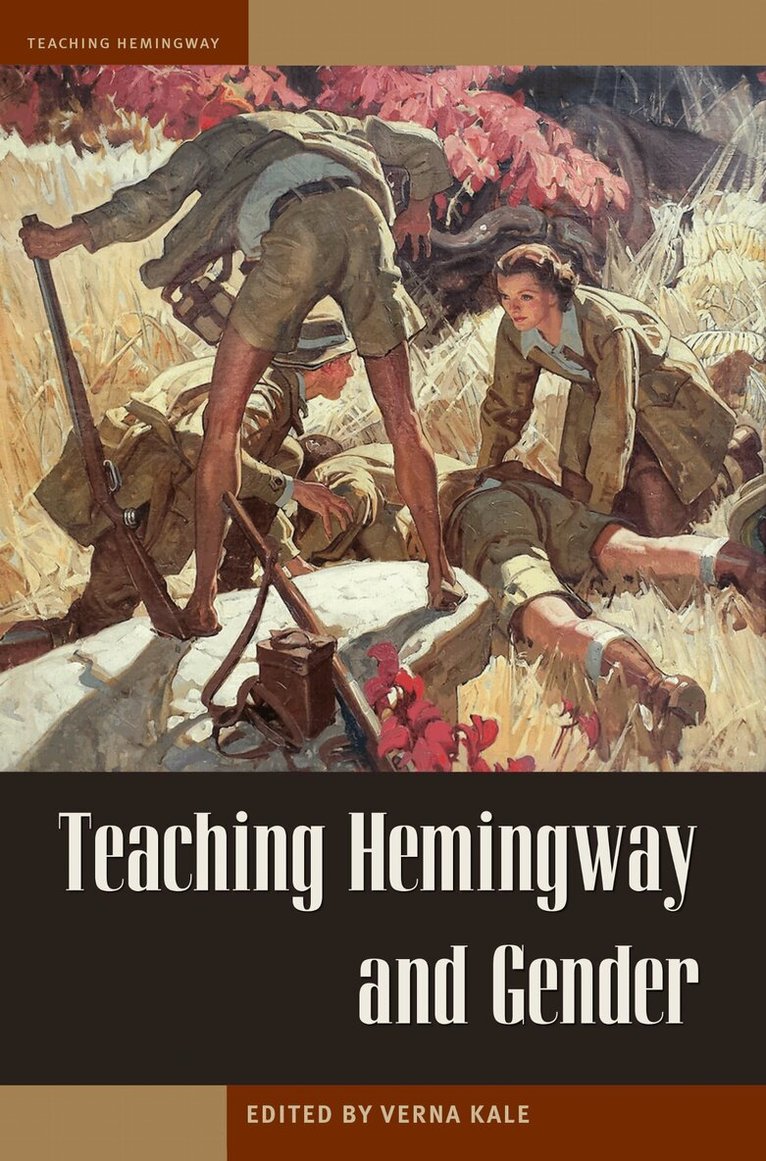
Ernest Hemingway's place in American letters seems guaranteed: a winner of Nobel and Pulitzer prizes, Hemingway has long been a fixture in high school and college curricula. Just as influential as his famed economy of style and unflappable heroes, however, is his public persona. Heming- way helped create an image of a masculine ideal: sportsman, brawler, hard drinker, serial monogamist, and world traveler. Yet his iconicity has also worked against him. Because Hemingway is often dismissed by students and scholars alike for his perceived misogyny, instructors might find themselves wondering how to handle the impossibly over-determined author or even if they should include him on their syllabi at all.With these concerns in mind, the authors of the essays in Teaching Hemingway and Gender introduce both students and scholars to Hemingway's surprisingly multivalent treatment of gender and sexuality. Individual essays deal with Hemingway's short stories, novels, and the posthumously published novel The Garden of Eden, but the ideas are widely applicable in discussions of modernism, authorship, the literary market place, popular culture, gender theory, queer theory, and men's studies.A state-of-the-field bibliographic essay by Debra A. Moddelmog and an evocative—and provocative— personal narrative by Hilary Kovar Justice bookend the volume, which offers contributions from senior scholars, faculty at community colleges, teachers in ESL and rhetoric programs, a professor at an all-male college, and others with a range of experiences in between. The book also contains an appendix of teaching materials, including suggestions for further reading, syllabi, writing prompts, and other course materials that readers can adapt for use in their own classrooms. The collection will serve as both a valuable source for scholars working on gender and sexuality and a practical handbook for new and veteran instructors.Teaching Hemingway and Gender deals not only with new readings of Hemingway but also with the ways instructors interact with and make assumptions about their students. The essays in Teaching Hemingway and Gender elucidate Hemingway's emergent themes as well as the ways in which we might challenge students—and ourselves—to engage them.
417 kr
Skickas inom 7-10 vardagar
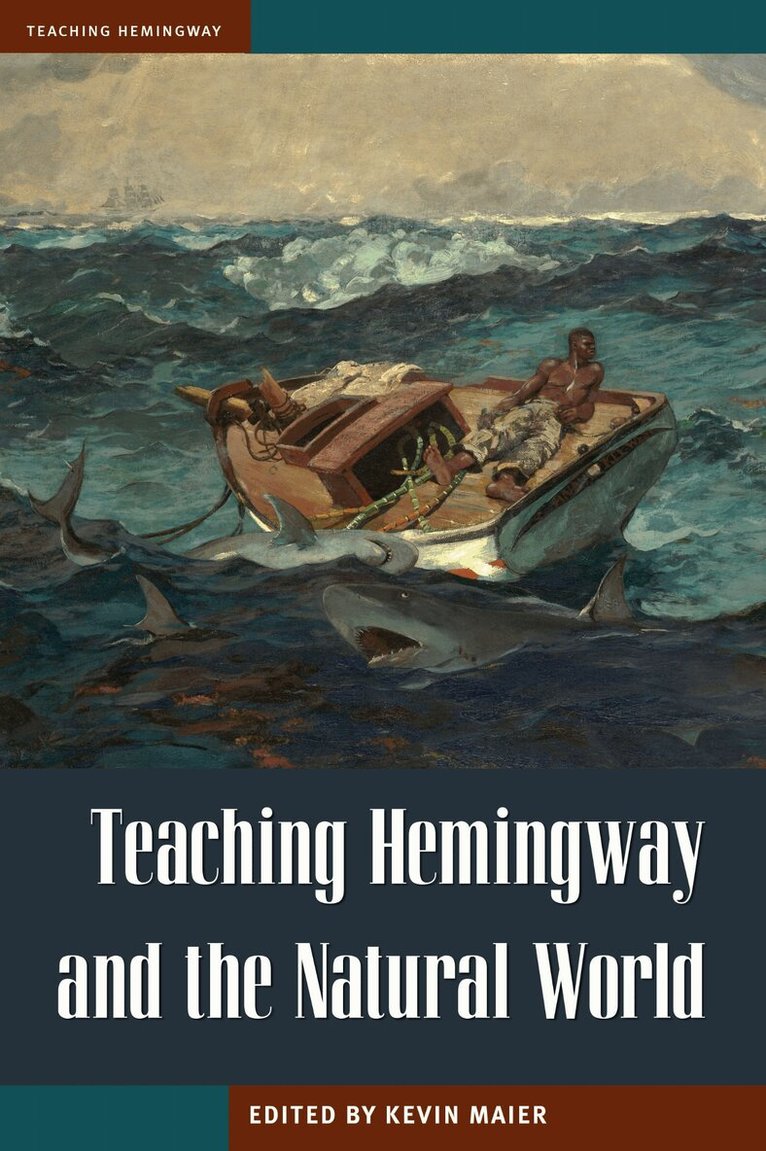
Ernest Hemingway is a writer we often associate with particular places and animals; Michigan’s Upper Peninsula, Spain’s countryside, East Africa’s game reserves, Cuba’s blue water, and Idaho’s sage- brush all come to mind. We can easily visualize the iconic images of Hemingway with y rod bent by hefty trout, with bulls charging matadors, or of the famous author proudly posing with trophy lions, marlin, and a menagerie of Western American game animals.As Robert E. Fleming once put it—updating Gertrude Stein’s famous quip that Hemingway looked like a modern and smelled of museums—Hemingway “was also a hunter, sherman, and naturalist who smelled of libraries.” Hemingway indeed read widely in natural history and science, as well as the literature of eld sports. is lifelong interest in the natural world and its inhabitants manifests itself in Hemingway’s writing in myriad ways. From the trout Nick Adams care- fully releases to Santiago’s marlin and Robert Jordan’s “heart beating against the pine needle oor of the forest” to Colonel Cantwell’s beloved Italian duck marshes, and from African savannahs to the Gulf Stream, animals and environments are central to Hemingway’s work and life. While these representations often served as background for broader human centered matters in early scholarship, contemporary critics have opted to treat animals and environments directly. Teaching Hemingway and the Natural World marks a key entry in Hemingway studies, bringing the questions from the rapidly evolving eld of environmental literary studies to bear on Hemingway’s places, animals, and life. It not only advances scholarship on Hemingway’s relationship to the natural world, but it also facilitates bringing this understanding to the classroom. This latest volume in the Teaching Hemingway series explores how his writing sheds light on broader questions of the human relationship to the nonhuman world. Organized geographically, the 16 essays by leading scholars are divided into five sections about Hemingway’s favorite places. Each essay includes specific classroom advice as well as theoretically sophisticated close readings.
417 kr
Skickas inom 7-10 vardagar
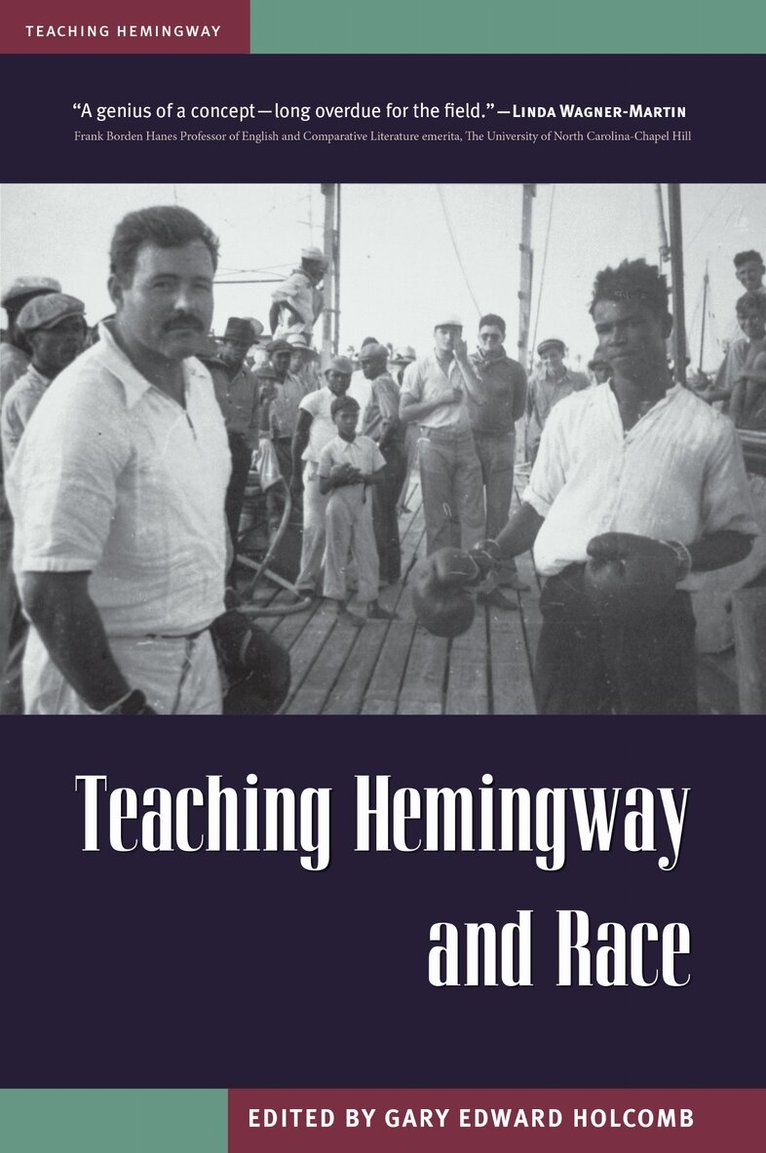
Teaching Hemingway and Race provides a practicable means for teaching the subject of race in Hemingway’s writing and related texts—from how to approach ethnic, nonwhite international, and tribal characters to how to teach difficult questions of racial representation. Rather than suggesting that Hemingway’s portrayals of cultural otherness are incidental to teaching and reading the texts, the volume brings them to the fore.Included in the collection are Marc Dudley’s instruction on how students may recognize “multiple selves at work in a text”; Margaret E. Wright-Cleveland’s approach to In Our Time, informed by American studies and women’s studies; and Ross Tangedal’s discussion of imperialism in Hemingway’s two nonfiction books. Other topics addressed include questions of developing vigorous learning outcomes when teaching Hemingway, Hemingway’s fascination with Latin America, teaching the Harlem Renaissance through Hemingway, discussing Hemingway’s “Soldier’s Home” and Langston Hughes’s “Home” in tandem, discussing the black presence in The Sun Also Rises, and a means for comparing how Jean Toomer, Ernest Gaines, and Hemingway deal with the issue of race. This latest volume in the Teaching Hemingway series includes ten essays by leading scholars that place racial markers in their historical context, while also illuminating those connections for scholars, classroom teachers, and students. Readers will find it refreshing and enlightening to encounter essays that juxtapose Hemingway’s work alongside Alain Locke’s The New Negro and explore Hemingway’s influence on Jean Toomer, Langston Hughes, Ralph Ellison, Ernest Gaines, and other black writers.
Hemingway in the Digital Age
Reflections on Teaching, Reading, and Understanding
Häftad, Engelska, 2019
417 kr
Skickas inom 7-10 vardagar
Remarkable connections between Hemingway's time and our own digital eraHow can we convince readers, and especially students, to slow down to the crawl that is often necessary to see the real power in the compressed language Hemingway uses to tell a story? Are there qualities of digital age life that make students, somehow, more connected to Hemingway's life and his writing? How can we compare the 21st-century transhumanist interest in making ourselves into 'something more than merely human' with Hemingway’s characters like Nick Adams, Jake Barnes, Frederic Henry, Catherine Barkley, Pilar, Robert Jordan, or Santiago, all of whom similarly wrestle within the bounds of their own mortality?Laura Godfrey has assembled a group of scholars who speak eloquently to these questions. Hemingway’s characters are seen trying to live life 'all the way up,' the way Hemingway's bullfighters did - so which characters do we see as most engaged with the world around them? Which characters pay closest attention to others and to their environments? And did Hemingway seem to assign value to those people who paid close attention? Within this framework, Hemingway's work emerges in stark relief as being about the value - indeed, the necessity - of thoughtfully trying to consider, to observe, and possibly even to understand and connect with people and places. And so, in this 21st-century 'digital age' and its increasing vocabulary about the importance of being mindful, present, intentional, and engaged, Hemingway's writing has become relevant for readers and students of all ages in exciting new ways.Hemingway in the Digital Age makes available to high school, college, and university teachers a wide selection of the emerging techniques and contemporary digital tools for teaching Ernest Hemingway's life and writing, as well as discussions of Hemingway's relevance to digital humanities projects.
296 kr
Skickas inom 7-10 vardagar
Encapsulating all of Hemingway's interests, his short stories are essential for understanding him.Sometimes characterised as the most significant author since Shakespeare, Ernest Hemingway was an acknowledged master of the short story, with his groundbreaking style and its apparent simplicity and honesty changing the nature of English prose fiction. While in the early 1920s, some mainstream editors seemed baffled by their subtlety, today his stories are mainstays in the classroom, taught at all levels from secondary school through university graduate courses.In this collection, 13 master teachers from all levels discuss these and other aspects of his work, demonstrating how they motivate students to appreciate what Hemingway is doing. In the process, the collection argues, one can put to rest the stereotyped view of the author as a macho adventurer and, rather, see how Hemingway proves to be uniquely sensitive to his world. The authors discuss both the most commonly taught and significantly less-taught stories that illustrate Hemingway’s concerns. Each has a unique point of departure, each a rich and unique background to bring to both students and interested readers.For further study or for use specifically by teachers, the volume includes classroom exercises and resources, teaching points, and commonly encountered issues.
417 kr
Skickas inom 7-10 vardagar